

Royidris clarinodis
- Scientific Name
- Royidris clarinodis
- Tribe
- Crematogastrini
- Subfamily
- Myrmicinae
- Author
- Heterick, 2006
- Distribution
- Found in 1 countries
Royidris clarinodis Overview
Royidris clarinodis is an ant species of the genus Royidris. It is primarily documented in 1 countries , including Madagascar. Detailed taxonomic data and occurrence records can be further explored via authoritative databases such as AntWeb or the Global Biodiversity Information Facility (GBIF).
Royidris clarinodis
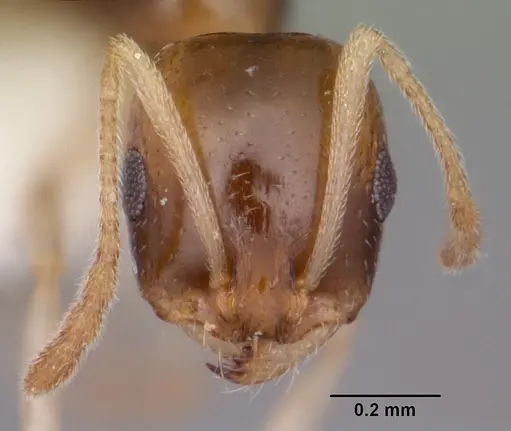
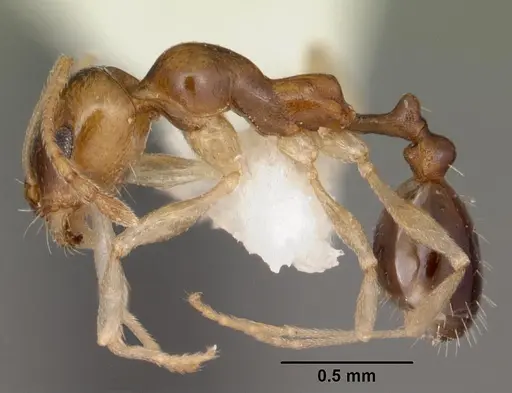
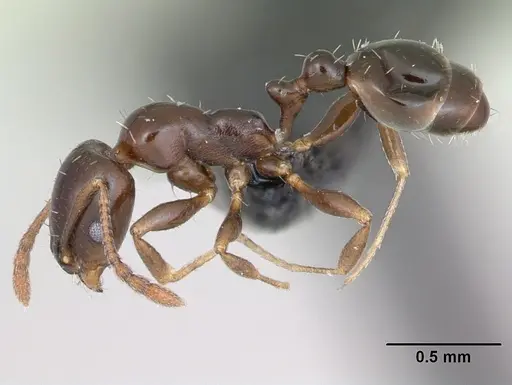
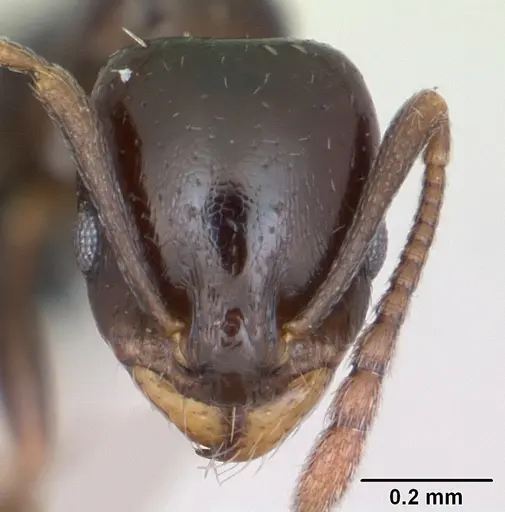
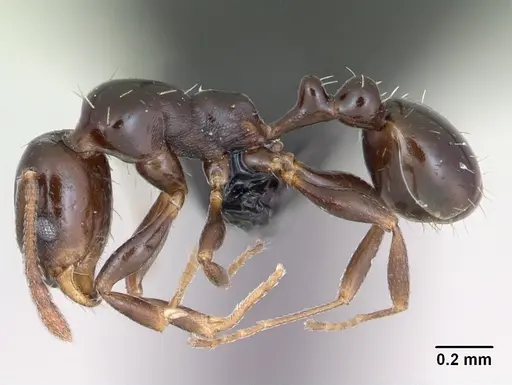
Royidris clarinodis is a tiny myrmicine ant endemic to Madagascar, measuring just 2.0-2.5mm in worker length [1]. Workers have a distinctive appearance with a smooth, unsculptured head, a 3-segmented antennal club, and relatively short scapes that barely reach the posterior head margin when laid straight back [1]. Their promesonotum is convex and swollen, with a sharply impressed V-shaped metanotal groove that sets this species apart within the robertsoni group [1]. Coloration varies considerably, some individuals are orange or yellowish with a light brown gaster, while others are uniformly dark chocolate brown [2]. This species was originally described as Royidris clarinodis before being reclassified to Royidris in 2014 [1].
These ants inhabit Madagascar's spiny forest, shrubland, and uapaca woodland regions, where they nest under stones but have also been collected from litter samples and as ground foragers [1]. The species is known only from the worker caste in scientific collections, though queens have been described [2]. This is a rare and relatively obscure species in the antkeeping hobby, making it an interesting choice for collectors seeking unusual Malagasy species.
Quick Summary
- Difficulty: Expert
- Origin & Habitat: Endemic to Madagascar, specifically Toliara Province. Found in spiny forest, shrubland, and uapaca woodland, nesting under stones and in leaf litter [1][2].
- Colony Type: Colony structure is unconfirmed. Only worker caste has been collected in significant numbers, queen is known from description but colony founding behavior has not been documented [2][1].
- Size & Growth:
- Queen: Approximately 0.61mm HW,0.66mm HL, based on single described queen [2].
- Worker: 2.0-2.5mm total length, with head width 0.35-0.47mm [1][2].
- Colony: Unknown, no colony size data available from research.
- Growth: Unknown, no development timing data exists for this species.
- Development: Unconfirmed, no direct observations of colony development exist. Estimates based on typical Malagasy Myrmicinae patterns suggest 6-10 weeks at optimal temperature. (Development timeline is unconfirmed for this species. Related Malagasy Monomorium species typically develop in 6-8 weeks under warm conditions.)
- Antkeeping:
- Temperature: Based on Madagascar's spiny forest habitat (tropical dry forest), aim for 22-26°C. Provide a gentle temperature gradient allowing workers to self-regulate.
- Humidity: Moderate humidity preferred, these ants live in seasonal dry forest and nest under stones, suggesting they tolerate drier conditions than rainforest species. Keep substrate lightly moist but allow drying periods between waterings.
- Diapause: Unknown, no research on seasonal dormancy exists. Madagascar experiences seasonal variation, so a brief cool period (around 15-18°C for 2-3 months) may be beneficial but is not confirmed as required.
- Nesting: Natural nesting is under stones and in leaf litter. In captivity, a naturalistic setup with substrate for tunneling or a Y-tong/plaster nest with narrow chambers works well. Provide some干燥 areas as they naturally nest under stones in well-drained soil.
- Behavior: These are small, ground-nesting ants that forage on the ground surface. They are not aggressive and likely have a peaceful temperament typical of small Myrmicinae. Their tiny size (under 3mm) means escape prevention is critical, they can squeeze through standard test tube openings. Use fine mesh barriers and tight-fitting lids. Foraging style appears to be ground-based searching for small prey and honeydew.
- Common Issues: tiny size makes escape likely without fine mesh barriers, colony growth is extremely slow with no documented development timeline, limited availability in antkeeping trade, wild-caught colonies may have been illegally collected from protected areas, humidity requirements are poorly understood, risk of either over-moistening or drying out the colony, no established feeding protocols, diet acceptance is unknown and may require experimentation
Housing and Nest Setup
Royidris clarinodis is a tiny ant that requires carefully scaled housing. In the wild, these ants nest under stones in Madagascar's spiny forest, so a naturalistic setup with a thin layer of sandy soil or a plaster/Y-tong nest with narrow chambers works well [1]. The species has been collected from litter samples and pitfall traps, indicating they readily traverse substrate [1]. For a founding colony, a standard test tube setup can work, but ensure the cotton is packed tightly, these tiny ants can squeeze through gaps that larger species cannot. Once the colony reaches 10+ workers, consider moving to a small formicarium with narrow tunnels scaled to their size. The nest should have both moist areas and slightly drier zones, mimicking their natural under-stone nesting sites where soil conditions likely vary.
Feeding and Diet
Diet acceptance for Royidris clarinodis has not been documented in scientific literature or antkeeping resources. Based on related Malagasy Monomorium species and general Myrmicinae behavior, they likely accept small protein sources like micro-arthropods (fruit flies, pinhead crickets, springtails) and sugar sources (honey water, sugar water) [2]. Start with offering small drops of honey water or sugar water and observe acceptance over 24-48 hours. For protein, offer tiny live or frozen prey items appropriately sized for their 2-3mm workers. Remove uneaten food promptly to prevent mold. Since this species is poorly known in captivity, be prepared to experiment with different food types and monitor what the colony accepts best.
Temperature and Seasonal Care
Based on their origin in Madagascar's Toliara Province (tropical dry forest/spiny forest), these ants likely prefer temperatures in the 22-26°C range [1]. The spiny forest experiences warm conditions year-round with seasonal dry and wet periods. Provide a temperature gradient by placing the nest on one side of the enclosure with gentle bottom heat from a heating cable or mat. This allows workers to move to warmer or cooler areas as needed. Regarding hibernation or diapause, no research exists on their seasonal requirements. Madagascar does have cooler winter months (May-October), so a brief cool period at 15-18°C for 2-3 months may be beneficial but should be considered optional until more is learned about this species.
Handling and Colony Maintenance
This species is not recommended for beginners due to the lack of documented care information and their tiny size. When working with Royidris clarinodis, use extreme care during transfers as they can easily be crushed or lost. Transfer colonies using smooth-surfaced tools and avoid bright lighting that may cause stress. Escape prevention is critical, these ants are under 3mm and can escape through standard test tube cotton, gaps in lid seals, and even through fine mesh that appears adequate. Use fluon on container rims and ensure all enclosures have tight-fitting lids with no gaps larger than 1mm. Monitor colony health carefully as health issues may be difficult to detect in such small colonies, and consult experienced keepers if problems arise. [1][2]
Frequently Asked Questions
How long does it take for Royidris clarinodis to go from egg to worker?
The egg-to-worker timeline is unconfirmed for this species, no scientific observations exist. Based on typical Malagasy Myrmicinae patterns, expect approximately 6-10 weeks at optimal temperature (around 24-26°C). However, this is an estimate and actual development time may vary significantly.
What do Royidris clarinodis ants eat?
Diet is not documented for this species. Based on related Monomorium species, they likely accept small live prey (fruit flies, springtails, micro-arthropods) and sugar sources (honey water, sugar water). Start with honey water and small protein items, then adjust based on what your colony accepts.
Are Royidris clarinodis good for beginners?
No, this species is not recommended for beginners. They are extremely small, escape easily, have no documented care requirements, and are rarely available in the antkeeping hobby. They require expert-level attention to humidity, temperature, and escape prevention.
Do Royidris clarinodis ants sting?
Royidris belongs to the Myrmicinae subfamily, which includes many species with functional stingers. However, the sting of such tiny ants is negligible to humans and rarely detectable. Their small size (2-3mm) means any sting would be very mild.
Can I keep multiple Royidris clarinodis queens together?
Colony structure is unconfirmed for this species. No research documents whether they are monogyne (single queen) or polygyne (multiple queens). Combining unrelated queens is not recommended due to the lack of information about their social structure.
What temperature do Royidris clarinodis need?
Based on their Madagascar spiny forest habitat, aim for 22-26°C. Provide a gentle gradient allowing workers to self-regulate. Avoid temperatures above 30°C or below 18°C for extended periods until more is learned about their tolerances.
How big do Royidris clarinodis colonies get?
Colony size is unknown, no research documents maximum colony size for this species. Given their tiny worker size (2-2.5mm) and the fact they are only known from worker caste collections, colonies are likely small, possibly under 100-500 workers at maturity.
Do Royidris clarinodis need hibernation?
Diapause requirements are unknown. Madagascar has seasonal temperature variation, so a brief cool period (15-18°C for 2-3 months during winter months) may be beneficial but is not confirmed as required. Observe your colony's behavior, if they naturally slow down during cooler months, a rest period is appropriate.
Why are my Royidris clarinodis dying?
Without documented care requirements, troubleshooting is difficult. Common issues likely include: escape (check all seals and mesh), improper humidity (too wet or too dry), temperature stress, or poor initial health of wild-caught colonies. Ensure excellent escape prevention and provide a moisture gradient. Consider consulting experienced Malagasy ant keepers.
When should I move Royidris clarinodis to a formicarium?
Wait until the colony has at least 20-30 workers before considering a formicarium. Test tube colonies can be maintained long-term with this species. When moving, use a smooth transition and ensure the new setup has appropriately sized tunnels, these tiny ants need narrow passages.
References

This caresheet is licensed under CC BY-SA 4.0 .
CASENT0019565
View on AntWeb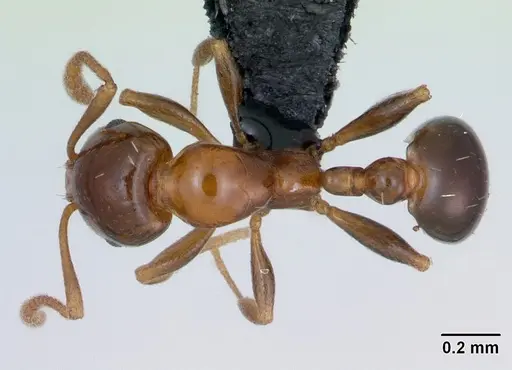
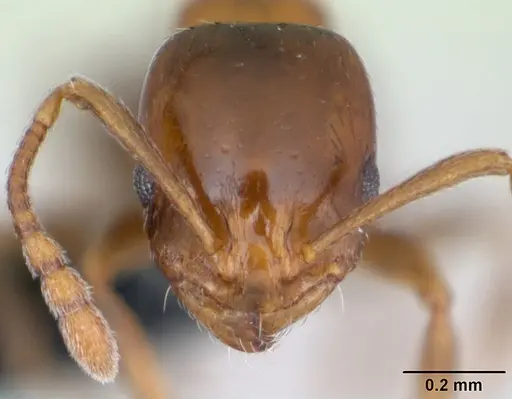
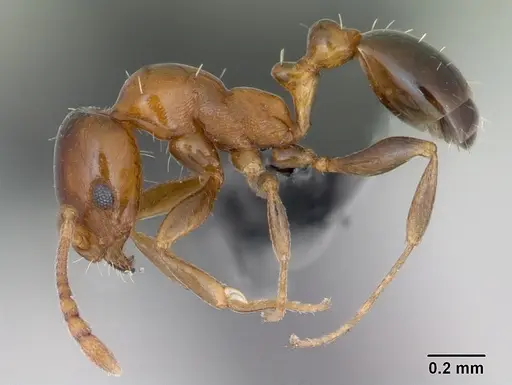
CASENT0102685
View on AntWeb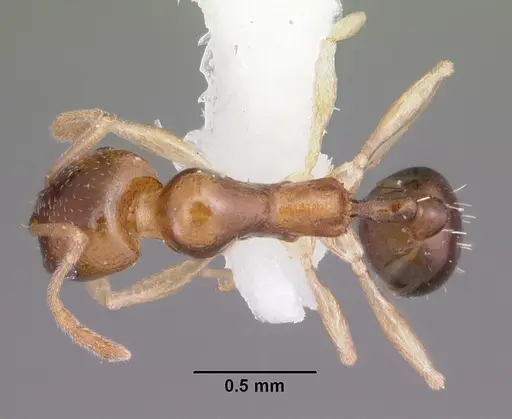
CASENT0453836
View on AntWeb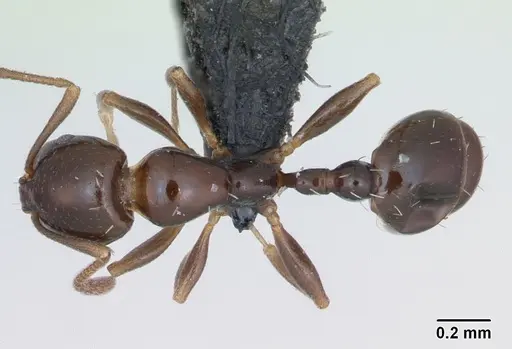
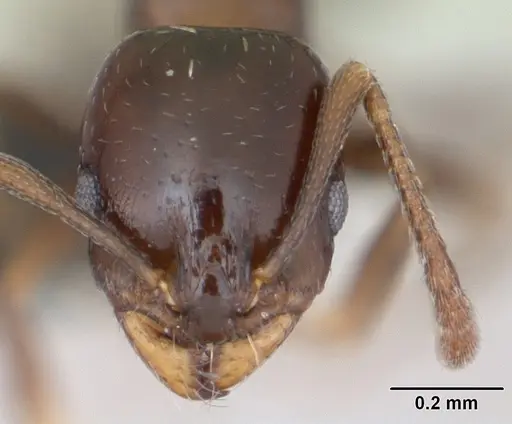
CASENT0453839
View on AntWeb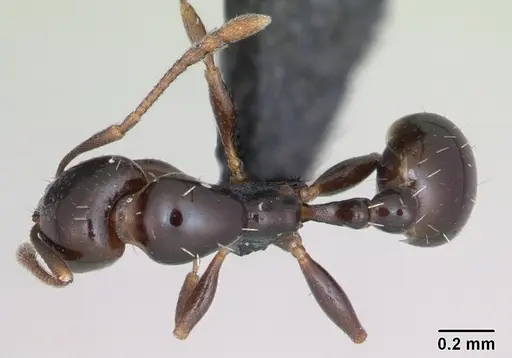
Literature
Loading...Loading products...