

Romblonella longinoi
- Scientific Name
- Romblonella longinoi
- Tribe
- Crematogastrini
- Subfamily
- Myrmicinae
- Author
- General, 2016
- Distribution
- Found in 1 countries
Romblonella longinoi Overview
Romblonella longinoi is an ant species of the genus Romblonella. It is primarily documented in 1 countries , including Malaysia. Detailed taxonomic data and occurrence records can be further explored via authoritative databases such as AntWeb or the Global Biodiversity Information Facility (GBIF).
Romblonella longinoi
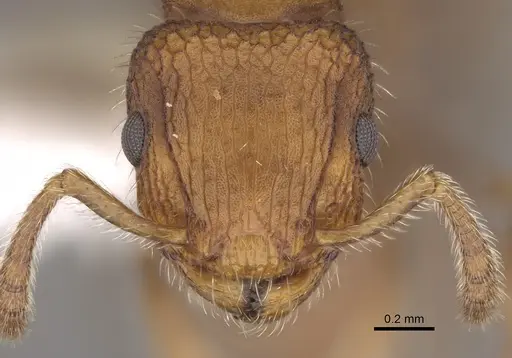
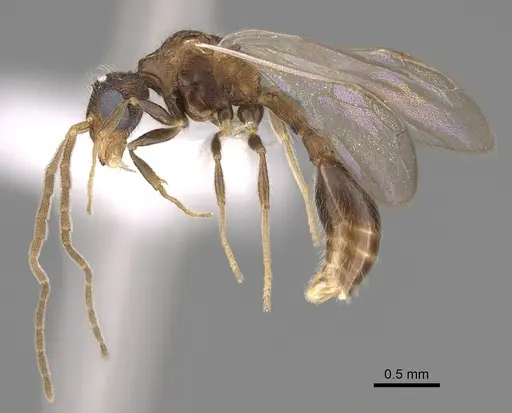
Romblonella longinoi is a small Myrmicinae ant native to Borneo, Malaysia. Workers measure 3.7-4.1mm and have a distinctive yellow to orange body with brown antennal club, legs, and the tip of the abdomen. The species is easily recognized by its uniquely broadened head capsule that widens toward the back, unlike other Romblonella species which have parallel-sided heads [1]. This ant was discovered on Mamutik Island in Sabah, collected from a dead stem in a wet tropical forest at low elevation [1]. The genus Romblonella remains poorly studied, with R. longinoi representing one of the rarest and most recently described species in the group.
Quick Summary
- Difficulty: Expert
- Origin & Habitat: Borneo, Malaysia (Sabah). Known only from Mamutik Island where it was collected from a dead stem in wet tropical forest at 10m elevation [1].
- Colony Type: Unknown, only a single nest series has ever been collected. Colony structure (single queen vs multiple queens) has not been documented.
- Size & Growth:
- Queen: Unknown, queen caste has not been described [1]
- Worker: 3.7-4.1mm [1]
- Colony: Unknown, only known from 18 workers in the type series
- Growth: Unknown
- Development: Unconfirmed (No development data exists for this species. Related Crematogastrini ants typically develop in 4-8 weeks at tropical temperatures.)
- Antkeeping:
- Temperature: Inferred from habitat: keep at 24-28°C. This species comes from a lowland wet tropical forest in Borneo where temperatures remain warm year-round.
- Humidity: High humidity required, collected from wet tropical forest. Keep nest substrate consistently moist but not waterlogged.
- Diapause: Unlikely, being a tropical lowland species from near the equator, no winter dormancy period is expected.
- Nesting: Inferred from collection data: found in a dead stem, suggesting they nest in small cavities in rotting wood. In captivity, a small test tube setup or acrylic nest with moist substrate works well. The tiny colony size means they need appropriately scaled chambers.
- Behavior: No specific behavioral observations have been documented. As a small Myrmicinae, they likely forage individually or in small groups. Escape risk is moderate due to their small size, use standard barriers. Sting capability is unknown for this genus.
- Common Issues: extremely limited availability, this species has rarely if ever been kept in captivity, no established care protocols, all recommendations are inferred from habitat and genus, queen and colony structure unknown, founding behavior unconfirmed, wild-caught colonies may have parasites or diseases with no documented treatment, very small colony size means slow growth and high vulnerability to stress
Discovery and Taxonomy
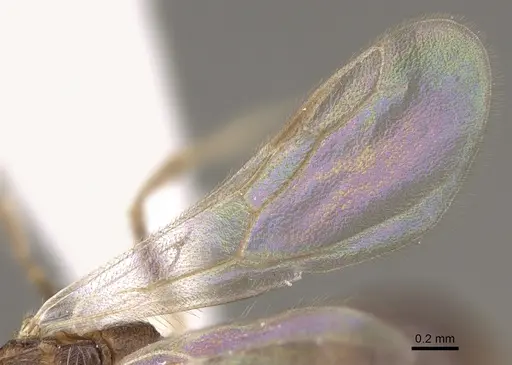
Romblonella longinoi was described in 2016 by David Emmanuel M. General, making it one of the most recently described Romblonella species. The species was named in honor of Dr. John T. Longino, a renowned myrmecologist who collected the only known nest series from Mamutik Island in Sabah, Malaysia on August 29,2010 [1]. The type series consists of 18 workers and 2 male alates, remarkably, this represents essentially all specimens of this species ever collected. The holotype worker measures 4.01mm total length, with paratype workers averaging 3.97mm [1]. The genus Romblonella contains only a handful of species, and R. longinoi stands out for its uniquely broadened head capsule that widens toward the back, a feature not found in any other Romblonella species [1].
Identification and Appearance
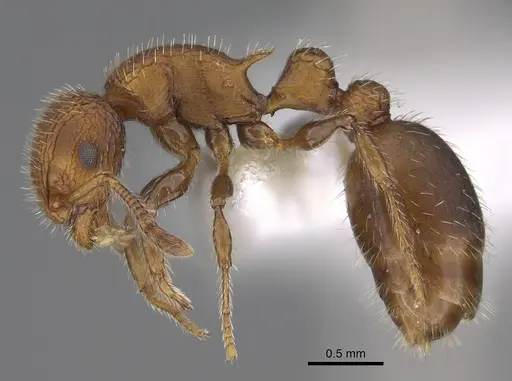
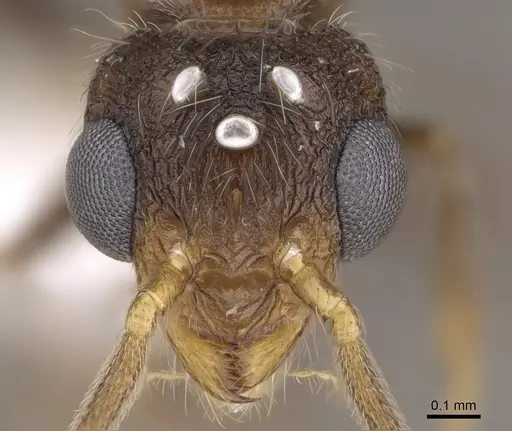
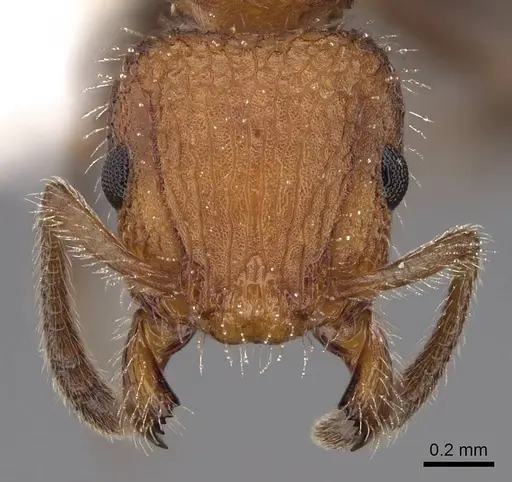
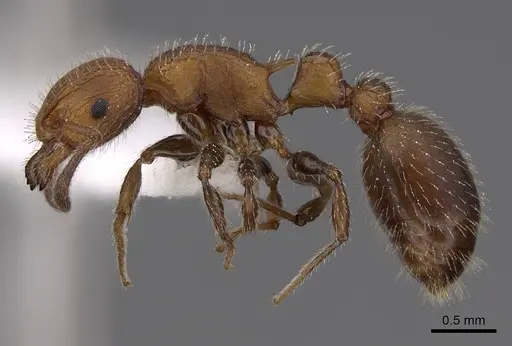
Workers of Romblonella longinoi have a distinctly bicolored appearance. The body is yellow to orange, contrasting with brown antennal club, legs, and the distal edges of the first gastral segment along with gastral segments 2-5 [1]. In full face view, the head is longer than wide with sides that diverge posteriorly, creating that distinctive broadened appearance. The eyes are positioned laterally, slightly behind the midlength of the head. A shallow scrobe (groove) is present, and the frontal carinae (ridge-like structures) extend almost to the posterior margin of the head. The scapes (antenna segments) are short, exceeding the posterior edge of the eye by about twice the width of the distal scape. The propodeal spines are long and stout, and the petiole is massive, larger and taller than the postpetiole [1]. These are tiny ants, workers range from 3.67 to 4.14mm.
Natural History
This species is known only from its type locality on Mamutik Island in Sabah, Malaysia, at approximately 5.97°N latitude and 116.01°E longitude, around 10 meters elevation [1]. The only collected specimen came from a dead stem in a wet tropical forest environment. This nesting preference suggests R. longinoi colonizes small cavities in rotting wood, similar to many other small Myrmicinae. The wet tropical forest habitat indicates this species requires high humidity and stable warm temperatures year-round. No behavioral observations have been documented in the scientific literature, and nothing is known about their diet, foraging patterns, or colony structure. The male alates were collected alongside workers, suggesting nuptial flights occur around late August in this region.
Housing and Care
Since this species has never been kept in captivity, all care recommendations are educated guesses based on its habitat and what is known about related ants. Provide a small test tube setup or appropriately sized acrylic nest with chambers scaled to their tiny 4mm size. Keep the nest substrate consistently moist, this is a wet tropical forest species. Maintain temperatures in the 24-28°C range, which matches their lowland Borneo habitat. Use fine mesh or fluon barriers as these small ants can squeeze through standard gaps. Feed small protein sources like fruit flies, pinhead crickets, or similar tiny prey. Sugar water should be offered but acceptance is uncertain. Given how rare this species is, only experienced antkeepers should attempt to keep it, and wild collection is not recommended given how few specimens exist. [1]
Conservation Status
Romblonella longinoi is known from a single nest series collected in 2010, essentially 18 workers and 2 males represent the entire scientific knowledge of this species. This makes it one of the rarest ants in the world from a documentation perspective. Its known range is extremely limited (Mamutik Island in Sabah), and nothing is known about its population size or trends. The species has not been evaluated for IUCN conservation status. For antkeepers, this means R. longinoi is essentially unavailable and would be extremely difficult to acquire. Any captive colonies would likely be from scientific breeding programs rather than wild collection, which should be avoided given the species' extreme rarity. [1]
Frequently Asked Questions
Can I keep Romblonella longinoi as a pet ant?
No. This species has never been documented in the antkeeping hobby and is known only from 18 workers collected in 2010. It is not available through any commercial sources and should not be collected from the wild given its extreme rarity.
How big do Romblonella longinoi colonies get?
Unknown. The only documented colony consists of 18 workers. Based on related Crematogastrini, colonies are likely small, probably under 100 workers at maturity given their tiny size and nesting in small dead stems.
What do Romblonella longinoi ants eat?
Unconfirmed. No dietary observations exist for this species. As a small Myrmicinae, they likely forage for small insects and tend aphids for honeydew. In captivity, offer small live prey like fruit flies and sugar water, but acceptance is speculative.
Do Romblonella longinoi ants sting?
Unknown. Myrmicinae ants can sting, but sting capability varies by species. No observations of stinging behavior have been documented for this genus.
What temperature do Romblonella longinoi ants need?
Inferred: 24-28°C. This species comes from lowland Borneo wet tropical forest where temperatures remain warm year-round. Keep within this range based on habitat data.
Do Romblonella longinoi need hibernation?
No. Being a tropical lowland species from near the equator (6°N latitude), no hibernation or winter dormancy is expected.
How long does it take for Romblonella longinoi to develop from egg to worker?
Unconfirmed. No development data exists for this species. Based on related Crematogastrini in tropical conditions, development likely takes 4-8 weeks.
Is Romblonella longinoi a good species for beginners?
No. This species is not recommended for any keeper. It has never been kept in captivity, no care protocols exist, and the species is so rare it is essentially unavailable. Even expert antkeepers would struggle with this species given the complete lack of documented husbandry information.
How many queens does Romblonella longinoi have?
Unknown. The queen caste has never been described. Colony structure (single queen vs multiple queens) is unconfirmed.
References

This caresheet is licensed under CC BY-SA 4.0 .
CASENT0617001
View on AntWeb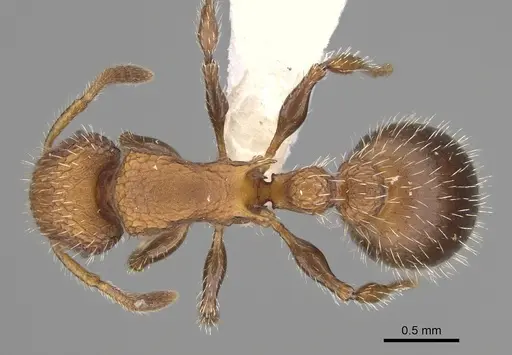
CASENT0617004
View on AntWeb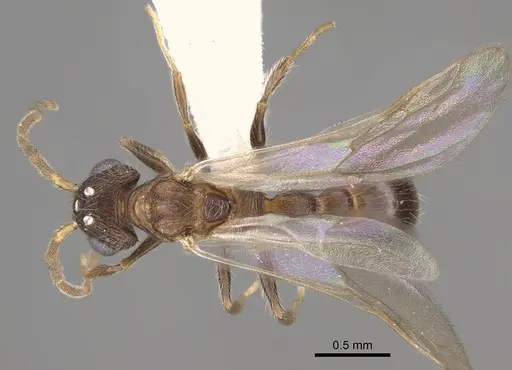
CASENT0617007
View on AntWeb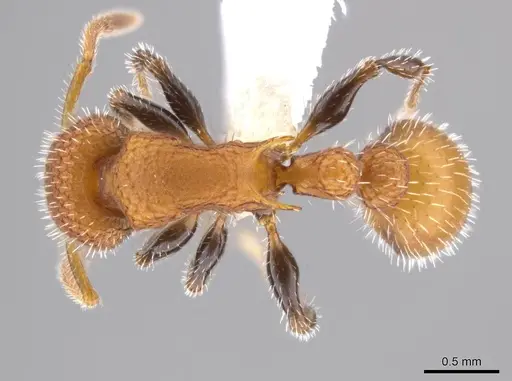
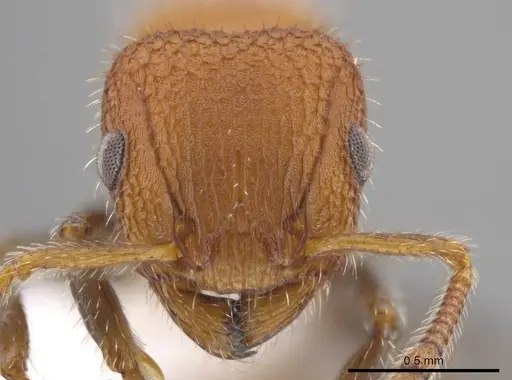
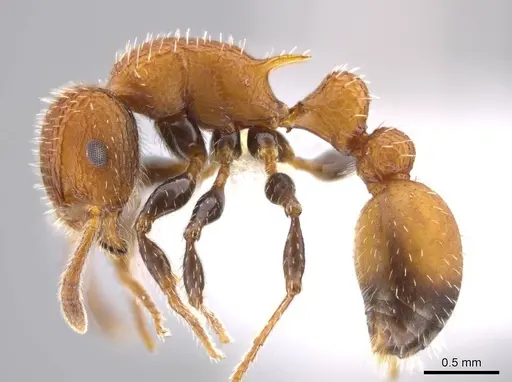
CASENT0617009
View on AntWeb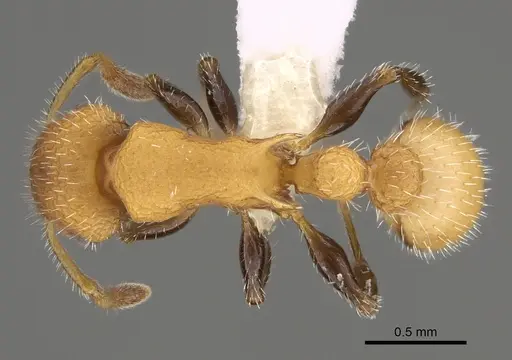
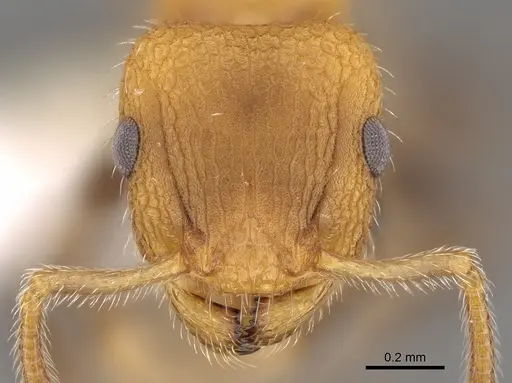
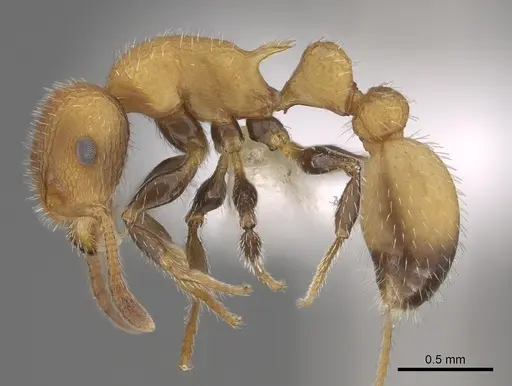
CASENT0617021
View on AntWeb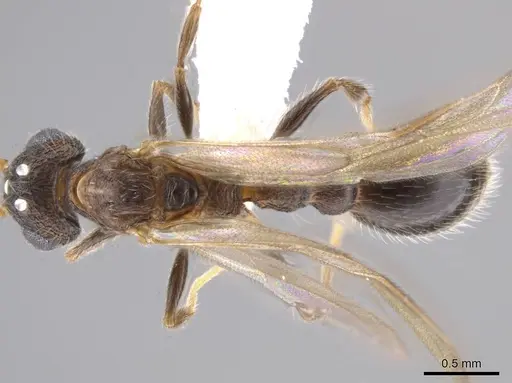
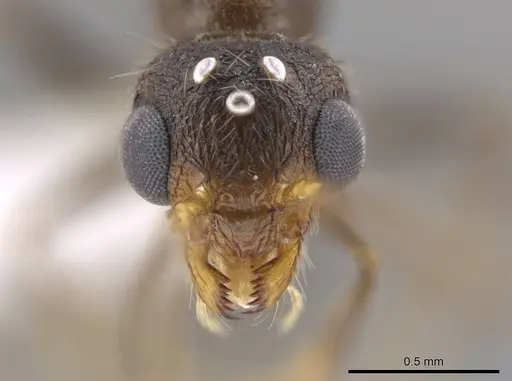
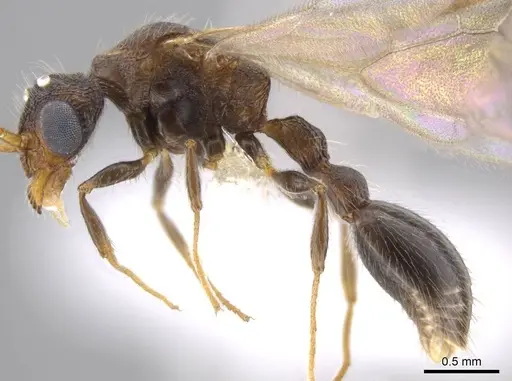
CASENT0922821
View on AntWeb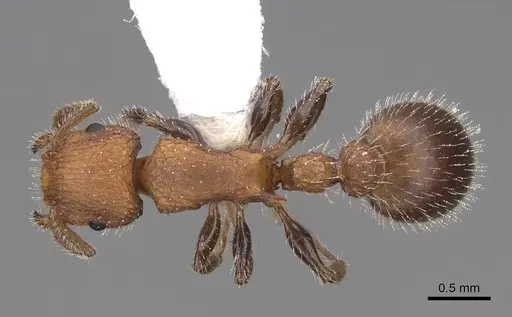
Literature
Loading...Loading products...