

Rogeria scandens
- Scientific Name
- Rogeria scandens
- Tribe
- Solenopsidini
- Subfamily
- Myrmicinae
- Author
- Mann, 1922
- Distribution
- Found in 2 countries
Rogeria scandens Overview
Rogeria scandens is an ant species of the genus Rogeria. It is primarily documented in 2 countries , including Colombia, Panama. Detailed taxonomic data and occurrence records can be further explored via authoritative databases such as AntWeb or the Global Biodiversity Information Facility (GBIF).
Rogeria scandens
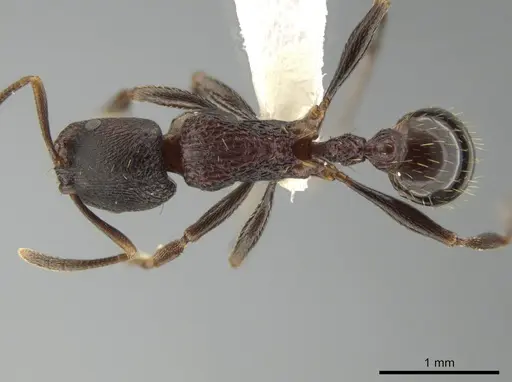
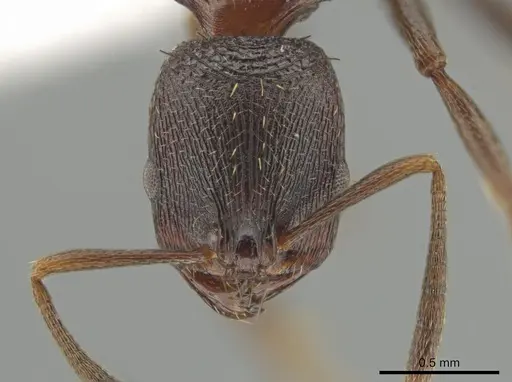
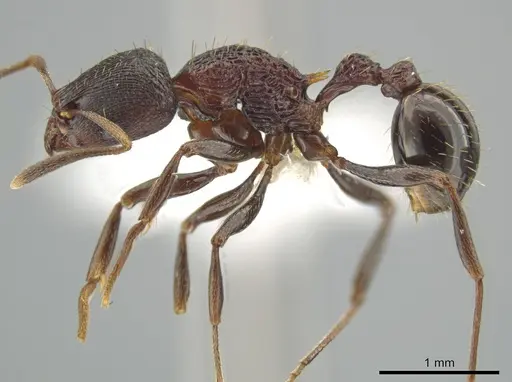
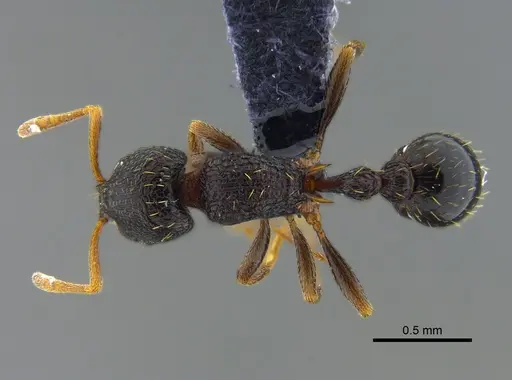
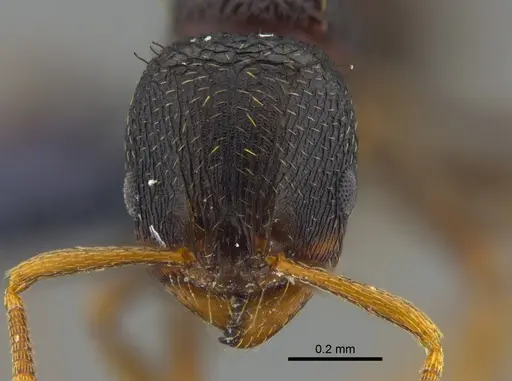
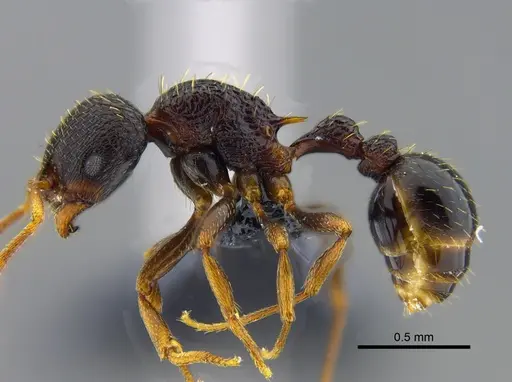
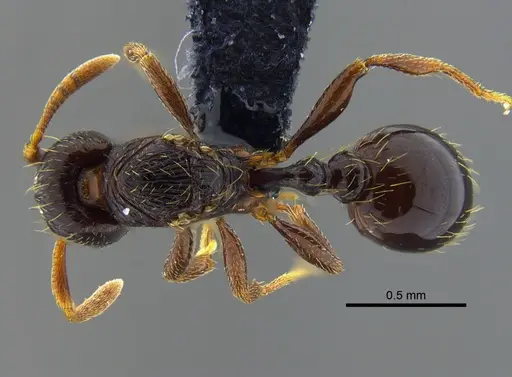
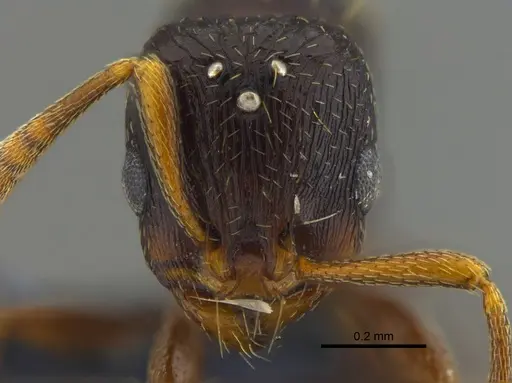
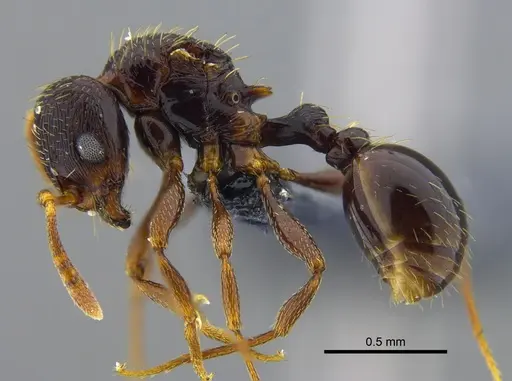
Rogeria scandens is a tiny Myrmicinae ant native to Central America and northwestern South America. Workers measure just 3.5-4.2mm, making them one of the smaller ant species you'll encounter in the hobby. They have a distinctive appearance with very large eyes (60-80 facets), long propodeal spines, and a heavily sculptured body covered in stiff, erect hairs that have toothed ends. The color varies by region, Honduran specimens are reddish-brown while Panamanian specimens are darker, blackish-brown. These ants belong to the tribe Solenopsidini, which means they have a functional stinger [1].
This species is rarely kept in captivity and has not been extensively studied. What we know comes from limited field collections, including one from a Heliconia plant in Panama. They appear to be arboreal or semi-arboreal nesters based on their collection location. The genus Rogeria is known for its elaborate sting apparatus, which these ants likely use for defense and subduing prey.
Quick Summary
- Difficulty: Expert
- Origin & Habitat: Found in Honduras, Nicaragua, Panama, and Colombia's Valle del Cauca region. This is a Neotropical species from tropical forests [2][3]. The Panama collection was from a Heliconia plant, suggesting arboreal or vegetation-nesting habits [1].
- Colony Type: Unknown. Colony structure (single queen vs multiple queens) has not been documented in scientific literature. Males have never been collected [1].
- Size & Growth:
- Queen: 4.2mm
- Worker: 3.5-4.2mm
- Colony: Unknown, no colony size data available
- Growth: Unknown
- Development: Unknown, no development data exists for this species. Based on typical Myrmicinae patterns and their small size, expect 4-8 weeks at warm tropical temperatures, but this is an estimate. (Development timeline is unconfirmed. Infer from typical Solenopsidini patterns.)
- Antkeeping:
- Temperature: Keep warm, roughly 24-28°C. This matches their Neotropical forest origin where temperatures are consistently warm year-round. A heating cable on one side of the nest can create a gentle gradient [1].
- Humidity: High humidity, think tropical forest conditions. Keep the nest substrate consistently moist but not waterlogged. Provide a water tube for drinking access. Mist occasionally but avoid standing water [1].
- Diapause: Unknown, no data on overwintering requirements. As a Neotropical species, they likely do not require a true diapause but may reduce activity during cooler periods. Monitor colony behavior and adjust temperature accordingly.
- Nesting: Likely arboreal or semi-arboreal based on Heliconia collection. Y-tong (AAC) nests or plaster nests with good moisture retention would be appropriate. Their small size means they need tight chambers and narrow passages. Provide climbing structures and vertical space.
- Behavior: These are small, cryptic ants with a functional stinger. They are likely predatory or omnivorous like other Solenopsidini. Their large eyes suggest good vision. Workers have dentate erect hairs, this may serve as a defensive adaptation. Due to their tiny size, escape prevention must be excellent, they can squeeze through remarkably small gaps. Handle with care as they can sting.
- Common Issues: escape prevention is critical due to their tiny 3.5mm size, use fine mesh and tight-fitting lids, no captive breeding data exists, establishing a colony may be difficult, diet preferences are unknown, you may need to experiment with various proteins and sugars, humidity requirements are not well documented, monitor for mold and drying, this species is rarely kept, finding established care guidelines is difficult
Housing and Nest Setup
Because Rogeria scandens is tiny (workers only 3.5-4.2mm), you need to think small when setting up their enclosure. Y-tong (AAC) nests work well because they provide tight chambers that match their body size. Plaster nests are another good option since they hold moisture well, important for these tropical ants. Their collection from a Heliconia plant suggests they may prefer vertical or arboreal setups, so consider adding small twigs, leaves, or other climbing structures in the outworld. The outworld should be simple to minimize escape routes, and you'll need excellent escape prevention, these tiny ants can slip through gaps you wouldn't think possible. Use fluon on tube edges and fine mesh on any ventilation.
Feeding and Diet
The diet of Rogeria scandens is not well documented in scientific literature. Based on their placement in the tribe Solenopsidini (which includes fire ants and other predatory Myrmicinae), they likely eat small invertebrates and may tend aphids for honeydew. Start with small live prey like fruit flies, pinhead crickets, or small mealworms. You can also offer sugar water or honey occasionally to see if they accept it. Because their natural diet is poorly understood, be prepared to experiment. Remove uneaten prey within 24-48 hours to prevent mold. Feed small amounts every 2-3 days and adjust based on colony consumption [1].
Temperature and Humidity
Rogeria scandens comes from Neotropical forests in Central America, so they need warm and humid conditions. Keep the nest around 24-28°C, this is warmer than many temperate species require. A heating cable on one side of the nest creates a temperature gradient so workers can choose their comfort zone. Place the heating on top of the nest, not underneath, to avoid evaporating moisture too quickly. Humidity should be high, think damp forest floor. The nest substrate should feel consistently moist but never waterlogged. A water tube attached to the nest provides drinking water. Good ventilation is essential to prevent mold while maintaining humidity [1].
Handling and Defense
This species has a functional stinger as members of the tribe Solenopsidini. While they're too small to cause serious harm, they can sting if threatened. Their large eyes suggest they may be more visually oriented than many ants. Workers have distinctive erect hairs with toothed ends, this may serve as a defensive adaptation making them appear larger or more intimidating to predators. When working with them, move slowly and avoid disturbing the nest directly. If you need to transfer them, use gentle techniques and give them time to evacuate rather than shaking them out.
Colony Establishment
Establishing Rogeria scandens in captivity will likely be challenging. Queens have been described (4.2mm) but males have never been collected, meaning we don't know when or how nuptial flights occur. If you obtain a founding queen, she is likely claustral (seals herself in and lives off stored fat) like most Myrmicinae, but this is not confirmed for this species. Provide her with a small, humid test tube setup and leave her completely undisturbed. Do not check for eggs or workers, this stress causes many founding queens to abandon or eat their brood. Wait at least 4-6 weeks before any inspection, and even then, be extremely gentle. The lack of documented captive care means you'll be pioneering keeping methods for this species [1].
Frequently Asked Questions
How long does it take for Rogeria scandens to go from egg to worker?
The development timeline is unconfirmed, no scientific data exists for this species. Based on typical Myrmicinae patterns and their small size (3.5-4.2mm workers), expect roughly 4-8 weeks at optimal warm temperatures (around 26°C). This is an estimate only, as actual development time may vary [1].
Can I keep Rogeria scandens in a test tube?
Yes, a test tube setup works well for founding colonies. Use a small test tube with a water reservoir (filled about one-third) and cotton stoppers. The queen will need a dark, undisturbed space to lay eggs and raise her first workers. Cover the tube with a dark cloth for the first few weeks. For established colonies, consider transitioning to a Y-tong or plaster nest that can hold moisture [1].
Are Rogeria scandens good for beginners?
No, this species is not recommended for beginners. They are rarely kept in captivity, have no established care protocols, and their biology is poorly documented. Additionally, their tiny size makes them challenging to house and feed. If you're interested in Rogeria, consider gaining experience with more common Myrmicinae first [1].
What do Rogeria scandens eat?
Their exact diet is unknown. Based on their placement in Solenopsidini, they likely eat small invertebrates and may collect honeydew. Offer small live prey like fruit flies, tiny crickets, or small mealworms. You can also try sugar water or honey to see if they accept it. Remove uneaten food promptly to prevent mold [1].
How big do Rogeria scandens colonies get?
Colony size is unknown, no scientific data exists on maximum colony size for this species. Given their very small worker size (3.5mm), colonies are likely modest, probably under a few hundred workers at most. Related species in the genus typically have smaller colonies compared to more common Myrmicinae.
Do Rogeria scandens need hibernation?
No, they likely do not require hibernation. As a Neotropical species from Honduras, Nicaragua, Panama, and Colombia, they experience year-round warm temperatures. They may reduce activity during cooler periods, but a true diapause is probably not necessary. Keep them at stable warm temperatures (24-28°C) year-round [1].
When should I move Rogeria scandens to a formicarium?
Wait until the colony is well-established with at least 20-30 workers before considering a formicarium. For this species, that may take a year or more given their slow, undocumented growth. When you do transition, choose a small, humid setup like a Y-tong or plaster nest. Their tiny size means they can escape easily, ensure your formicarium has excellent barriers [1].
Why are my Rogeria scandens dying?
Without documented care guidelines, troubleshooting is difficult. Common issues likely include: wrong humidity (too dry or too wet causing mold), temperature stress (too cold or temperature fluctuations), escape through tiny gaps, stress from disturbance during founding, or unsuitable food. Document your conditions carefully and adjust one variable at a time. Consider joining antkeeping communities to share notes with other attempting this species [1].
Can I keep multiple Rogeria scandens queens together?
We don't know. Colony structure (monogyne vs polygyne) has not been documented for this species. Males have never been collected, so we lack basic reproductive biology information. Do not combine unrelated queens, this often leads to fighting and colony loss. If you have multiple founding queens, house them separately until you understand their social structure.
References

This caresheet is licensed under CC BY-SA 4.0 .
Literature
Loading...Loading products...