

Rogeria megastigmatica
- Scientific Name
- Rogeria megastigmatica
- Tribe
- Solenopsidini
- Subfamily
- Myrmicinae
- Author
- Kugler, 1994
- Distribution
- Found in 1 countries
Rogeria megastigmatica Overview
Rogeria megastigmatica is an ant species of the genus Rogeria. It is primarily documented in 1 countries , including Solomon Islands. Detailed taxonomic data and occurrence records can be further explored via authoritative databases such as AntWeb or the Global Biodiversity Information Facility (GBIF).
Rogeria megastigmatica
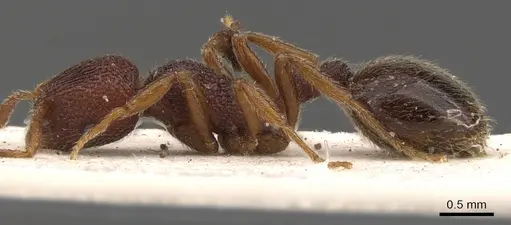
Rogeria megastigmatica is a small ant species endemic to the Solomon Islands, specifically found on Guadalcanal and San Cristobal islands. Workers measure 4.5-4.9mm in total length, making them moderately sized within the genus. They belong to the stigmatica-group and were described by Kugler in 1994 from collections made in the 1960s. The species is notably larger than its close relative R. stigmatica found on other Solomon Islands, at least 35% larger. These ants have triangular mandibles with at least 6 teeth and feature a strongly asymmetrical petiolar node when viewed from the side. As members of the subfamily Myrmicinae tribe Solenopsidini, they possess a functional stinger. This species remains poorly known, with only workers documented and no queen or male castes ever recorded.
Quick Summary
- Difficulty: Unknown, this is an extremely rare species with no established husbandry information
- Origin & Habitat: Endemic to the Solomon Islands (Guadalcanal and San Cristobal) in the Oceania region [1]. The specific habitat details are not documented, but the Solomon Islands feature a tropical rainforest climate.
- Colony Type: Unknown, only workers have been collected. Colony structure (single-queen or multi-queen) has not been determined.
- Size & Growth:
- Queen: Unconfirmed, no queens have been described or collected
- Worker: 4.5-4.9mm total length (workers only)
- Colony: Unknown, no colony collections have been documented
- Growth: Unknown, no development data exists for this species
- Development: Unknown, no brood development has been studied (This species is known only from isolated worker specimens. No brood, colony, or queen data exists in scientific literature.)
- Antkeeping:
- Temperature: Estimated 24-28°C based on tropical Solomon Islands origin. No direct thermal studies exist for this species.
- Humidity: Estimated high humidity (70-80%) based on tropical island habitat and typical Myrmicinae preferences. No direct studies on moisture requirements.
- Diapause: Unlikely, Solomon Islands have no cold season. However, no direct research on overwintering behavior exists.
- Nesting: Unknown, no natural nesting observations have been documented. Related Rogeria species typically nest in soil, rotting wood, or under stones in forest habitats.
- Behavior: Behavior is unstudied. As Solenopsidini members, they likely have some predatory tendencies and possess a functional stinger for defense and prey capture. Their small size and tropical origin suggest they are active foragers. Escape prevention should be considered given their 4.5-4.9mm worker size, standard barrier methods should suffice.
- Common Issues: This species has never been kept in captivity, no husbandry protocols exist, No queens have ever been collected, making captive breeding from wild colonies impossible, The species is extremely rare in scientific collections with only 5 worker specimens known, No food preferences or feeding behavior has been documented, Wild-caught colonies may carry unknown parasites or diseases with no documented treatment protocols
Species Overview and Distribution
Rogeria megastigmatica is one of the rarest ant species in the antkeeping hobby, known only from a handful of worker specimens collected in the Solomon Islands. The species was described in 1994 by C. Kugler from collections made by P.J.M. Greenslade in 1962. It has been recorded from Guadalcanal (the type locality at Ilu Bush) and San Cristobal (Kira Kira). This species is endemic to the Solomon Islands, meaning it is found nowhere else in the world. The closely related R. stigmatica occurs on other Solomon Islands but is notably smaller, R. megastigmatica is at least 35% larger in body size. The species belongs to the stigmatica-group within the genus Rogeria, characterized by specific morphological features of the petiole and propodeum. [1]
Identification and Morphology
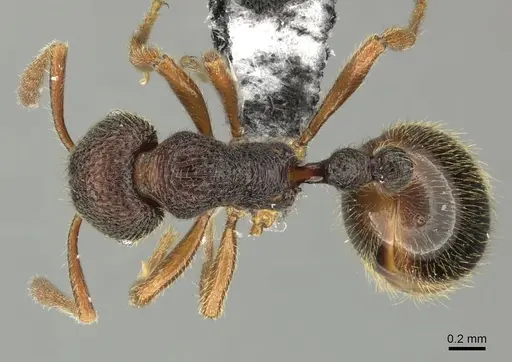
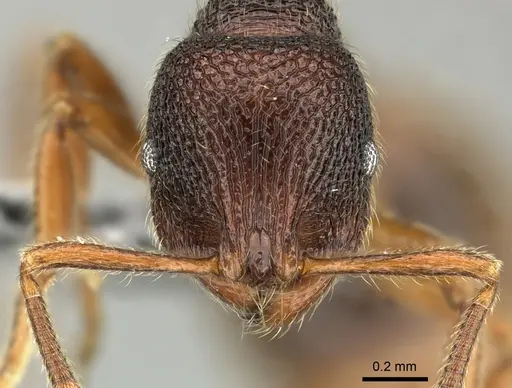
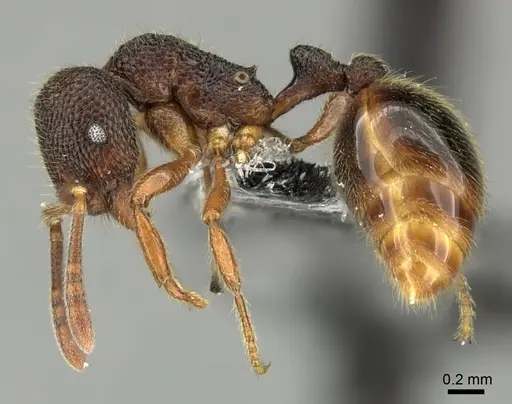
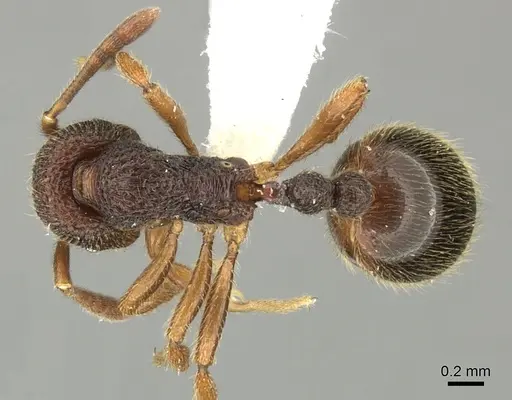
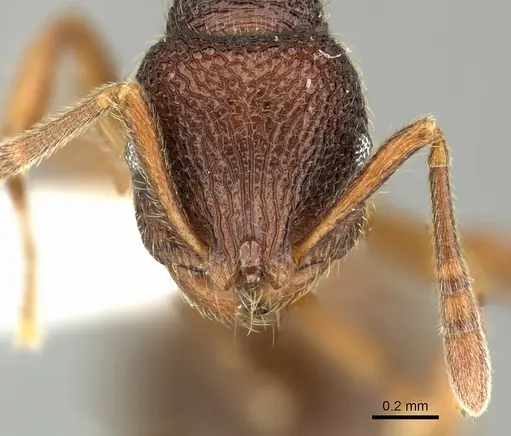
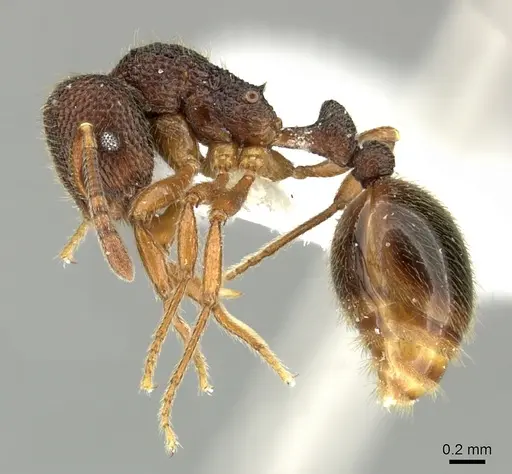
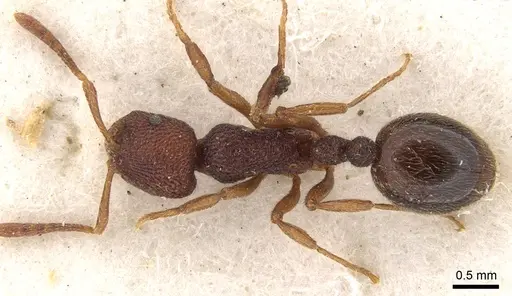
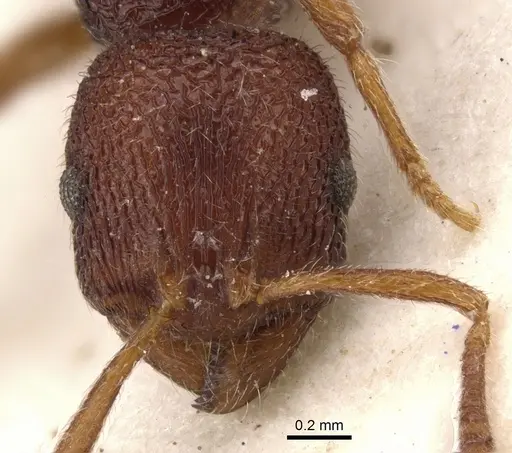
Workers of R. megastigmatica measure 4.5-4.9mm in total length, making them moderately sized ants. Key identification features include triangular mandibles with at least 6 teeth, a convex median clypeal apron, and a strongly asymmetrical petiolar node when viewed from the side. The metanotal groove is not as narrow or sharply defined as in related species. The pronotum shows areolate (pitted) sculpture with a rugose-areolate patch in the center. The dorsal face of the propodeum has transverse rugulae (wrinkles). The petiolar peduncle is smooth while the sides of the node are areolate. This species can be distinguished from R. stigmatica by its significantly larger size (at least 35% larger) and the strongly asymmetrical petiolar node.
Taxonomy and Relationships
Rogeria megastigmatica belongs to the subfamily Myrmicinae (the largest ant subfamily) and the tribe Solenopsidini. This tribe includes well-known genera like Solenopsis (fire ants) and Wasmannia. Members of Solenopsidini are characterized by having a functional stinger, which they use for defense and prey capture. The species is placed in the stigmatica-group, a species cluster defined by morphological characteristics. The genus Rogeria contains about 40 described species, mostly found in Neotropical and Australasian regions. This species represents one of the few Rogeria species documented from the Solomon Islands.
Current Knowledge Gaps
It cannot be overstated how little is known about this species. No queens have ever been collected or described. No males are known. No colony has ever been observed. No natural history observations exist, we don't know what they eat, where they nest, how their colonies are structured, when they have nuptial flights, or how their brood develops. This species has never been documented in antkeeping literature or husbandry guides. Any care recommendations would be entirely speculative guesses based on related species and general Myrmicinae biology. For these reasons, this species is not recommended for antkeeping, it is a species for myrmecologists studying rare Solomon Islands fauna, not a species suitable for captive husbandry. [1]
Frequently Asked Questions
Can I keep Rogeria megastigmatica ants as a pet?
No, this species is not available in the antkeeping hobby and has never been kept in captivity. No queens have ever been collected, making it impossible to establish a captive colony. The species is extremely rare, known only from 5 worker specimens collected in 1962.
Where does Rogeria megastigmatica live?
This species is endemic to the Solomon Islands, found only on Guadalcanal and San Cristobal islands. It was described from collections made in the 1960s and has rarely been observed since.
How big are Rogeria megastigmatica workers?
Workers measure 4.5-4.9mm in total length, making them moderately sized ants. This is notably larger (at least 35%) than the related Rogeria stigmatica found on other Solomon Islands.
What do Rogeria megastigmatica ants eat?
Unknown, no feeding observations or diet studies have been documented for this species. Related Solenopsidini ants are often predatory or omnivorous, but specific food preferences are unstudied.
How do Rogeria megastigmatica colonies form?
Unknown, no queens have ever been collected or described, so claustral versus semi-claustral founding behavior is unconfirmed. Colony structure (single-queen vs multi-queen) is completely unknown.
What temperature do Rogeria megastigmatica ants need?
No specific temperature requirements have been documented. Based on their origin in the tropical Solomon Islands, they likely require warm conditions around 24-28°C, but this is entirely an estimate with no experimental data.
Is Rogeria megastigmatica available for purchase?
No, this species is not available in the antkeeping hobby. It is extremely rare in the wild (known only from 5 worker specimens) and has never been collected for captive purposes.
How long do Rogeria megastigmatica ants live?
Unknown, no life cycle data exists for this species. Development time from egg to adult worker has never been studied.
Are Rogeria megastigmatica endangered?
The conservation status has not been assessed. The species is extremely rare in scientific collections, but its actual population status in the Solomon Islands is unknown due to limited survey data.
References

This caresheet is licensed under CC BY-SA 4.0 .
Literature
Loading...Loading products...