

Rogeria cornuta
- Scientific Name
- Rogeria cornuta
- Tribe
- Solenopsidini
- Subfamily
- Myrmicinae
- Author
- Kugler, 1994
- Distribution
- Found in 4 countries
Rogeria cornuta Overview
Rogeria cornuta is an ant species of the genus Rogeria. It is primarily documented in 4 countries , including Brazil, Costa Rica, Guatemala. Detailed taxonomic data and occurrence records can be further explored via authoritative databases such as AntWeb or the Global Biodiversity Information Facility (GBIF).
Rogeria cornuta
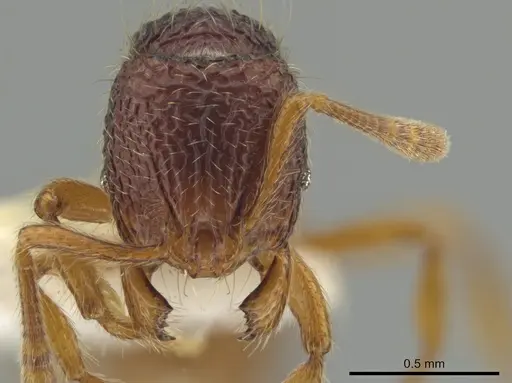
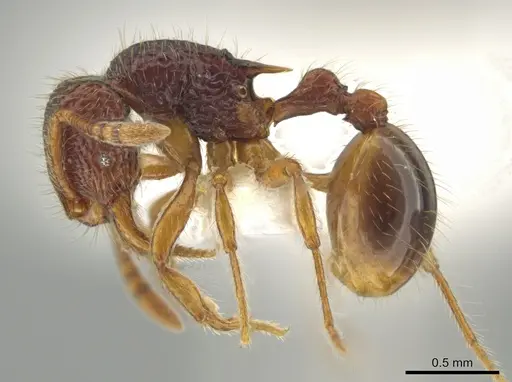
Rogeria cornuta is a small, cryptic ant species native to the wet forests of Central America, found in Belize, Guatemala, Costa Rica, and southern Mexico. Workers measure just 3.5-3.8mm in total length, making them one of the smaller ant species you'll encounter [1]. They have a distinctive dark reddish-brown coloration with lighter areas on the face and the tip of the abdomen, while their legs and antennae are yellowish-brown. The species gets its name 'cornuta' (meaning horned) from its most striking feature: very long propodeal spines that curve inward toward the body. These ants are cryptic leaf litter dwellers, living hidden in the forest floor rather than building visible nests above ground [2].
This species belongs to the Solenopsidini tribe within the Myrmicinae subfamily, which means they possess a functional stinger, something to keep in mind when handling. Despite being relatively common in wet forest habitats across their range, Rogeria cornuta remains poorly studied, and many aspects of their biology in the wild and in captivity are still unknown. Their small size and cryptic nature make them a challenging but rewarding species for experienced antkeepers who enjoy observing subtle behaviors.
Quick Summary
- Difficulty: Medium
- Origin & Habitat: Wet forests in Central America, Belize, Guatemala, Costa Rica, and southern Mexico [2][3]. Found in leaf litter in primary rainforest remnants and forest fragments [2].
- Colony Type: Unknown, colony structure (single-queen or multi-queen) has not been documented in scientific literature
- Size & Growth:
- Queen: Undescribed, queens have been collected in Guatemala but remain undescribed
- Worker: 3.5-3.8mm total length [1]
- Colony: Unknown, no colony size data available
- Growth: Unknown, no development data available
- Development: Unknown, likely 6-10 weeks based on typical Myrmicinae patterns at warm temperatures (No direct studies on development. Estimate based on related Solenopsidini species.)
- Antkeeping:
- Temperature: Aim for 22-26°C, warm, stable conditions matching their wet tropical forest habitat. Use a heating cable on one side of the nest to create a gentle gradient if room temperature is below this range.
- Humidity: Keep substrate consistently moist but not waterlogged. These ants come from damp forest floors, so think damp leaf litter conditions, the substrate should feel damp to the touch with some slightly drier areas for the ants to choose.
- Diapause: Unknown, no data on overwintering requirements. Given their tropical distribution, they likely do not require a true diapause, but may show reduced activity during cooler periods.
- Nesting: Naturalistic setup with moist substrate works best, they are leaf litter dwellers and will likely thrive in setups with multiple small chambers or a thick layer of humid earth. Y-tong or plaster nests with small chambers scaled to their tiny size can work, but ensure moisture is maintained.
- Behavior: These are cryptic, ground-dwelling ants that prefer to stay hidden in leaf litter and substrate rather than forage openly. They are likely timid and non-aggressive, typical of small litter-dwelling ants. Their small size (under 4mm) means escape prevention must be excellent, they can easily slip through small gaps. As members of Solenopsidini, they have a functional stinger, though given their tiny size, any sting would be very mild. Expect slow, careful movement and a colony that prefers to stay within the nest and foraging areas.
- Common Issues: escape prevention is critical due to their tiny size, they can squeeze through the smallest gaps, humidity management is challenging, too wet causes mold, too dry stresses the colony, slow growth and lack of data means beginners may lose patience or make mistakes, wild-caught colonies may have parasites that are difficult to detect, limited availability in the antkeeping hobby makes establishing colonies challenging
Housing and Nest Setup
Rogeria cornuta is a tiny leaf litter ant that does best in a naturalistic setup with moist substrate. A setup with a deep layer of humid earth or peat mixed with leaf litter gives them the environment they naturally inhabit. Because they are so small (workers are only 3.5-3.8mm), you'll need to scale their housing accordingly, small chambers and narrow passages work better than large open spaces. A Y-tong (AAC) nest with tight chambers or a plaster nest with good moisture retention can work, but many keepers have success with simple test tube setups connected to a foraging area with moist substrate. Whatever setup you choose, ensure excellent escape prevention, these tiny ants can slip through gaps you wouldn't think possible. Use fine mesh on any ventilation holes and ensure all connections are tight-fitting. [1]
Temperature and Humidity
Being from the wet forests of Central America, these ants need warm and humid conditions. Aim for temperatures in the 22-26°C range, stable warmth that mimics their tropical habitat. A heating cable placed on one side of the nest can create a gentle gradient, allowing ants to move between warmer and cooler areas. For humidity, keep the substrate consistently moist but never waterlogged. The goal is damp forest floor conditions, think the moisture level you find under fallen leaves in a rainforest. A moisture gradient within the nest lets the ants choose their preferred spot. Avoid both drying out (which stresses the colony) and excessive wetness (which promotes mold). Some condensation on the nest walls is normal and indicates good humidity. [2]
Feeding and Diet
The specific diet of Rogeria cornuta has not been studied, but as a member of the Solenopsidini tribe, they likely have a typical omnivorous diet similar to other small Myrmicines. They probably forage for small insects, honeydew, and nectar in the wild. In captivity, offer a variety of foods including small live prey (fruit flies, pinhead crickets, springtails), protein sources like mealworms or cricket pieces, and sugar sources (honey water, sugar water). Start with small amounts and observe what the colony accepts. Remove uneaten food after 24-48 hours to prevent mold. Given their tiny size, prey items should be appropriately scaled, very small insects or pre-killed and cut into tiny pieces.
Behavior and Temperament
These are cryptic, reclusive ants that prefer to stay hidden within their substrate and nest. They are not aggressive and will likely flee rather than confront threats. As small leaf litter ants, they probably have a modest foraging range and may not venture far from the nest. Their small eyes (only 16-18 facets) suggest they rely more on chemical cues than vision. The long propodeal spines are likely a defensive adaptation, they may use them to block access to the nest or deter small predators. While they possess a stinger (being in Solenopsidini), their tiny size means any sting would be negligible to humans. The main behavioral concern for keepers is their small size making escape a constant risk, always use excellent barrier precautions.
Colony Establishment
Since queens have been collected but remain undescribed, and males have never been found, establishing a colony from a wild queen is extremely difficult. If you obtain a founding queen, keep her in a small, humid setup (like a test tube with a water reservoir) at warm temperatures (24-26°C) and minimal disturbance. The founding chamber should be small and dark. Wait patiently, claustral founding is likely but unconfirmed for this species. If you obtain a colony, expect slow growth typical of small litter ant species. These ants are rarely available in the antkeeping hobby, so establishing a breeding population is a significant achievement that contributes to our knowledge of this poorly understood species.
Frequently Asked Questions
How long does it take for Rogeria cornuta to produce first workers?
The development timeline is unconfirmed for this species. Based on typical Myrmicinae patterns, expect roughly 6-10 weeks from egg to first worker at optimal warm temperatures (around 24-26°C). However, this is an estimate, no specific studies exist on their development.
Can I keep multiple queens of Rogeria cornuta together?
The colony structure of this species is completely unstudied. There is no data on whether they are single-queen (monogyne) or multi-queen (polygyne) in the wild. Until more information is available, it is not recommended to combine unrelated queens, as fighting and colony collapse would be likely.
What size colony does Rogeria cornuta reach?
Colony size data is not available for this species. Being small leaf litter ants, colonies are likely modest in size, probably under a few hundred workers at maturity, similar to other cryptic litter-dwelling species.
Are Rogeria cornuta good for beginners?
This species is not ideal for beginners. They are rarely available, their specific care requirements are poorly documented, and their tiny size makes them prone to escape and difficult to house properly. Experienced antkeepers interested in unusual species may find them rewarding, but they require careful attention to humidity and escape prevention.
What do Rogeria cornuta eat?
Their exact diet is unstudied, but they likely accept small live prey (fruit flies, springtails), protein sources, and sugar water like other small Myrmicines. Offer small, appropriately-sized food items and remove uneaten portions to prevent mold.
Do Rogeria cornuta need hibernation?
Diapause requirements are unknown. Given their distribution in the wet forests of Central America (Belize, Guatemala, Costa Rica, Mexico), they likely do not require a true hibernation period. They may show reduced activity during cooler periods but should be kept warm year-round.
Why are my Rogeria cornuta escaping?
Their tiny size (workers are only 3.5-3.8mm) makes them excellent escape artists. They can slip through gaps that seem impossible. Use excellent escape prevention including fine mesh on all ventilation, tight-fitting connections between nest parts, and barrier methods like fluon on smooth surfaces. Check for gaps regularly.
When will Rogeria cornuta alates appear?
Nuptial flight timing is completely unstudied for this species. Males have never been collected, and queens remain undescribed. Without this basic biological information, it is impossible to predict when or how alates (reproductives) would appear.
References

This caresheet is licensed under CC BY-SA 4.0 .
CASENT0633837
View on AntWeb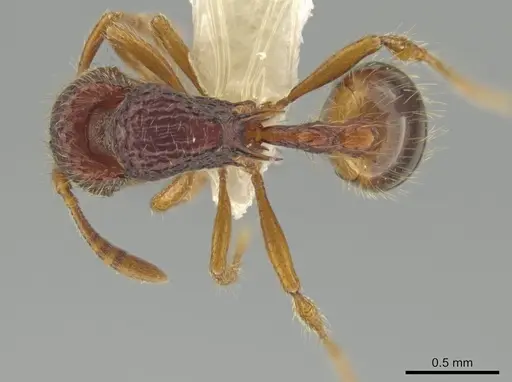
Literature
Loading...Loading products...