

Rogeria bruchi
- Scientific Name
- Rogeria bruchi
- Tribe
- Solenopsidini
- Subfamily
- Myrmicinae
- Author
- Santschi, 1922
- Distribution
- Found in 1 countries
Rogeria bruchi Overview
Rogeria bruchi is an ant species of the genus Rogeria. It is primarily documented in 1 countries , including Brazil. Detailed taxonomic data and occurrence records can be further explored via authoritative databases such as AntWeb or the Global Biodiversity Information Facility (GBIF).
Rogeria bruchi
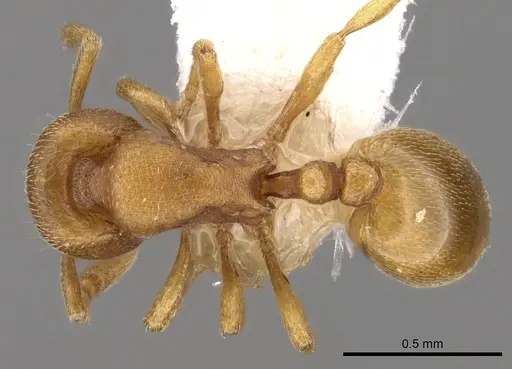
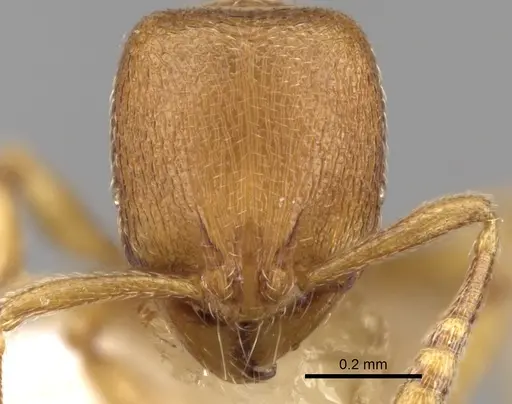
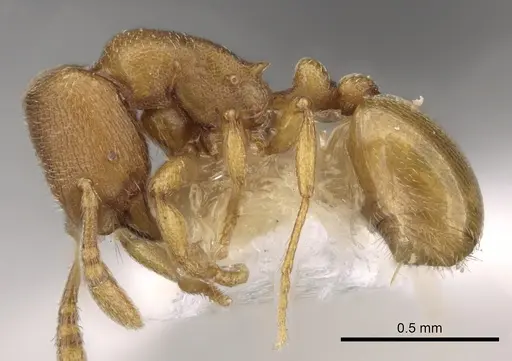
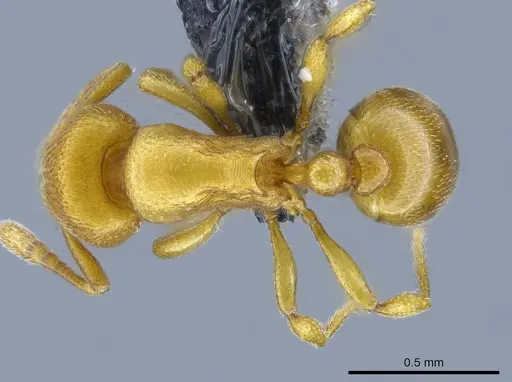
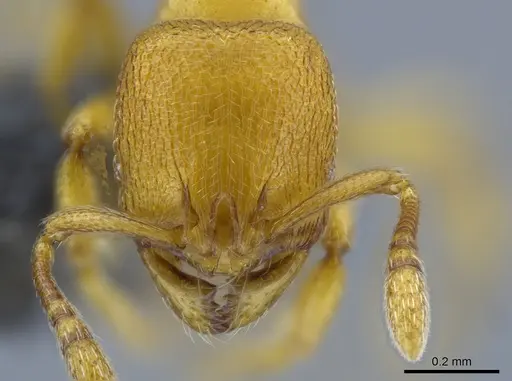
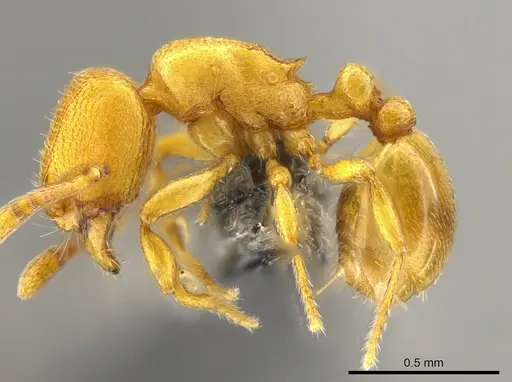
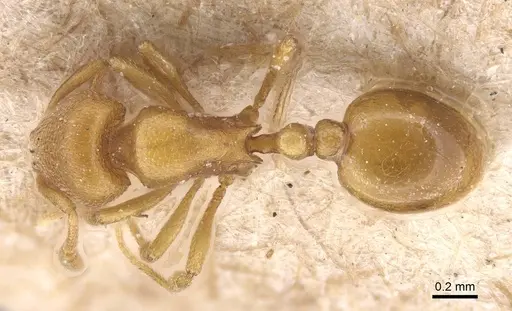
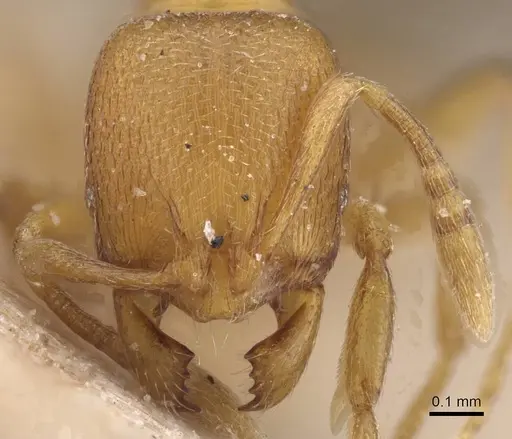
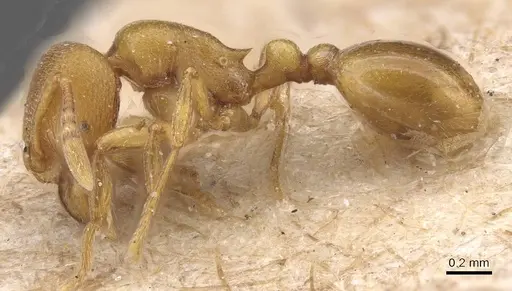
Rogeria bruchi is a tiny subterranean ant species from the Solenopsidini tribe, known only from a handful of worker specimens collected in Argentina and Paraguay. Workers measure just 2.2-2.6mm with a pale yellowish-brown coloration, small eyes, and distinctive five-toothed mandibles. This species belongs to the foreli-group and was originally described by Santschi in 1922 from specimens collected in Buenos Aires, Argentina.
What makes R. bruchi particularly interesting is its completely subterranean lifestyle, these ants have never been found on the surface and are only collected using specialized underground sampling methods [1]. This makes them one of the most elusive and rarely kept ant species in the hobby. They represent a true challenge for advanced antkeepers interested in studying rarely encountered Neotropical species.
Quick Summary
- Difficulty: Expert
- Origin & Habitat: Native to the subtropical regions of Argentina and Paraguay, specifically found in the Buenos Aires area and Santa Catarina Plateau region [1]. In the wild, they are strictly subterranean (hypogaeic), living in underground chambers well below the soil surface.
- Colony Type: Unknown colony structure. Only worker specimens have ever been collected, queen and male castes remain undescribed. Based on related Solenopsidini species, expect single-queen colonies if queens are eventually found.
- Size & Growth:
- Queen: Unknown, queen caste has never been described.
- Worker: 2.2-2.6mm.
- Colony: Unknown, only 5 worker specimens have ever been documented.
- Growth: Unknown, no colony development data exists.
- Development: Unknown, this species has never been successfully bred in captivity. (No captive breeding records exist. Development timeline must be inferred from related Solenopsidini species.)
- Antkeeping:
- Temperature: Keep at room temperature, roughly 18-22°C. Being from temperate/subtropical Argentina, they likely tolerate cooler conditions than tropical species. Avoid overheating.
- Humidity: High humidity is essential, these are subterranean ants that naturally live in damp soil environments. Keep the nest substrate consistently moist but not waterlogged.
- Diapause: Likely yes. Based on their Argentine origin (Buenos Aires has distinct seasons with winters below 15°C), they probably require a cool period around 10-15°C for several months.
- Nesting: Because they are strictly subterranean, they need a nest setup that keeps them in darkness. Deep test tubes or acrylic nests with soil substrate work well. They will likely nest in the moist substrate rather than on artificial surfaces.
- Behavior: Nothing is known about their behavior in captivity since the species has never been kept. Based on their tiny size and subterranean nature, they are likely cryptic, avoiding light, and may be predatory on small soil arthropods like their Solenopsidini relatives. Escape risk is significant given their minute size, fine mesh barriers are essential.
- Common Issues: this species has never been kept in captivity, there are no established care protocols, only 5 worker specimens exist in museum collections, making wild collection extremely difficult, subterranean lifestyle means they may refuse to forage in visible areas, tiny size makes escape prevention critical, they can squeeze through standard barrier setups, no information on what food they accept, related species are predatory but this is unconfirmed for R. bruchi
Why Rogeria bruchi Is So Rare in Captivity
This is perhaps the most poorly known ant species you could attempt to keep. In nearly a century since its 1922 description, only FIVE worker specimens have ever been collected, all from underground sampling in Argentina and Paraguay. No one has ever found a queen, male, or colony. This means there are no established care guidelines, no documented captive breeding success, and no way to obtain this species through normal means. They represent the frontier of antkeeping, a species that exists almost entirely in museum drawers rather than in formicariums. If you somehow obtain specimens, you would be conducting original research with every observation [1].
Understanding Their Subterranean Lifestyle
The most important thing we know about R. bruchi is that they are strictly hypogaeic, meaning they live entirely underground and never come to the surface [1]. In Santa Catarina, Brazil, they were only detected using the TSBF (Tropical Soil Biology and Fauna) method, which involves extracting ants from deep soil samples. This puts them among the most cryptic ant species in the Americas. In captivity, this means they will likely remain hidden within their nest chamber, rarely if ever emerging into an outworld. Your observation opportunities will be limited to whatever happens in the nest substrate itself. This also suggests they have very low light tolerance and may be stressed by any illumination of the nest area.
Housing and Nest Setup
Given their completely subterranean nature, treat R. bruchi as a soil-nesting species that needs darkness and moisture. A deep test tube setup with a soil chamber works well, fill roughly one-third with moist substrate and let them burrow into it. Alternatively, a small acrylic nest with soil substrate maintains humidity while allowing some observation. Keep the nest in complete darkness or use a red film if you need to observe them. The nest chamber should be small, these are tiny ants with likely small colony sizes. Because they are so small, ensure your escape prevention uses fine mesh or fluon barriers that can contain 2-3mm ants.
Feeding and Diet - An Unknown Aspect
We have no direct information on what R. bruchi eats. However, being in the Solenopsidini tribe (which includes Solenopsis fire ants and Megalomyrmex), they are likely predatory or omnivorous, feeding on small soil arthropods, larvae, and possibly honeydew from root-feeding aphids. Start with tiny live prey like springtails, which are small enough for their size and represent natural soil fauna. You could also try offering minute amounts of sugar water, though acceptance is uncertain. Given how rare and valuable any specimens would be, start with the most natural diet possible and observe carefully. Any feeding behavior you document would be original research.
Temperature and Seasonal Care
Being from the Buenos Aires region of Argentina (temperate/subtropical), R. bruchi experiences distinct seasons with cool winters. Keep them at room temperature, roughly 18-22°C is a safe starting range. In winter, they likely enter a dormant period similar to many temperate ants. Provide a cool period around 10-15°C during winter months, mimicking their natural seasonal cycle. Avoid temperatures above 25°C, as this species is not adapted to tropical heat. Their preference for stable, cool conditions is another reason to keep them in darkness with minimal temperature fluctuations.
The Challenge of Acquisition
Perhaps the biggest obstacle to keeping this species is simply obtaining them. They have never been found in large numbers, and no one has documented how to locate their nests. Standard ant collecting methods (baits, pitfall traps, manual searching) would not work for these subterranean ants. If you are serious about attempting to keep R. bruchi, you would need to either connect with researchers working in Argentina/Paraguay or conduct your own fieldwork using soil extraction methods. This makes them a species for truly dedicated ant enthusiasts willing to invest significant effort in acquisition, they cannot simply be purchased from ant vendors. [1]
Frequently Asked Questions
Can I buy Rogeria bruchi ants?
No. This species has never been commercially available and likely never will be. Only 5 worker specimens have ever been collected in nearly a century, all by researchers using specialized underground sampling methods. There are no captive colonies to source from.
How do I keep Rogeria bruchi?
There are no established care guidelines, this species has never been kept in captivity. Based on their biology, use a moist soil nest setup in complete darkness, keep temperatures around 18-22°C, and offer tiny live prey. You would essentially be conducting original research with every observation.
What do Rogeria bruchi ants eat?
Unknown. As a member of the Solenopsidini tribe, they likely eat small soil arthropods and are predatory. Offer tiny live prey like springtails. Sugar acceptance is unconfirmed. Any feeding observations would be original scientific contributions.
How big do Rogeria bruchi colonies get?
Unknown. Only 5 worker specimens have ever been collected, so colony size in the wild is completely undocumented. Given their tiny size and subterranean lifestyle, colonies are likely small, possibly under 100 workers.
Where does Rogeria bruchi live?
Only known from Argentina and Paraguay. The holotype was collected in Buenos Aires, Argentina (Monte Veloz), and more specimens were found in the Santa Catarina Plateau region of Brazil [1]. They live entirely underground.
Why is Rogeria bruchi so rarely seen?
Because they are strictly subterranean (hypogaeic), they live underground and never come to the surface. Standard ant collecting methods cannot find them. They are only detected through deep soil extraction. This makes them one of the rarest and most elusive ant species in the world.
Can beginners keep Rogeria bruchi?
No. This is an expert-level species suitable only for advanced antkeepers with research experience. There are no established care protocols, no captive breeding success to reference, and obtaining specimens requires either fieldwork or research connections. Every aspect of their care would be original research.
Do Rogeria bruchi need hibernation?
Likely yes, based on their Argentine origin. Buenos Aires experiences cool winters, and related temperate ants require a dormant period. Provide a cool period around 10-15°C during winter months.
What is the queen of Rogeria bruchi like?
Unknown, the queen caste has never been described. No one has ever collected a Rogeria bruchi queen. This is one of many fundamental biology questions about this species that remains completely unanswered.
References

This caresheet is licensed under CC BY-SA 4.0 .
Literature
Loading...Loading products...