

Rhytidoponera pilosula
- Scientific Name
- Rhytidoponera pilosula
- Tribe
- Ectatommini
- Subfamily
- Ectatomminae
- Author
- Clark, 1936
- Distribution
- Found in 1 countries
Rhytidoponera pilosula Overview
Rhytidoponera pilosula is an ant species of the genus Rhytidoponera. It is primarily documented in 1 countries , including Australia. Detailed taxonomic data and occurrence records can be further explored via authoritative databases such as AntWeb or the Global Biodiversity Information Facility (GBIF).
Rhytidoponera pilosula
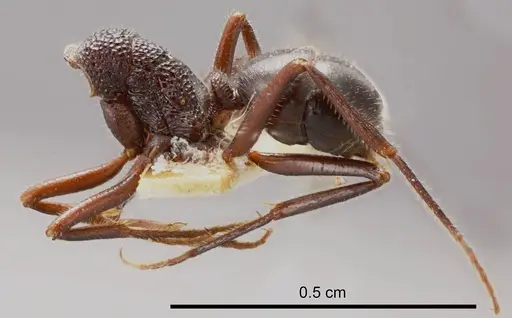
Rhytidoponera pilosula is a medium-sized ant native to inland Australia, specifically found in New South Wales around the Bourke region. Workers are uniformly blackish with a notably hairy (pilosula means 'hairy') appearance, measuring around 5-7mm. These ants belong to the subfamily Ectatomminae, which means they possess a functional stinger, a key consideration for keepers. The species was described by Clark in 1936 from specimens collected in arid inland NSW.
This is an arid-adapted species from Australia's interior, which influences their care requirements significantly. They are predatory ants that hunt small invertebrates, and unlike many common ant genera, they are not colony foundation specialists but rather active hunters. The genus Rhytidoponera is known for its somewhat slender build and distinctive appearance, though this species stands out for its hairy coat.
Quick Summary
- Difficulty: Medium
- Origin & Habitat: Inland Australia, specifically New South Wales around Bourke and extending into southwestern Queensland and northwestern NSW. This is an arid region with hot summers and cool winters, typical of Australia's interior [1].
- Colony Type: Likely monogyne (single queen colonies) based on typical genus patterns. Colony size appears modest, likely in the 100-500 worker range based on related species.
- Colony: Monogyne
- Founding: Semi-claustral
- Size & Growth:
- Queen: Approximately 7-9mm, estimated based on genus patterns for medium-sized Rhytidoponera
- Worker: 5-7mm
- Colony: Estimated 100-500 workers based on related species
- Growth: Moderate, typical for predatory ants
- Development: Estimated 8-12 weeks at optimal temperature based on related Ectatomminae species (Development time is estimated as no specific study exists for this species. Temperature-dependent, warmer conditions accelerate development.)
- Antkeeping:
- Temperature: Keep at 24-28°C during active season. They are adapted to arid conditions but still need warmth. A slight temperature gradient allows workers to regulate. Room temperature (22-24°C) is acceptable as a baseline.
- Humidity: Low to moderate, think arid Australian conditions. Allow the nest to dry out partially between waterings. Avoid constant dampness. A water tube for drinking is more important than high humidity.
- Diapause: Yes, they require a cool period during Australian winter (roughly May-August in the southern hemisphere). Keep at 10-15°C during this rest period. This mimics their natural seasonal cycle in arid Australia.
- Nesting: They nest in soil in nature, often under stones or in shallow ground nests. In captivity, a naturalistic setup with soil substrate or a Y-tong/plaster nest works well. Provide some dry areas as they prefer well-drained conditions.
- Behavior: These ants are active hunters and will aggressively pursue small prey. Workers are moderately aggressive and will sting if threatened, the stinger is functional in this subfamily. They are not escape artists but can climb smooth surfaces. They are diurnal and actively forage during warmer parts of the day. Colonies are not overly large but maintain steady growth.
- Common Issues: overhumidity is the biggest killer, these ants come from arid regions and suffer in damp conditions, stingers mean they can deliver painful bites, handle with care, wild-caught colonies may be difficult to establish as they are not common, hibernation failure if not given proper cool period can weaken colonies, prey must be small enough for them to tackle, they are predators but not large enough for big insects
Temperature and Heating
Rhytidoponera pilosula comes from inland Australia where temperatures can be extreme. During the active season (roughly September to April in the southern hemisphere), maintain temperatures of 24-28°C. This is warm but not extreme, typical room temperature of 22-24°C is acceptable as a baseline. A heating cable on one side of the nest creates a gradient that lets workers regulate their body temperature by moving between warmer and cooler areas.
During the winter rest period (diapause), temperatures should drop to 10-15°C. This cool period is important for colony health and mimics the Australian winter. In the northern hemisphere, this typically means reducing temperature from roughly November through March. Do not feed during this period, the colony will be largely inactive and the queen will not lay eggs. A simple way to achieve this is moving the colony to an unheated garage or basement during winter. [1]
Feeding and Diet
As predatory ants, Rhytidoponera pilosula needs protein-rich food. Their primary diet in captivity should be small live invertebrates. Suitable prey includes fruit flies, small crickets, mealworms, and other insects small enough for workers to tackle. They are active hunters that will chase down moving prey.
Beyond live prey, they will accept protein-based baits like canned cat food, boiled egg, or tuna. Sugar sources are also accepted, you can offer honey water or sugar water occasionally. However, protein should form the bulk of their diet. Feed every 2-3 days during active season, removing any uneaten prey after 24 hours. During diapause, stop feeding entirely.
A water tube with fresh water should always be available. These ants will drink from the water tube rather than requiring high humidity.
Nesting and Habitat
In the wild, Rhytidoponera pilosula nests in soil in arid regions of inland Australia, often under stones or in shallow excavations. The key to captive housing is providing well-drained conditions, these ants absolutely cannot tolerate damp or waterlogged nests.
A naturalistic setup with a soil substrate works well. Use a mix of sand and soil that drains quickly, and allow it to dry partially between waterings. Flat stones on top of the substrate give workers a sense of security and mimic their natural nesting under rocks. Alternatively, a Y-tong (acrylic) nest with a plaster base can work if you keep it very dry, add a water tube but avoid wetting the plaster.
The outworld (foraging area) should be simple and easy to clean. These ants are not particularly good climbers on smooth surfaces, but standard escape prevention (fluon on rims) is still recommended.
Behavior and Temperament
These ants are active and alert. Workers are moderately aggressive and will readily sting if the colony is disturbed. The sting is functional, this is one of the subfamilies (Ectatomminae) that retains a working stinger. The sting is not dangerously venomous to healthy humans but can be painful.
Foraging workers actively hunt rather than scavenging. They are diurnal, most active during warmer parts of the day. Colonies are not particularly large but grow steadily. Workers are not huge, around 5-7mm, so they cannot take down large prey.
When keeping this species, observe their hunting behavior, it's quite engaging to watch them chase down fruit flies or small crickets. They are not colony stressers that panic and abandon brood, but they will defend their nest vigorously if threatened.
Colony Founding
Rhytidoponera queens are semi-claustral, meaning the queen does not seal herself away completely during founding. She establishes a small chamber but must leave periodically to forage for food to sustain herself and her developing brood. This is different from claustral species like Camponotus or Lasius that rely entirely on stored fat reserves.
For keepers, this means founding colonies need regular feeding. Offer small prey items (fruit flies, small insects) near the founding chamber. The queen will hunt to feed herself and later to feed her larvae. This makes founding slightly more challenging than claustral species, but it's still achievable.
First workers (nanitics) will be smaller than full-grown workers. Once workers emerge, the colony grows more quickly as the workers assist with foraging and brood care.
Overwintering and Seasonal Care
In captivity, you must simulate the seasonal cycle these ants experience in Australia. Reduce temperatures to 10-15°C from roughly November through March (or a 3-4 month period). During this time, the colony becomes less active, the queen stops laying eggs, and workers cluster together.
Do not feed during diapause. The colony will survive on stored food reserves. Keep water available, a water tube still provides drinking water even when they are less active. Monitor for mold in the nest during this period, the combination of cool temperatures and any uneaten food can cause problems.
In spring, gradually increase temperatures back to active season levels and resume feeding. The colony should break dormancy within a few weeks and resume normal activity.
Frequently Asked Questions
Do Rhytidoponera pilosula ants sting?
Yes, they can sting. Rhytidoponera belongs to the subfamily Ectatomminae, which retains functional stingers. The sting is not medically significant for healthy humans but can be painful. Handle with care and avoid provoking the colony.
How long does it take for first workers to appear?
Estimated 8-12 weeks from egg to worker at optimal temperature (around 26°C). This is based on related Ectatomminae species, as no specific study exists for this species. First workers (nanitics) will be smaller than mature workers.
Can I keep multiple queens together?
Not recommended. This species appears to be monogyne (single queen) in the wild. Combining unrelated queens has not been documented and would likely result in fighting. Start with a single founding queen.
What do Rhytidoponera pilosula eat?
They are predatory ants that need live small invertebrates. Feed fruit flies, small crickets, mealworms, or similar prey. They also accept protein baits like canned cat food and will drink sugar water or honey water. Protein should form the bulk of their diet.
Do they need hibernation?
Yes, they require a cool period to mimic Australian winter. Keep them at 10-15°C for 3-4 months during winter (roughly November-March in the northern hemisphere). Stop feeding during this period. This rest period is important for colony health.
Are Rhytidoponera pilosula good for beginners?
They are intermediate difficulty. The semi-claustral founding requires more attention than fully claustral species, and they are sensitive to overhumidity. However, they are not particularly difficult once established. Their stinging ability is something to be aware of.
How big do colonies get?
Estimated 100-500 workers based on related species. This is a modest colony size, they are not among the largest ant species. Growth rate is moderate.
What humidity level do they need?
Low to moderate. These are arid-adapted ants from inland Australia. Keep the nest relatively dry, allow substrate to dry between waterings. A water tube for drinking is more important than high humidity. Constant dampness will kill them.
When should I move them to a formicarium?
Wait until the colony has at least 20-30 workers before moving to a larger setup. For founding colonies, a simple test tube setup with a small outworld works fine. Only upgrade when the colony is clearly outgrowing the setup.
Why are my ants dying?
The most common cause is overhumidity, these arid-adapted ants suffer in damp conditions. Check that the nest is drying properly between waterings. Other possibilities include improper temperature (too cold or too hot), insufficient prey, or stress from disturbance during founding.
References

This caresheet is licensed under CC BY-SA 4.0 .
ANTWEB1008316
View on AntWeb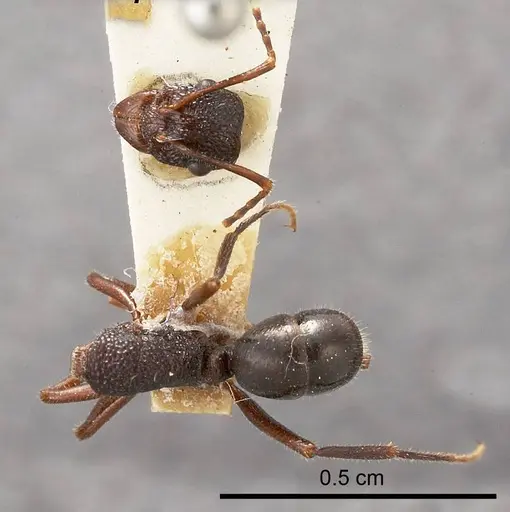
Literature
Loading...Loading products...