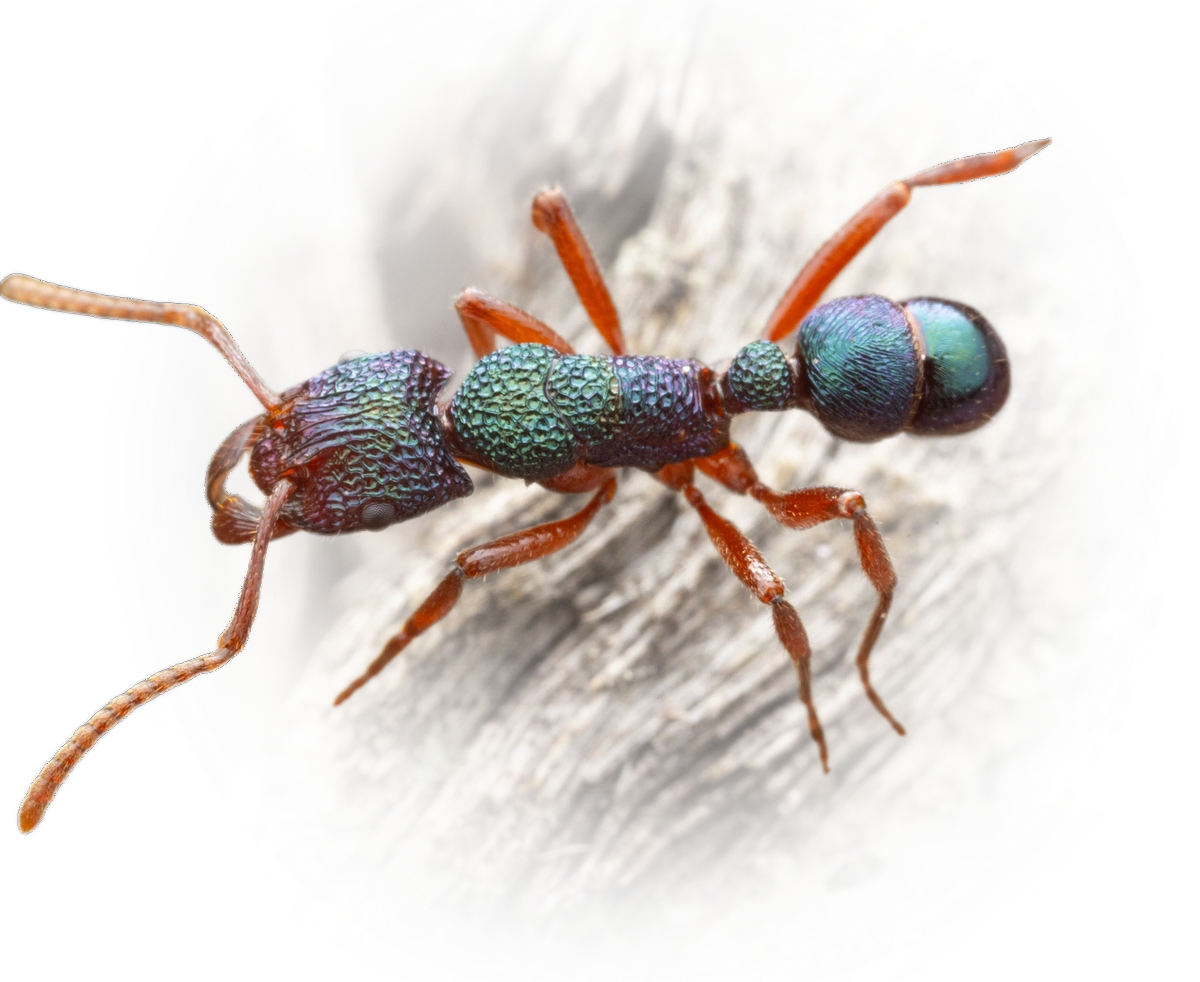

Rhytidoponera aspera
- Scientific Name
- Rhytidoponera aspera
- Tribe
- Ectatommini
- Subfamily
- Ectatomminae
- Author
- Roger, 1860
- Distribution
- Found in 1 countries
Rhytidoponera aspera Overview
Rhytidoponera aspera is an ant species of the genus Rhytidoponera. It is primarily documented in 1 countries , including Australia. Detailed taxonomic data and occurrence records can be further explored via authoritative databases such as AntWeb or the Global Biodiversity Information Facility (GBIF).
Rhytidoponera aspera
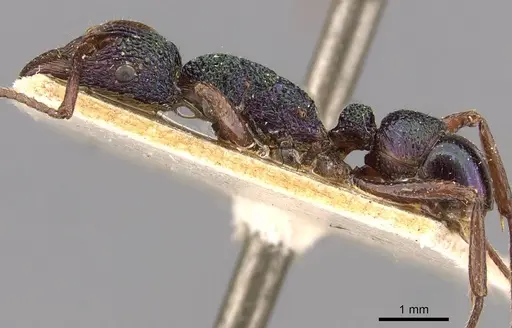
Rhytidoponera aspera is a small to medium-sized ant native to Australia, belonging to the subfamily Ectatomminae. Workers measure around 4-6mm and display a striking blue-green to blue iridescence that makes them quite distinctive [1]. The species was originally described as a variety of Rhytidoponera metallica in 1860 before being elevated to species status and later synonymized with R. arnoldi [2].
What makes R. aspera particularly unusual is its reproductive biology, queens are extremely rare or unknown in this species, with mature queenright colonies not being found [3]. This suggests the species primarily reproduces through gamergates (reproductive workers) rather than a traditional queen system. This is exceptionally rare among ants and makes them a fascinating species for advanced antkeepers who can obtain established colonies.
Quick Summary
- Difficulty: Expert
- Origin & Habitat: Australia, found in eucalypt forest environments of southeastern Australia [4]. They are classified as 'Opportunist' functional group, meaning they adapt to disturbed habitats and can exploit various food resources [4].
- Colony Type: Gamergate-based reproduction, queens are rare or unknown, colonies reproduce through reproductive workers (gamergates) rather than a founding queen [3]. This is a unique colony structure where workers can lay eggs and perpetuate the colony.
- Special: Gamergates
- Size & Growth:
- Queen: Queens are extremely rare, not commonly found or described [3]
- Worker: 4-6mm
- Colony: Small colonies, limited data available due to their unusual reproductive biology [3]
- Growth: Unknown, likely moderate based on typical Ponerine patterns
- Development: Unknown, no direct development data available for this species (Development timeline has not been studied. Related Ponerine ants typically take 2-3 months from egg to worker at warm temperatures.)
- Antkeeping:
- Temperature: Keep at 22-26°C, Australian species from temperate regions should do well at room temperature with a slight warm side. Avoid temperatures below 15°C.
- Humidity: Moderate humidity, they inhabit forest floor environments in nature. Keep nest substrate slightly moist but not waterlogged.
- Diapause: Unknown, Australian temperate species may benefit from a mild winter cool-down period, but specific requirements are unconfirmed.
- Nesting: They nest in soil and under stones in forest habitats. In captivity, a naturalistic setup with soil substrate or a Y-tong/plaster nest works well. Provide some damp substrate areas.
- Behavior: R. aspera are opportunistic foragers that actively search for food on the forest floor. As Ponerine ants, they have a functional stinger and can deliver a mild sting if threatened. Workers are moderately aggressive when defending the colony. Escape prevention should be moderate, they're not tiny ants but can climb smooth surfaces. They are not colonial and should be kept in single-colony setups.
- Common Issues: Gamergate reproduction means you cannot start colonies from a founding queen, must acquire established colonies with reproductive workers, Queens are extremely rare in the hobby, this species is difficult to obtain, Stinging capability means they can defend themselves if handled roughly, Limited availability and information makes this an expert-only species, Specific temperature and humidity requirements are not well-documented, requires experimentation
Colony Structure and Reproduction
The most remarkable aspect of Rhytidoponera aspera is its unusual reproductive biology. Unlike most ant species that rely on a queen to found new colonies, R. aspera appears to reproduce primarily through gamergates, workers that become reproductive and lay eggs [3]. Queens are so rare that researchers have noted 'queens rare or unknown' and 'mature queenright colonies not found' [3]. This means colonies are maintained and propagated by reproductive workers rather than a dominant egg-laying queen. For antkeepers, this fundamentally changes how you would establish a colony, you cannot start with a founding queen as you would with most species. Instead, you would need to obtain an already-established colony containing reproductive workers.
Appearance and Identification
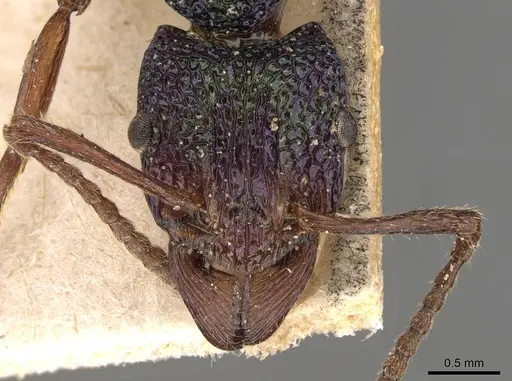
Workers of R. aspera are small to medium-sized ants measuring approximately 4-6mm. They display the characteristic blue-green to blue iridescence common to many Rhytidoponera species, which gives them a distinctive metallic appearance [1]. The species name 'aspera' means 'rough' in Latin, referring to the textured surface of their exoskeleton. They belong to the subfamily Ectatomminae (formerly classified as Ponerinae), which means they have a functional stinger and can deliver a mild sting if threatened or handled. The genus Rhytidoponera is exclusively found in the Australasian region, with Australia being the primary distribution area for this species [2].
Natural Habitat and Distribution
In the wild, R. aspera inhabits eucalypt forest environments in southeastern Australia [4]. They are classified as an 'Opportunist' functional group, meaning they can exploit a wide range of resources and adapt to various conditions including disturbed habitats [4]. Field studies show they can be found both in ground traps and in elevated traps in trees, suggesting they forage at multiple levels within the forest ecosystem [4]. Their distribution is limited to Australia, though there are interception records in New Zealand, indicating they occasionally arrive via human-mediated dispersal [5]. This opportunistic nature means they can tolerate some habitat disturbance.
Feeding and Diet
As Ponerine ants, R. aspera are likely predatory or omnivorous, feeding on small invertebrates and arthropods they encounter while foraging. The 'Opportunist' functional group classification suggests they exploit various food sources including nectar, honeydew, and small prey [4]. In captivity, you should offer a varied diet including small live prey (fruit flies, pinhead crickets, small mealworms) and sugar sources (honey water, sugar water). Observe your colony's preferences and adjust feeding accordingly. As with most Ponerines, protein-rich foods should make up a significant portion of their diet.
Temperature and Care
Since R. aspera comes from temperate southeastern Australia, they should do well at typical room temperatures of 22-26°C. A slight warm side in the enclosure (reaching up to 28°C) would be beneficial but not essential. Avoid temperatures below 15°C as this could stress the colony. As forest-floor inhabitants, they prefer moderate humidity levels, keep the nest substrate slightly moist but not saturated. A naturalistic setup with a soil layer works well for maintaining appropriate humidity. Provide a shallow water dish for drinking. Since they have a stinger, use moderate escape prevention, they can climb smooth surfaces but aren't among the most escape-prone ants.
Obtaining and Keeping This Species
R. aspera is considered an expert-level species due to several factors. First, their unusual gamergate-based reproduction means you cannot start colonies traditionally, you must acquire an established colony with reproductive workers already present [3]. Second, queens are so rare that finding a mated queen for sale is extremely unlikely. Third, the species has limited availability in the antkeeping hobby. Fourth, specific care requirements (exact temperature ranges, humidity preferences, development timelines) are not well-documented in scientific literature, requiring keepers to experiment and observe their colony's preferences. If you do obtain a colony, treat it as a long-term commitment since reproduction will be slower than typical queen-founded colonies.
Frequently Asked Questions
Can I start a Rhytidoponera aspera colony from a queen?
No, queens are extremely rare or unknown in this species. R. aspera reproduces through gamergates (reproductive workers) rather than a founding queen [3]. You must obtain an already-established colony containing reproductive workers.
What makes Rhytidoponera aspera different from other ants?
R. aspera is unusual because it lacks a traditional queen, colonies reproduce through gamergates (reproductive workers) that can lay eggs [3]. This is extremely rare among ants. They also have striking blue iridescence and are found only in Australia [1].
Do Rhytidoponera aspera ants sting?
Yes, as members of the subfamily Ectatomminae (formerly Ponerinae), they have a functional stinger and can deliver a mild sting if threatened or handled. The sting is not dangerous to healthy humans but can cause mild discomfort.
How big do Rhytidoponera aspera colonies get?
Colony size appears to be relatively small based on limited field data. The unusual reproductive biology may limit colony size compared to typical queen-founded species [3]. Exact maximum sizes are not well-documented.
Are Rhytidoponera aspera good for beginners?
No, this species is not recommended for beginners. The gamergate-based reproduction makes them difficult to obtain and establish, and specific care requirements are not well-documented. They are considered an expert-level species.
What do Rhytidoponera aspera eat?
As opportunistic Ponerine ants, they likely eat small invertebrates and arthropods in the wild. In captivity, offer small live prey (fruit flies, small crickets, mealworms) and sugar sources (honey water, sugar water). Protein-rich foods should form a significant part of their diet.
Where is Rhytidoponera aspera found in the wild?
They are native to Australia, specifically southeastern Australia in eucalypt forest environments [4]. They are classified as an 'Opportunist' functional group, meaning they can adapt to various habitats including disturbed areas.
Can I keep multiple colonies of Rhytidoponera aspera together?
Not recommended, unless the colonies were founded together, introducing unrelated colonies will likely result in aggression. Each colony maintains its own identity and will defend against intruders.
Do Rhytidoponera aspera need hibernation?
Specific overwintering requirements are unconfirmed. As a species from temperate southeastern Australia, they may benefit from a mild cool-down period during winter months, but exact temperature and duration requirements are not documented.
Why are they called the 'Rough Ant'?
The species name 'aspera' comes from Latin meaning 'rough', referring to the textured surface of their exoskeleton. They also have a striking blue-green iridescence that makes them visually distinctive [1].
References

This caresheet is licensed under CC BY-SA 4.0 .
CASENT0281241
View on AntWeb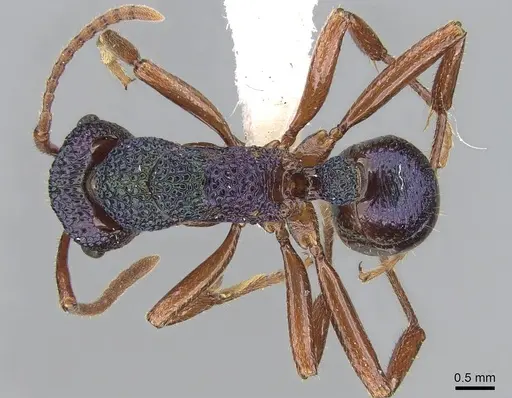
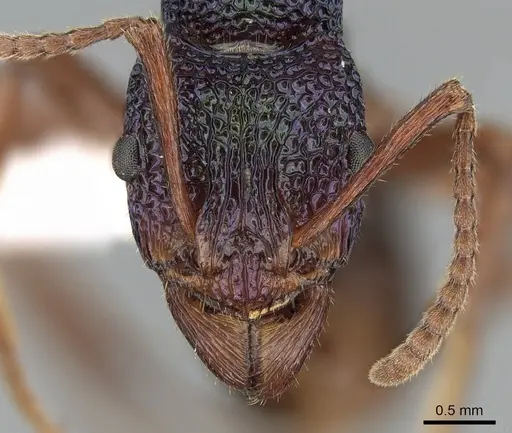
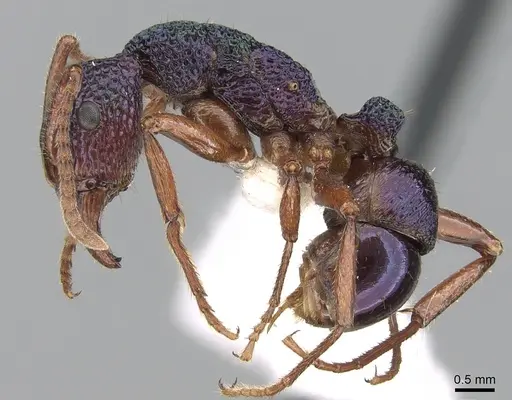
CASENT0907153
View on AntWeb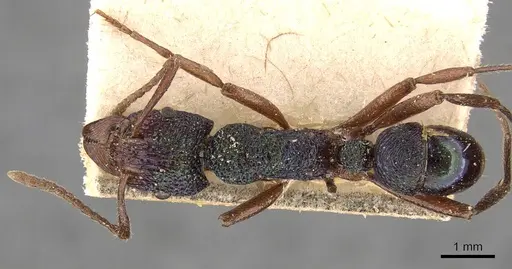
Literature
Loading...Loading products...