

Rhopalothrix subspatulata
- Scientific Name
- Rhopalothrix subspatulata
- Tribe
- Attini
- Subfamily
- Myrmicinae
- Author
- Longino & Boudinot, 2013
- Distribution
- Found in 2 countries
Rhopalothrix subspatulata Overview
Rhopalothrix subspatulata is an ant species of the genus Rhopalothrix. It is primarily documented in 2 countries , including Costa Rica, Nicaragua. Detailed taxonomic data and occurrence records can be further explored via authoritative databases such as AntWeb or the Global Biodiversity Information Facility (GBIF).
Rhopalothrix subspatulata
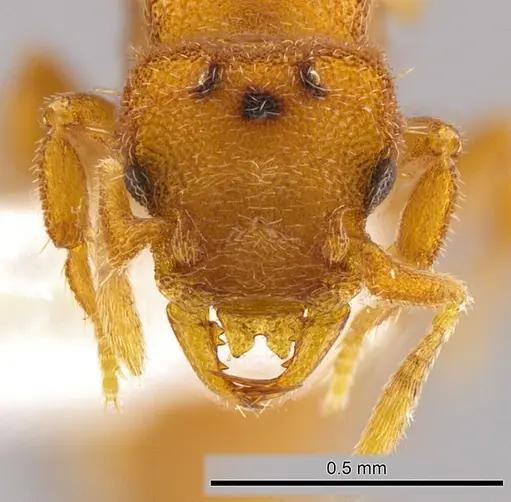
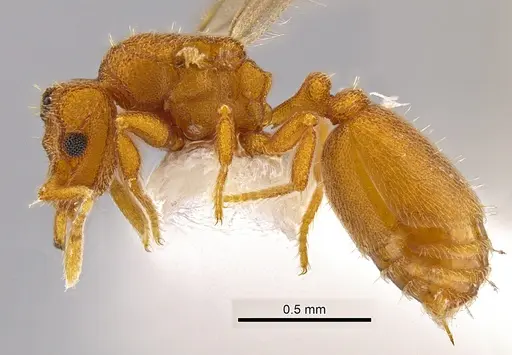
Rhopalothrix subspatulata is an extremely rare, tiny ant native to the lowland rainforests of Costa Rica and Nicaragua. Workers measure just 0.42-0.49mm in head width (roughly 2-3mm total length), making them among the smallest ants in the Myrmicinae subfamily [1]. Queens are slightly larger at 0.51-0.53mm head width [1]. The species has pale coloration and notably reduced eyes, both clear adaptations to a subterranean lifestyle [1]. The name subspatulata refers to the sparse spatulate (spoon-shaped) setae on their gaster (abdomen) [1].
What makes this species remarkable is its cryptic underground existence. Researchers have collected only about 50 workers total, mostly from soil samples rather than the forest floor litter where most leaf-litter ants are found [1]. The data strongly suggests Rhopalothrix subspatulata nests and forages in mineral soil 5-10cm beneath the surface, only rarely venturing into the leaf litter layer [1]. Alate queens have been collected from canopy fogging samples during the mid to late wet season (October through December), indicating they mate above ground but otherwise remain hidden [1].
Quick Summary
- Difficulty: Expert
- Origin & Habitat: Lowland rainforest in Costa Rica and Nicaragua, from 50-800m elevation [1]. Found in tropical wet forest at La Selva Biological Station [1].
- Colony Type: Colony structure is unconfirmed. The genus appears to have single-queen colonies based on typical Attini patterns, but no direct observations exist for this species.
- Size & Growth:
- Queen: 0.51-0.53mm head width (estimated 4-5mm total length) [1]
- Worker: 0.42-0.49mm head width (roughly 2-3mm total length) [1][2]
- Colony: Unknown, only about 50 workers have ever been collected [1]
- Growth: Unknown, inferred as slow based on small colony sizes typical of cryptic leaf-litter ants
- Development: Unknown, likely 6-10 weeks based on typical Myrmicinae patterns at tropical temperatures (No direct development data exists. Estimates based on related small Myrmicinae species.)
- Antkeeping:
- Temperature: Keep at 24-28°C, mimicking warm lowland rainforest conditions. Use a heating gradient if possible.
- Humidity: High humidity (70-85%) is essential. Keep the nest substrate consistently moist but not waterlogged, these ants naturally live in damp mineral soil.
- Diapause: Unknown, being a tropical species, they likely do not require true hibernation but may slow down during cooler or drier periods.
- Nesting: This is the critical challenge. In nature they nest in mineral soil 5-10cm beneath the surface. In captivity, provide a deep, soil-based setup (plaster or acrylic nests with soil substrate work best). They rarely venture above ground, so minimal foraging space is needed.
- Behavior: Extremely cryptic and secretive. Workers are tiny, slow-moving, and likely forage in soil crevices. No aggression data exists, but their small size and subterranean habits suggest a peaceful, non-aggressive species. They are not known to sting. Escape prevention is critical due to their minute size, even standard escape barriers may fail. They are likely nocturnal or crepuscular, matching their underground lifestyle.
- Common Issues: extreme difficulty of collection means virtually no wild colonies available, subterranean lifestyle makes them nearly impossible to observe, keepers may rarely see workers, tiny size creates major escape risk through standard barriers, no established captive breeding protocols exist, slow growth and small colony sizes make them fragile, risk of colony collapse from standard antkeeping mistakes due to lack of species-specific knowledge
Why This Species Is So Challenging
Rhopalothrix subspatulata represents one of the most difficult ants to keep in captivity, and honestly, most antkeepers should not attempt it. This isn't a species you can purchase or collect easily, only about 50 workers have ever been documented by researchers, and almost all came from specialized soil sampling rather than typical ant collection methods [1]. The species was only formally described in 2013,and basic biology like colony structure, founding behavior, and development timeline remain completely unknown [1]. There are no established care protocols, no captive breeding colonies that I'm aware of, and no way to obtain founding queens through normal channels. This makes it a species for advanced researchers rather than hobbyists.
The fundamental challenge is that these ants are truly subterranean. While most antkeepers deal with species that at least occasionally come to the surface, Rhopalothrix subspatulata spends nearly all its time in mineral soil 5-10cm below the forest floor [1]. They have pale coloration and greatly reduced eyes, both classic adaptations to life underground [1]. This means even if you somehow obtained a colony, you would rarely, if ever, see your ants. They would essentially be invisible pets.
The genus Rhopalothrix itself is considered a rare inhabitant of wet forest leaf litter and soil [3]. This species specifically belongs to the R. isthmica clade, which is restricted to the Neotropics with its center of diversity in Central America [3]. This isn't a species that adapts well to captivity, it's an obligate forest-floor specialist that requires specific soil conditions, humidity levels, and darkness to survive.
My recommendation: Appreciate this species from a distance through scientific papers and AntWeb images. If you're serious about studying ant biology, this would be a species to potentially research in the field rather than keep in a formicarium.
Natural History and Biology
The story of how Rhopalothrix subspatulata was discovered reveals why we know so little about it. Most specimens came from Berlese samples (soil cores extracted through funnels) rather than the typical Winkler samples used for leaf-litter ants [1]. At La Selva Biological Station in Costa Rica, researchers found workers in 3% of 208 Berlese samples but only 2% of 640 miniWinkler samples [1]. Since each miniWinkler sample covers about 60 times the area of a Berlese sample (1 square meter versus 165 square centimeters), this data strongly indicates R. subspatulata is far more abundant in soil than in leaf litter [1].
The collection data paints a clear picture: these ants nest and forage in mineral soil beneath the forest floor, only occasionally venturing up into the litter layer [1]. Their pale, nearly translucent coloration and significantly reduced eyes are classic subterranean adaptations, underground, there's no evolutionary pressure for dark pigmentation or good vision [1].
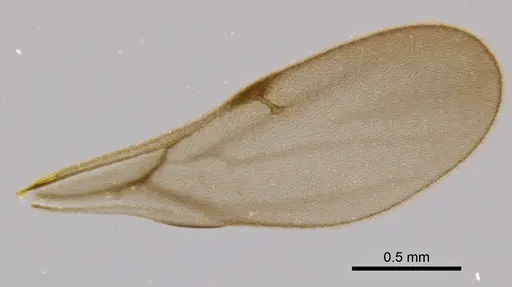
Alate (winged) queens were collected from canopy fogging samples in October, November, and December 1994 and 1999, the mid to late wet season in Costa Rica [1]. This suggests the species mates above ground in the canopy and has normally dispersing queens (not claustral foundation where the queen never leaves the nest). However, the actual founding behavior has never been observed.
Males were unknown until 2022,when Leonid Borysenko published the first description of Rhopalothrix males [2]. This shows just how rarely these ants are encountered, even males, which typically emerge in large numbers for nuptial flights, had never been collected before.
The geographic range covers Costa Rica and Nicaragua at elevations from 50-800 meters [1]. This is lowland rainforest habitat, hot, humid, and with consistent year-round temperatures in the mid-20s Celsius.
Housing and Nesting Requirements
If you somehow obtained a colony of Rhopalothrix subspatulata, housing would require a specialized setup quite different from standard antkeeping. The key insight from their biology is that they are subterranean, they live in soil, not in wood or artificial nests [1]. In captivity, you'd need to provide a deep soil-based environment, ideally at least 10cm of substrate to allow natural behavior.
A plaster or acrylic nest with a thick soil layer would be the most appropriate setup. The substrate should be kept consistently moist but never waterlogged, think damp forest soil, not a swamp. You'll need to maintain high ambient humidity (70-85%) to prevent the nest from drying out. A humidity gauge is essential.
Because they rarely come to the surface, the outworld (foraging area) can be relatively small. These aren't ants that will create impressive foraging trails or readily emerge to take food. In fact, you might rarely see them at all, they would move through soil crevices and may only become visible when the nest is carefully dissected.
Escape prevention is critical despite their small size. Standard fluon barriers may work, but given their cryptic habits, they might simply remain hidden rather than attempt to escape. That said, their minute size means they could potentially squeeze through gaps in standard formicaria.
Lighting should be minimal, these are dark-environment ants. Keep the nest in a dim location or provide covering to simulate the underground conditions they naturally prefer.
Honestly, the more practical approach for this species would be to maintain them in a soil-filled container that can be periodically checked rather than a traditional formicarium. This allows for the deep substrate they require and makes periodic observation possible without destroying the nest.
Feeding and Diet
The diet of Rhopalothrix subspatulata in the wild is not directly documented, but we can make reasonable inferences from related species. As members of the tribe Attini, they're related to fungus-growing ants, but Rhopalothrix is not a fungus cultivator, it's part of the 'basic' Attini that are predators or omnivores [3].
Given their tiny size (workers are only about 2-3mm) and subterranean habits, they likely prey on minute soil arthropods: springtails, mites, tiny beetle larvae, and other micro-invertebrates found in forest soil [1]. They probably forage in soil crevices and feed on small prey items they encounter while moving through their tunnels.
In captivity, you would need to provide appropriately sized live prey. Standard ant food like mealworms or crickets would be far too large. Live springtails would be the ideal foundation diet, supplemented with other micro-arthropods like fruit flies (Drosophila), tiny isopods, and similar small prey. The prey items should be no larger than the ants themselves, these are tiny predators.
Sugar sources might be accepted, but this is uncertain. Many small Myrmicinae will take honey or sugar water, but given their subterranean lifestyle and likely predatory focus, protein should be the primary food. Offer sugar water occasionally and remove it if not consumed within a day or two.
Feeding frequency would be difficult to determine since you likely won't see the ants regularly. A conservative approach would be to provide small amounts of prey weekly and monitor for consumption. The challenge is that prey could die and decompose in the nest without being eaten, potentially causing mold issues in the humid environment they require.
Honestly, establishing a reliable feeding protocol would require significant trial and error and careful observation, both difficult given their cryptic habits.
Temperature and Seasonal Care
As a lowland tropical species from Costa Rica and Nicaragua, Rhopalothrix subspatulata requires warm, stable temperatures in the range of 24-28°C [1]. Their natural habitat at 50-800m elevation in lowland rainforest experiences minimal temperature variation year-round, typically staying in the mid-20s Celsius.
In captivity, maintain temperatures in this range consistently. A heating cable or mat on one side of the nest can create a gentle gradient, allowing the ants to choose their preferred temperature zone. However, given their subterranean nature, they may simply remain in the soil at a depth where temperature is stable rather than moving toward heat sources.
Regarding seasonal cycles, being a tropical species, they likely do not require true hibernation or diapause. However, the wet season in Costa Rica (roughly May through November) is when alate queens were collected [1], suggesting reproductive activity is tied to seasonal rainfall patterns. In captivity, you might simulate wet/dry seasons by adjusting humidity, but there's no established protocol for this.
Temperature stability is probably more important than exact values. Avoid placing the nest in locations with drafts, direct sunlight, or temperature fluctuations. A dedicated thermostat on any heating equipment is advisable.
The lack of specific seasonal data means this is another area where keeper experimentation and careful observation would be necessary, but again, actually observing these cryptic ants to note behavioral changes would be extremely challenging.
Frequently Asked Questions
Can I keep Rhopalothrix subspatulata in a test tube?
A test tube would be completely unsuitable. These ants are subterranean, nesting in mineral soil 5-10cm beneath the forest floor [1]. They require deep soil substrate, not a simple water tube. The setup would need to be a soil-filled container or custom nest with at least 10cm of substrate depth.
How long does it take for Rhopalothrix subspatulata to develop from egg to worker?
The development timeline is completely unconfirmed for this species. Based on typical Myrmicinae patterns at tropical temperatures (24-28°C), a reasonable estimate would be 6-10 weeks from egg to first worker. However, this is purely speculative, no direct observations exist [1].
Are Rhopalothrix subspatulata good for beginners?
Absolutely not. This is an expert-level, research-species ant that should not be attempted by hobbyists. Only about 50 workers have ever been documented, basic biology is unknown, and no captive breeding protocols exist [1]. There are no established care guidelines, and the ants are virtually impossible to obtain.
What do Rhopalothrix subspatulata eat?
Their exact diet is unconfirmed, but as tiny subterranean predators related to Attini, they likely prey on minute soil arthropods like springtails, mites, and tiny larvae. In captivity, you would need to provide appropriately sized live prey, springtails, fruit flies, and other micro-arthropods no larger than the ants themselves [1]. Sugar sources might be accepted but are uncertain.
How big do Rhopalothrix subspatulata colonies get?
Colony size is unknown. Based on collection data showing only about 50 workers ever documented, colonies are likely small, probably under 100 workers at most [1]. This is typical for cryptic leaf-litter and soil-dwelling ants that are rarely encountered.
Can I keep multiple queens together?
Colony structure is unconfirmed for this species. No data exists on whether they are monogyne (single queen) or polygyne (multiple queens). Based on typical Attini patterns, single-queen colonies are more likely, but this is purely speculative [1]. Combining unrelated queens is not recommended given the complete lack of information.
Do Rhopalothrix subspatulata need hibernation?
No, being a tropical lowland species from Costa Rica, they do not require hibernation. They likely experience year-round activity in stable warm, humid conditions. However, they may slow during cooler or drier periods if humidity drops.
Where can I get Rhopalothrix subspatulata?
You almost certainly cannot obtain this species. It is extremely rare in the wild with only about 50 workers ever collected [1]. It was only described in 2013 and has no established presence in the antkeeping hobby. There are no commercial sources. This is a species for scientific researchers studying ant biology in the field, not for captive keeping.
Why are Rhopalothrix subspatulata so rarely found?
They are truly subterranean, nesting and foraging in mineral soil 5-10cm beneath the forest floor rather than in the leaf litter layer where most ant collectors focus [1]. Their pale color and reduced eyes confirm subterranean adaptations. Standard ant collection methods miss them entirely, they require soil sampling (Berlese extraction) to be collected [1].
References

This caresheet is licensed under CC BY-SA 4.0 .
INBIOCRI001259541
View on AntWeb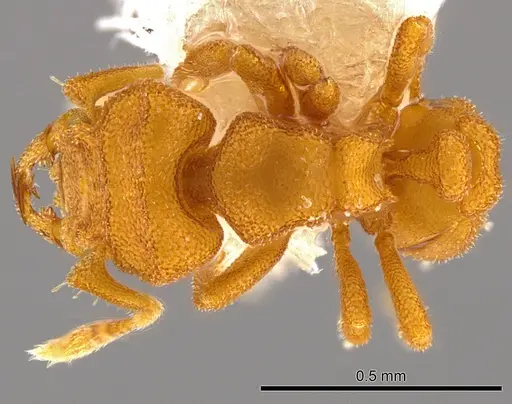
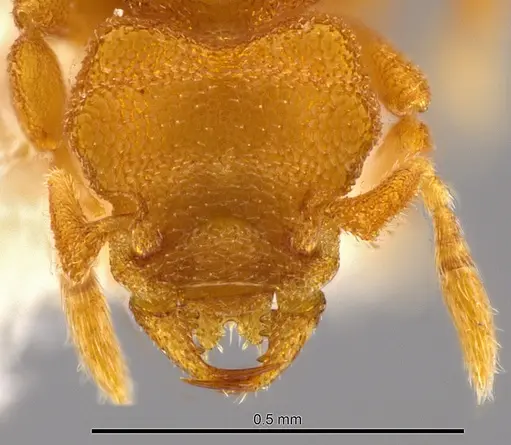
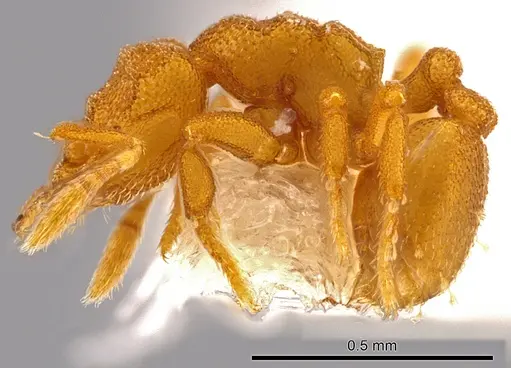
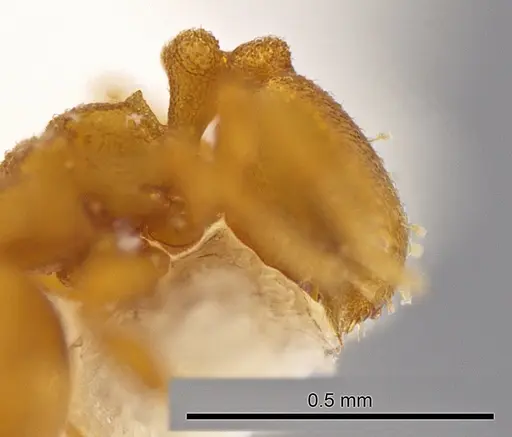
INBIOCRI002728337
View on AntWeb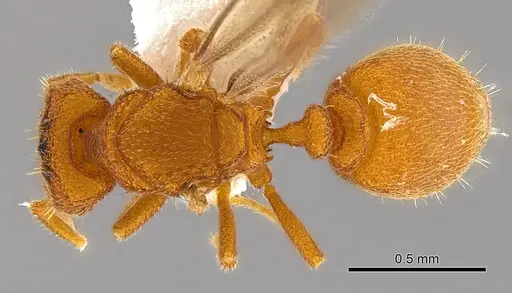
Literature
Loading...Loading products...