

Rhopalothrix stannardi
- Scientific Name
- Rhopalothrix stannardi
- Tribe
- Attini
- Subfamily
- Myrmicinae
- Author
- Brown & Kempf, 1960
- Distribution
- Found in 2 countries
Rhopalothrix stannardi Overview
Rhopalothrix stannardi is an ant species of the genus Rhopalothrix. It is primarily documented in 2 countries , including Guatemala, Mexico. Detailed taxonomic data and occurrence records can be further explored via authoritative databases such as AntWeb or the Global Biodiversity Information Facility (GBIF).
Rhopalothrix stannardi
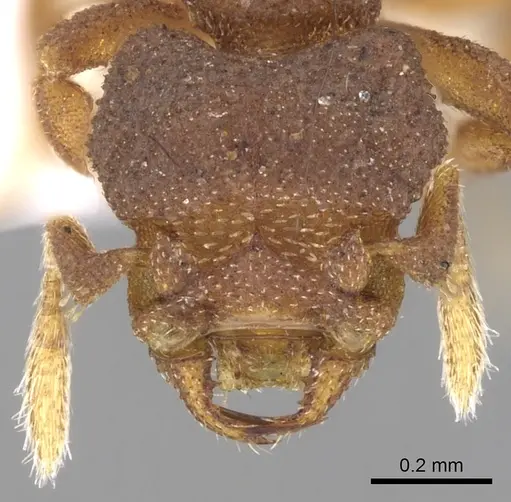
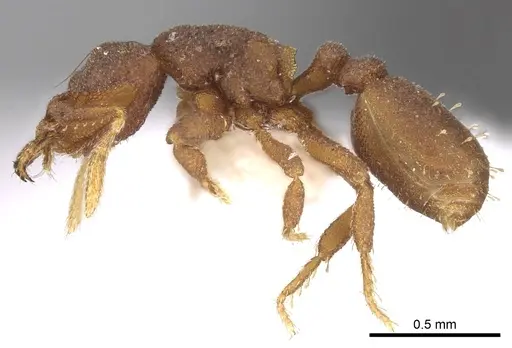
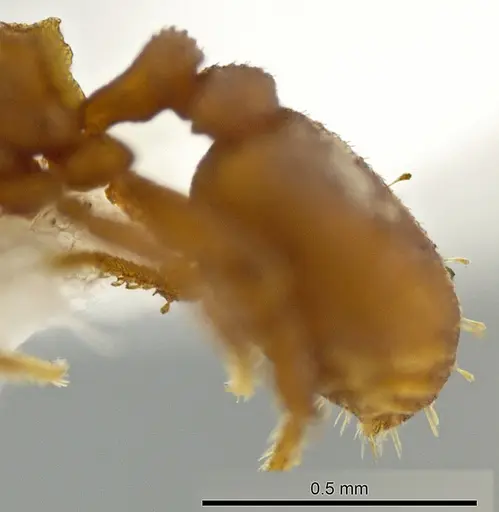
Rhopalothrix stannardi is an extremely tiny ant, measuring just 2.7mm in total length with a head width of 0.53-0.59mm [1]. Workers have a distinctive appearance with mandibles bearing three widely spaced denticles on the chewing margin, and about 12 scale-like hairs on the rear half of the first gastral segment [1]. The species is known only from the worker caste, males have never been documented [1]. These ants are found in lowland wet to moist tropical forests of southern Mexico (Chiapas) and Guatemala, typically at elevations between 70-270 meters [1]. All specimens have been collected by sifting leaf litter through Winkler extractors, indicating they are cryptic ground-dwelling ants that rarely venture into the open [1]. This is one of the rarest ant species in Central America, appearing in only 4-7% of leaf litter samples even in optimal habitat [1].
Quick Summary
- Difficulty: Expert
- Origin & Habitat: Lowland wet to moist tropical forests in southern Mexico (Chiapas) and Guatemala, at 70-270m elevation. Found in sifted leaf litter from the forest floor [1].
- Colony Type: Unknown, only worker caste has been documented, with no information on queen number or colony structure [1].
- Size & Growth:
- Antkeeping:
- Temperature: Based on lowland tropical habitat (70-270m elevation), aim for warm conditions around 24-28°C. No direct studies exist on this species' temperature tolerance [1].
- Humidity: High humidity is essential, these ants live in moist forest leaf litter. Keep the nest substrate consistently damp but not waterlogged [1].
- Diapause: Unknown, no research on seasonal behavior. As a lowland tropical species, they likely do not require hibernation [1].
- Nesting: Natural nesting is in leaf litter and soil. In captivity, use a small test tube setup or naturalistic terrarium with fine substrate. Their tiny size means they need tight chambers and excellent escape prevention [1].
- Behavior: Presumed predatory like other Basicerotini ants, feeding on tiny soil arthropods [2]. This is a cryptic, secretive species that spends most of its time hidden in leaf litter and soil crevices. They are not aggressive and will likely flee rather than fight when disturbed. Escape prevention is critical due to their very small size, they can squeeze through the tiniest gaps [1].
- Common Issues: escape prevention is critical due to their tiny 2.7mm size, they can slip through standard barrier gaps, virtually no captive husbandry information exists, this is an expert-level species for a reason, colony size and growth rate are completely unknown, making care unpredictable, diet is only presumed predatory, actual feeding behavior has never been documented, rare in the wild (4-7% sample occurrence) suggesting specialized ecological requirements
Discovery and Identification
Rhopalothrix stannardi was first described in 1960 by Brown and Kempf from a single worker collected in the Ocosingo Valley of Chiapas, Mexico [1]. The species was named after collector L.J. Stannard. For decades, this was known only from the holotype specimen. The species was rediscovered during Project LLAMA in the 2000s, when additional workers were collected from leaf litter samples in Chiapas, Mexico and Tikal National Park, Guatemala [1]. Workers can be identified by their tiny size (HW 0.53-0.59mm), mandibles with three widely spaced denticles, and the distinctive scale-like hairs on the rear of the gaster [1]. The genus Rhopalothrix belongs to the tribe Basicerotini, a group of small, cryptic, predatory ants [2].
Distribution and Habitat
This species is known only from a narrow band of Central American lowland tropical forest. In Mexico, it has been collected in Chiapas state, particularly around the Ocosingo Valley [1]. In Guatemala, it has been found in the Petén region, including the Biotopo Cerro Cahuí and Tikal National Park [2]. All collections come from elevations between 70-270 meters above sea level, this is true lowland forest habitat [1]. The species prefers wet to moist forest conditions and is always collected from sifted leaf litter, indicating it lives in the forest floor layer rather than in vegetation [1]. During quantitative sampling, R. stannardi appeared in only 4 out of 100 miniWinkler samples in Chiapas and 7 out of 100 samples in Guatemala, making it one of the rarest ant species in the region [1].
Biology and Foraging
Almost nothing is known about the biology of Rhopalothrix stannardi. Based on its placement in the tribe Basicerotini, it is presumed to be predatory like other members of this group, likely hunting tiny soil arthropods such as springtails and mites [2]. The tribe Basicerotini contains cryptic ants that typically forage alone in leaf litter, using their specialized mandibles to capture small prey. The mandibles of R. stannardi have three widely spaced teeth with the subapical tooth about twice as long as the apical tooth, this dentition pattern is typical for predatory Basicerotini [1]. Workers lack the specialized cephalic hairs found in some related genera, which may indicate different prey-handling or sensory behaviors [3]. The species has never been observed foraging in the open or constructing visible nests [1].
Keeping Rare Leaf Litter Ants
Rhopalothrix stannardi represents a significant challenge for antkeepers. This species has never been kept in captivity to our knowledge, and all husbandry recommendations must be inferred from related Basicerotini species and general leaf litter ant biology. The primary challenge is replicating their cryptic, leaf-litter existence. A naturalistic setup with a deep layer of moist leaf litter and small soil chambers would be most appropriate. Their tiny size (2.7mm) means escape prevention must be excellent, even standard test tube barriers may not contain them. Temperature should be warm (24-28°C) matching their lowland tropical origin. Humidity must be high, these ants live in moist forest floor conditions. Feeding is speculative but should focus on tiny live prey: springtails, micro-arthropods, and similar small invertebrates. Given how little is known about this species, it should only be attempted by experienced antkeepers willing to experiment and document their findings. Any captive success would represent genuinely new biological knowledge [1].
Frequently Asked Questions
How big do Rhopalothrix stannardi ants get?
Workers are extremely tiny at just 2.7mm total length, with a head width of only 0.53-0.59mm [1]. Queens and males have never been documented.
Is Rhopalothrix stannardi a good species for beginners?
No. This is an expert-level species with virtually no captive husbandry information. No one has successfully kept this species in captivity to our knowledge. Only the worker caste has ever been collected, and nothing is known about their colony structure, founding behavior, or development [1].
What do Rhopalothrix stannardi ants eat?
Based on their placement in the tribe Basicerotini, they are presumed predatory on tiny soil arthropods like springtails and micro-mites [2]. No direct observations of feeding exist. In captivity, you would likely need to offer small live prey.
Do Rhopalothrix stannardi ants need hibernation?
Probably not. They come from lowland tropical forests at 70-270m elevation in Mexico and Guatemala, where temperatures remain warm year-round [1]. No research exists on their seasonal behavior.
Can I keep Rhopalothrix stannardi in a test tube?
A small test tube setup could work, but their extremely tiny size (2.7mm) makes escape likely unless you use excellent barriers. A naturalistic terrarium with moist leaf litter substrate would better replicate their natural habitat [1].
How long do Rhopalothrix stannardi ants live?
Unknown, no research has documented any life stage beyond workers. The complete lifecycle from egg to adult has never been studied [1].
Where is Rhopalothrix stannardi found?
This species is known only from lowland wet forests in southern Mexico (Chiapas) and Guatemala, at elevations between 70-270 meters [1].
Are Rhopalothrix stannardi ants aggressive?
No information exists on their temperament. Related Basicerotini ants are not aggressive and typically flee when disturbed rather than fight [2].
How many queens does Rhopalothrix stannardi have?
Unknown, only workers have ever been collected. No queen, male, or colony structure data exists for this species [1].
What temperature do Rhopalothrix stannardi ants need?
No specific research exists, but their lowland tropical habitat (70-270m elevation) suggests warm conditions around 24-28°C would be appropriate [1].
Why is Rhopalothrix stannardi so rare?
The species appears in only 4-7% of leaf litter samples even in optimal habitat [1]. This likely reflects their extremely specialized microhabitat requirements and cryptic lifestyle in the forest floor. They are not common anywhere in their range.
Can I feed Rhopalothrix stannardi sugar water?
Unknown, no feeding observations exist. As presumed predators in the tribe Basicerotini, they likely rely on protein from prey rather than sugar sources [2]. Offering sugar water occasionally would be experimental.
References

This caresheet is licensed under CC BY-SA 4.0 .
CASENT0280781
View on AntWeb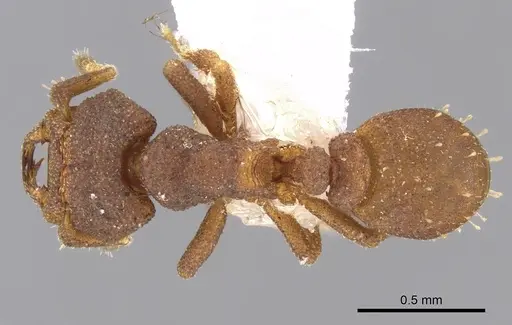
CASENT0610397
View on AntWeb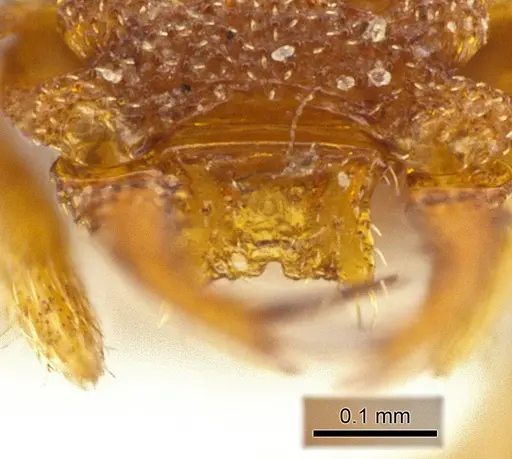
Literature
Loading...Loading products...