

Rhopalothrix nubilosa
- Scientific Name
- Rhopalothrix nubilosa
- Tribe
- Attini
- Subfamily
- Myrmicinae
- Author
- Longino & Boudinot, 2013
- Distribution
- Found in 1 countries
Rhopalothrix nubilosa Overview
Rhopalothrix nubilosa is an ant species of the genus Rhopalothrix. It is primarily documented in 1 countries , including Costa Rica. Detailed taxonomic data and occurrence records can be further explored via authoritative databases such as AntWeb or the Global Biodiversity Information Facility (GBIF).
Rhopalothrix nubilosa
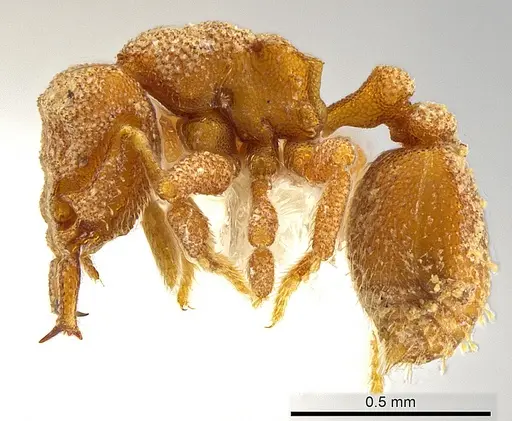
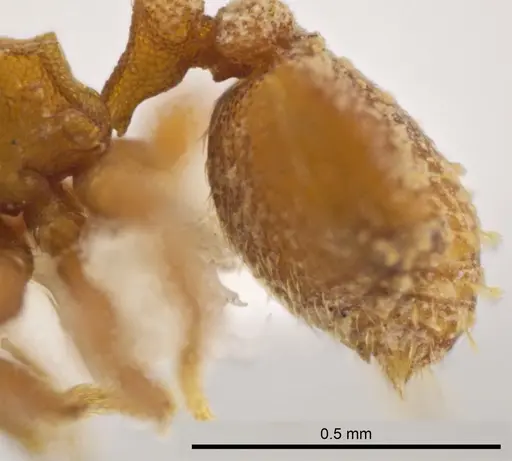
Rhopalothrix nubilosa is an extremely rare tiny ant species described from cloud forests in Costa Rica at 1500m elevation. Workers are among the smallest ants you'll encounter, with a head width of just 0.57mm [1]. They belong to the R. isthmica clade, a group of rare leaf litter inhabitants restricted to Central America's wet forests [2]. The species was identified as distinct from its lowland relative R. subspatulata due to its larger size and sharply parapatric distribution on the Barva Transect [1]. The name 'nubilosa' refers to their cloud forest habitat [1].
This is one of the rarest ants in the hobby, known from only 5 individuals out of 200 leaf litter samples at a single site [1]. Males have never been observed, and no queen has been described. This makes them an expert-only species where you're essentially pioneering captive husbandry with almost no established guidance.
Quick Summary
- Difficulty: Expert
- Origin & Habitat: Cloud forest in Costa Rica at 1500m elevation on the Barva Transect, Heredia province [1][3]
- Colony Type: Unknown, only workers have been described. No queen or male has been documented [1].
- Size & Growth:
- Queen: Unknown, queens have not been described [1]
- Worker: Head width 0.57mm (extremely small) [1]
- Colony: Unknown, only single workers have been collected [1]
- Growth: Unknown
- Development: Unknown, no breeding data exists [1] (This species has never been kept in captivity. All timelines are speculative.)
- Antkeeping:
- Temperature: Cloud forest species, keep cool, around 18-22°C. Avoid warmth. High elevation origin suggests they prefer stable, moderate temperatures [1].
- Humidity: High humidity required, think damp montane forest floor. Keep substrate consistently moist but not waterlogged. Mist regularly and provide a water reservoir.
- Diapause: Unknown, likely experiences seasonal variation in cloud forest but no specific data exists [1].
- Nesting: Natural nesting is in leaf litter and soil. In captivity, use very small test tubes or plaster nests with fine chambers. They need tight spaces scaled to their tiny size.
- Behavior: Behavior is unobserved in captivity. In the wild, they are cryptic leaf litter dwellers that likely forage slowly and avoid detection [2]. Their tiny size and rarity suggest they are extremely secretive. Escape prevention must be excellent, they can easily squeeze through standard barrier setups.
- Common Issues: no captive husbandry data exists, you're pioneering everything, extremely small size makes escape likely without fine mesh barriers, cloud forest humidity requirements may be difficult to maintain consistently, no queen or founding behavior known, cannot establish colonies from wild, single known population means very limited genetic diversity if ever available
Species Overview and Rarity
Rhopalothrix nubilosa represents one of the most poorly known ant species in the hobby. Described in 2013 by Longino and Boudinot, it is known only from workers collected in a single cloud forest location in Costa Rica [1]. The species name 'nubilosa' literally means 'cloudy' or 'misty', referring to the cloud forest habitat where it lives [1]. This is not a species you'll find at any ant farm or supplier, it exists only in scientific collections.
The genus Rhopalothrix belongs to the tribe Attini (fungus-growing ants), but Rhopalothrix species are not fungus growers. They are rare inhabitants of wet forest leaf litter and soil, part of a monophyletic clade restricted to the Neotropics with highest diversity in Central America [2]. Finding R. nubilosa in captivity would require either a scientific collection or a very dedicated field collector in Costa Rica.
Housing and Setup
Since this species has never been kept in captivity, all housing recommendations are educated guesses based on similar tiny leaf-litter ants. Use the smallest possible test tubes or vials, these ants are barely over half a millimeter wide. A standard test tube setup works but ensure the cotton is packed tightly.
For a more permanent setup, a small plaster or acrylic nest with chambers scaled to their tiny size would be ideal. The key is creating tiny, tight spaces, these ants would be overwhelmed by the large chambers typical of formicarium setups. Keep the nest area very small, roughly the size of a thimble.
Escape prevention is critical. Their small size means they can squeeze through gaps that larger ants cannot. Use fine mesh barriers and ensure all connections are sealed. Fluon on the rim of any container is essential.
Temperature and Humidity
As a cloud forest species from 1500m elevation in Costa Rica, Rhopalothrix nubilosa requires cool, humid conditions. Aim for temperatures in the range of 18-22°C, significantly cooler than most tropical ant species. Avoid any heating elements unless your room temperature falls below this range.
Humidity should be high, mimicking the constantly damp montane forest floor. Keep the substrate consistently moist but not sitting in water. Regular misting helps maintain humidity. A small water reservoir connected to the nest can help maintain stable moisture levels over time.
Avoid temperature fluctuations and dry conditions. These ants are adapted to the stable, mild climate of cloud forests where temperatures remain relatively constant year-round. [1]
Feeding and Diet
The diet of Rhopalothrix nubilosa is completely unstudied in the wild. As Myrmicinae, they likely are omnivorous like most ants in this subfamily, but their exact preferences are unknown. In captivity, you would need to experiment cautiously.
Start with the smallest possible prey items, these ants are tiny enough that even springtails may be too large. Fruit flies, booklice, and other microscopic arthropods would be more appropriate. Given their leaf litter habitat, they likely prey on tiny soil arthropods.
Sugar sources may be accepted, but given their minute size, even a drop of honey water would be enormous to them. If offering sugar, use extremely diluted solutions on cotton wicks. Monitor carefully for acceptance.
Field Collection and Legal Considerations
If you ever encounter this species in the wild, collection would require a scientific permit in Costa Rica. The type locality is on protected land, and these ants are extremely rare, finding them requires specialized leaf litter extraction techniques (miniWinkler samples) [1].
Do not release any ant collection from Costa Rica in other countries, this could spread pathogens or invasive species. If you maintain any Rhopalothrix, they should remain in secure enclosures permanently.
For antkeepers, the practical reality is that this species is essentially unavailable in the hobby. It exists only in scientific collections, and no one has documented successful captive breeding. This makes it an expert-only species in the truest sense, you would be pioneering all aspects of husbandry.
Related Species and Expectations
If you're interested in tiny leaf-litter ants, more accessible alternatives exist in the hobby. Related genera like Strumigenys (the tiny trap-jaw ants), basic Myrmicinae species, or even other Rhopalothrix that may be more common could be better starting points.
Rhopalothrix nubilosa specifically represents an extreme case of a data-deficient species. The scientific community knows almost nothing about its colony structure, queen biology, or captive requirements. While this makes it scientifically interesting, it makes it extremely challenging to keep successfully.
Any successful husbandry of this species would be a genuine contribution to antkeeping knowledge. Document any attempts thoroughly, what works, what doesn't, and share findings with the antkeeping community. [2]
Frequently Asked Questions
Can I buy Rhopalothrix nubilosa ants?
No. This species is essentially unavailable in the antkeeping hobby. It is known only from a handful of workers collected in one Costa Rican cloud forest location in 2005. No one has documented successful captive breeding, and they do not appear in any ant farm or supplier catalogs. Your best option is to seek more accessible tiny leaf-litter ants.
How big are Rhopalothrix nubilosa workers?
Extremely small. Workers have a head width of just 0.57mm, making them among the smallest ants you could keep. For reference, a typical house ant is 5-10 times larger. This tiny size creates significant challenges for housing and feeding in captivity [1].
Where does Rhopalothrix nubilosa live?
Only in cloud forests in Costa Rica at 1500m elevation. The entire known population comes from the Barva Transect in Heredia province. The species name 'nubilosa' means 'cloudy' in Latin, referring to this misty montane habitat [1].
Do Rhopalothrix nubilosa queens exist?
No one has ever documented a queen of this species. Only workers have been collected and described. This means we have no information about colony founding, queen size, or whether they are monogyne or polygyne. The entire reproductive biology is completely unknown [1].
What do Rhopalothrix nubilosa eat?
Unknown. Their diet has never been studied in the wild or captivity. As tiny leaf-litter ants, they likely prey on microscopic soil arthropods like springtails, mites, and booklice. In captivity, you would need to experiment with the smallest possible prey items. Sugar acceptance is completely unconfirmed.
Are Rhopalothrix nubilosa good for beginners?
Absolutely not. This is an expert-only species, possibly the most difficult ant to keep in the hobby. There is zero captive husbandry data, no described queen, no known colony size, and no established feeding or temperature guidelines. You would be pioneering all aspects of care with no prior reference.
What temperature do Rhopalothrix nubilosa need?
Based on their cloud forest habitat at 1500m elevation, they likely need cool conditions around 18-22°C. Avoid heating. They are adapted to the stable, mild temperatures of montane Costa Rican forests. Keep them cooler than typical tropical ant species [1].
How do I set up a nest for Rhopalothrix nubilosa?
Use the smallest possible chambers scaled to their tiny size. Standard test tubes work but pack cotton tightly. A small plaster or acrylic nest with thimble-sized chambers would be ideal. Focus on maintaining high humidity and preventing escapes through tiny gaps. No established protocol exists, you would be experimenting.
Do Rhopalothrix nubilosa need hibernation?
Unknown. Cloud forests at 1500m in Costa Rica have mild year-round temperatures with seasonal rainfall patterns rather than cold winters. They may experience a dry season slowdown rather than true hibernation. No data exists on overwintering requirements [1].
References

This caresheet is licensed under CC BY-SA 4.0 .
CASENT0629594
View on AntWeb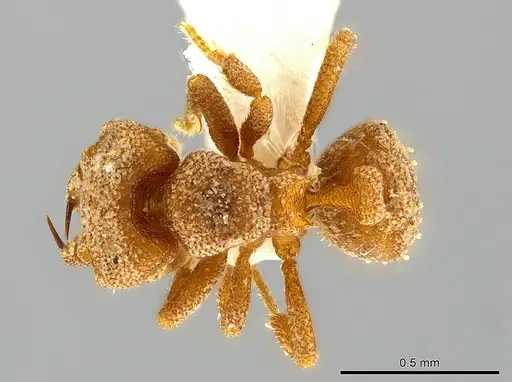


Literature
Loading...Loading products...