

Rhopalothrix isthmica
- Scientific Name
- Rhopalothrix isthmica
- Tribe
- Attini
- Subfamily
- Myrmicinae
- Author
- Weber, 1941
- Distribution
- Found in 4 countries
Rhopalothrix isthmica Overview
Rhopalothrix isthmica is an ant species of the genus Rhopalothrix. It is primarily documented in 4 countries , including Colombia, Guatemala, Honduras. Detailed taxonomic data and occurrence records can be further explored via authoritative databases such as AntWeb or the Global Biodiversity Information Facility (GBIF).
Rhopalothrix isthmica
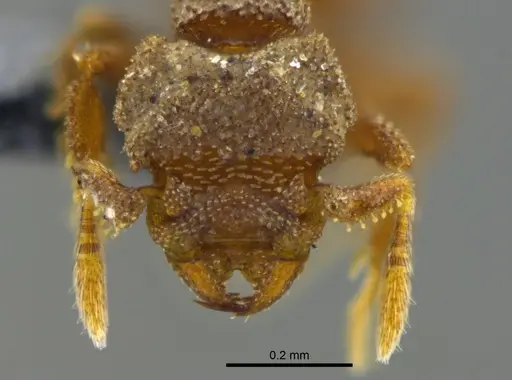
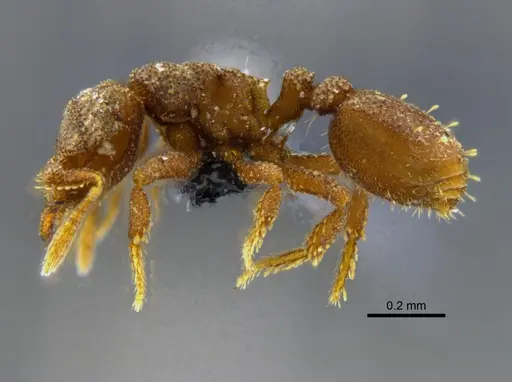
Rhopalothrix isthmica is a tiny dacetine ant native to Central and northern South America. Workers measure just 2.2mm with a distinctive reddish-ferruginous color and densely punctate, opaque integument [1]. The head is broader than long with a strongly concave occipital margin, and the mandibles feature three teeth with the middle tooth being largest [1][2]. This species is part of the tribe Attini (fungus-growing ants) but is a representative of true dacetine ants rather than fungus-cultivating species [3]. The most notable aspect of this species is its extremely cryptic lifestyle, all specimens are collected from sifted leaf litter using specialized extraction methods (Winkler and Berlese samples), meaning these ants live entirely within the forest floor leaf litter layer and are virtually never observed foraging in the open [1]. Queens and males remain unknown to science, making captive breeding particularly challenging [1].
Quick Summary
- Difficulty: Expert
- Origin & Habitat: Rhopalothrix isthmica occurs in moderately seasonal to aseasonal wet forest across Central America and northern Colombia, from near sea level to 2000m elevation [1]. In Honduras it is found in cloud forests at Comayagua and La Muralla, and along the north Caribbean lowlands. In Guatemala it occurs in the Volcán Atitlán region where it can be relatively abundant. In Colombia, populations inhabit dry forest in the north (La Guajira) and both open grassland and riparian forest in the eastern regions [2]. All specimens are collected from sifted leaf litter, these are true leaf-litter specialists living hidden within the forest floor [1][2].
- Colony Type: Unknown, queens and males have never been documented. The colony structure is unconfirmed. Based on related dacetine ants, likely single-queen colonies, but this is speculative.
- Size & Growth:
- Queen: Unknown, queens have never been described [1]
- Worker: 2.2mm total length, head width HW 0.58-0.68mm [1][2]
- Colony: Unknown, only small numbers of workers have ever been collected. In Guatemala, found in 29 of 100 miniWinkler samples in optimal habitat [1]. In Colombia, found in 8 of 20 samples in suitable areas [2].
- Growth: Unknown, development has never been observed
- Development: Unknown, no data available (Development timeline unconfirmed. Related dacetine ants typically develop in 4-8 weeks at warm temperatures, but this is a rough estimate only.)
- Antkeeping:
- Temperature: Keep at room temperature, roughly 20-25°C. This species occurs in warm tropical to subtropical forests, but precise requirements are unconfirmed.
- Humidity: High humidity is essential, these ants live in wet forest leaf litter. Keep the substrate consistently moist but not waterlogged. The forest floor environment they inhabit is constantly humid.
- Diapause: Unlikely, being a tropical species, they probably do not require a diapause period. However, some high-elevation populations (up to 2000m) might experience seasonal slowdowns.
- Nesting: This is a leaf-litter specialist. In captivity, they would need a naturalistic setup with a deep layer of moist sifted leaf litter or soil. Standard test tubes and formicaria are likely unsuitable, they require space to forage through substrate like they would in forest floor litter. A naturalistic terrarium-type setup works best.
- Behavior: Extremely cryptic and rarely seen. Workers are slow-moving and spend their time foraging through leaf litter and soil. They are not aggressive and have no functional stinger (Myrmicinae tribe Attini do not have functional stingers). Escape risk is low given their tiny size and cryptic habits, but they may escape through very small gaps. Foraging style is entirely subterranean within the litter layer, they will not venture into the open. Temperament is peaceful.
- Common Issues: queen acquisition is essentially impossible since queens have never been found or described, wild colonies are extremely difficult to locate, they live hidden in leaf litter and are only extracted by specialized methods, captive colonies would likely refuse conventional ant feeders, their natural diet is unknown, the cryptic lifestyle makes it nearly impossible to observe colony activity, high humidity requirements make mold a constant threat in captivity, no established husbandry protocols exist for this species
Natural History and Habitat
Rhopalothrix isthmica is one of the most cryptic ant species in the Neotropics. These tiny ants live exclusively within the forest floor leaf litter layer, making them virtually invisible to casual observation. Scientists only discover them by collecting leaf litter samples and using specialized extraction methods (Winkler and Berlese extractors) that separate tiny arthropods from the debris [1]. The species has an unusually broad elevational range for a leaf-litter ant, occurring from sea level up to 2000m in Central America, though in Colombia populations are found from near sea level to 1000m [1][2]. This wide distribution, combined with considerable variability in setal patterns across their range, suggests there may be multiple distinct populations with unknown genetic differences [1]. In optimal habitat like Volcán Atitlán in Guatemala, they can be relatively abundant, appearing in nearly 30% of leaf litter samples, but in most areas they are considered rare [1]. The habitat preferences vary across their range: wet forest in Central America, dry forest in northern Colombia, and both open grassland and riparian forest in eastern Colombia [2].
Identification and Morphology
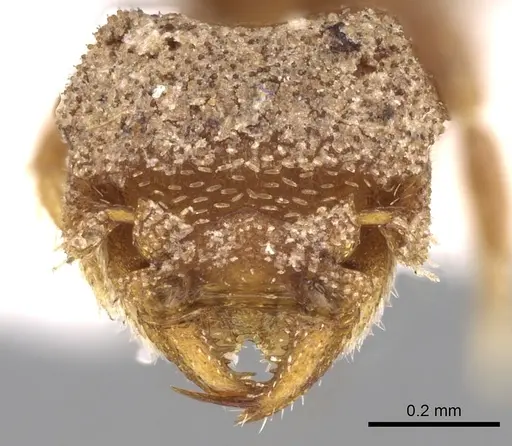
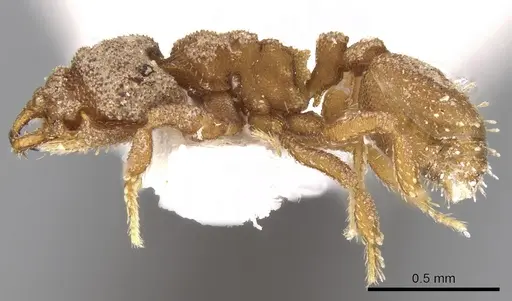
Workers of Rhopalothrix isthmica are tiny at just 2.2mm total length, with a head width (HW) of 0.58-0.68mm [1][2]. The most distinctive features include a head that is broader than long with a strongly concave posterior margin, and mandibles bearing three teeth on the masticatory margin with the middle tooth being the largest [1][2]. The subapical tooth is about twice as long as the apical tooth and has a distinct reclinate denticle at its base [1]. The body is reddish-ferruginous in color with the entire integument being opaque and densely punctate [1]. A key identifying feature is the abundance of squamiform (scale-like) setae on the first gastral segment, covering either the entire segment or at least the posterior half [1]. The propodeal tooth is acute to right-angled, and the infradental lamella (the lamella below the propodeal tooth) is evenly and shallowly concave [1]. These morphological details are important because Rhopalothrix isthmica can be confused with related species like R. megisthmica and R. atitlanica, which occur in the same regions [1].
Housing and Nest Setup
Housing Rhopalothrix isthmica presents unique challenges that make this an expert-only species. Since queens have never been found or described, the only way to obtain a colony would be from the wild, which is extremely difficult given their cryptic leaf-litter lifestyle [1]. If a colony were to be obtained, a naturalistic terrarium setup would be essential rather than conventional ant keeping equipment. The setup should consist of a deep container (at least 10-15cm deep) filled with moist, sifted leaf litter collected from the species' natural habitat. The substrate should be kept consistently humid but never waterlogged, these ants live in wet forest floor conditions [1]. A layer of decaying wood or small pieces of bark on top provides additional microhabitats. Standard test tube setups and formicaria are completely unsuitable for this species because they do not allow the ants to forage through litter like they would in their natural environment. The enclosure should have excellent escape prevention despite their tiny size, they can squeeze through remarkably small gaps.
Feeding and Diet
The natural diet of Rhopalothrix isthmica is essentially unknown, no observations of foraging or feeding have ever been published. As a member of the tribe Attini (which includes fungus-growing ants), this species is taxonomically related to fungus cultivators, but Rhopalothrix specifically is not known to cultivate fungus [3]. The related dacetine ants (like Strumigenys) are specialized predators on tiny arthropods such as springtails and mites. Given the lack of any data on this species' diet, it is extremely uncertain what they would accept in captivity. They would likely require small live prey items similar to what other dacetine ants consume, but this is speculative. Conventional ant foods like sugar water, honey, or insect pieces would almost certainly be refused. This represents one of the major challenges with attempting to keep this species, without knowing what they eat, successful husbandry is nearly impossible.
Challenges and Why This Is an Expert-Only Species
Rhopalothrix isthmica represents one of the most challenging ants to keep in captivity for several fundamental reasons. First and most critically, queens have never been documented in scientific literature, the queen caste is unknown to science [1]. This means there is no established method to obtain a founding queen, and wild colonies are virtually impossible to locate because they live hidden within leaf litter and are only discovered through specialized extraction techniques [1]. Second, no information exists on their diet, reproduction, development, or colony structure, attempting to keep them would be entirely experimental with no established protocols to follow [1]. Third, their entire lifestyle revolves around the forest floor litter layer, requiring a naturalistic setup that is fundamentally different from standard ant keeping methods. Fourth, the high humidity requirements needed to maintain leaf litter environments create constant challenges with mold and fungal growth. For all these reasons, this species should only be attempted by expert antkeepers with extensive experience with cryptic leaf-litter species and the resources to create highly specialized naturalistic enclosures.
Frequently Asked Questions
Can I keep Rhopalothrix isthmica in a test tube?
No, test tubes are completely unsuitable for this species. Rhopalothrix isthmica lives exclusively within the forest floor leaf litter layer and would not survive in a test tube setup. They require a naturalistic terrarium with deep, moist leaf litter substrate to forage through.
How do I get a colony of Rhopalothrix isthmica?
You essentially cannot obtain a colony. Queens have never been found or described in scientific literature, making it impossible to start a colony from a queen [1]. Finding wild colonies is also nearly impossible because these tiny ants live hidden in leaf litter and are only discovered using specialized extraction methods (Winkler samplers) [1]. This species is not available in the ant keeping hobby.
What do Rhopalothrix isthmica ants eat?
Their natural diet is completely unknown, no observations of feeding have ever been documented [1]. As dacetine ants, they might be predators on tiny arthropods like springtails, but this is purely speculative. They would almost certainly refuse conventional ant foods like sugar water or insect pieces.
Are Rhopalothrix isthmica good for beginners?
No. This species is absolutely not suitable for beginners or even intermediate antkeepers. Queens are unknown to science, their diet is unconfirmed, and no captive husbandry protocols exist. This is an expert-only species that should only be attempted by specialists with experience maintaining cryptic leaf-litter ants.
What temperature do Rhopalothrix isthmica need?
Precise temperature requirements are unconfirmed, but being a tropical species they would likely thrive at room temperature around 20-25°C. The species occurs in warm Central American and Colombian forests, so standard room temperatures should be suitable if humidity is maintained.
Do Rhopalothrix isthmica need hibernation?
Unlikely. Being a tropical species from Central America and northern Colombia, they probably do not require a diapause or hibernation period [1]. However, some high-elevation populations (up to 2000m in Guatemala) might experience seasonal temperature variations.
How big do Rhopalothrix isthmica colonies get?
Colony size is unknown. Only small numbers of workers have ever been collected, and the maximum colony size has never been documented [1]. Based on related dacetine ants, colonies are likely small, possibly under 100 workers.
Why are Rhopalothrix isthmica so rarely kept?
This species is nearly impossible to keep because queens have never been found or described, making captive breeding impossible [1]. Additionally, they live entirely within leaf litter, require highly specialized naturalistic setups, and their diet is completely unknown. There are no established husbandry protocols.
References

This caresheet is licensed under CC BY-SA 4.0 .
CASENT0280780
View on AntWeb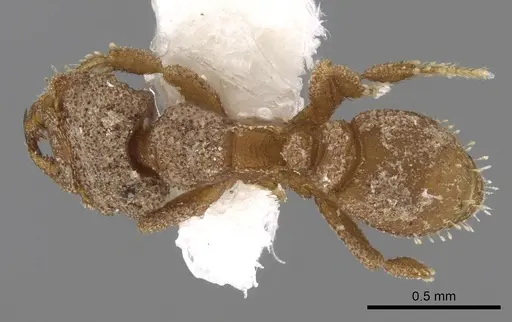
CBUMAGENT41926
View on AntWeb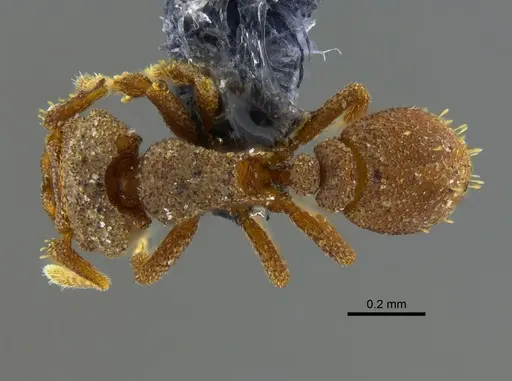
Literature
Loading...Loading products...