

Rhopalothrix ciliata
- Scientific Name
- Rhopalothrix ciliata
- Tribe
- Attini
- Subfamily
- Myrmicinae
- Author
- Mayr, 1870
- Distribution
- Found in 2 countries
Rhopalothrix ciliata Overview
Rhopalothrix ciliata is an ant species of the genus Rhopalothrix. It is primarily documented in 2 countries , including Colombia, Ecuador. Detailed taxonomic data and occurrence records can be further explored via authoritative databases such as AntWeb or the Global Biodiversity Information Facility (GBIF).
Rhopalothrix ciliata
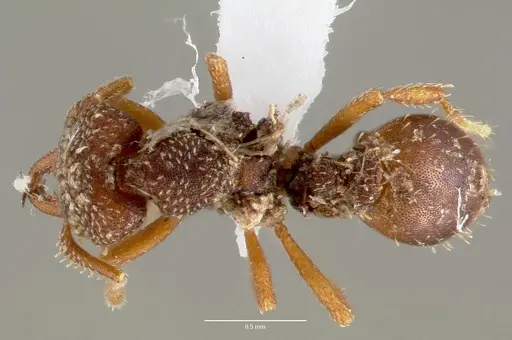
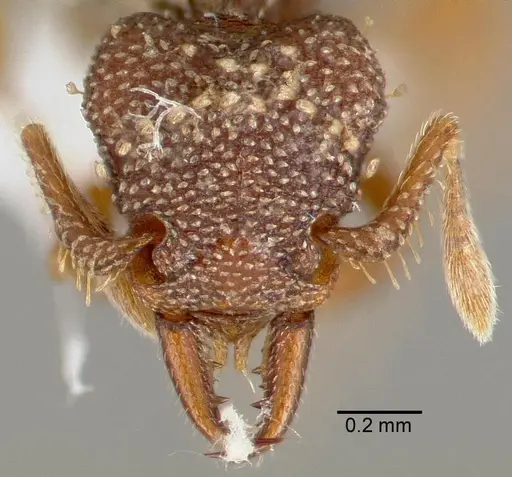
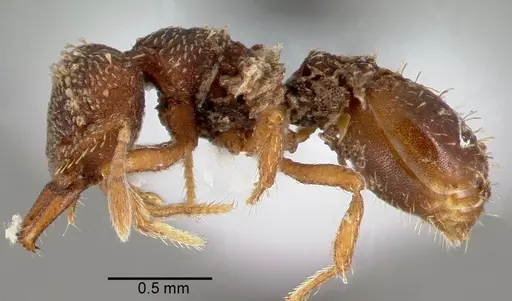
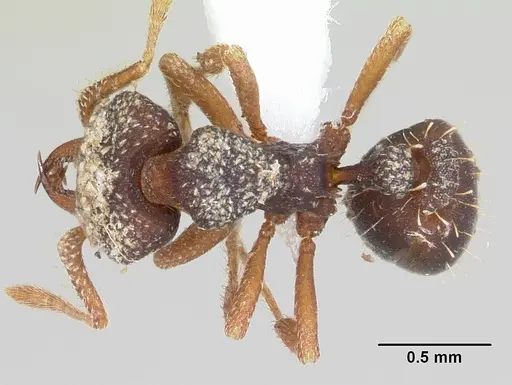
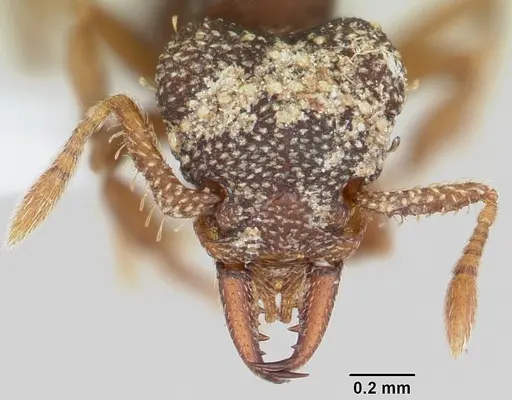
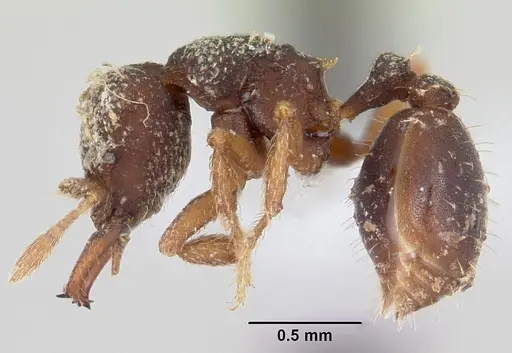
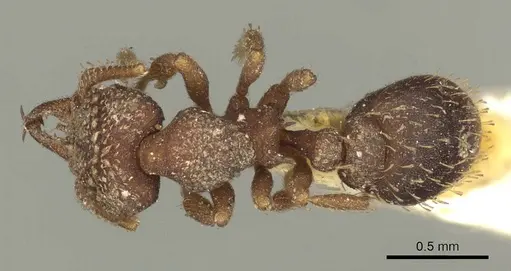
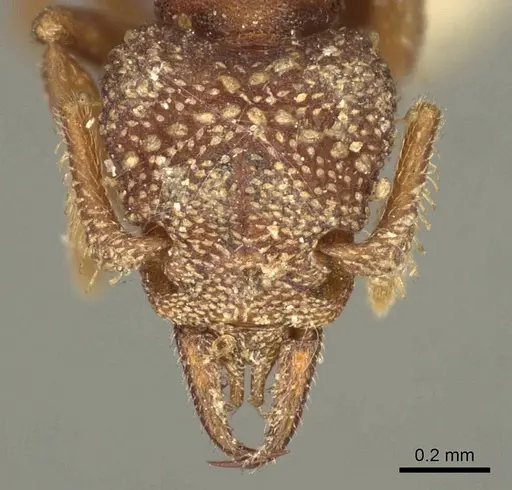
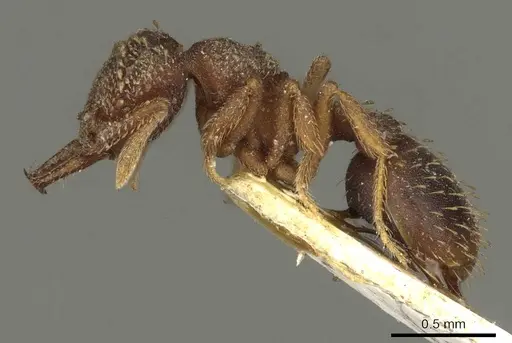
Rhopalothrix ciliata is a tiny leaf litter ant belonging to the tribe Attini (fungus-growing ants), native to the cloud forests of the northern Andes. Workers measure just 2.6-3.1 mm in total length, making them one of the smaller ant species you'll encounter [1][2]. They have a distinctive rusty-brown (ferruginous) coloration with a dark band across the abdomen and yellowish legs, and their most striking feature is the dense covering of scale-like (squamiform) hairs on their face that form an arch across the head [1][2]. These ants are part of the Rhopalothrix genus-group, which are small predators that live in forest floor leaf litter [3].
What makes R. ciliata particularly interesting is its adaptability, while they naturally inhabit cloud forests above 1500 m elevation, they are remarkably abundant in modified environments like coffee agroecosystems that include native trees [2]. This suggests they can tolerate some habitat disturbance. They are collected using Winkler extraction from sifted leaf litter, which tells us they forage deep within the forest floor layer [2].
Quick Summary
- Difficulty: Hard
- Origin & Habitat: Cloud forests and montane evergreen forests of the northern Andes, found at altitudes above 1500 m in Colombia, Ecuador, and Venezuela [2]. They thrive in humid, shaded forest floor environments and are surprisingly abundant in agroecosystems like coffee plantations with native trees [2].
- Colony Type: Colony structure is unconfirmed. No specific data on queen number or colony size in the wild.
- Size & Growth:
- Queen: Unconfirmed, no queen measurements available in the literature
- Worker: 2.6-3.1 mm total length, head width 0.49-0.72 mm, Weber's length 0.49-0.8 mm [2][1]
- Colony: Unknown, no wild colony size data available
- Growth: Unknown, no development data available for this species
- Development: Unknown, no direct development data. Based on typical Attini leaf litter predators (2-5 mm range), estimate 6-10 weeks at optimal temperature [3]. (Development timeline is unconfirmed. Attini generally have moderate development times, but Rhopalothrix are small leaf litter specialists which may differ from typical fungus-farming ants.)
- Antkeeping:
- Temperature: Cool mountain conditions, aim for 18-22°C. These are high-altitude cloud forest ants, so they prefer cooler temperatures than most tropical ants. Avoid temperatures above 25°C [2].
- Humidity: High humidity required, think damp forest floor. Keep the nest substrate consistently moist but not waterlogged, with good ventilation to prevent mold. They naturally live in humid cloud forest leaf litter [2].
- Diapause: Unknown, no specific data on overwintering requirements. Given their high-altitude cloud forest origin, they likely experience seasonal temperature changes and may require a cool period. More research needed.
- Nesting: Naturalistic setup with deep leaf litter layer works best. In captivity, a well-moistened plaster nest or test tube setup with access to a foraging area filled with damp leaf litter mimics their natural environment. They are leaf litter foragers, not arboreal nesters.
- Behavior: These are shy, cryptic leaf litter ants that spend most of their time foraging in the forest floor layer. They are predators, likely hunting small micro-arthropods in the litter. Their small size (under 4mm) means escape prevention is critical, they can slip through surprisingly small gaps. They are not aggressive and will likely flee rather than engage. Activity level is moderate, they forage actively but stay hidden in substrate.
Housing and Nest Setup
Rhopalothrix ciliata requires a naturalistic setup that mimics their leaf litter habitat. A Y-tong (AAC) nest with narrow chambers works well, paired with a foraging area that includes a deep layer of damp leaf litter or coco fiber substrate. The nest chambers should be kept consistently moist but not flooded, these are forest floor ants that need humidity without standing water. Because they are tiny (under 4mm), excellent escape prevention is essential. Use tight-fitting lids and consider fluon on any exposed edges. A small water tube for humidity works better than open water reservoirs since they are so small and can drown easily. Keep the setup in a cool location away from direct heat sources [2].
Feeding and Diet
As leaf litter predators in the tribe Attini, these ants are likely carnivorous, hunting small micro-arthropods like springtails, mites, and other tiny invertebrates found in forest floor litter. Offer small live prey such as flightless fruit flies (Drosophila), small mealworms, and most importantly, live springtails. Springtails are ideal because they match the natural prey size in leaf litter. You could also offer small pieces of insects, but live prey is likely preferred. Sugar sources may be accepted but are not a primary food source for these predatory leaf litter ants. Feed every 2-3 days, removing any uneaten prey to prevent mold. The foraging area should have some substrate depth to allow natural foraging behavior [3].
Temperature and Humidity
These are cool-adapted cloud forest ants from high altitudes in the Colombian Andes. Keep temperatures in the range of 18-22°C, never let them experience prolonged temperatures above 25°C. Room temperature (around 20°C) is ideal for this species. They need high humidity, similar to damp forest floor conditions. Maintain moisture in the nest substrate without saturating it, and provide a humidity gradient so ants can choose their preferred zone. A small water tube or moist cotton in the outworld helps maintain humidity. Avoid placing the setup near heating elements or in direct sunlight. If your room is warm, consider a small cooling method or keep them in a cooler area of your ant room [2].
Handling and Temperament
Rhopalothrix ciliata is a shy, cryptic species that avoids confrontation. Workers are tiny and not equipped for aggressive defense, they will likely flee and hide rather than bite or sting. When working with them, go slow and gentle. Because of their small size, they are also fragile. Avoid disturbing the colony unnecessarily, especially during founding and early development. They are not suitable for observation-focused keeping since they spend most of their time hidden in leaf litter. Instead, appreciate them as a naturalistic setup species where you can watch subtle foraging activity. Escape prevention is critical, their tiny size means they can slip through gaps you wouldn't expect [1][2].
Growth and Development
Specific development data for R. ciliata is not available in the scientific literature. Based on typical Attini leaf litter predators in the 2-5 mm size range, expect development from egg to first worker to take approximately 6-10 weeks at optimal temperature (around 20°C). The first workers (nanitics) will likely be smaller than mature workers. Growth rate is unknown but likely moderate, these are small ants with presumably moderate metabolic rates. Be patient with this species, as leaf litter ants often develop more slowly than larger, more visible species. Monitor for brood development but avoid disturbing the nest frequently. Colonies likely remain small (under 100 workers) given their tiny worker size and leaf litter habitat [3].
Frequently Asked Questions
How long does it take for Rhopalothrix ciliata to produce first workers?
The exact timeline is unconfirmed, but based on typical Attini leaf litter predators, expect 6-10 weeks from egg to first worker at optimal temperature (around 20°C). This is an estimate based on related species, no specific development data exists for R. ciliata.
What do Rhopalothrix ciliata ants eat?
They are leaf litter predators that hunt small micro-arthropods. Feed them live springtails, small fruit flies (Drosophila), and tiny insects. Springtails are ideal as they match their natural prey size. Occasional small insect pieces may be accepted, but live prey is preferred.
Can I keep Rhopalothrix ciliata in a test tube?
A test tube setup can work for founding colonies, but they do better in a naturalistic setup with a deep leaf litter or coco fiber layer in the foraging area. If using test tubes, ensure excellent escape prevention, they are tiny and can slip through small gaps. A Y-tong nest with moist chambers is a good option for established colonies.
What temperature do Rhopalothrix ciliata ants need?
Keep them cool at 18-22°C. These are high-altitude cloud forest ants that prefer cooler temperatures than most tropical ants. Never expose them to temperatures above 25°C for prolonged periods. Room temperature around 20°C is ideal.
Are Rhopalothrix ciliata ants good for beginners?
No, this is a difficult species to keep. They require specific cool, humid conditions, tiny live prey, and excellent escape prevention. Their colony structure and exact care requirements are poorly documented. This species is best suited for experienced antkeepers who can provide specialized leaf litter predator setups.
How big do Rhopalothrix ciliata colonies get?
Colony size is unknown, no wild colony data exists. Based on their tiny worker size (2.6-3.1 mm) and leaf litter habitat, colonies likely remain relatively small, probably under 100 workers. They are cryptic leaf litter specialists, not large colony-forming ants.
Do Rhopalothrix ciliata ants need hibernation?
Diapause requirements are unconfirmed. Given their high-altitude cloud forest origin in the Colombian Andes, they likely experience seasonal temperature variations. A cool period (15-18°C) during winter months may be beneficial, but specific requirements are not documented. More research is needed.
Why are my Rhopalothrix ciliata ants dying?
Common causes include: temperatures too high (above 25°C), low humidity, lack of appropriate live prey, or escape/small prey items causing mortality. These are sensitive leaf litter specialists. Ensure cool temperatures, high humidity, and offer small live prey like springtails. Also check for drowning risk in water tubes, their tiny size makes them vulnerable.
When should I move Rhopalothrix ciliata to a formicarium?
Wait until the colony has at least 20-30 workers before moving to a formicarium. They do well in Y-tong nests with naturalistic outworlds. For founding colonies, keep them in a simple test tube setup with a damp cotton ball and minimal disturbance until the first workers emerge, then gradually transition to a proper setup.
References

This caresheet is licensed under CC BY-SA 4.0 .
Literature
Loading...Loading products...