

Rhopalomastix johorensis
- Scientific Name
- Rhopalomastix johorensis
- Tribe
- Crematogastrini
- Subfamily
- Myrmicinae
- Author
- Wheeler, 1929
- Distribution
- Found in 3 countries
Rhopalomastix johorensis Overview
Rhopalomastix johorensis is an ant species of the genus Rhopalomastix. It is primarily documented in 3 countries , including Malaysia, Singapore, Thailand. Detailed taxonomic data and occurrence records can be further explored via authoritative databases such as AntWeb or the Global Biodiversity Information Facility (GBIF).
Rhopalomastix johorensis
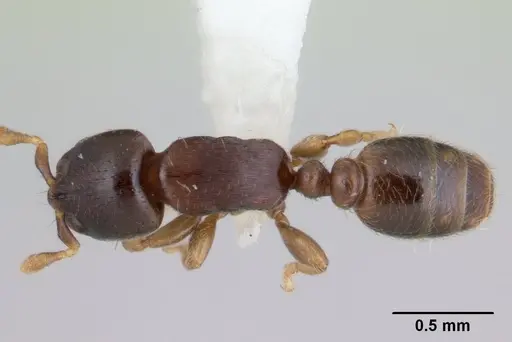
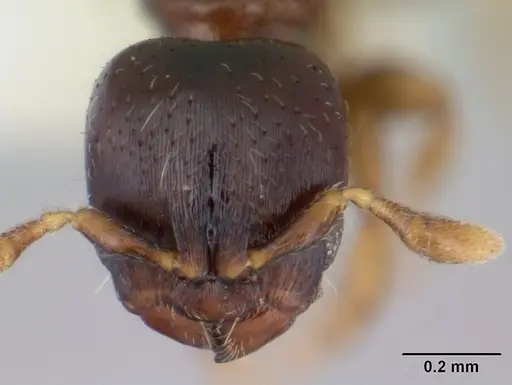
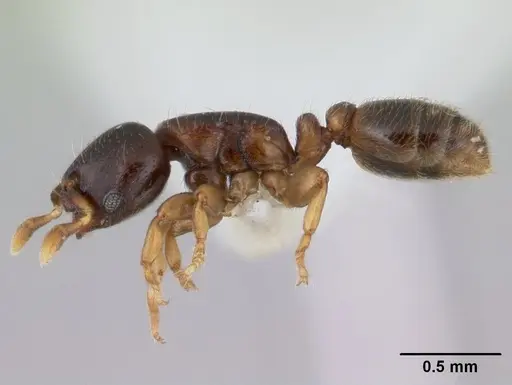
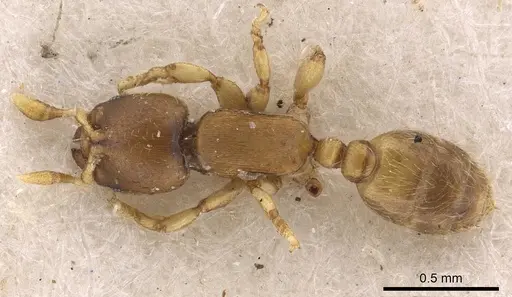
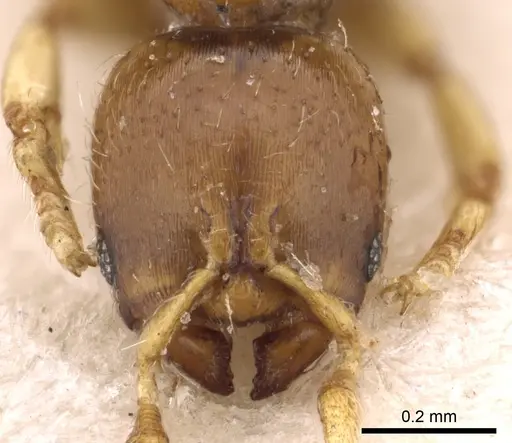
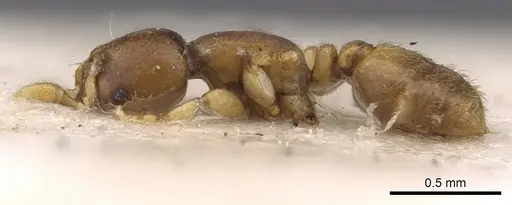
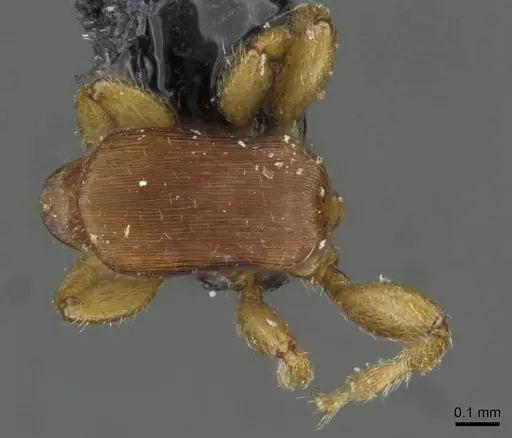
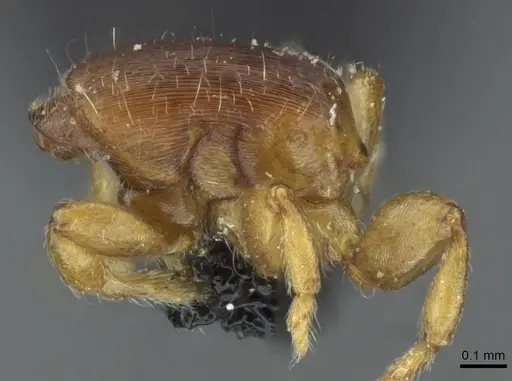
Rhopalomastix johorensis is a small Myrmicinae ant native to Singapore, Thailand, and West Java, Indonesia. Workers measure just 1.84-2.43mm and display a broad size variation within colonies, with smaller workers being pale yellowish-brown and larger workers appearing darker brown or reddish-brown [1]. The head and mesosoma are notably darker than the rest of the body. Queens are larger at 2.53-3.1mm and appear uniformly dark brown/blackish [1]. This species is remarkable for being only the second ant genus in the world known to live in close association with armoured scale insects (Diaspididae), hosting species like Rhopalaspis peetersi within their nest galleries [2][3].
Quick Summary
- Difficulty: Medium
- Origin & Habitat: Native to Southeast Asia, Singapore, Thailand, and West Java, Indonesia. Found in the bark of cultivated fruit trees (especially mango) on roadsides and plantations close to human dwellings, as well as in wild trees in secondary forests, disturbed forests, and primary evergreen and peat swamp forests [1][3].
- Colony Type: Colony structure is not well-documented in scientific literature. Workers are monomorphic with broad size variation, meaning they come in different sizes but all look similar [1]. The presence of ergatoid (wingless) replacement reproductives has not been documented for this species.
- Size & Growth:
- Queen: 2.53-3.1mm [1]
- Worker: 1.84-2.43mm [1]
- Colony: Unknown, likely small to moderate based on related Myrmicinae species
- Growth: Moderate, estimated based on tropical Myrmicinae patterns
- Development: 6-8 weeks (estimated based on typical Myrmicinae development in tropical conditions) (Development time is not directly studied for this species. Estimates based on genus-level patterns for small tropical Myrmicinae ants.)
- Antkeeping:
- Temperature: Keep at 24-28°C, they are a tropical species from Singapore and Thailand where temperatures stay warm year-round [1]. A gentle gradient is helpful.
- Humidity: Moderate to high, they nest in tree bark which provides humid but ventilated conditions. Allow some drying between water additions.
- Diapause: No, as a tropical species, they do not require hibernation. Keep temperatures stable year-round.
- Nesting: This is a bark-nesting species. In captivity, they do best in naturalistic setups with flat stones, cork bark, or similar materials that mimic tree bark. They will not do well in standard test tube setups. The inner bark must be at least 3mm thick and soft fibrous [3].
- Behavior: These ants are relatively docile and not aggressive. Workers are active foragers that sometimes briefly leave the nest entrance during the day [3]. They have a unique mutualistic relationship with armoured scale insects, which they protect and tend for honeydew. This makes them different from typical antkeepers' species, they are not easy sugar-feeders and rely on their scale insect partners. They are small but not particularly prone to escaping if given proper housing.
- Common Issues: they are not typical antkeeping species, their dependence on scale insects makes them difficult to keep long-term, bark-nesting requirement means standard test tube setups will not work, escape prevention is important given their small size, they may not accept standard ant foods, their diet depends on scale insect honeydew, wild-caught colonies may carry parasites or be stressed from collection
Housing and Nest Setup
Rhopalomastix johorensis requires a completely different approach than most ant species kept in captivity. These are bark-nesting ants that naturally live in the soft inner bark of trees like mango, durian, and Macaranga [1][3]. In captivity, you cannot use standard test tubes or Y-tong nests. Instead, set up a naturalistic terrarium with pieces of cork bark, flat stones, or wood pieces that the ants can nest beneath or inside. The nesting material must have inner bark at least 3mm thick that is soft and fibrous [3]. Place the nest setup in a warm, humid area of the terrarium. You will also need to establish and maintain a population of armoured scale insects (Diaspididae), specifically species like Pseudaulacaspis samoana or Rhopalaspis peetersi, as these are the ants' primary food source [3]. This makes R. johorensis one of the most challenging species to keep, as they are specialized mutualists.
Feeding and Diet
This is the most critical and challenging aspect of keeping Rhopalomastix johorensis. Unlike most ant species that readily accept sugar water, honey, or protein foods, R. johorensis is specialized to feed on honeydew produced by armoured scale insects (Diaspididae) [3][2]. In fact, this ant genus is only the second in the world known to have such a relationship with armoured scale insects, the first being the African genus Melissotarsus [2]. The ants protect the scale insects and in return feed on their honeydew secretions. In captivity, you would need to culture appropriate scale insect species and maintain them within the ant nest setup. Attempting to keep these ants without their scale insect partners will likely result in starvation. This species is NOT recommended for beginners specifically because of its specialized dietary requirements.
Temperature and Care
As a tropical species from Singapore and Thailand, Rhopalomastix johorensis requires warm temperatures year-round. Keep the nest area at 24-28°C, which mimics their natural environment in Southeast Asia [1]. Room temperature within this range is acceptable. They do not require any cooling or hibernation period, in fact, temperature drops below 20°C could be harmful. Provide a gentle thermal gradient so the ants can choose their preferred temperature. Since they nest in tree bark, they prefer humid conditions but need adequate ventilation to prevent mold. Mist the terrarium occasionally and ensure the substrate stays slightly moist but not waterlogged.
Behavior and Temperament
Rhopalomastix johorensis workers are relatively docile and not aggressive toward keepers. They are active foragers, with some workers briefly exiting the nest entrance during daylight hours [3]. Unlike many Myrmicinae, they do not have a functional stinger, Myrmicinae ants have stingers but they are relatively weak compared to Ponerinae species. The most notable aspect of their behavior is their mutualistic relationship with scale insects. The ants tend and protect scale insect colonies, and in return the scale insects produce honeydew that the ants feed on. This relationship is so specialized that the ants cannot survive without their insect partners. Colonies may contain multiple scale insect species including Pseudaulacaspis samoana, Rhopalaspis peetersi (a newly discovered genus), and Mangaspis sp. [3].
Origin and Distribution
This species is native to the Indomalaya region, specifically found in Singapore, Thailand, and West Java, Indonesia [1]. In Thailand, colonies are commonly found in the bark of cultivated mango trees along roadsides and in plantations, often close to human dwellings [1]. They have also been collected from wild trees including Azadirachta excelsa in primary evergreen and peat swamp forests of southern Thailand [1]. In Singapore, colonies have been found in various native tree species like Campnosperma auriculatum and Macaranga gigantea in nature reserves [3]. This arboreal nesting habit explains why they are found so often in fruit trees near human habitation.
Frequently Asked Questions
Can I keep Rhopalomastix johorensis in a test tube?
No, test tubes will not work for this species. Rhopalomastix johorensis are bark-nesting ants that naturally live inside tree bark [3]. They need a naturalistic setup with cork bark, flat stones, or similar materials that mimic their natural nesting environment. The inner bark they nest in must be at least 3mm thick and soft fibrous [3].
What do Rhopalomastix johorensis eat?
This species has a highly specialized diet, they feed primarily on honeydew from armoured scale insects (Diaspididae). This is one of only two ant genera in the world known to have this relationship with armoured scale insects [2]. You cannot keep these ants with standard ant foods. To successfully maintain R. johorensis, you would need to culture scale insects like Pseudaulacaspis samoana or Rhopalaspis peetersi within their nest setup [3].
How long does it take for Rhopalomastix johorensis to develop from egg to worker?
The exact development time has not been scientifically documented for this species. Based on typical patterns for small tropical Myrmicinae ants, estimate around 6-8 weeks from egg to first worker at optimal warm temperatures (around 26°C). This is an educated estimate rather than a confirmed timeline.
Do Rhopalomastix johorensis ants sting?
Rhopalomastix johorensis is a Myrmicinae ant, a subfamily that includes many species with functional stingers. However, this particular species is not known for being aggressive or for having a painful sting. They are relatively docile ants that focus on their mutualistic relationship with scale insects rather than defending against threats.
Are Rhopalomastix johorensis good for beginners?
No, this species is NOT recommended for beginners. While they are small and docile, their extremely specialized dietary requirements make them one of the most difficult ants to keep. They require maintaining a culture of armoured scale insects (Diaspididae) as their primary food source [3][2]. Without these scale insects, the ants will starve. Most antkeepers should choose a more standard species like Lasius, Camponotus, or Tetramorium for their first colony.
How big do Rhopalomastix johorensis colonies get?
The maximum colony size is not well-documented in scientific literature. Based on related small Myrmicinae species and their bark-nesting lifestyle, colonies likely reach a few hundred workers at most. The species shows broad size variation among workers (1.84-2.43mm), with larger colonies having more large workers [1].
Do Rhopalomastix johorensis need hibernation?
No, as a tropical species from Singapore and Thailand, they do not require hibernation or winter cooling [1]. Keep them warm year-round at 24-28°C. Temperature drops below 20°C could be harmful to the colony.
Where is Rhopalomastix johorensis found in the wild?
This species is native to Southeast Asia, specifically Singapore, Thailand, and West Java, Indonesia [1]. They nest in the bark of fruit trees like mango and durian, often close to human dwellings. They are also found in wild trees in secondary forests, disturbed forests, and primary evergreen and peat swamp forests [1][3].
Can I keep multiple queens together?
The colony structure (monogyne vs polygyne) has not been documented for this species. Given their specialized biology and the difficulty of keeping them, it is not recommended to attempt combining unrelated queens. Focus on establishing a single healthy colony with its scale insect partners first.
Why is Rhopalomastix johorensis special?
Rhopalomastix johorensis is one of only two ant genera in the world known to live in association with armoured scale insects (Diaspididae) [2]. This mutualistic relationship is extremely rare in the ant world. The ants protect the scale insects, and in return feed on the honeydew the scale insects produce. A new genus and species of scale insect (Rhopalaspis peetersi) was even discovered living in these ant nests [2].
References

This caresheet is licensed under CC BY-SA 4.0 .
Literature
Loading...Loading products...