

Rasopone pluviselva
- Scientific Name
- Rasopone pluviselva
- Tribe
- Ponerini
- Subfamily
- Ponerinae
- Author
- Longino & Branstetter, 2020
- Distribution
- Found in 2 countries
Rasopone pluviselva Overview
Rasopone pluviselva is an ant species of the genus Rasopone. It is primarily documented in 2 countries , including Costa Rica, Nicaragua. Detailed taxonomic data and occurrence records can be further explored via authoritative databases such as AntWeb or the Global Biodiversity Information Facility (GBIF).
Rasopone pluviselva
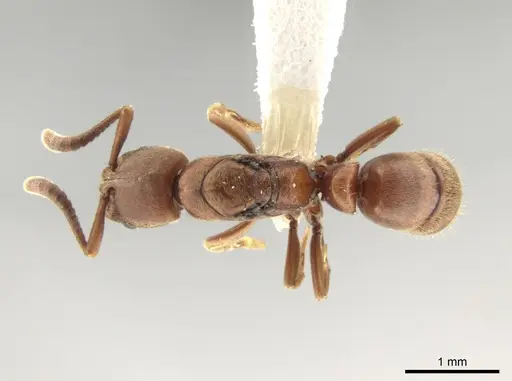
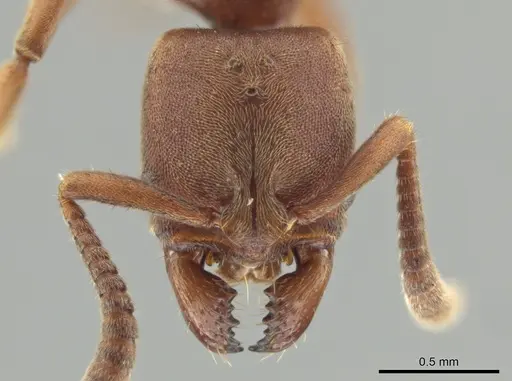
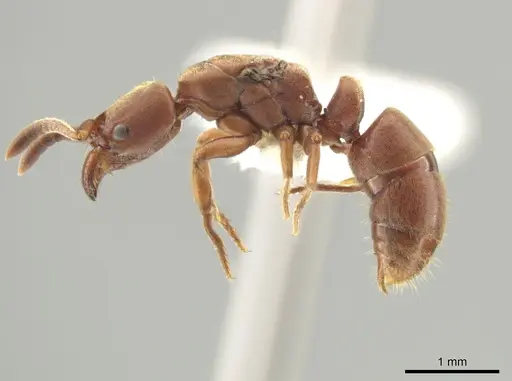
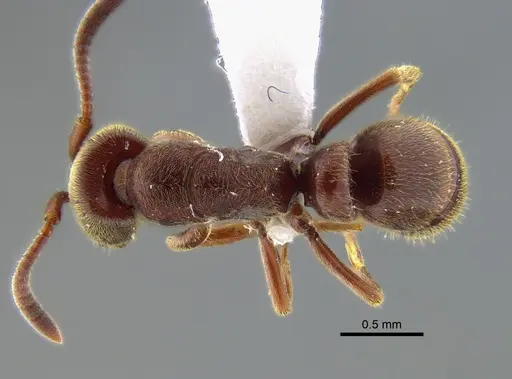
Rasopone pluviselva is a small Ponerine ant native to Central America, ranging from Honduras to Panama [1]. Workers are tiny at only 0.80-0.91mm head width, making them among the smallest in the genus, one of just two species with mean HW under 0.9mm [1]. They have an orange coloration with smooth to faintly striate mandibles and a distinctive truncate anterior clypeal margin [1]. These ants inhabit lowland wet to seasonal dry forests at elevations between 50-1100 meters [1].
This is a recently described species (2020), so captive care information is limited. Based on their natural habitat in tropical forests and membership in the Ponerinae subfamily, they likely have functional stingers, a characteristic of this subfamily. They appear to be ground-dwelling ants found in leaf litter samples and occasionally beneath stones [1].
Quick Summary
- Difficulty: Unknown, too little captive data to assess
- Origin & Habitat: Lowland wet to seasonal dry forest in Central America, from Honduras (La Mosquitia) to Panama, elevation 50-1100m [1][2]
- Colony Type: Colony structure is unconfirmed. Most specimens collected are workers with occasional dealate queens in Winkler samples [1]. No data on whether they are single-queen or multi-queen colonies.
- Size & Growth:
- Queen: 0.84-0.91mm head width [1]
- Worker: 0.80-0.91mm head width [1]
- Colony: Unknown, no colony size data available
- Growth: Unknown, no development data for this species
- Development: Unknown, no direct measurements. Based on typical Ponerine patterns, estimate 6-10 weeks at warm tropical temperatures, but this is a rough guess. (Development timeline has not been studied. This is a newly described species with no captive breeding data.)
- Antkeeping:
- Temperature: Likely need warm conditions matching their tropical origin. Based on lowland forest habitat (50-1100m elevation), aim for roughly 24-28°C with a gradient. This is inferred from habitat, not confirmed.
- Humidity: Require high humidity matching their wet forest origin. Keep substrate consistently moist but not waterlogged. Provide a water reservoir in the nest setup.
- Diapause: Unknown, tropical species may not require true diapause, but may have reduced activity during dry seasons.
- Nesting: Based on collection data (Winkler samples from leaf litter, workers found beneath stones), they likely nest in soil or under objects in forest floor microhabitats. A naturalistic setup with moist substrate and flat stones or a plaster/acrylic nest with good humidity retention would be appropriate.
- Behavior: Behavior is unstudied in captivity. Based on genus placement in Ponerinae, they are likely predatory on small invertebrates and may have functional stingers for subdueing prey. Their tiny size and ground-nesting habits suggest they are shy and not aggressive toward humans. Escape prevention is critical due to their very small size, they can squeeze through standard mesh barriers.
- Common Issues: no captive care data exists, this species has never been kept by hobbyists, very small size means escapes are likely without fine mesh barriers, tropical humidity needs may be difficult to maintain consistently, no information on accepted foods, diet is completely unknown, no data on founding behavior or colony development timeline
Species Discovery and Identification
Rasopone pluviselva was only recently described in 2020 by Longino and Branstetter through phylogenetic analysis [1]. It was previously confused with the similar species R. minuta, but differs in having shorter scapes (mean SI 73 vs 77) [1]. The species is allopatric with R. minuta, occurring east and south of Sierra de Agalta in Honduras [1]. DNA analysis (COI data) reveals four geographically structured BINs (Barcode Index Numbers), suggesting there may be cryptic diversity within what is currently described as a single species [1]. The type specimens were collected from La Selva Biological Station in Costa Rica and other sites across Central America using Winkler extraction from sifted leaf litter [1].
Natural History and Habitat
In the wild, Rasopone pluviselva inhabits lowland wet to seasonal dry forests across Central America at elevations from 50 to 1100 meters [1]. Most specimens are collected through Winkler extraction of sifted leaf litter, indicating they are leaf-litter dwelling ants that live in the forest floor microhabitat [1]. One worker was hand-collected beneath a stone, suggesting they sometimes nest under rocks or logs [1]. A worker was also collected from vegetation beating at a 1100m site, showing they can forage in low vegetation as well [1]. Alate (winged) queens have been collected in February via Malaise trap, suggesting nuptial flights occur during the dry season in this region [1].
Identification and Morphology
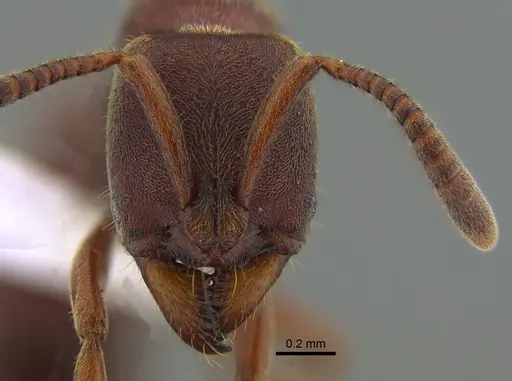
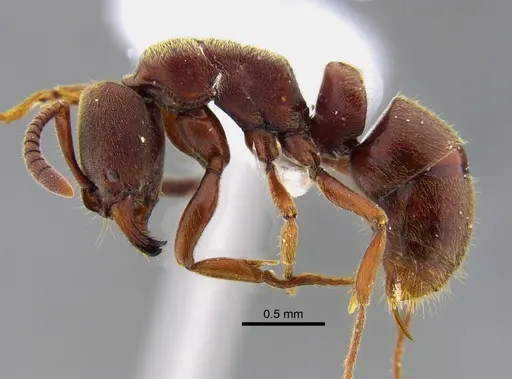
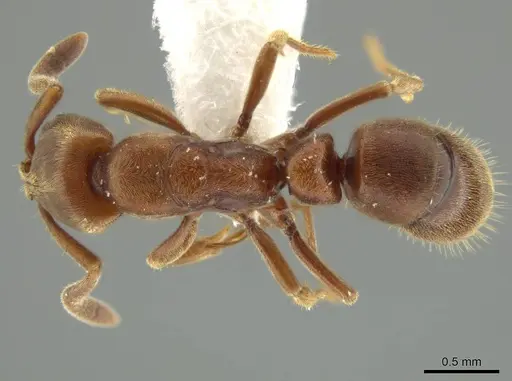
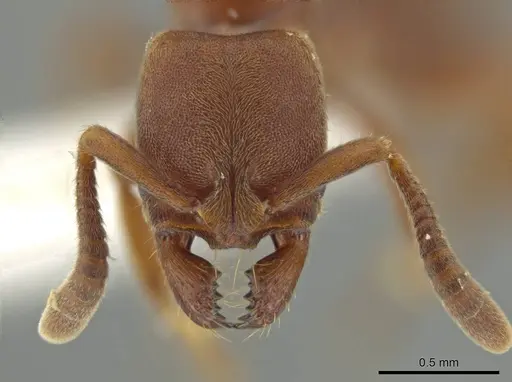
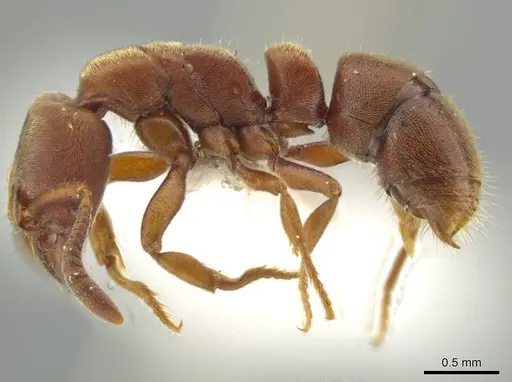
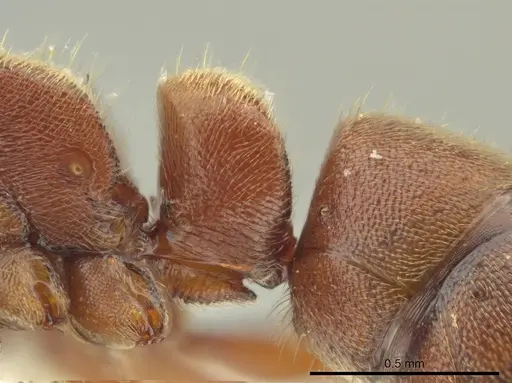
Workers of Rasopone pluviselva are among the smallest in the genus, with a head width of only 0.80-0.91mm (mean 0.84mm) [1]. Queens are slightly larger at 0.84-0.91mm head width [1]. They have an orange body coloration, smooth to faintly striate mandibles, and a truncate anterior clypeal margin (the front edge of the face is flat rather than rounded) [1]. The sides of the head are bare or have only a few inconspicuous erect setae [1]. The petiolar node (the connection between the thorax and abdomen) is moderately tapering and scale-like [1]. These morphological features help distinguish them from the similar R. minuta, which has longer scapes (mean SI 77 vs 73) [1].
Housing and Captive Care
Since this species has never been kept in captivity, all care recommendations are educated guesses based on natural history. Provide a naturalistic or plaster nest setup with consistently moist substrate, these are forest floor ants that need humidity [1]. A water reservoir in the nest setup helps maintain moisture levels. Temperature should be warm (24-28°C) matching their tropical lowland origin [1]. Because they are extremely tiny (under 1mm), escape prevention must be excellent, use fine mesh barriers and tight-fitting lids. Start with a test tube or small container setup and only move to a larger formicarium once the colony establishes. Feed small live prey appropriate to their size, likely small insects or micro-arthropods based on Ponerine predatory habits. Do not release this species or any ant outside its native range.
Diet and Feeding
The diet of Rasopone pluviselva has not been studied, but as a Ponerine ant, they are likely predatory on small invertebrates. In captivity, you should probably offer small live prey such as fruit flies, pinhead crickets, or other tiny arthropods appropriate to their minute size. The genus Rasopone is in the tribe Ponerini, members of which typically hunt and subdue prey using their stinger. Sugar sources may be accepted but are not a primary diet component for predatory Ponerines. Start with small live prey and observe acceptance. Remove uneaten prey after 24-48 hours to prevent mold.
Safety and Handling
Rasopone belongs to the Ponerinae subfamily, which includes ants with functional stingers. While this specific species has not been studied for sting potency, Ponerine ants can deliver painful stings. However, given their extremely small size (under 1mm), any sting would likely be very mild. They are not aggressive toward humans and would only sting if directly handled or threatened. For safety, use caution when working with the colony and consider using gloves or forceps when necessary. Their tiny size actually makes them more likely to be overlooked than to pose a stinging threat.
Frequently Asked Questions
How long does it take for Rasopone pluviselva to develop from egg to worker?
The development timeline has not been studied for this species. Based on typical Ponerine ant development patterns, estimate roughly 6-10 weeks from egg to first worker at warm tropical temperatures (around 26°C). This is a rough guess since no direct data exists for this newly described species.
What do Rasopone pluviselva ants eat?
Diet has not been documented for this species. As Ponerine ants, they are likely predatory on small invertebrates. In captivity, you should offer small live prey such as fruit flies, tiny crickets, or other micro-arthropods appropriate to their minute size. Sugar water may be accepted but is not a primary food source.
Can I keep Rasopone pluviselva in a test tube setup?
A test tube setup would work for a founding colony. These are very small ants (workers under 1mm), so ensure the cotton is packed tightly to prevent escapes. Once the colony grows, transition to a naturalistic or plaster nest with moist substrate.
Are Rasopone pluviselva good for beginners?
This species cannot be recommended for beginners because no captive care information exists. This is a newly described species (2020) that has never been kept by antkeepers. There is no data on diet acceptance, development timeline, or colony needs. Consider starting with better-documented species like Lasius, Camponotus, or Tetramorium.
What temperature do Rasopone pluviselva need?
Temperature requirements are not confirmed for this species. Based on their natural habitat in lowland tropical forests (50-1100m elevation), aim for warm conditions around 24-28°C. Provide a temperature gradient so the ants can choose their preferred zone.
How big do Rasopone pluviselva colonies get?
Colony size data is not available for this species. Most specimens collected are workers with occasional dealate queens in Winkler samples, suggesting colonies exist but typical size is unknown. Related Rasopone species typically have moderate-sized colonies.
Do Rasopone pluviselva need hibernation?
Hibernation requirements are unknown. As a tropical species from Central America, they likely do not require true diapause. However, they may have reduced activity during the dry season. Do not attempt hibernation until more is known about their biology.
What humidity do Rasopone pluviselva need?
Humidity requirements are not documented but based on their wet forest habitat, they likely need high humidity. Keep the nest substrate consistently moist but not waterlogged. A humidity range of 70-80% is a reasonable starting point.
Why are my Rasopone pluviselva dying?
Without any captive data, we cannot identify specific causes of colony failure. However, common issues with poorly-known species include: incorrect humidity (too dry or too wet), inappropriate temperature, stress from handling, and acceptance of captive foods. Ensure excellent escape prevention as they are extremely tiny. Consider consulting with experienced keepers of other Ponerine species.
References

This caresheet is licensed under CC BY-SA 4.0 .
Literature
Loading...Loading products...