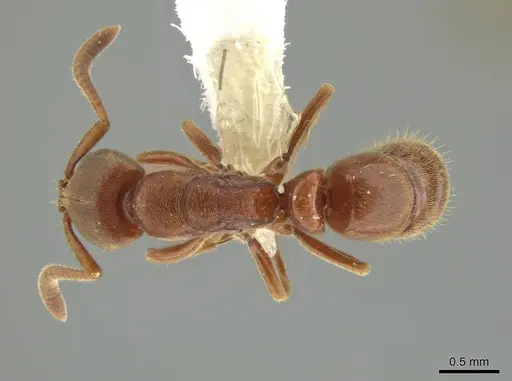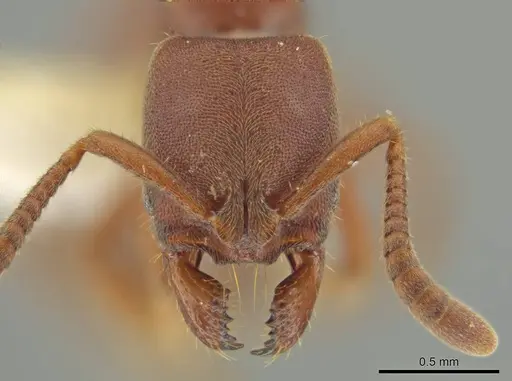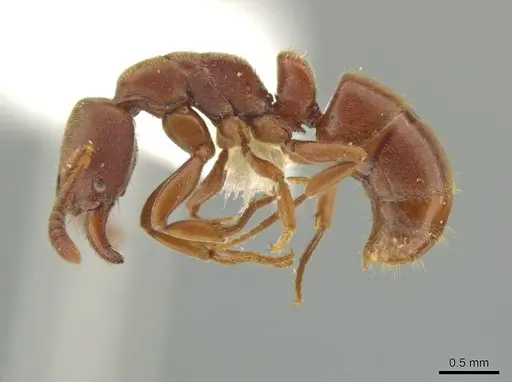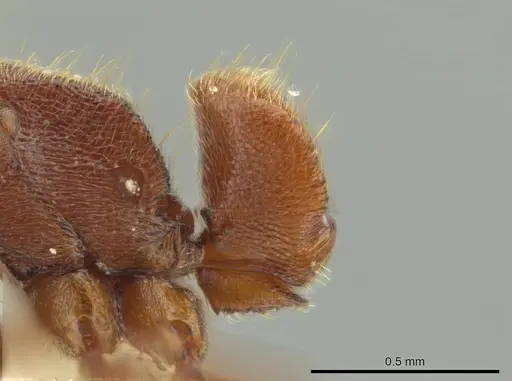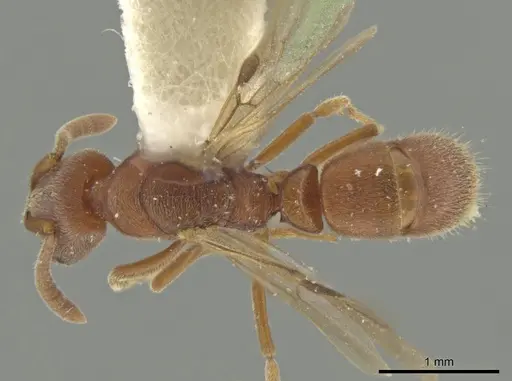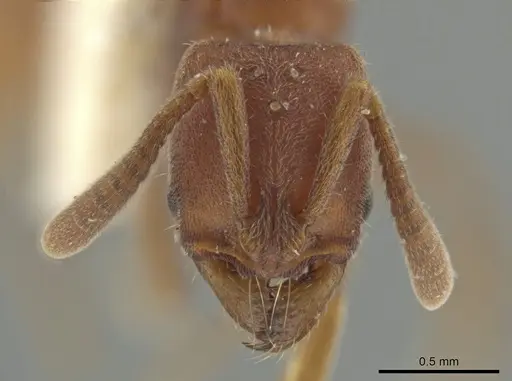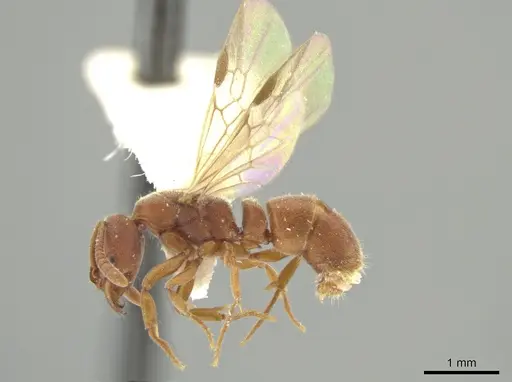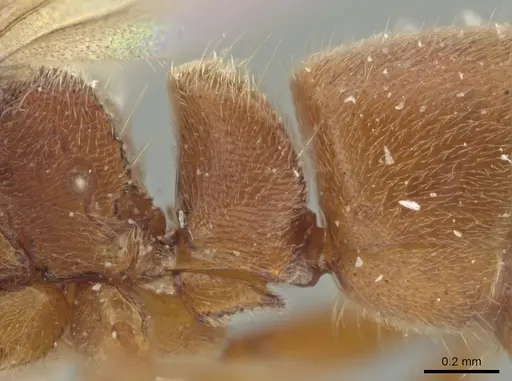
Rasopone minuta - "Minute Rasopone Ant"
Rasopone minuta is a small, reddish-brown ant species belonging to the Ponerinae subfamily. Queens of this species are tiny, measuring about 4 millimeters in length, with distinctive mandibles featuring seven teeth. Workers are slightly larger, around 4.5 mm. These ants are known to forage on the ground during the day. The genus Rasopone is restricted to Central and South America, with species typically found in rainforests, foraging in leaf litter and rotten wood.
- Difficulty: Medium
- Origin & Habitat: Central and South America (Mexico, Guatemala, Belize, Honduras, Venezuela) in Tropical forests, disturbed tropical rainforest, cloud forests, under stones in clay soil, leaf litter, rotten wood.
- Colony Type: Monogyne, claustral founding.
- Size & Growth:
- Queen: 4-4mm
- Worker: 4.5-4.5mm
- Colony: Small (hundreds). Slow growth.
- Antkeeping:
- Temperature: Maintain temperatures between 24-28°C (75-82°F). As a tropical species, they thrive in warmer conditions. Consistent temperature is crucial for their brood development and overall colony health..
- Humidity: High humidity, around 70-90%, is essential. Their natural habitat is damp, so ensure their nest stays moist, especially in the brood chambers. Proper ventilation is also important to prevent mold..
- Diapause: Not required. Not specified at Not specified.
- Nesting: They prefer natural setups like ytong or acrylic nests with a constant humidity gradient. Given their natural tendency to nest under stones in clay soil or in rotten wood and leaf litter, setups that mimic these conditions are ideal..
- Behavior: Medium (towards prey, low towards handler unless provoked) aggressiveness.
- Common Issues: Humidity fluctuations, Lack of adequate protein, Mold in nest, Colony stalling due to stress.
Keeping Rasopone minuta requires a keen eye for detail, particularly concerning humidity. These ants originate from tropical forests where stable, high humidity is the norm. Without adequate moisture, their brood can quickly dry out, leading to a stalled colony or even colony collapse. Regularly check the hydration of their nest and consider a setup that allows for a steady moisture gradient, like a naturalistic terrarium with plenty of substrate. Mist their outworld lightly a few times a week to simulate natural condensation.
Their dietary needs are typical for Ponerine ants, meaning a strong emphasis on protein. They are active hunters in their natural environment, so offering a varied diet of small feeder insects like fruit flies, roaches, or even tiny crickets is vital. Make sure any insects offered are live or freshly killed to entice their predatory instincts. Supplementing with a sugar source, such as honey water or sugar water, is also important for the queen and general worker energy, but protein should be the focus.
Observing Rasopone minuta can be quite rewarding, but their small size and often cryptic behavior mean you'll need patience. They are known to forage on the ground, so a well-designed outworld with some natural elements like small twigs or leaf litter can encourage more visible activity. Keep the lighting subdued as bright lights might deter them from exploring. Their subtle movements and hunting strategies offer fascinating insights into their world.
Due to their specific humidity and protein requirements, Rasopone minuta is best suited for ant keepers with some experience. Beginners might find the precise environmental control challenging. It's crucial to research and understand the needs of Ponerine ants before attempting to keep this species to ensure a healthy and thriving colony. Joining online antkeeping communities can provide valuable tips and support from others with experience in similar species.
Frequently Asked Questions
What kind of nest is best for *Rasopone minuta* colonies?
For your Rasopone minuta colony, an acrylic or ytong nest that allows for a stable humidity gradient is ideal. Think about incorporating natural elements into their outworld, like leaf litter or small pieces of rotten wood, to replicate their natural foraging environment. Remember, they love damp conditions, so a nest that holds moisture well is a must-have!
How do I feed *Rasopone minuta*?
These ants are primarily protein-eaters, so a steady supply of small feeder insects is key. Fruit flies, tiny crickets, or even small roaches work wonders. Always ensure the insects are fresh or recently deceased to trigger their hunting instincts. You can offer a small amount of sugar water or honey water too, but protein should be the main course for these active foragers.
Do *Rasopone minuta* queens have workers during founding?
Rasopone minuta queens are claustral, meaning they seal themselves in a chamber and raise their first batch of workers without needing to forage. This initial period is critical for their survival, so it’s best to leave them undisturbed during this phase.
Are *Rasopone minuta* difficult to keep?
While not for absolute beginners, Rasopone minuta can be successfully kept by intermediate ant keepers. Their specific needs for high humidity and a protein-rich diet, typical of many Ponerine ants, require a bit more attention and experience than a basic garden ant species. Getting their environmental conditions just right is the main challenge.
What kind of humidity do *Rasopone minuta* ants need?
High humidity is non-negotiable for Rasopone minuta. Aim for a consistent 70-90% humidity within their nest, especially where the brood is located. Misting their outworld occasionally can help maintain ambient humidity, but the core of their nest needs to remain moist to prevent desiccation of their delicate brood.
Do *Rasopone minuta* sting?
Yes, Rasopone minuta can sting. While they aren't considered highly aggressive towards handlers, like many Ponerine ants, they do possess a sting for subduing prey and defense. It's always wise to handle them with care and avoid direct contact.
What is the typical colony size for *Rasopone minuta*?
Rasopone minuta colonies are typically on the smaller side, usually numbering in the hundreds rather than thousands. They form more intimate colonies compared to some of the supercolony-forming species, focusing on efficient hunting and brood care.
How fast do *Rasopone minuta* colonies grow?
The growth rate for Rasopone minuta colonies tends to be slow. They don't explode in numbers overnight. Patience is key when keeping this species, as their development from egg to adult worker can take time, and the colony will expand gradually.
Do *Rasopone minuta* require diapause?
Given their tropical origin, Rasopone minuta does not require diapause (a period of hibernation or dormancy). They thrive in consistent warm temperatures year-round, mimicking their natural equatorial environment.
Where can I find *Rasopone minuta* in the wild?
Rasopone minuta are native to Central and South America, specifically in countries like Mexico, Guatemala, Belize, Honduras, and Venezuela. They are often found in tropical rainforests, cloud forests, and disturbed forest areas, nesting under stones, in clay soil, or within leaf litter and rotten wood.
What is the size difference between a *Rasopone minuta* queen and worker?
The queen of Rasopone minuta is quite small, around 4 millimeters in total length. The workers are slightly larger, typically measuring about 4.5 millimeters. So, there isn't a massive size disparity between the queen and her workers in this species.