

Pseudomyrmex triplaridis
- Scientific Name
- Pseudomyrmex triplaridis
- Tribe
- Pseudomyrmecini
- Subfamily
- Pseudomyrmecinae
- Author
- Forel, 1904
- Distribution
- Found in 6 countries
Pseudomyrmex triplaridis Overview
Pseudomyrmex triplaridis is an ant species of the genus Pseudomyrmex. It is primarily documented in 6 countries , including Brazil, Colombia, Ecuador. Detailed taxonomic data and occurrence records can be further explored via authoritative databases such as AntWeb or the Global Biodiversity Information Facility (GBIF).
Pseudomyrmex triplaridis
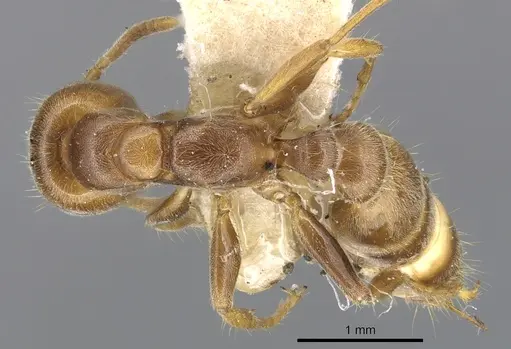
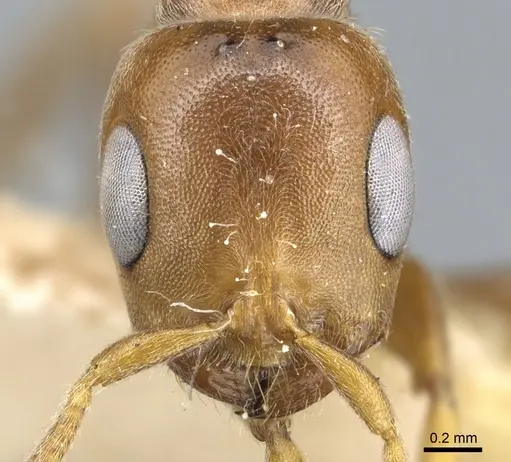
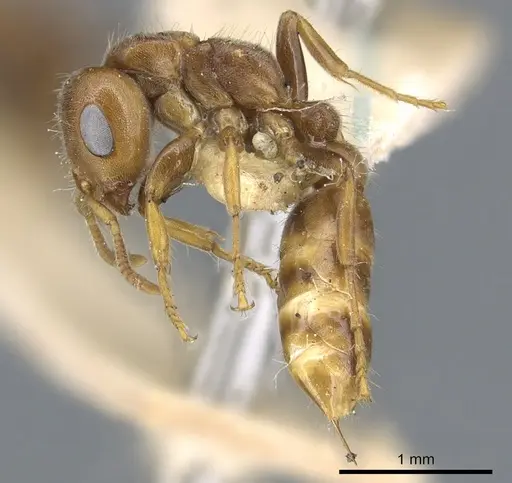
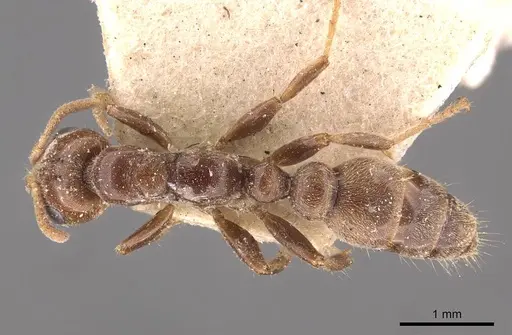
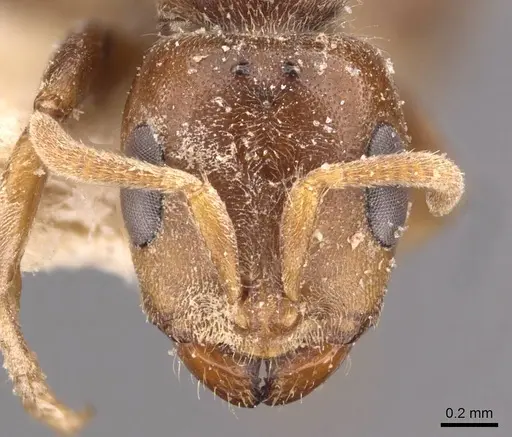
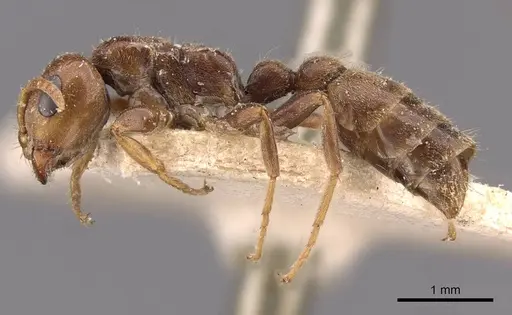
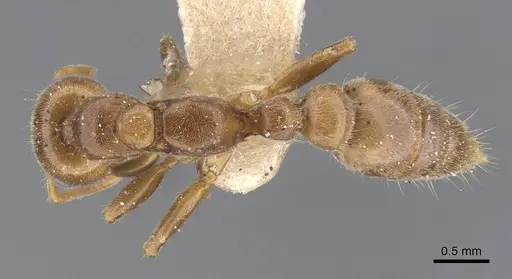
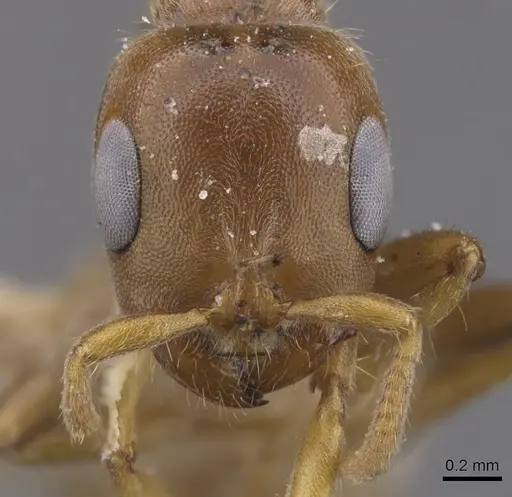
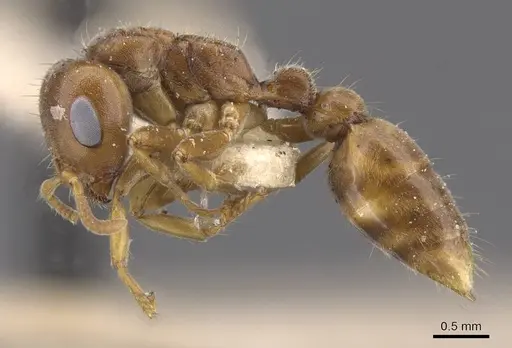
Pseudomyrmex triplaridis is a slender, medium-sized ant native to the Neotropical region, ranging from southern Panama to southern Brazil [1]. Workers measure 1.03-1.27mm in head length with a head width of 0.89-1.14mm, making them smaller than their close relative P. triplarinus [2]. They have relatively short legs (LHT/HL 0.70-0.75), coarse punctures on the head and pronotum, and common body pilosity with visible hairs on the posterior margin and upper sides of the head [2]. This species is always obligately associated with Triplaris plants, they nest and forage exclusively on these trees [2][1].
What makes P. triplaridis particularly interesting is its mutualistic relationship with Triplaris trees. Unlike some related species (such as P. dendroicus), these workers do not clear vegetation at the base of their host tree [2]. They have large eyes and functional stingers [1], and they tend to associate with multiple host plant species including T. weigeltiana, T. dugandii, T. americana, T. peruviana, and T. setosa [1]. This flexibility in host plant use while remaining strictly tied to the Triplaris genus makes them a fascinating study subject for ant-plant mutualisms.
Quick Summary
- Difficulty: Medium
- Origin & Habitat: Neotropical region, Brazil, Colombia, Costa Rica, French Guiana, Guatemala, Guyana, Mexico, Panama, Suriname, Trinidad and Tobago, Venezuela. Found in Amazon basin and peripheral populations in Guyana and southern Brazil [2]. In Colombia, recorded in Amazonas, Meta, and Tolima [3][4]. Always inhabits Triplaris plants.
- Colony Type: Colony structure is unconfirmed. This species is an obligate mutualist of Triplaris plants, nesting within the plant structures.
- Size & Growth:
- Queen: Unconfirmed, related species in the P. viduus group provide estimates
- Worker: HL 1.03-1.27mm, HW 0.89-1.14mm [2]
- Colony: Unconfirmed, likely smaller colonies based on related species
- Growth: Unconfirmed
- Development: Unconfirmed, estimated 6-10 weeks based on typical Pseudomyrmex patterns (No specific development data available for this species. Estimates based on genus-level patterns for related species.)
- Antkeeping:
- Temperature: Keep at 24-28°C, these are tropical ants requiring warm, stable conditions [1]. Avoid temperatures below 20°C.
- Humidity: High humidity required, think humid tropical forest canopy. Keep nest substrate consistently moist but not waterlogged.
- Diapause: No, this is a tropical species that does not require hibernation [1]. Maintain warm conditions year-round.
- Nesting: Natural nesting occurs inside Triplaris plants (domatia). In captivity, provide a naturalistic setup with plant material or hollow twigs/branches. Y-tong nests with narrow chambers may work but ensure they can move between nest and outworld freely.
- Behavior: These ants are active foragers that travel along their Triplaris host plants. They have large eyes and are visually oriented [1]. Workers are not aggressive toward their host plant, notably, they do NOT clear vegetation at the base of the tree like some related species [2]. They possess stingers and will use them if threatened [1]. Escape prevention is important as they are agile climbers. They tend scale insects and other honeydew-producing insects within their host plant.
- Common Issues: tropical species requires warm conditions, cold temperatures below 20°C can be fatal, obligate plant-ant relationship means they need plant material or structured nesting sites, escape risk due to small size and active foraging, use fine mesh barriers, lack of documented captive breeding means colony establishment from wild may be challenging, limited information on specific dietary needs, likely relies on honeydew from scale insects
Host Plant Association
Pseudomyrmex triplaridis is an obligate mutualist of Triplaris plants, they cannot survive without their host [1]. This ant nests and forages exclusively on Triplaris trees, using hollow branches and specialized structures called domatia (plant cavities) for nesting. They associate with multiple Triplaris species including T. weigeltiana (= T. surinamensis), T. dugandii, T. americana, T. peruviana, and T. setosa [1]. In captivity, you would need to replicate this relationship by providing plant material or structured nesting sites that mimic their natural domatia. This specialized relationship is what makes this species challenging to keep, they are not generalist nesters like many common ant species.
Distribution and Climate
This species ranges from southern Panama through northern South America to southern Brazil [1]. Most records come from the Amazon basin, with peripheral populations in Guyana and southern Brazil [2]. In Colombia, they are found in Amazonas, Meta, and Tolima departments [3][4]. This is a true tropical species adapted to warm, humid conditions year-round. They do not experience cold winters in their native range, so they do not require any diapause period in captivity. Keep them consistently warm (24-28°C) and humid.
Identification and Morphology
Workers of P. triplaridis can be identified by their relatively short legs (LHT/HL 0.70-0.75), coarse punctures on the head and pronotum (0.010-0.020mm diameter), and common body pilosity with erect hairs visible on the posterior margin and upper sides of the head in frontal view [2]. They are smaller than the similar P. triplarinus, with narrower heads and a palp formula of 5,3 [2]. The species has large eyes and functional stingers, both adaptations for their arboreal lifestyle [1]. Queens and males were described by Forel in 1904,but specific measurements for reproductives are not well-documented in available literature.
Feeding and Diet
Like other Pseudomyrmex plant-ants, P. triplaridis primarily feeds on honeydew from scale insects and other hemipterans that they tend within their host plant [5]. They have been documented tending Farinococcus multispinosus scale insects inside Triplaris branches [5]. In captivity, offer sugar water or honey as a carbohydrate source, and provide small live prey (fruit flies, small crickets, pinhead crickets) for protein. Their arboreal lifestyle suggests they may prefer elevated feeding stations. Monitor acceptance carefully as specific dietary preferences are not well-documented for this species.
Nesting in Captivity
In nature, these ants nest inside Triplaris plant structures, hollow branches, stem cavities, and domatia. Replicating this in captivity is challenging. A naturalistic setup with actual plant material or hollow twigs/branches works best. You could also try a Y-tong (AAC) nest with narrow chambers, but ensure the outworld has plant material or structures for them to forage on. They are active climbers, so ensure the setup prevents escapes. The key challenge is providing the plant-based nesting environment they evolved to inhabit. [2][1]
Behavior and Defense
Unlike some related Pseudomyrmex species (such as P. dendroicus), P. triplaridis workers do not clear vegetation at the base of their host tree [2]. This suggests a more passive defensive strategy rather than active territory maintenance. They possess functional stingers and will use them if the colony is threatened [1]. Their large eyes suggest they rely on visual cues for navigation and foraging. They are active foragers that travel along their host plant, and are likely quick-moving and alert. Handle with care and use appropriate escape prevention.
Frequently Asked Questions
Can I keep Pseudomyrmex triplaridis in a test tube?
A standard test tube setup is not ideal for this species. They are obligate plant-ants that naturally nest inside Triplaris plant structures. A naturalistic setup with plant material, hollow twigs, or branches is much better suited to their needs. If you must use a test tube, provide a connected outworld with plant material for them to forage on.
What do Pseudomyrmex triplaridis eat?
Like other plant-ants, they primarily feed on honeydew from scale insects they tend within their host plant. In captivity, offer sugar water or honey as a carbohydrate source, and small live prey (fruit flies, small crickets) for protein. They have been documented tending Farinococcus scale insects in the wild.
Do Pseudomyrmex triplaridis ants sting?
Yes, they possess functional stingers [1]. While not typically aggressive, they will sting if threatened. Handle with care and use adequate escape prevention when working with them.
Are Pseudomyrmex triplaridis good for beginners?
No. This is not a beginner-friendly species. They are obligate mutualists of Triplaris plants and require specific housing that mimics their natural plant-dwelling habitat. Limited captive breeding information is available, making them challenging even for experienced antkeepers.
Do Pseudomyrmex triplaridis need hibernation?
No. This is a tropical species from the Neotropical region that does not experience cold winters. They require warm, humid conditions year-round without any diapause period. Keep temperatures between 24-28°C consistently.
How long does it take for Pseudomyrmex triplaridis to develop from egg to worker?
Specific development data is not available for this species. Based on typical Pseudomyrmex genus patterns, estimate 6-10 weeks from egg to first worker at optimal warm temperatures (around 26°C).
What temperature do Pseudomyrmex triplaridis need?
Keep them at 24-28°C. These are tropical ants requiring warm, stable conditions. Avoid temperatures below 20°C as this could be harmful. A heating cable on one side of the nest can help maintain appropriate temperatures.
Can I keep multiple queens together?
Colony structure is unconfirmed for this species. There is no documented information on whether they are monogyne (single queen) or polygyne (multiple queens). Combining unrelated queens is not recommended due to lack of data on their founding behavior.
How big do Pseudomyrmex triplaridis colonies get?
Colony size is unconfirmed. Based on related species in the genus, they likely form smaller colonies (likely under 500 workers). They are not known for the massive colony sizes seen in some other ant genera.
Why are my Pseudomyrmex triplaridis dying?
Common causes include: temperatures below 20°C (tropical species cannot tolerate cold), too dry conditions (they need high humidity), lack of appropriate nesting sites (they need plant material or structured spaces), and stress from handling. Ensure warm, humid conditions and a naturalistic setup with plant material.
References

This caresheet is licensed under CC BY-SA 4.0 .
Literature
Loading...Loading products...