

Pseudomyrmex salvini
- Scientific Name
- Pseudomyrmex salvini
- Tribe
- Pseudomyrmecini
- Subfamily
- Pseudomyrmecinae
- Author
- Forel, 1899
- Distribution
- Found in 3 countries
Pseudomyrmex salvini Overview
Pseudomyrmex salvini is an ant species of the genus Pseudomyrmex. It is primarily documented in 3 countries , including Guatemala, Honduras, Mexico. Detailed taxonomic data and occurrence records can be further explored via authoritative databases such as AntWeb or the Global Biodiversity Information Facility (GBIF).
Pseudomyrmex salvini
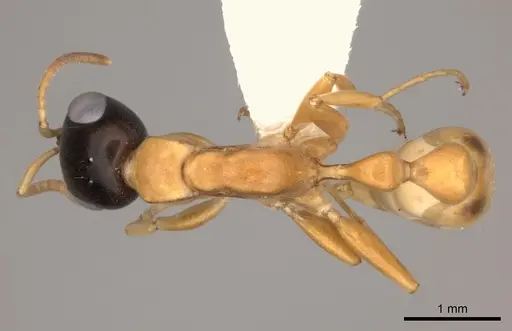
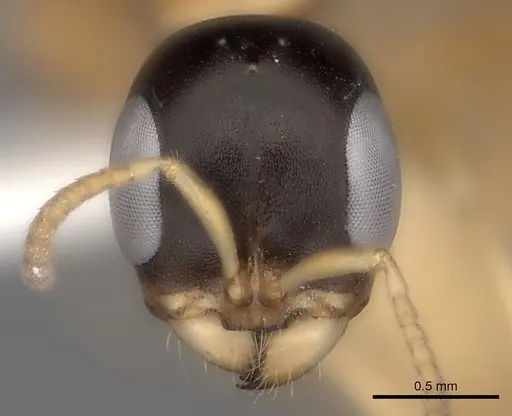
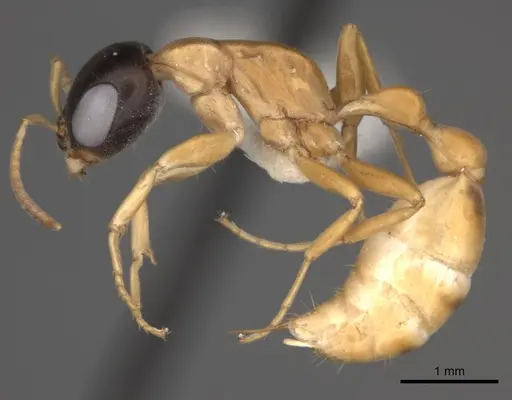
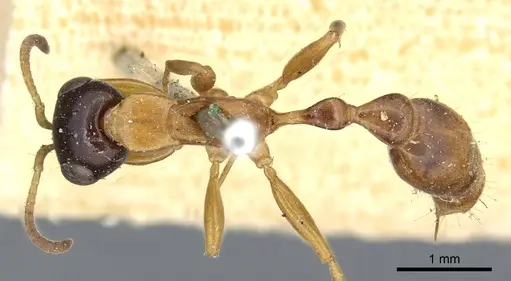
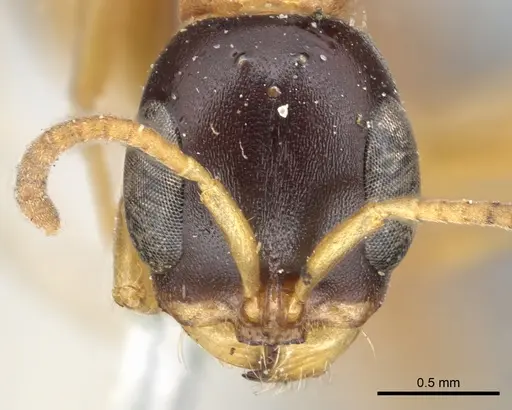
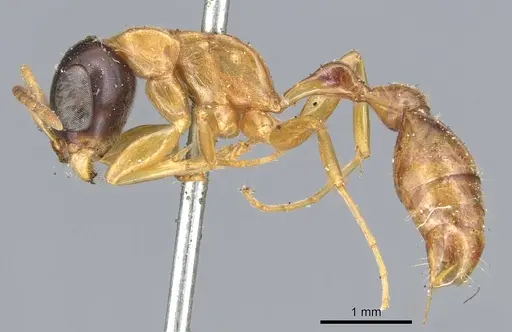
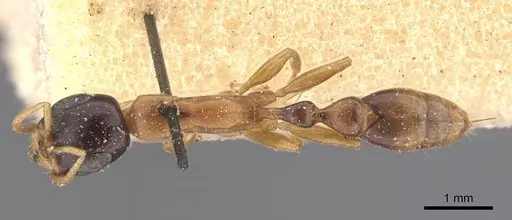
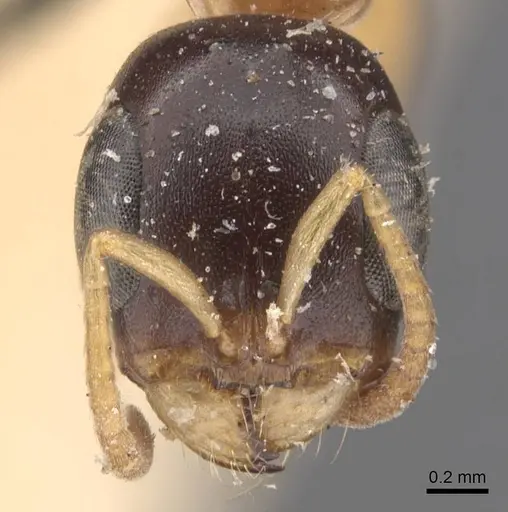
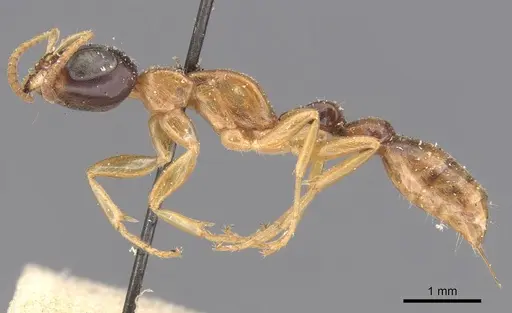
Pseudomyrmex salvini is a relatively large ant species native to southeastern Mexico, Guatemala, Belize, and Honduras. Workers measure 5.5-6.3mm with a distinctive appearance: a dark blackish-brown head contrasting sharply with a yellow-orange to medium brown body, and notably large eyes that exceed half the head length [1][2]. This species belongs to the elongatulus group and nests in dead twigs, including liana and weed stalks, typically in or near rainforest habitats at elevations between 10-990m [1]. Workers and queens forage on low vegetation, making them active surface-dwellers in their natural range.
What makes P. salvini interesting is its status as a generalist ant with no specialized plant associations, unlike many Pseudomyrmex species that form mutualistic relationships with Acacia plants, this species is a free-ranging forager that nests in dead wood [3][4]. They also show a unique digestive adaptation: their invertase enzyme activity increases by about 250% when fed sucrose, suggesting they can handle sugar-rich foods effectively [3][4].
Quick Summary
- Difficulty: Medium
- Origin & Habitat: Southeastern Mexico, Guatemala, Belize, and Honduras. Found in littoral vegetation, rainforest, rainforest edge, mesophil forest, and roadside areas at elevations from 10-990m [1].
- Colony Type: Colony structure is unconfirmed. Based on related Pseudomyrmex species, likely single-queen (monogyne) colonies. Workers and dealate queens forage on low vegetation [1].
- Size & Growth:
- Queen: Unconfirmed, related species in the elongatulus group typically range from 7-9mm
- Worker: 5.5-6.3mm total length, HW 1.12-1.21,LHT 0.96-1.12 [1][2]
- Colony: Unconfirmed, likely moderate-sized colonies based on genus patterns
- Growth: Moderate, based on typical Pseudomyrmex development
- Development: Estimated 6-8 weeks at optimal tropical temperatures (24-28°C) based on genus-level data for related species (Direct development data unavailable, inferred from typical Pseudomyrmex patterns for tropical species)
- Antkeeping:
- Temperature: Keep at 24-28°C. This species comes from warm tropical rainforest habitats in Central America, so maintain warm, stable temperatures [1]. A heating cable on one side of the nest can create a gradient.
- Humidity: High humidity preferred (60-80%). These ants inhabit rainforest environments, so keep the nest substrate consistently moist but not waterlogged. Mist occasionally and provide a water source.
- Diapause: No, as a tropical species from low elevations (mean 316m), they do not require hibernation. Maintain year-round warm conditions [1].
- Nesting: Natural nesting: dead twigs, liana stems, and similar hollow plant material. In captivity, they do well in Y-tong (AAC) nests, test tubes with tight chambers, or naturalistic setups with twigs/branches. They prefer narrow, enclosed spaces that mimic their natural twig nests [4][1].
- Behavior: P. salvini workers are active foragers that search for food on low vegetation and the ground. They are generalist feeders, accepting both sugar sources and protein. Their large eyes suggest good vision, and they are quick-moving ants. They are not particularly aggressive toward keepers but will defend their nest if threatened. Escape risk is moderate, their size (5.5-6.3mm) makes them capable of escaping through small gaps, so use standard barrier methods.
- Common Issues: tropical species may struggle in cool/dry environments, keep warm and humid, colonies may be slow to establish initially, patience is needed during founding, escape prevention needed despite moderate size, they are active foragers, wild-caught colonies may carry parasites from their native range, test tube setups may dry out quickly, monitor humidity closely
Housing and Nest Setup
Pseudomyrmex salvini naturally nests in dead twigs, liana stems, and similar hollow plant material [4][1]. In captivity, you can replicate this with several approaches. Y-tong (AAC) nests work well because they provide the dark, enclosed chambers these ants prefer. Alternatively, test tube setups with tight-fitting chambers can work, though you may need to connect multiple tubes to give them adequate space.
For a naturalistic approach, you can create a setup with actual dead twigs or bamboo sections. Simply collect dry twigs, cut them to appropriate lengths, and place them in an outworld. The ants will nest inside the hollow pith or use pre-existing holes. This setup also makes for an interesting display that mimics their natural environment.
Whatever nest type you choose, ensure it provides darkness (Pseudomyrmex prefer dark nests) and protection from vibrations. These ants are sensitive to disturbances and will relocate if their nest is too exposed. The outworld should include climbing structures since they naturally forage on vegetation.
Feeding and Diet
P. salvini is a generalist feeder, which makes them relatively easy to keep. They accept sugar sources readily, you can offer sugar water, honey, or ripe fruit. Their invertase enzyme activity increases significantly when fed sucrose (about 250% increase), indicating they can process sugar-rich foods effectively [3][4]. Keep a constant sugar source available in the outworld.
For protein, offer small insects like fruit flies, small crickets, mealworms, or other appropriately-sized arthropods. Since they forage actively, they will readily hunt and consume live prey. You can also offer small pieces of raw chicken, hard-boiled egg, or dog food as alternative protein sources.
Feed them every 2-3 days, removing any uneaten food to prevent mold. The exact amount depends on your colony size, start with small portions and adjust based on how quickly they consume it. Having both sugar and protein available ensures balanced nutrition.
Temperature and Humidity
As a tropical species from Central American rainforests, P. salvini requires warm and humid conditions. Maintain temperatures between 24-28°C (75-82°F) for optimal activity and brood development [1]. Temperatures below 22°C may reduce activity and slow development. You can achieve this with a room-temperature setup if your home is naturally warm, or use a heating cable placed on one side of the nest to create a gentle temperature gradient.
Humidity should be kept high, around 60-80%. This species comes from mesic (moist) forest environments where rainfall is frequent [1]. Keep the nest substrate moist but not waterlogged, standing water in the nest can drown colonies. Mist the outworld occasionally and ensure the water reservoir in test tube setups is adequately sized. A shallow water dish in the outworld also helps maintain humidity while providing a drinking source.
Avoid placing the nest near air conditioning vents, drafty windows, or anywhere with temperature fluctuations. Tropical ants are not adapted to temperature swings.
Seasonal Care
Unlike temperate ant species, P. salvini does not require hibernation or diapause. They come from a tropical climate where temperatures remain warm year-round [1]. Maintain consistent warm conditions throughout the year. If your room temperature drops significantly in winter, you may need to provide supplemental heating.
The wet/dry season cycles in their native range do not appear to require special mimicking, simply maintain consistent humidity. However, you might observe slight activity changes during what would be the dry season in their range (roughly December-May in their native habitat). During this period, you can slightly reduce misting frequency, but don't let the nest dry out completely.
These ants remain active year-round when kept at proper temperatures. Expect continued brood production and foraging activity throughout the year, unlike species that slow down in winter.
Behavior and Temperament
Pseudomyrmex salvini workers are active, visual ants with notably large eyes [1]. They forage primarily on low vegetation and the ground, searching for both sugar sources and small prey. Their large eyes suggest they rely more on vision than many ant species, which is consistent with their active foraging style.
They are not particularly aggressive toward humans and rarely sting. However, they will defend their nest if it is threatened or damaged. Compared to some Pseudomyrmex species that are known for their painful stings, P. salvini is considered relatively docile.
In terms of escape risk, these ants are moderate escape artists. Their size (5.5-6.3mm) is large enough that standard barrier methods like Fluon on test tube rims or proper outworld walls will contain them. However, they are active and quick, so ensure all connections between nest and outworld are secure. Check for small gaps around tubing connections regularly.
Frequently Asked Questions
How long does it take for Pseudomyrmex salvini to produce first workers?
The exact timeline is unconfirmed, but based on typical Pseudomyrmex development, expect first workers (nanitics) approximately 6-8 weeks after the queen lays eggs, when kept at optimal temperatures of 24-28°C. This is faster than many temperate species due to the tropical nature of this ant.
Do Pseudomyrmex salvini ants sting?
Pseudomyrmex ants can sting, but P. salvini is considered relatively docile compared to some related species. They are not aggressive toward keepers and will typically flee rather than attack. However, they will defend their nest if directly threatened.
Can I keep multiple Pseudomyrmex salvini queens together?
The colony structure for this specific species is unconfirmed. Based on related species in the genus, they likely form single-queen colonies. Combining unrelated foundress queens is not recommended as it may result in aggression. If you obtain a wild colony, it likely has only one reproductive queen.
What do Pseudomyrmex salvini eat?
They are generalist feeders. Offer sugar water, honey, or ripe fruit for carbohydrates. For protein, provide small insects like fruit flies, crickets, or mealworms. They accept both live prey and dead protein sources. Keep sugar available constantly and protein every 2-3 days.
Are Pseudomyrmex salvini good for beginners?
This species is rated as medium difficulty. While not as challenging as some exotic species, they do require warm, humid tropical conditions year-round. They are more demanding than common temperate species like Lasius or Camponotus. Experience with antkeeping basics is recommended before attempting this species.
Do Pseudomyrmex salvini need hibernation?
No. As a tropical species from low-elevation Central American rainforests, they do not require hibernation or any cool period. Maintain year-round temperatures of 24-28°C. Cooler temperatures may cause dormancy and health problems.
What size colony do Pseudomyrmex salvini reach?
Exact colony size is unconfirmed for this species. Based on genus patterns, they likely reach several hundred workers at maturity. They are not among the largest Pseudomyrmex species but form moderate-sized colonies.
When should I move Pseudomyrmex salvini to a formicarium?
Wait until the colony has at least 20-30 workers before moving from a founding test tube setup. This species nests in twigs, so a Y-tong nest or naturalistic setup with branches works well. Ensure the new setup maintains similar dark, humid conditions they had in the founding setup.
Why are my Pseudomyrmex salvini dying?
Common causes include: temperatures below 22°C (tropical species need warmth), low humidity causing desiccation, poor nutrition (ensure both sugar and protein are available), or stress from excessive disturbance. Check that the nest is dark, humid, and stable. Wild-caught colonies may also carry parasites.
References

This caresheet is licensed under CC BY-SA 4.0 .
Literature
Loading...Loading products...