

Pseudomyrmex peperi
- Scientific Name
- Pseudomyrmex peperi
- Tribe
- Pseudomyrmecini
- Subfamily
- Pseudomyrmecinae
- Author
- Forel, 1913
- Distribution
- Found in 6 countries
Pseudomyrmex peperi Overview
Pseudomyrmex peperi is an ant species of the genus Pseudomyrmex. It is primarily documented in 6 countries , including Belize, Guatemala, Honduras. Detailed taxonomic data and occurrence records can be further explored via authoritative databases such as AntWeb or the Global Biodiversity Information Facility (GBIF).
Pseudomyrmex peperi
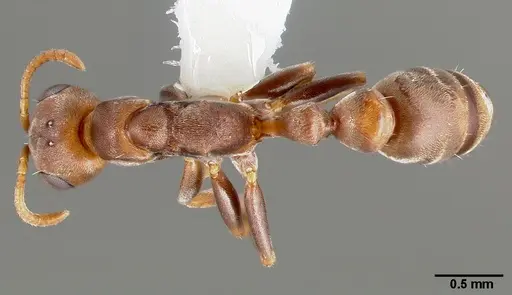
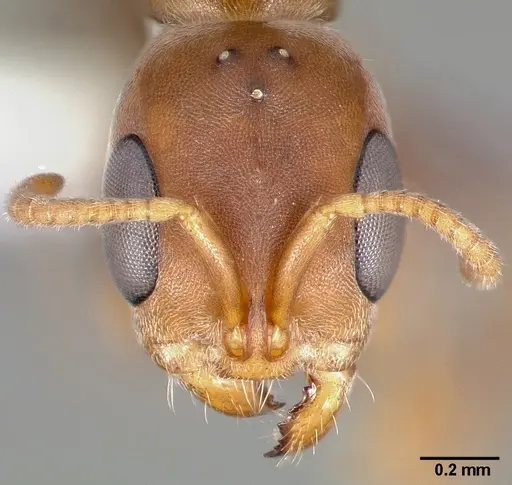
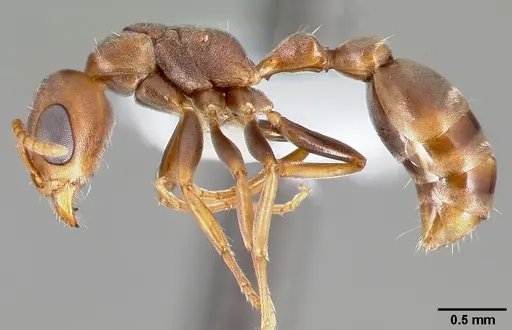
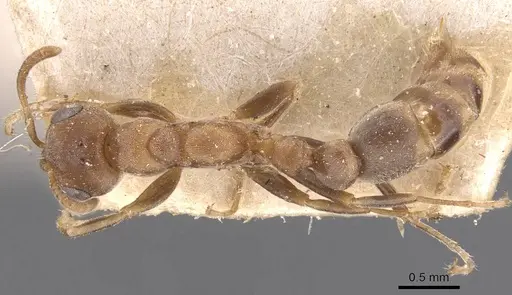
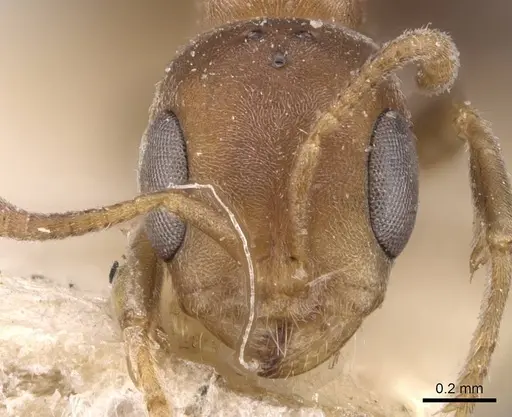
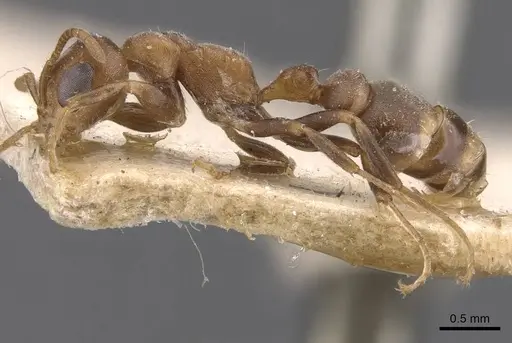
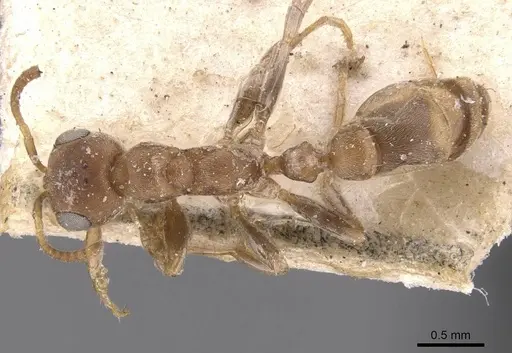
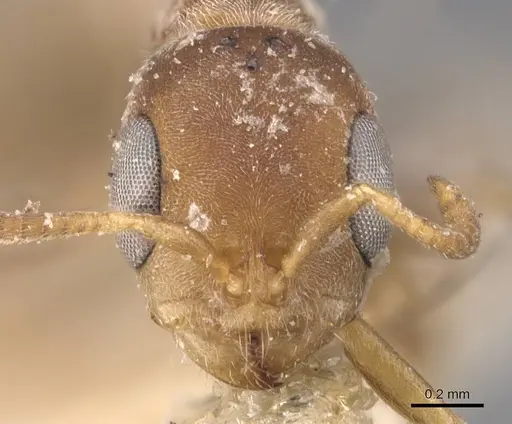
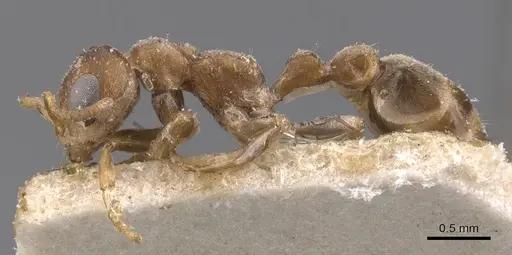
Pseudomyrmex peperi is a small, slender ant measuring 0.76-0.90mm in head width, belonging to the Pseudomyrmex ferrugineus species group [1]. Workers have a moderately elongate head with a matte, finely punctulate surface, and range from light to medium brown in color [2]. This species is an obligate mutualist that lives exclusively inside the hollow domatia (swollen thorns) of Neotropical Vachellia trees, where it protects its host from herbivores and competing plants in exchange for shelter and food [3]. Found from eastern Mexico to Nicaragua, P. peperi is one of the most widespread acacia-ant species, associated with at least six different Vachellia species including A. chiapensis, A. collinsii, A. cornigera, A. gentlei, A. globulifera, and A. hindsii [1][4]. Unlike many ants, P. peperi forms extremely polygynous supercolonies containing hundreds of thousands of queens, making it one of the most highly social ant species known [4].
Quick Summary
- Difficulty: Expert
- Origin & Habitat: Neotropical region from eastern Mexico to Nicaragua, living exclusively inside Vachellia (swollen-thorn acacia) domatia, the hollow cavities in the plant's swollen thorns [1][3]. This arboreal ant is never found nesting apart from its host plants [5][6].
- Colony Type: Extremely polygynous supercolonies with hundreds of thousands of queens. Colonies can contain thousands of physogastric (reproductive) queens that produce eggs continuously [4]. Genetic studies show supercolonies are founded by a single singly-mated queen, with subsequent intranidal mating among colony-derived males and daughter queens [4].
- Colony: Polygyne, Supercolonial
- Size & Growth:
- Queen: Estimated 6-8mm based on genus patterns (no direct measurement in sources)
- Worker: 0.76-0.90mm head width, body length approximately 4-5mm [4][2]
- Colony: Supercolonies can contain hundreds of thousands of workers [4]. Documented colonies had 1,500-2,400 adult workers plus thousands of brood [4].
- Growth: Fast, colonies maintain massive brood production with 84% of individuals being brood (42% larvae,9% pupae,33% eggs) [4]
- Development: Estimated 4-6 weeks based on typical Pseudomyrmecinae development patterns (Colonies show continuous brood production year-round due to tropical habitat and multiple physogastric queens [4])
- Antkeeping:
- Temperature: Tropical species, keep at 24-28°C. Requires warm, stable temperatures year-round
- Humidity: Moderate to high, arboreal ants in humid tropical forests. Provide some moisture but ensure ventilation to prevent mold
- Diapause: No, being a tropical species, they do not require hibernation. Maintain consistent conditions year-round
- Nesting: This is THE critical challenge: P. peperi is an OBLIGATE acacia mutualist that cannot survive without its Vachellia host plant [5][6]. In captivity, this makes them essentially unkeepable for hobbyists. The only theoretical setups would require living Vachellia plants in vivaria, which is extremely advanced. Standard formicariums, test tubes, and artificial nests are NOT suitable [4].
- Behavior: Workers are less aggressive than related species P. ferrugineus and P. mixtecus [4]. They are arboreal, constantly patrolling the host plant's branches and leaves. Workers feed on extrafloral nectaries and collect Beltian bodies (protein-rich structures at leaflet tips) from Vachellia [7]. Their small size and arboreal nature make escape prevention relatively straightforward in appropriate setups, they won't crawl out of properly enclosed vivaria. However, their obligate plant dependency makes any standard ant-keeping setup impossible [4].
- Common Issues: obligate mutualist cannot survive without Vachellia host plant, this is not a hobbyist-keeping species [5][6], extreme polygyny means colonies produce enormous numbers of alates (reproductives), releasing these could cause ecological problems in non-native areas, tropical temperature requirements mean room temperature is often insufficient without heating, cannot be fed standard ant foods, relies entirely on host plant extrafloral nectaries and Beltian bodies [7], no established captive breeding protocols exist for this species
Why Pseudomyrmex peperi Cannot Be Kept by Hobbyists
This section is critical: Pseudomyrmex peperi is an OBLIGATE mutualist that CANNOT survive without its Vachellia host plant [5][6]. Unlike most ants that can adapt to various nest types and food sources, P. peperi has evolved an absolute dependency on living Vachellia trees. Workers feed almost exclusively on extrafloral nectaries on the plant and collect Beltian bodies (specialized protein-rich structures) from leaflet tips [7]. The ants cannot survive on standard ant foods like sugar water, honey, or insects. They have even evolved specialized digestive biochemistry, workers lack invertase activity (the enzyme to process sucrose), while larvae have extremely high invertase activity (377 ± 42 ng glucose released per μg per minute) [8][4]. This digestive specialization ties the ants to their specific host plant. Without a living Vachellia plant in a properly designed vivarium, colonies will simply starve. This is not a species for antkeepers, it represents one of the most specialized ant-plant mutualisms in the world [3].
The Acacia Ant Mutualism
Pseudomyrmex peperi represents one of the classic examples of ant-plant mutualism in the Neotropics. The relationship between Vachellia (formerly Acacia) trees and Pseudomyrmex ants is ancient and coevolved, the ants receive hollow domatia (specialized swollen thorns) for nesting, plus food in the form of extrafloral nectar and Beltian bodies. In return, the ants aggressively defend the tree from herbivores, competing plants, and other insects [3][9]. P. peperi is one of several acacia-ant species that compete for host plants, along with P. ferrugineus and P. mixtecus. It is considered less aggressive than P. ferrugineus [4]. The phylogenetic position of P. peperi is interesting, it appears to be sister to all other members of the P. ferrugineus subgroup in most analyses, representing an early branch in this specialized mutualistic radiation [9]. The species is associated with at least six different Vachellia species, showing some flexibility in host choice compared to more specialized mutualists [1][4].
Supercolony Structure and Reproduction
P. peperi has one of the most extreme colony structures known in ants, true supercolonies with hundreds of thousands of queens [4]. Documented colonies show remarkable numbers: one colony had 23 physogastric (actively reproducing) queens producing 66 females per queen, while another had 61 queens producing 39 females per queen [4]. The brood composition is unusual, 84% of individuals are brood (42% larvae,9% pupae,33% eggs), with only 16% adult workers. This is a much higher proportion of brood than seen in monogynous (single-queen) ant species [4]. Genetic analysis reveals supercolonies are founded by a single queen that mates only once. Subsequent generations mate within the colony (intranidal mating), leading to inbreeding. Despite this, the species maintains genetic diversity through the massive number of queens. Studies found 77% private alleles between different supercolonies, indicating minimal genetic exchange between them [4]. The extreme polygyny appears to be a derived state that evolved at least twice independently within acacia-ants [4].
Distribution and Habitat
Pseudomyrmex peperi ranges from eastern Mexico through Guatemala, El Salvador, Honduras, and Nicaragua [1][2]. In Mexico, it has been recorded in Campeche, Chiapas, Hidalgo, San Luis Potosí, Yucatán, Oaxaca, Quintana Roo, and Veracruz states [10]. This is one of the most widely distributed acacia-ant species, occurring across the Neotropical region where its host Vachellia trees grow [11]. The species is always found living inside Vachellia domatia, the specialized hollow structures in the swollen thorns of acacia trees. It is never found in any other nesting substrate [5][6]. This makes field collection straightforward, researchers simply cut open acacia thorns to find the colonies [4]. The distribution overlaps with the closely related and more common P. ferrugineus, and the two species often compete for the same host plants [2].
Temperature and Seasonal Care
As a Neotropical species from Mexico and Central America, P. peperi requires warm, tropical conditions year-round. There is no diapause or winter rest period, colonies remain active throughout the year in their native habitat. Optimal temperatures would be in the 24-28°C range, similar to what they experience in their native acacia trees in tropical forests. Temperature drops below this range would likely reduce activity and potentially impact colony health. Unlike temperate ants that can be hibernated, this species needs consistently warm conditions. For anyone attempting the extremely difficult vivarium setup with living Vachellia plants, maintaining these temperatures would be essential. The humidity requirements would be moderate to high, reflecting their arboreal forest habitat.
Legal and Ecological Considerations
P. peperi is native to Mexico and Central America (Belize, El Salvador, Guatemala, Honduras, Nicaragua) [1][2]. It should NOT be released outside its native range. While not considered invasive, introducing these ants to non-native areas could disrupt local ecosystems, particularly if Vachellia plants (also native to the Americas) are present. The extreme polygynous colony structure means even a single colony could produce enormous numbers of alates (reproductives), potentially establishing populations far from their native range. Always check local regulations regarding ant keeping, and never release any ant species outside its documented distribution. For P. peperi specifically, since it cannot be kept in standard ant-keeping setups anyway, this is more of a field-collection concern than a captive-breeding concern.
Frequently Asked Questions
Can I keep Pseudomyrmex peperi in a test tube or formicarium?
No. This is absolutely not possible. Pseudomyrmex peperi is an OBLIGATE mutualist that cannot survive without living Vachellia (acacia) host plants [5][6]. They feed almost exclusively on extrafloral nectaries and Beltian bodies from the plant, and workers lack the digestive enzymes to process standard ant foods [8][4]. There is no established captive protocol for keeping this species, it is not a hobbyist-appropriate ant.
What do Pseudomyrmex peperi ants eat?
They eat only food from their Vachellia host plant: extrafloral nectar from the tree's nectaries, and Beltian bodies (protein-rich structures) from leaflet tips [7]. Workers themselves lack invertase activity and cannot process sucrose, but larvae have extremely high invertase activity to process the plant-derived foods [8][4]. They cannot be fed standard ant foods like sugar water, honey, or insects.
How long does it take for Pseudomyrmex peperi to develop from egg to worker?
Exact development time has not been directly studied. Based on typical Pseudomyrmecinae development patterns, estimate approximately 4-6 weeks from egg to worker at optimal tropical temperatures (around 24-28°C). The presence of multiple physogastric queens in colonies means continuous brood production, but individual development follows similar timelines to related species.
Can I keep multiple Pseudomyrmex peperi queens together?
Yes, in fact, they naturally live in extremely polygynous supercolonies with hundreds of thousands of queens [4]. However, this is irrelevant for hobbyists because the species cannot be kept in captivity at all without its Vachellia host plant. Even if you could provide a host plant, combining unrelated foundress queens has not been studied and would be extremely risky.
How big do Pseudomyrmex peperi colonies get?
Colonies are massive, supercolonies can contain hundreds of thousands of workers [4]. Documented colonies had 1,500-2,400 adult workers, but these were likely sub-samples from much larger supercolonies. Each colony also contains thousands of physogastric queens (23-61 documented), with each queen producing dozens of offspring [4].
Do Pseudomyrmex peperi ants sting?
Pseudomyrmex ants can sting, but P. peperi is described as less aggressive than related species like P. ferrugineus [4]. As small arboreal ants, their sting is not medically significant to humans. The main concern is their aggressive defense of their host plant rather than stinging keepers.
Are Pseudomyrmex peperi good for beginners?
No. This species is absolutely not suitable for beginners or any hobbyist antkeeper. It is one of the most specialized ant species in the world, requiring a living Vachellia host plant to survive. There are no established captive breeding protocols, and the ants cannot survive on standard ant foods. This is an expert-level species in terms of ecological specialization, not difficulty, it is essentially unkeepable in captivity [5][6].
Do Pseudomyrmex peperi need hibernation?
No. As a Neotropical species from tropical Mexico and Central America, they do not require hibernation or any winter rest period. They need consistently warm temperatures (24-28°C) year-round to remain active.
Why are my Pseudomyrmex peperi dying?
If you somehow obtained this species, they are almost certainly dying because they cannot survive in captivity without their Vachellia host plant. They will starve regardless of food provided, as they cannot process standard ant foods and require plant-derived nutrients [8][4]. This species should not be attempted by hobbyists under any circumstances.
References

This caresheet is licensed under CC BY-SA 4.0 .
Literature
Loading...Loading products...