

Pseudomyrmex malignus
- Scientific Name
- Pseudomyrmex malignus
- Tribe
- Pseudomyrmecini
- Subfamily
- Pseudomyrmecinae
- Author
- Wheeler, 1921
- Distribution
- Found in 5 countries
Pseudomyrmex malignus Overview
Pseudomyrmex malignus is an ant species of the genus Pseudomyrmex. It is primarily documented in 5 countries , including Brazil, French Guiana, Guyana. Detailed taxonomic data and occurrence records can be further explored via authoritative databases such as AntWeb or the Global Biodiversity Information Facility (GBIF).
Pseudomyrmex malignus
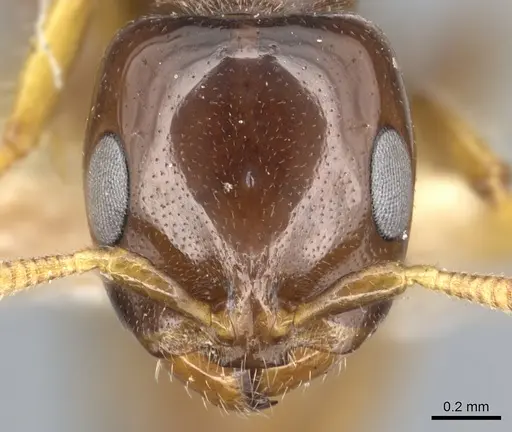
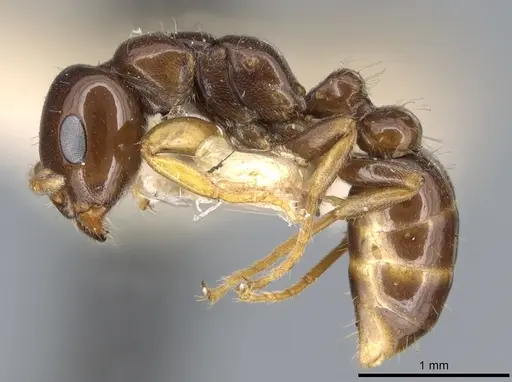
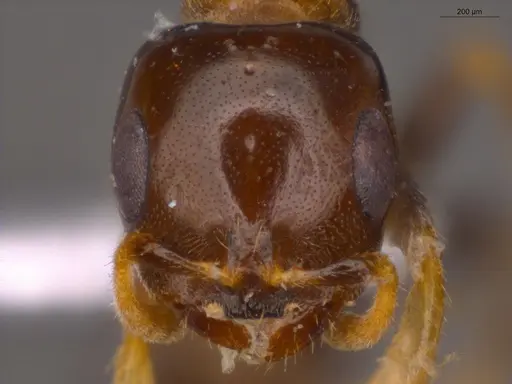
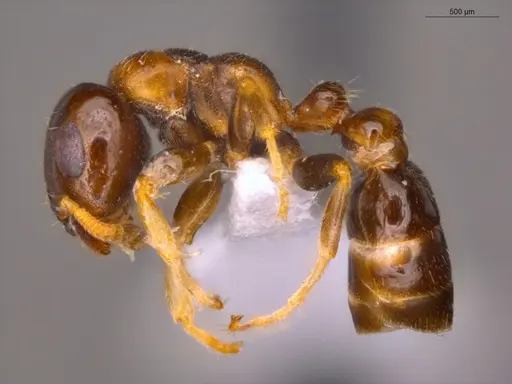
Pseudomyrmex malignus is a small, slender arboreal ant native to the eastern Amazon basin. Workers measure 0.91-1.18mm in head length, making them one of the smaller Pseudomyrmex species [1]. Their body color is highly variable, ranging from orange-brown to dark brown, with the head and terminal abdominal segments typically darker than the rest of the body [1]. These ants are distinguished by their smooth, shiny head surface and the absence of erect hairs on the sides and posterior margin of the head [1]. P. malignus is a Tachigali-inhabiting species, meaning it nests exclusively in hollow twigs and branches of Tachigali trees (specifically T. paniculata and T. rusbyi) in the rainforest canopy [1]. They are less frequently encountered than their relatives P. concolor or P. penetrator but share their range across French Guiana, Guyana, Suriname, and Trinidad and Tobago [1][2].
Quick Summary
- Difficulty: Expert
- Origin & Habitat: Eastern Amazon basin (French Guiana, Guyana, Suriname, Trinidad and Tobago). They inhabit the rainforest canopy, nesting exclusively in hollow twigs and branches of Tachigali trees [1][2].
- Colony Type: Likely single-queen colonies based on typical Pseudomyrmex patterns. Colony structure is not directly documented for this species.
- Size & Growth:
- Queen: Not directly measured, related Pseudomyrmex queens are typically 6-8mm
- Worker: 0.91-1.18mm head length, corresponding to approximately 4-6mm total length [1]
- Colony: Unknown for this species, related species typically reach several hundred workers
- Growth: Unknown, likely moderate based on tropical arboreal ant patterns
- Development: Unconfirmed, likely 4-8 weeks based on related tropical Pseudomyrmex species (Development timeline has not been directly studied for this species)
- Antkeeping:
- Temperature: Keep at 24-28°C. These are tropical ants from the Amazon basin requiring warm, stable conditions
- Humidity: High humidity (70-85%), they inhabit rainforest canopy environments. Provide moisture through damp substrate in the outworld and ensure the nest maintains humidity
- Diapause: No, as tropical ants from near the equator, they do not require a winter dormancy period
- Nesting: Arboreal setup is essential. These ants naturally nest in hollow twigs and small branches. Provide artificial nests that mimic narrow, vertical spaces, acrylic nests with small chambers, bamboo sections, or custom twig setups work well. They need tight-fitting chambers scaled to their tiny size
- Behavior: These are arboreal ants with active foraging behavior. They are likely similar to related Pseudomyrmex species, quick-moving, alert workers that patrol their territory actively. Their small size and preference for elevated nesting sites make escape prevention important. They probably defend their nests vigorously when threatened. As tiny ants, they pose minimal sting risk to humans
- Common Issues: arboreal nature makes standard ground-based nests unsuitable, they need vertical, twig-like setups, tiny size means escapes are likely without fine mesh barriers and careful sealing, high humidity requirements can lead to mold if ventilation is poor, limited available care information makes successful captive husbandry challenging, wild-caught colonies may have specialized needs tied to their Tachigali tree hosts
Natural History and Host Association
Pseudomyrmex malignus is a specialized arboreal ant that lives exclusively in association with Tachigali trees in the Amazon basin. Unlike many ants that nest in soil or ground-level locations, these ants have adapted to life in the rainforest canopy, occupying hollow twigs and small branches of their host trees [1]. The species is less commonly encountered than its relatives P. concolor or P. penetrator but overlaps broadly with them in distribution across the eastern Amazon region [1]. Their morphological features, including the smooth, shiny head surface and reduced pilosity, may represent adaptations to their arboreal lifestyle. The workers are slender and quick-moving, characteristics common to Pseudomyrmecinae ants that patrol vegetation in search of honeydew and small prey.
Housing and Nest Setup
Keeping Pseudomyrmex malignus successfully requires replicating their natural arboreal habitat. Standard test tube setups designed for ground-nesting ants are not appropriate for this species. Instead, provide an arboreal-style nest that mimics narrow, vertical twig chambers. Acrylic nests with small, tight-fitting chambers work well, as do sections of bamboo or hollow twigs. The nest chambers should be scaled to their tiny worker size (around 1mm workers), meaning passages and chambers should be relatively narrow. The outworld should include vertical structures like twigs, branches, or mesh that allows them to forage at different heights. Ensure excellent escape prevention, their small size means they can squeeze through gaps that would hold larger ants. Use fine mesh on any ventilation holes.
Temperature and Humidity Requirements
As tropical ants from the Amazon basin, Pseudomyrmex malignus requires warm and humid conditions. Maintain temperatures in the range of 24-28°C, avoiding drops below 22°C. A heating cable on one side of the nest can help maintain stable temperatures, but avoid direct heat that could dry out the nest. Humidity should be kept high (70-85%), reflecting their rainforest canopy origin where humidity remains consistently elevated. The nest substrate should remain moist but not waterlogged. Mist the outworld regularly and consider using a water reservoir in the nest setup to maintain humidity over time. Good ventilation is important to prevent mold, but avoid excessive airflow that dries the environment.
Feeding and Diet
Like other Pseudomyrmecinae ants, Pseudomyrmex malignus likely has an omnivorous diet typical of arboreal ants. They probably feed on honeydew collected from sap-sucking insects (aphids, scale insects, mealybugs) that inhabit their host trees, along with small insects and arthropods they can capture. In captivity, offer sugar water or honey as a constant energy source. For protein, provide small live prey appropriate to their size, fruit flies, springtails, small mealworms, or other tiny insects. They are active foragers, so food should be offered in the outworld where they can access it easily. Remove uneaten prey after 24-48 hours to prevent mold.
Colony Development and Growth
The colony development timeline for Pseudomyrmex malignus has not been directly documented. Based on related Pseudomyrmex species and their tropical distribution, expect a relatively fast development compared to temperate species, likely 4-8 weeks from egg to first worker at optimal temperature. The first workers (nanitics) will be smaller than mature workers and may take some time to develop the full worker size range seen in established colonies. Colonies likely reach several hundred workers over time, though exact maximum size is unknown. Growth rate is probably moderate. Be patient with founding colonies, arboreal species can be sensitive to disturbance during the founding stage.
Frequently Asked Questions
Can I keep Pseudomyrmex malignus in a test tube setup?
No, test tube setups are not appropriate for this species. Pseudomyrmex malignus is an arboreal ant that naturally nests in hollow twigs and branches. They need an arboreal-style nest with narrow, vertical chambers scaled to their tiny size. Acrylic nests designed for small arboreal ants, bamboo sections, or custom twig setups work well.
What do Pseudomyrmex malignus eat?
They likely have an omnivorous diet similar to other Pseudomyrmecinae ants. Offer sugar water or honey as a constant energy source, along with small live prey like fruit flies, springtails, or tiny insects for protein. They are active foragers that will patrol the outworld for food.
How long does it take for first workers to appear?
The exact development timeline is unconfirmed for this species. Based on related tropical Pseudomyrmex species, expect approximately 4-8 weeks from egg to first worker at optimal temperature (24-28°C). Be patient, founding colonies can be slow to establish.
Do Pseudomyrmex malignus ants sting?
They are very small ants (workers around 4-6mm total length) and their sting is likely negligible to humans. While all Pseudomyrmecinae have the ability to sting, the small size and minimal venom of this species means they pose minimal sting risk.
Are Pseudomyrmex malignus good for beginners?
No, this species is not recommended for beginners. They are arboreal ants with very specific housing requirements (vertical, twig-like nests), require high humidity and warm temperatures, and there is limited available care information. They are considered an expert-level species.
Do Pseudomyrmex malignus need hibernation?
No, they do not require hibernation. As tropical ants from the Amazon basin near the equator, they are adapted to year-round warm conditions without seasonal temperature fluctuations. Maintain consistent temperatures year-round.
How big do Pseudomyrmex malignus colonies get?
The maximum colony size is unknown for this species. Based on related Pseudomyrmex species, colonies likely reach several hundred workers over time. They are not among the largest ant species.
Why are my Pseudomyrmex malignus dying?
Common issues include: incorrect housing (standard test tubes or ground nests won't work, they need arboreal setups), low humidity (they require 70-85% humidity), temperatures too low (keep above 24°C), escape due to their tiny size (use fine mesh), and disturbance during founding. Ensure you have an appropriate arboreal nest setup before acquiring this species.
Can I keep multiple queens together?
The colony structure of this species is not well-documented. Based on typical Pseudomyrmex patterns, they likely form single-queen colonies. Combining unrelated queens has not been studied and is not recommended.
What temperature should I keep Pseudomyrmex malignus at?
Keep them at 24-28°C. These are tropical Amazon ants requiring warm, stable conditions. Avoid temperatures below 22°C. A heating cable on one side of the nest can help maintain appropriate temperatures.
References

This caresheet is licensed under CC BY-SA 4.0 .
CASENT0902888
View on AntWeb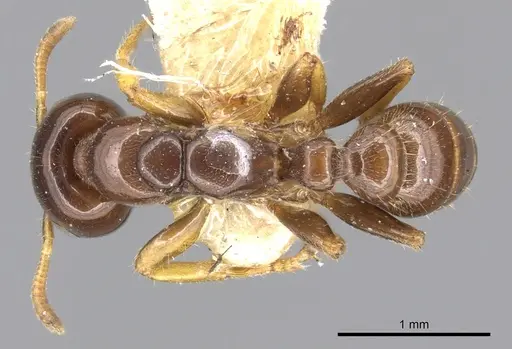
ECOFOG-CSG15-0079-07
View on AntWeb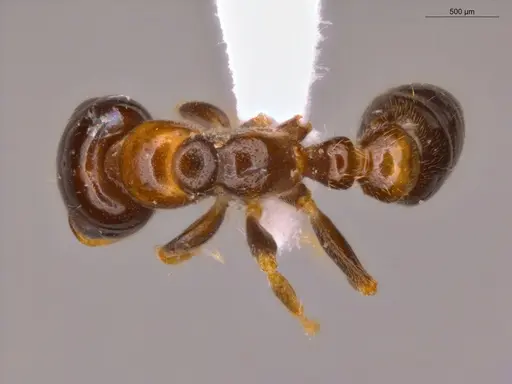
Literature
Loading...Loading products...