

Pseudomyrmex goeldii
- Scientific Name
- Pseudomyrmex goeldii
- Tribe
- Pseudomyrmecini
- Subfamily
- Pseudomyrmecinae
- Author
- Forel, 1912
- Distribution
- Found in 0 countries
Pseudomyrmex goeldii Overview
Pseudomyrmex goeldii is an ant species of the genus Pseudomyrmex. It is primarily documented in 0 countries . Detailed taxonomic data and occurrence records can be further explored via authoritative databases such as AntWeb or the Global Biodiversity Information Facility (GBIF).
Pseudomyrmex goeldii
Pseudomyrmex goeldii is a relatively large ant species native to southeastern Brazil, specifically the Atlantic rainforest region around Sorocaba, São Paulo. Workers measure 0.81-0.87mm in head length, making them larger than other members of the goeldii species group [1]. They have a distinctive appearance with a smooth, shiny head featuring fine punctulae, uniformly dark brown coloration, and slightly lighter appendages [1]. This species is a generalist dead twig inhabitant, nesting in hollow plant stems and dead branches in forest environments [1]. Known only from a type series collected over a century ago, P. goeldii remains one of the more obscure species in the Pseudomyrmex genus, with limited documented observations in the wild [1][2].
Quick Summary
- Difficulty: Unknown, limited data available
- Origin & Habitat: Southeastern Brazil (Sorocaba, São Paulo) in Atlantic rainforest region [1][2]. Generalist dead twig inhabitant in forest environments [1].
- Colony Type: Unconfirmed colony structure. Based on typical Pseudomyrmex patterns, likely single-queen colonies, but this has not been documented for this specific species.
- Size & Growth:
- Queen: Unknown, not described in available literature
- Worker: 0.81-0.87mm head length,0.65-0.66mm head width [1]
- Colony: Unknown, no colony size data available
- Growth: Unknown, no development data available
- Development: Unknown, no direct measurements exist. Based on typical Pseudomyrmex patterns from related species, estimate 6-10 weeks at tropical temperatures, but this is an educated guess. (No specific development data exists for this species. Related Pseudomyrmex species typically develop in 6-8 weeks under warm conditions.)
- Antkeeping:
- Temperature: Unknown for this specific species. Inferred from Atlantic rainforest habitat: aim for warm conditions around 22-28°C with a gentle gradient. Adjust based on colony activity.
- Humidity: Unknown for this specific species. Inferred from rainforest origin: moderate to high humidity (60-80%) with some drier areas for escape. Keep substrate moderately moist but not waterlogged.
- Diapause: Unknown, no seasonal data available. As a tropical Brazilian species, likely year-round active without true hibernation, but may show reduced activity during cooler months.
- Nesting: Natural nesting: dead twigs and hollow plant stems [1]. Captive recommendations: test tube setups or acrylic nests with narrow chambers scaled to their small size. Provide dead twig or stem-like structures for natural feel.
- Behavior: Described as having a timid demeanor in the wild [1]. Based on typical Pseudomyrmex behavior, they are likely arboreal and may show moderate aggression when defending their nest. Escape prevention is important due to their small size, use fine mesh barriers. Activity level is likely moderate, with workers foraging individually or in small groups.
- Common Issues: limited availability, this species is rarely available in the antkeeping hobby, no established captive care protocols, keepers will be pioneering husbandry methods, escape risk due to small size requires fine mesh barriers, unknown dietary requirements, may require experimentation, wild-caught colonies may have parasites given limited collection history
Availability and Rarity
Pseudomyrmex goeldii is extremely rare in the antkeeping hobby. This species is known only from the original type series collected over a century ago by Emílio Goeldi in southeastern Brazil [1][2]. There have been few, if any, documented collections since that initial series. This means virtually no captive colonies exist in antkeeping collections worldwide. If you encounter this species, it would likely be from a wild-caught queen from the Sorocaba region of Brazil. The extreme rarity makes this a species for advanced keepers interested in pioneering captive breeding of poorly documented species.
Natural History and Habitat
P. goeldii belongs to the goeldii species group within Pseudomyrmex and is native to the Atlantic rainforest region of southeastern Brazil [1]. The type locality is Sorocaba, São Paulo, an area that was historically covered in Atlantic forest but has since undergone significant development [1]. As a generalist dead twig inhabitant, this species nests in hollow plant stems, dead branches, and similar cavities found in forest environments [1]. Unlike some Pseudomyrmex species that are specialized acacia-ants, P. goeldii appears to be a more generalist species occupying various dead wood microhabitats. The Atlantic rainforest is a biodiversity hotspot with high humidity and warm temperatures year-round.
Identification and Morphology
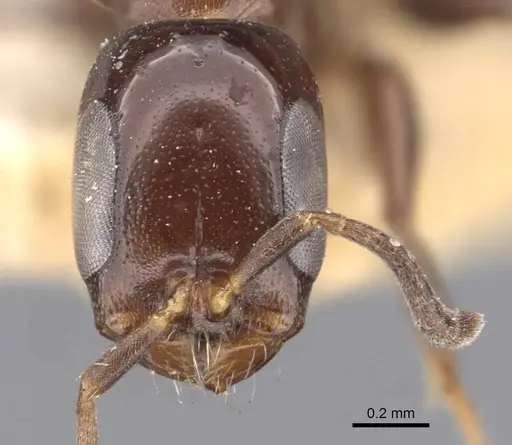
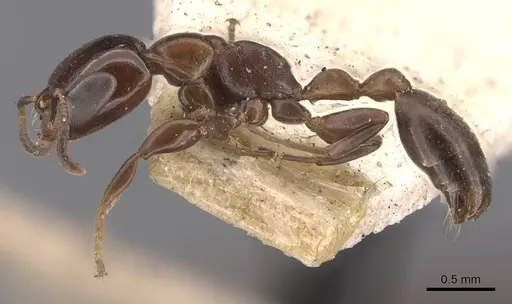
Workers of P. goeldii are relatively large for the genus, with head lengths of 0.81-0.87mm and head widths of 0.65-0.66mm [1]. This places them among the larger Pseudomyrmex species. They can be identified by their smooth, shiny head with scattered fine punctulae, relatively short eyes (REL 0.55-0.56), and a weakly angulate juncture between the dorsal and declivitous faces of the propodeum [1]. The body is uniformly dark brown with slightly lighter appendages [1]. The timid demeanor noted in field observations suggests they are not aggressive defenders compared to some related acacia-ant species.
Housing and Nesting
In nature, P. goeldii nests in dead twigs and hollow plant stems [1]. For captive care, a test tube setup works well for founding colonies, while established colonies can be housed in acrylic nests or naturalistic setups that provide narrow chambers and passages scaled to their small size. Include small dead wood or twig-like structures if possible to mimic their natural nesting preferences. Ensure escape prevention is excellent, their small size means they can squeeze through standard gaps. Use fine mesh on any ventilation openings.
Temperature and Humidity
As a species from the Atlantic rainforest of southeastern Brazil, P. goeldii likely prefers warm, humid conditions. Aim for temperatures in the range of 22-28°C, providing a gradient so the ants can choose their preferred zone. Humidity should be moderate to high (60-80%), keeping the nest substrate consistently moist but not waterlogged. Since this species has never been documented in captivity, these recommendations are educated inferences from the genus and habitat, observe your colony and adjust accordingly.
Feeding and Diet
The specific dietary requirements of P. goeldii are unknown. Based on typical Pseudomyrmex behavior, they likely forage for honeydew and small insects. Offer sugar water or honey as a constant energy source, and provide small protein sources like fruit flies, pinhead crickets, or other appropriately sized live prey. Start with modest offerings and observe what the colony accepts. Given their small size, prey items should be very small.
Frequently Asked Questions
Is Pseudomyrmex goeldii available for purchase?
This species is extremely rare in the antkeeping hobby. It is known only from a type series collected over a century ago in Brazil and has rarely been documented since. You are unlikely to find captive-bred colonies for sale.
How do I care for Pseudomyrmex goeldii?
Since this species has never been documented in captivity, there are no established care protocols. Based on its Atlantic rainforest origin, provide warm temperatures (22-28°C), moderate humidity (60-80%), and small prey items. This would be a pioneering species for advanced keepers.
What does Pseudomyrmex goeldii look like?
Workers are relatively large for the genus at 0.81-0.87mm head length. They have a smooth, shiny head with fine punctulae, uniformly dark brown body, and slightly lighter appendages. They have relatively short eyes compared to related species.
Where does Pseudomyrmex goeldii live?
This species is known only from southeastern Brazil, specifically the Sorocaba area in São Paulo state, within the Atlantic rainforest region.
How big do Pseudomyrmex goeldii colonies get?
Colony size is unknown, no colony size data exists for this species. Related Pseudomyrmex species typically form colonies of several hundred to a few thousand workers.
Does Pseudomyrmex goeldii sting?
Most Pseudomyrmex species can sting, though their stingers are often too small to penetrate human skin effectively. This species is described as timid, so it is unlikely to be aggressive.
Do Pseudomyrmex goeldii queens need to forage during founding?
Founding behavior has not been documented for this species. Based on typical Pseudomyrmex patterns, queens are likely claustral (seal themselves in and live off stored fat reserves), but this is an inference, not a confirmed fact.
Can I keep multiple Pseudomyrmex goeldii queens together?
Colony structure is unconfirmed for this species. Most Pseudomyrmex are single-queen colonies, but combining unrelated queens is not recommended unless you have specific documentation showing they accept multiple queens.
What is the egg to worker timeline for Pseudomyrmex goeldii?
This has not been documented. Based on related Pseudomyrmex species, development likely takes 6-10 weeks at warm tropical temperatures, but this is an estimate only.
Is Pseudomyrmex goeldii good for beginners?
No. This species is not recommended for beginners due to its extreme rarity, complete lack of captive care documentation, and the likelihood that any colony would be wild-caught. It would be a species for advanced keepers interested in pioneering husbandry.
References

This caresheet is licensed under CC BY-SA 4.0 .
CASENT0907543
View on AntWeb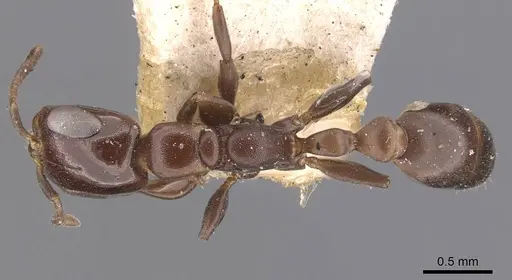
Literature
Loading...Loading products...