

Pseudomyrmex comitator
- Scientific Name
- Pseudomyrmex comitator
- Tribe
- Pseudomyrmecini
- Subfamily
- Pseudomyrmecinae
- Author
- Ward & Branstetter, 2022
- Distribution
- Found in 0 countries
Pseudomyrmex comitator Overview
Pseudomyrmex comitator is an ant species of the genus Pseudomyrmex. It is primarily documented in 0 countries . Detailed taxonomic data and occurrence records can be further explored via authoritative databases such as AntWeb or the Global Biodiversity Information Facility (GBIF).
Pseudomyrmex comitator
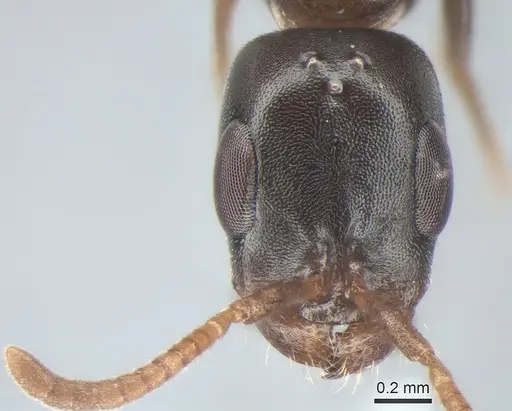
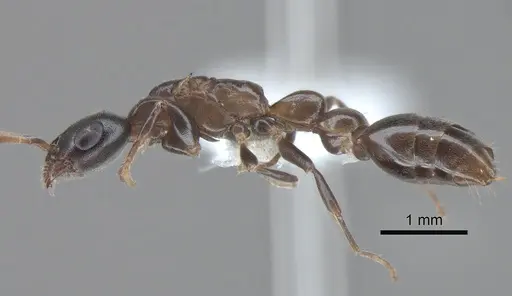
Pseudomyrmex comitator is an extraordinarily rare ant species known only from two high-elevation sites in Chiapas, Mexico. Queens are tiny, measuring just 0.77-0.81mm in head width, with an elongated head, smooth mandibles, and a distinctively swollen petiole. They are dark brown to brownish-black in color, with the head and gaster darker than the rest of the body [1]. This species is found in pine oak and Liquidambar forest at approximately 1,520 meters elevation [1].
What makes P. comitator truly remarkable is its lifestyle as a workerless inquiline, a social parasite that lives entirely within nests of its host species, Pseudomyrmex cognatus. Unlike typical ants, these queens never produce their own workers. Instead, they infiltrate host colonies and exploit the host's workforce to survive. The single known queen was collected from a nest containing workers, alate males, alate queens, and brood of P. cognatus [1].
Quick Summary
- Difficulty: Expert
- Origin & Habitat: Chiapas, Mexico at 1,520m elevation in pine oak and Liquidambar forest [1].
- Colony Type: Workerless social parasite (inquiline), queens live permanently within host colonies (Pseudomyrmex cognatus) and produce no workers of their own [1].
- Queen: Socially parasitic
- Size & Growth:
- Queen: 0.77-0.81mm head width,1.00-1.01mm head length [1]
- Worker: No workers exist, this is a workerless species [1]
- Colony: Colonies consist only of the parasitic queen(s) living within host nests [1]
- Growth: N/A
- Development: N/A, no workers produced (This species produces no workers at all. Reproduction is limited to alates (males and queens) that the host colony rears.)
- Antkeeping:
- Temperature: Unknown, no captive studies exist. Based on high-elevation Mexican habitat, likely prefers cooler temperatures than typical tropical ants.
- Humidity: Unknown, no captive studies exist.
- Diapause: Unknown, insufficient data.
- Nesting: Lives within dead sticks in host nests. In captivity would require a thriving colony of Pseudomyrmex cognatus as a host.
- Behavior: As a social parasite, P. comitator queens live permanently within host colonies. They are not aggressive and cannot defend themselves, they rely entirely on host workers for survival. The species has never been observed foraging independently. Escape risk is minimal since the queens cannot survive outside a host colony [1].
- Common Issues: This species cannot be kept in captivity without a host colony of Pseudomyrmex cognatus, which itself is difficult to maintain., Queens cannot survive independently, they produce no workers and cannot forage for food., The species is known from only two specimens and has never been maintained in captivity., No information exists on proper care requirements, temperature, or humidity preferences., Introducing a parasite to any ant colony raises significant ethical concerns about the host colony's welfare.
Why This Species Cannot Be Kept
Pseudomyrmex comitator is one of the most difficult ants to keep in captivity, possibly impossible. This species is a workerless inquiline, meaning it has evolved to live permanently within nests of its host species, Pseudomyrmex cognatus. The queens never produce workers. They cannot forage, cannot defend themselves, and cannot survive outside a host colony. Keeping this species would require first establishing a thriving colony of Pseudomyrmex cognatus, then somehow introducing the parasite without killing the host queen or being rejected by host workers. This has never been documented and would require extremely advanced antkeeping expertise. For all practical purposes, this species is not suitable for captive keeping [1].
The Parasitic Lifestyle
P. comitator represents an extreme example of social parasitism in ants. The queens are notably smaller than their host queens (HW 0.77-0.81 vs 0.99-1.11mm), lack striations on their mandibles, and have reduced body pilosity. They have evolved to infiltrate host colonies and live off the host's resources. The only known specimen was collected from a nest containing workers, alate males, alate queens, and brood of P. cognatus, evidence that the parasite was being maintained by the host colony [1]. This type of relationship is called inquiline parasitism, where the parasite queen lives in the nest, lays her own eggs, and relies on host workers to raise her brood, but produces no workers of her own.
Distribution and Rarity
This species is known from only two specimens collected from adjacent sites in Chiapas, Mexico at 1,520m elevation. Both collection sites were in highland pine oak forest, a relatively cool, moist habitat compared to typical lowland tropical areas. The holotype was collected from a nest in a dead stick, while the paratype was found as a stray on the ground nearby. The species was only formally described in 2022,making it one of the most recently described ant species. Its entire known range consists of two locations within a few kilometers of each other [1].
Related Species and Host
Pseudomyrmex comitator is phylogenetically embedded within Pseudomyrmex cognatus, it evolved from the host species relatively recently, with an estimated divergence of about 0.9 million years ago. Genetic analysis shows it is more closely related to P. cognatus populations from Honduras and Nicaragua than to the Chiapas population of the host, suggesting it may have originated from a different population and then spread. The host, P. cognatus, is a moderately large Pseudomyrmex species that nests in dead twigs and sticks in forest habitats. If you were to attempt keeping this parasite, you would first need to locate and maintain a colony of P. cognatus, which itself requires specific forest habitat conditions [1].
Frequently Asked Questions
Can I keep Pseudomyrmex comitator in my ant farm?
No. This species is a workerless social parasite that cannot survive without a host colony of Pseudomyrmex cognatus. It produces no workers and cannot forage. There are no documented cases of anyone successfully maintaining this species in captivity. It is not suitable for antkeeping.
What does Pseudomyrmex comitator eat?
Unknown. As a social parasite living within host colonies, it presumably receives food through trophallaxis (mouth-to-mouth food sharing) from host workers. It cannot feed itself independently. No captive feeding observations exist.
How do I start a Pseudomyrmex comitator colony?
You cannot. This species cannot be started as a colony because it produces no workers. The only option would be to locate a wild colony of Pseudomyrmex cognatus and somehow introduce the parasite, which has never been documented and would almost certainly be rejected or killed by host workers.
Does Pseudomyrmex comitator sting?
Unknown. Queens are tiny (under 1mm) and lack workers entirely. Even if a stinger exists, it would be far too small to penetrate human skin. However, the primary concern is that the queen cannot survive outside a host colony at all.
What temperature does Pseudomyrmex comitator need?
Unknown. The species is known from high-elevation (1,520m) forest in Chiapas, Mexico, suggesting it prefers cooler conditions than typical tropical ants. However, no captive studies exist to confirm temperature requirements.
Is Pseudomyrmex comitator dangerous?
No. This species poses no danger to humans. Queens are tiny, cannot sting effectively, and produce no workers. The only concern would be ecological if released in non-native areas.
What is an inquiline ant?
An inquiline is a social parasite that lives permanently within the nest of another ant species. Unlike some parasites that take over host colonies (like slave-making ants), inquiline queens produce no workers of their own and rely entirely on host workers for survival. P. comitator is an extreme example, a completely workerless inquiline.
References

This caresheet is licensed under CC BY-SA 4.0 .
JTLC000010310
View on AntWeb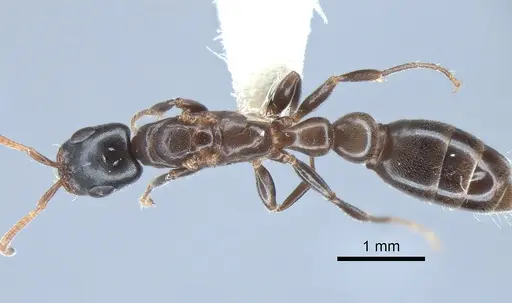
Literature
Loading...Loading products...