

Protanilla boltoni
- Scientific Name
- Protanilla boltoni
- Tribe
- Leptanillini
- Subfamily
- Leptanillinae
- Author
- Borowiec <i>et al.</i>, 2011
- Distribution
- Found in 1 countries
Protanilla boltoni Overview
Protanilla boltoni is an ant species of the genus Protanilla. It is primarily documented in 1 countries , including Malaysia. Detailed taxonomic data and occurrence records can be further explored via authoritative databases such as AntWeb or the Global Biodiversity Information Facility (GBIF).
Protanilla boltoni
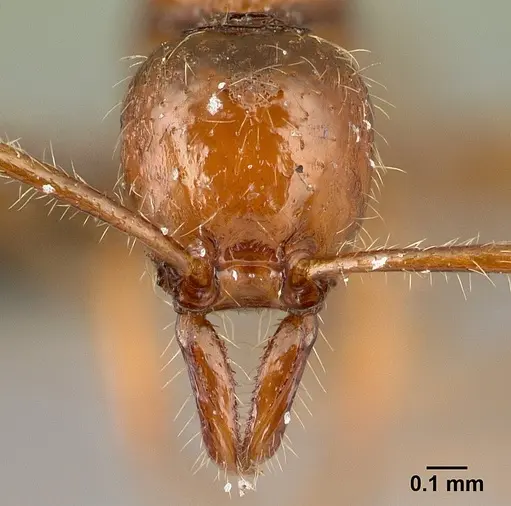
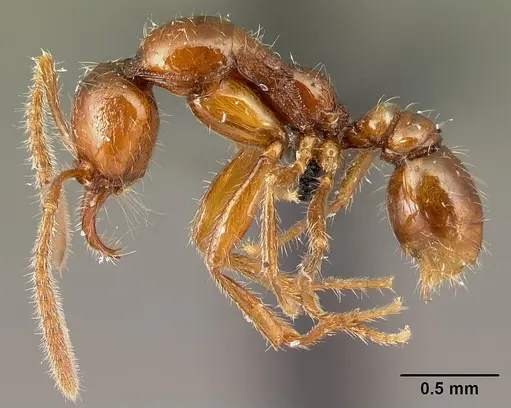
Protanilla boltoni is an extremely rare, tiny ant species from the Cameron Highlands of Malaysia. Workers measure just 0.67-0.73mm in head width, making them among the smallest ants you could keep. They are completely blind, like all Leptanillinae ants, and have a unique morphological feature: their abdominal segments II and III (petiole and postpetiole) are rigidly fused together, the first time this has been documented in worker ants [1][2]. They have elongated, sickle-like mandibles with around 15 teeth, and their orange-brown to reddish-brown coloration helps them blend into rotting wood and leaf litter. This species is known from only two specimens ever collected, making it one of the rarest ants in cultivation [1].
What makes this species particularly interesting is its extreme specialization. As a member of the Leptanillinae subfamily, these ants are blind, subterranean hunters. Related species like Opamyrma hungvuong have been observed preying on centipedes, suggesting this group are specialized predators [3]. The only specimens were collected from wet, decomposing wood very close to a stream in highland Malaysia, a consistently humid, shaded microhabitat [1].
Quick Summary
- Difficulty: Expert
- Origin & Habitat: Cameron Highlands, Perak, Malaysia at 590m elevation. Found in the trunk of a dead tree at late stage of decomposition, very close to a stream. The sifted material was wet, they live in damp, rotting wood in a shaded highland forest environment [1].
- Colony Type: Unknown, only worker caste has been described. No queens or males have ever been documented. The species group (taylori group) is known only from workers, with related species P. taylori and an undescribed species known only from gynes (queens) [1][4].
- Size & Growth:
- Queen: Unknown, queen has not been described [4]
- Worker: 0.67-0.73mm head width (very small ants) [1]
- Colony: Unknown, only two workers have ever been collected [1]
- Growth: Unknown
- Development: Unknown, no data available. Based on related Leptanillinae species, expect 4-8 weeks at warm temperatures, but this is entirely estimated. (Development timeline is unconfirmed. Related Leptanillinae species typically develop relatively quickly as small colonies.)
- Antkeeping:
- Temperature: Inferred from habitat: aim for 22-26°C, typical of highland tropical forest. The Cameron Highlands are cooler than lowland Malaysia, so avoid excessive heat. A gentle gradient allowing cooler areas is advisable.
- Humidity: High humidity is essential, these ants were collected from wet, decomposing wood very close to a stream. Keep the nest substrate consistently moist but not waterlogged. This is a damp forest floor species that likely desiccates quickly in dry conditions.
- Diapause: Unknown, no data on overwintering requirements. As a Malaysian highland species, they may not require true hibernation but may show reduced activity during cooler periods.
- Nesting: Natural nesting: rotting wood in very close proximity to water. For captivity: Y-tong (AAC) nests or plaster nests work well for tiny ants. Provide consistently moist substrate and avoid excessive ventilation that would dry them out. The nest should mimic damp, dark rotting wood.
- Behavior: These are blind, subterranean ants, they will not venture into the open or explore visually. They are likely slow-moving, cryptic hunters that stay within their nest and foraging passages. Their tiny size (under 1mm) means escape prevention must be excellent, they can squeeze through the tiniest gaps. Expect minimal activity at the nest entrance. They are probably predatory like other Leptanillinae, using their sickle-like mandibles to capture small arthropods. Aggression level is unknown but likely low, these are specialized hunters, not defenders.
- Common Issues: extreme rarity means no established husbandry protocols exist, you are essentially pioneering care for this species, tiny size makes escape prevention critical, standard test tube barriers may not contain them, no queen or male specimens exist, wild colonies have never been observed, high humidity requirements can lead to mold problems if ventilation is poor, predatory diet may be difficult to meet, they likely need live micro-prey, completely blind, they will not respond to visual cues and may be easily lost during colony transfers
Housing and Nest Setup
Protanilla boltoni presents unique housing challenges due to its extremely small size and specialized habitat requirements. In the wild, these ants were collected from wet, decomposing wood very close to a stream in the Cameron Highlands of Malaysia [1]. This tells us they need consistently high humidity and dark, enclosed spaces.
For housing, Y-tong (AAC) nests or plaster nests work well for tiny Leptanillinae ants. The key is maintaining moisture without creating standing water. Use a small formicarium with chambers scaled to their minute size, passages should be narrow and enclosed. Test tubes can work for founding colonies but may be too large for these tiny ants to feel secure.
Escape prevention is critical. At only 0.67-0.73mm in head width, these ants can squeeze through gaps that would hold back larger species. Use fine mesh barriers and ensure all connections are tight. Even the gap between a nest and outworld needs careful sealing.
The outworld should be simple and small, these ants are blind and subterranean, so they won't use elaborate foraging arenas. A small container with moist substrate for hunting is sufficient.
Feeding and Diet
The diet of Protanilla boltoni is not directly documented, but we can make strong inferences from related species. Members of the Leptanillinae subfamily are predatory, the closely related Opamyrma hungvuong has been observed actively hunting and killing centipedes [3]. The elongated, sickle-like mandibles with their row of teeth are clearly adapted for capturing and processing small arthropod prey [1].
In captivity, you should offer small live prey items. Ideal foods include:
- Micro arthropods: springtails (folsomia), tiny soil mites, and small isopods
- Very small insect larvae: fruit fly larvae, booklice
- Small worms: microworms, banana worms
Do not rely on sugar sources, these are predatory ants, not honeydew feeders. Their mandible structure is not suited for consuming sugary liquids. Some protein-rich liquids might be accepted experimentally, but live prey should be the primary food source.
Feed small amounts frequently rather than large prey items. Given their tiny size, even a small fruit fly larva is a substantial meal. Remove any uneaten prey after 24-48 hours to prevent mold in the humid environment they require.
Temperature and Humidity
Protanilla boltoni comes from the Cameron Highlands of Malaysia at approximately 590m elevation. This is a highland tropical environment that is cooler and wetter than lowland Malaysian rainforests. The area experiences consistent high humidity year-round.
Temperature: Aim for 22-26°C. Avoid excessive heat, these ants come from a cooler highland environment, not the hot lowlands. A slight temperature gradient allowing cooler areas (around 20-22°C) is advisable. Too much heat will likely stress and kill them.
Humidity: This is critical. The only specimens were collected from wet material, the sifted wood was described as 'wet' [1]. These ants live in damp, decomposing wood very close to a stream. Keep the nest substrate consistently moist but never waterlogged. The substrate should feel damp to the touch at all times.
However, balance humidity with adequate ventilation to prevent mold. Stagnant, overly wet conditions will kill them just as quickly as dry conditions. The goal is consistently damp, not wet or dry. Monitor for condensation, some condensation is normal and desirable, but excessive pooling indicates too much moisture.
Understanding This Species
Before attempting to keep Protanilla boltoni, you should understand what makes this species exceptional. Only TWO worker specimens have ever been collected, this is not an exaggeration or approximation, it is literally the entire known population of this species [1]. No queens, no males, no colony has ever been observed.
This means several things for potential keepers:
First, there is no established care protocol. Any husbandry information is inferred from related species and the limited habitat data. You will be pioneering the captive husbandry of this species.
Second, obtaining colonies may be essentially impossible. Unless you travel to the Cameron Highlands and collect them yourself (which would require significant effort and likely permits), you are extremely unlikely to find this species in the ant trade.
Third, even if you obtain specimens, we have no data on their colony structure, founding behavior, or development. Everything about keeping them successfully would be experimental.
The genus Protanilla and the entire subfamily Leptanillinae are characterized by being blind, subterranean ants that hunt small prey in rotting wood [5]. They represent an unusual and specialized branch of ant evolution. Keeping them would be an extreme challenge suitable only for the most experienced antkeepers with a research focus.
Frequently Asked Questions
Can I keep Protanilla boltoni in a test tube?
Test tubes can work for very small colonies, but standard test tubes may be too large for these tiny ants to feel secure. The passages should be narrow and enclosed. If using test tubes, use small diameter tubes and ensure the cotton is packed tightly to prevent escapes, at 0.67-0.73mm, they can squeeze through surprisingly small gaps.
How long does it take for Protanilla boltoni to develop from egg to worker?
The development timeline is completely unknown, no data exists. Based on related Leptanillinae species, expect 4-8 weeks at warm temperatures (around 24-26°C), but this is entirely an estimate with no direct evidence.
What do Protanilla boltoni eat?
They are predatory ants. Offer small live micro-arthropods like springtails, tiny soil mites, and small insect larvae. Their sickle-like mandibles are adapted for hunting small prey. Do not rely on sugar sources, they are not honeydew feeders.
Are Protanilla boltoni good for beginners?
No. This species is absolutely not suitable for beginners. Only two workers have ever been documented, there is no established care protocol, and they require highly specialized conditions. This is an expert-only species that should only be attempted by researchers or extremely experienced antkeepers willing to experiment.
Do Protanilla boltoni need hibernation?
Unknown. As a Malaysian highland species from the Cameron Highlands, they may not require true hibernation but could show reduced activity during cooler periods. The Cameron Highlands have a mild climate without extreme seasonal temperature swings.
Do Protanilla boltoni ants sting?
Given their tiny size (under 1mm), any sting would be negligible to humans. Their mandibles are designed for prey capture, not defense. However, their stingers exist, most ants have them, but they are far too small to penetrate human skin.
How big do Protanilla boltoni colonies get?
Unknown. Only two workers have ever been collected, so we have no data on maximum colony size. Related Leptanillinae species typically maintain small colonies, possibly under 100 workers.
Can I keep multiple queens together?
No queen has ever been documented for this species, only workers are known. The colony structure is completely unconfirmed. Even if you obtained a queen, there would be no established protocol for multi-queen founding in this species.
Why are Protanilla boltoni so rare?
This species is known from only two specimens because they are extremely specialized, subterranean ants living in a very specific microhabitat (wet, decomposing wood near streams in highland Malaysia). They are blind, tiny, and likely have small, localized populations. The Cameron Highlands are a limited geographic area, and these ants are not easily collected without specialized equipment like Winkler apparatus.
Are Protanilla boltoni dangerous?
No. At under 1mm in size, they pose no threat to humans. They are blind, cryptic ants that would flee rather than engage. Even if they could sting, their size makes it physically impossible to penetrate human skin.
References

This caresheet is licensed under CC BY-SA 4.0 .
CASENT0217032
View on AntWeb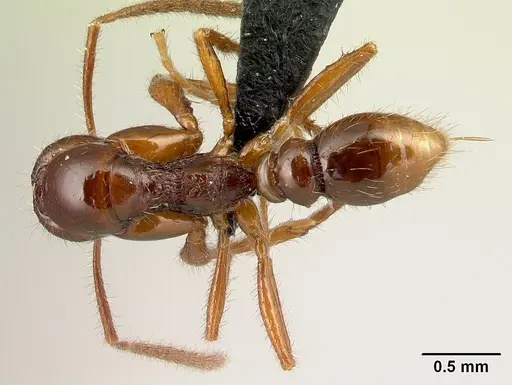
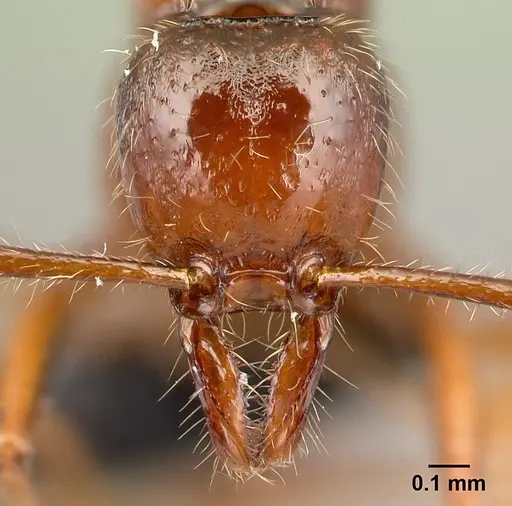
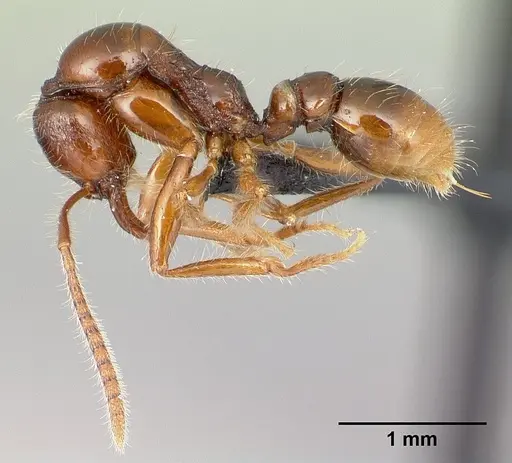
CASENT0217035
View on AntWeb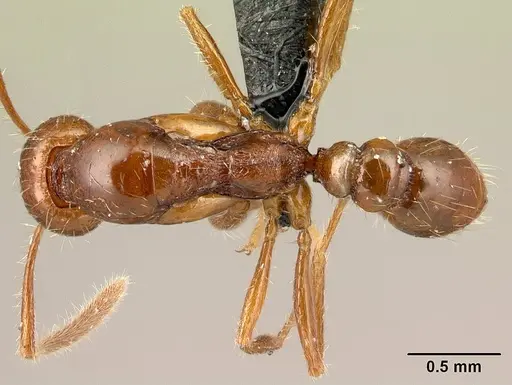
Literature
Loading...Loading products...