

Protalaridris armata
- Scientific Name
- Protalaridris armata
- Tribe
- Attini
- Subfamily
- Myrmicinae
- Author
- Brown, 1980
- Distribution
- Found in 3 countries
Protalaridris armata Overview
Protalaridris armata is an ant species of the genus Protalaridris. It is primarily documented in 3 countries , including Colombia, Ecuador, Panama. Detailed taxonomic data and occurrence records can be further explored via authoritative databases such as AntWeb or the Global Biodiversity Information Facility (GBIF).
Protalaridris armata
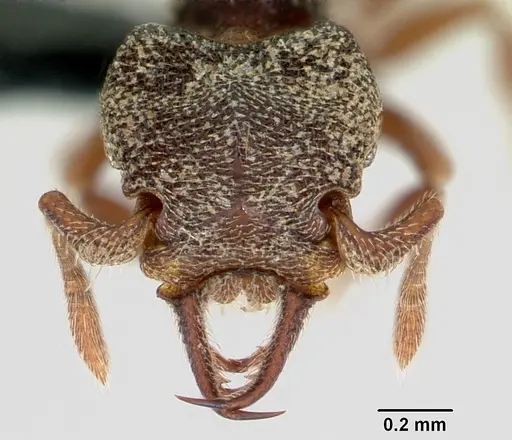
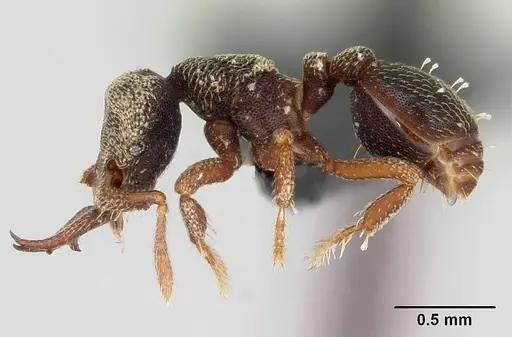
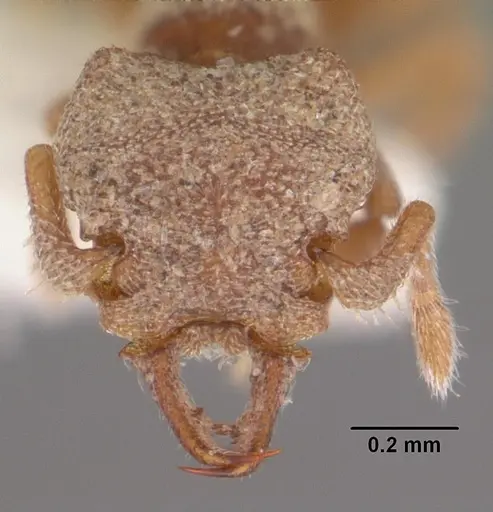
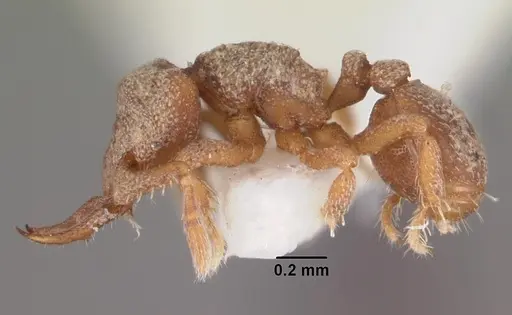
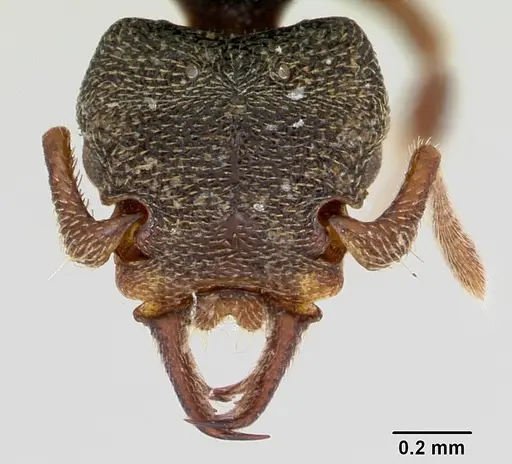
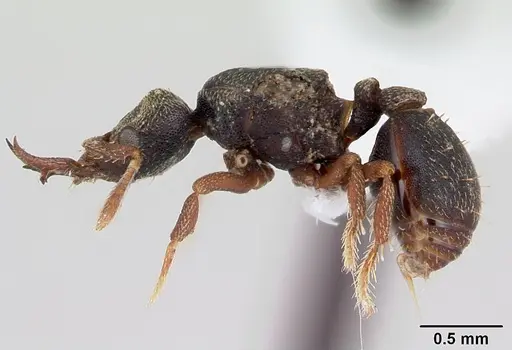
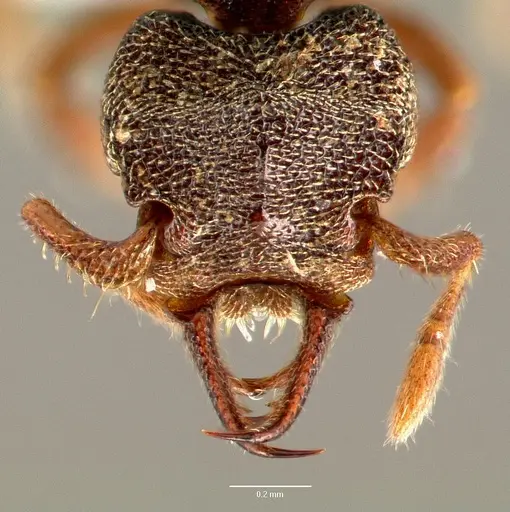
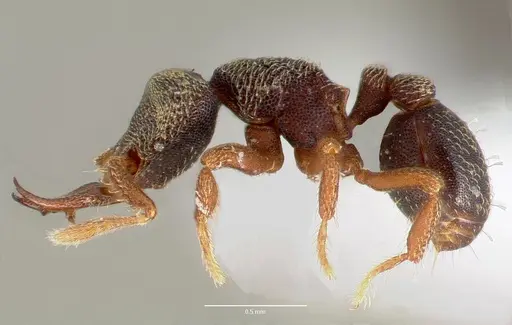
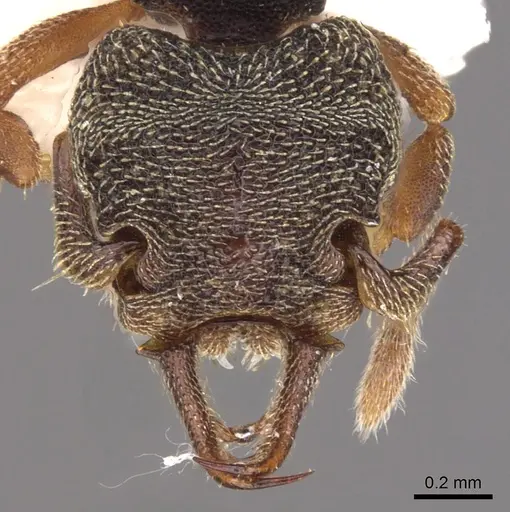
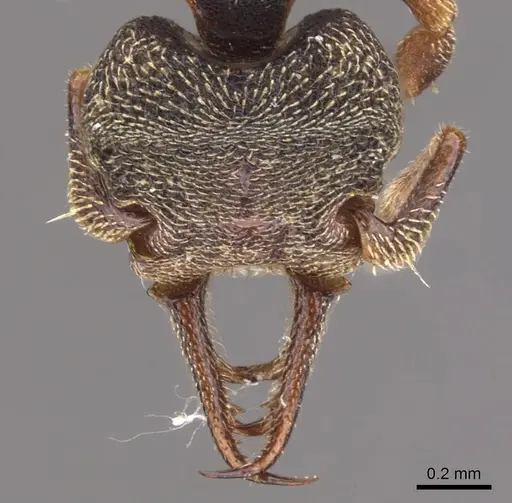
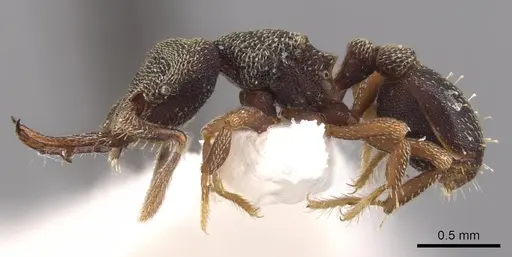
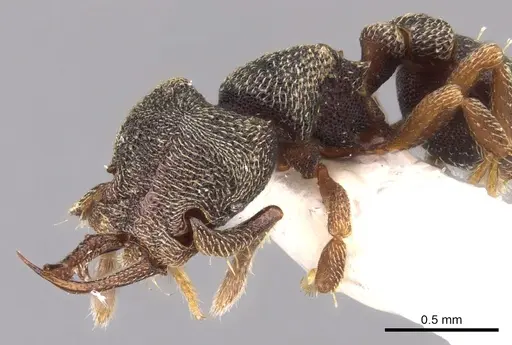
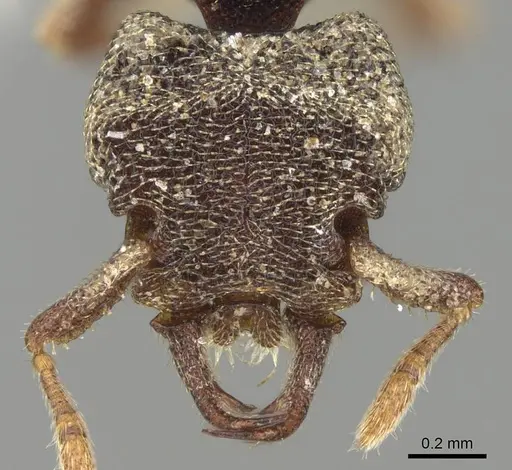
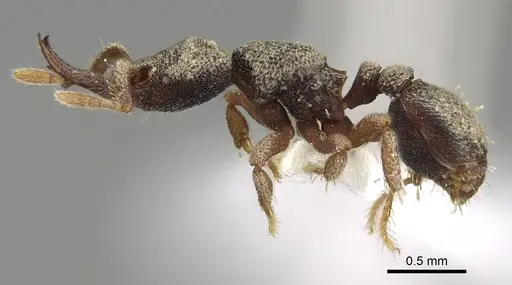
Protalaridris armata is a tiny leaf-litter ant native to the premontane and montane forests of Panama, Colombia, Ecuador, and Venezuela. Workers measure just 2.2-3.2mm and are easily recognized by their two massive downward-curving teeth on each mandible, a feature unique among species in the genus. Their body is dark brown to reddish-brown and is often encrusted with soil particles, which they deliberately collect and carry as camouflage using specialized 'holding hairs' across their body. This dirt-cloaking behavior is one of their most fascinating traits and serves as protection from predators. Queens are slightly larger at 3.6mm and have been found dealate (wingless) in the wild. These ants are part of the tribe Attini and are predatory, hunting small prey in the leaf litter layer of humid forest floors.
Quick Summary
- Difficulty: Expert
- Origin & Habitat: Premontane to montane cloud forests in the Andes, from Panama (up to 2400m elevation) south to Ecuador (as low as 680m). They live in wet ravines, moss forests, oak forests, and ridgetop montane forests [1][2][3].
- Colony Type: Colony structure is unconfirmed. Only dealate queens have been collected, no fully claustral founding has been observed. Males have never been collected, suggesting nuptial flights may be rare or occur high in the canopy [1][2].
- Colony: Monogyne
- Size & Growth:
- Queen: 3.6mm (TL), HL 0.76-0.82mm [1][2]. Queens are dealate when found, indicating they may found colonies claustrally after mating.
- Worker: 2.2-3.2mm total length, HL 0.60-0.87mm, HW 0.69-0.93mm [1][2].
- Colony: Unknown. Most collections yield only single workers or small groups, suggesting colonies are small, likely under 100 workers based on similar litter-dwelling ants [4].
- Growth: Unknown, no captive colonies have been documented in the literature.
- Development: Unconfirmed. Based on similar small Myrmicinae (Basiceros, Rhopalothrix), estimate 6-10 weeks at optimal temperature. (No captive breeding data exists. Development is entirely unstudied.)
- Antkeeping:
- Temperature: As a montane species from high-altitude cloud forests, keep cool, aim for 18-22°C. They naturally occur in damp, shaded forest floors at elevations where temperatures remain moderate year-round. Avoid overheating.
- Humidity: High humidity is essential. These ants come from perpetually damp moss forests and wet ravines. Keep nest substrate consistently moist but not waterlogged. Provide a water source and ensure humidity never drops low enough to dry out the nest.
- Diapause: Unknown. As a tropical montane species, they likely experience reduced activity during cooler/drier seasons but true hibernation is unlikely. Maintain stable temperatures year-round.
- Nesting: In the wild they live in leaf litter and soil. In captivity, a naturalistic setup with moist substrate (like a mixture of soil and leaf litter) in a shallow container works best. They can also be kept in test tubes with damp cotton, but provide plenty of cover and darkness. They are not arboreal, avoid tall formicarium setups.
- Behavior: These are secretive, cryptic ants that spend most of their time hidden in leaf litter. They are predatory and likely use their large mandibles to capture small soft-bodied prey like springtails, mites, and other micro-arthropods. They are not aggressive toward keepers and due to their tiny size, cannot sting humans. Their most notable behavior is the soil-binding, they actively collect and carry soil particles on their specialized hairs, effectively camouflaging themselves. This makes them incredibly difficult to spot in their natural habitat. Escape risk is low as they are small but not particularly agile, standard containment works fine.
- Common Issues: no captive husbandry information exists, all care recommendations are extrapolated from field data, high humidity requirements make mold a constant threat if ventilation is poor, tiny size makes them difficult to feed, prey must be appropriately small, they may refuse to eat standard ant foods if not given live micro-prey, wild-caught colonies may be stressed or damaged from collection and transport
Housing and Setup
Protalaridris armata presents unique housing challenges because so little is known about keeping this species. Based on their natural history as leaf-litter dwellers in humid cloud forests, a naturalistic setup is most appropriate. Use a shallow container (like a plastic box or glass terrarium) filled with a moist substrate mixture of soil, sand, and decomposed leaf litter. Keep the substrate consistently damp but not standing with water. Add pieces of bark, moss, or small stones to provide cover and mimic the debris-rich forest floor they naturally inhabit. If using a test tube setup, keep the water chamber large enough to maintain humidity and wrap the tube in dark material to reduce light exposure, these ants prefer darkness. Avoid tall formicarium setups, they are ground-dwelling and will not use vertical space effectively. [1][2][3]
Feeding and Diet
As predatory leaf-litter ants, they almost certainly feed on small soft-bodied arthropods. Based on related genera (Basiceros, Rhopalothrix), their diet likely consists primarily of springtails, mites, tiny beetles, and other micro-arthropods found in forest floor debris. Offer small live prey items appropriately sized for their 2-3mm workers, springtails are an ideal choice. They may also accept small pieces of insects like fruit flies or pinhead crickets, but success is uncertain. Sugar sources are likely not accepted, these are strict predators, not honeydew-feeders. Do not offer honey, sugar water, or fruits. Feed small amounts of live prey every few days and remove uneaten prey to prevent mold. [1][2]
Temperature and Humidity
This is a critical aspect of care. Protalaridris armata comes from cool, perpetually humid montane cloud forests where temperatures rarely get warm. Keep them at 18-22°C, room temperature is often too warm, especially in summer. If your room is warmer, consider using a cooling method or placing the colony in a cooler location. High humidity is non-negotiable. The substrate should feel like a damp forest floor, moist to the touch but not soggy. Provide a water source like a shallow dish. Mist the enclosure regularly and ensure good (but not excessive) ventilation to prevent mold while maintaining humidity. A hygrometer helps monitor conditions, aim for 70-85% relative humidity. [1][2][3]
Understanding Their Unique Camouflage
One of the most fascinating aspects of Protalaridris armata is their soil-binding behavior. These ants have specialized 'holding hairs' (also called brush hairs) distributed across their body, particularly dense on the head and abdomen. These hairs are blade-shaped and designed to pick up and hold soil particles and debris. Workers deliberately collect soil from their environment and embed it in these hairs, effectively camouflaging themselves as moving dirt clumps. This behavior is believed to provide protection from visual predators. In captivity, you may observe this behavior if you provide a soil substrate. The soil coating can become quite extensive, sometimes obscuring the ant's actual body features. This is normal and healthy behavior, do not attempt to clean them. [1]
Finding and Collecting
Protalaridris armata is rarely encountered even in its native habitat. Most specimens have been collected through leaf litter extraction methods (Winkler sacs) rather than direct observation. They are considered cryptobiotic, spending most of their time hidden in the leaf litter layer. In the Otongachi Reserve in Ecuador, they are found in about 20% of leaf litter samples, making them one of the more common Protalaridris species in that area. If you are attempting to find wild colonies, focus on wet ravines and mossy areas in premontane cloud forests at elevations between 700-2400m. Look for the distinctive large mandibles with two ventral teeth, this makes them identifiable even when encrusted with soil. [4][1][2][3]
Challenges and Limitations
This species is genuinely one of the most challenging ants to keep because absolutely no captive husbandry information exists. Everything in this caresheet is extrapolated from field data and knowledge of related genera. Expect a steep learning curve and be prepared for trial-and-error. They may have specific humidity, temperature, or dietary requirements that are difficult to meet. Colonies collected from the wild are often stressed and may not survive long in captivity. Males have never been collected, suggesting they may mate in the canopy or have very brief nuptial flights, this means establishing captive colonies from wild-caught queens may be the only option, and even that has never been documented. Only experienced antkeepers should attempt this species. [1][2][4]
Frequently Asked Questions
Can I keep Protalaridris armata in a test tube?
Yes, but it's not ideal. A test tube with damp cotton can work, but these ants prefer darkness and cover. Wrap the tube in dark material and ensure the substrate stays moist. A naturalistic setup with soil and leaf litter is probably better for this species.
How long until first workers appear?
Unknown, no captive colonies have been documented. Based on similar small Myrmicinae, estimate 6-10 weeks from egg to worker at optimal temperature, but this is purely speculative.
What do Protalaridris armata eat?
They are predatory leaf-litter ants. Feed small live prey like springtails, fruit flies, and tiny mites. They likely do not accept sugar sources. Avoid standard ant foods like honey or protein mixes.
Are Protalaridris armata good for beginners?
No. This is an expert-level species with no captive husbandry information. There are no care guides, no established protocols, and no documented successful captive colonies. Only experienced antkeepers should attempt this species.
What temperature do they need?
Keep them cool at 18-22°C. They come from high-altitude cloud forests where temperatures are moderate year-round. Room temperature is often too warm, avoid heat sources.
Why are they covered in dirt?
This is normal and intentional. They have specialized holding hairs that collect and carry soil particles as camouflage against predators. This is called soil-binding pilosity.
How big do colonies get?
Unknown, but likely small. Most wild collections yield only single workers or very small groups, suggesting colonies probably stay under 100 workers.
Do they need hibernation?
Unlikely. As a tropical montane species, they probably experience reduced activity during cooler seasons but not true hibernation. Maintain stable temperatures year-round.
Where do they live in the wild?
Premontane to montane cloud forests in Panama, Colombia, Ecuador, and Venezuela. They live in leaf litter in wet ravines, moss forests, and oak forests at elevations from 680-2400m.
Can I keep multiple queens together?
Not documented. Only dealate single queens have been found in the wild. Combining unrelated queens has never been studied for this species.
Why are they so hard to find?
They are cryptobiotic, they hide in leaf litter and are camouflaged with soil. Their small size and dirt-covering make them nearly invisible even to researchers who have to use special extraction methods to find them.
References

This caresheet is licensed under CC BY-SA 4.0 .
CASENT0008665
View on AntWeb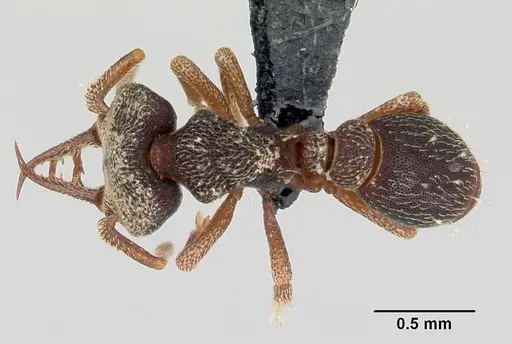
CASENT0102366
View on AntWeb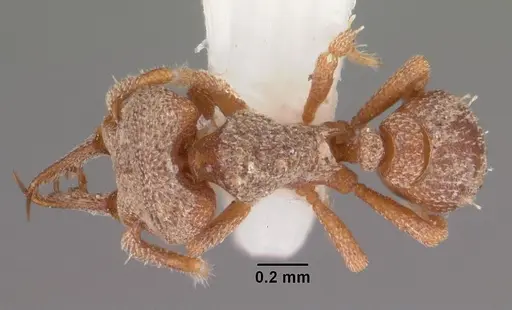
CASENT0423546
View on AntWeb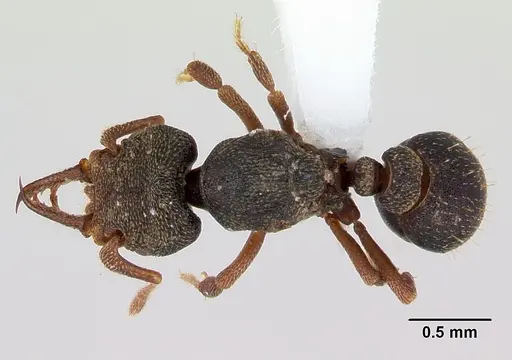
CASENT0423567
View on AntWeb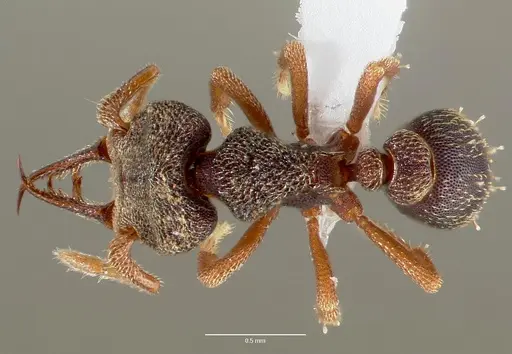
CASENT0900943
View on AntWeb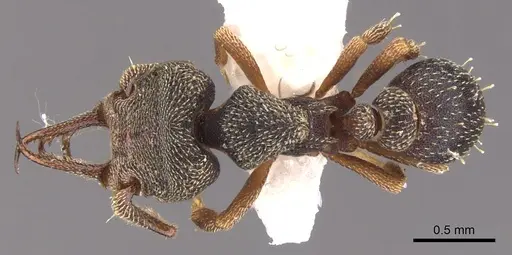
CASENT0914919
View on AntWeb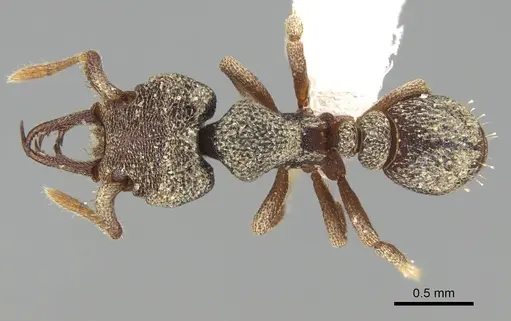
Literature
Loading...Loading products...