

Prolasius hemiflavus
- Scientific Name
- Prolasius hemiflavus
- Tribe
- Melophorini
- Subfamily
- Formicinae
- Author
- Clark, 1934
- Distribution
- Found in 1 countries
Prolasius hemiflavus Overview
Prolasius hemiflavus is an ant species of the genus Prolasius. It is primarily documented in 1 countries , including Australia. Detailed taxonomic data and occurrence records can be further explored via authoritative databases such as AntWeb or the Global Biodiversity Information Facility (GBIF).
Prolasius hemiflavus
Prolasius hemiflavus is a small ant species native to southern Australia, belonging to the Formicinae subfamily. Workers are characterized by a distinct propodeal angle (the angle where the thorax meets the abdomen) and one pair of erect setae on the pronotum [1]. This species has been collected from various habitats including under stones, in pitfall traps, and from trees along the south coast of Australia [1]. The species is known from Western Australia, New South Wales, Tasmania, and Victoria, making it one of the more widely distributed Prolasius species [1].
This ant remains poorly studied in captivity, with limited scientific data available on its biology and care requirements. As a member of the Melophorini tribe, it likely shares characteristics with related Australian ants, but specific details about founding behavior, colony size, and exact temperature preferences have not been documented. The species appears to prefer coastal and forest-edge habitats in temperate regions of Australia.
Quick Summary
- Difficulty: Unknown
- Origin & Habitat: Southern Australia (WA, NSW, Tasmania, Victoria). Found along the south coast and in jarrah forest regions near Perth. Natural nesting occurs under stones, in trees, and in open woodland areas [1].
- Colony Type: Unconfirmed, colony structure (single-queen or multi-queen) has not been documented in scientific literature.
- Size & Growth:
- Queen: Unknown, no measurements available in published literature
- Worker: Unknown, no measurements available in published literature
- Colony: Unknown, colony size has not been documented
- Growth: Unknown
- Development: Unknown, no development data available for this species (Development timeline has not been studied. Related Melophorini species typically develop in 6-10 weeks at warm temperatures, but this is an estimate only.)
- Antkeeping:
- Temperature: Unknown, no specific data available. Being an Australian species from temperate regions, moderate temperatures (20-26°C) are likely suitable. Start in this range and observe colony activity for guidance.
- Humidity: Unknown, no specific data. Based on natural habitat (coastal areas, under stones), moderate humidity with some dry areas is likely appropriate. Keep nest substrate slightly moist but not waterlogged.
- Diapause: Unknown, no data on overwintering requirements. Southern Australian populations may experience mild winter dormancy, but this is unconfirmed.
- Nesting: Based on field collections, they nest under stones and in trees [1]. In captivity, a test tube setup or small acrylic nest with moderate humidity would be a reasonable starting point. Provide a small chamber size appropriate for a small ant species.
- Behavior: Behavior is undocumented in scientific literature. As a Formicine ant, they likely have moderate activity levels and may tend aphids for honeydew. Escape prevention should be practiced as with any small ant species, use fine mesh and secure barriers. No specific aggression or stinging data is available.
- Common Issues: lack of scientific data makes care recommendations uncertain, keepers should monitor colony response and adjust accordingly, no documented feeding preferences, likely omnivorous like other Formicinae, but specific diet requirements unknown, colony founding behavior unconfirmed, unknown whether queen seals herself in (claustral) or must forage, winter care requirements unknown, unclear if diapause is needed, no known diseases or parasites documented, standard antkeeping hygiene recommended
Natural Distribution and Habitat
Prolasius hemiflavus is endemic to southern Australia, with records from Western Australia, New South Wales, Tasmania, and Victoria [1]. In Western Australia, the species has been found along the south coast and in jarrah forest regions near Jarrahdale, approximately 60 kilometers south of Perth [1]. The ant has been collected using various methods including pitfall traps, from trees, and from under stones, suggesting it forages both on the ground and in vegetation [1]. This distribution pattern indicates preference for temperate coastal and forest-edge habitats.
Identification and Morphology
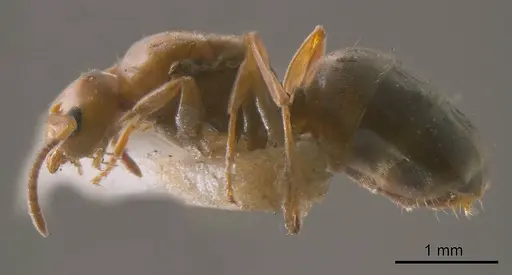
Workers of Prolasius hemiflavus can be identified by two key characteristics: a distinct propodeal angle (the angular junction between the mesosoma and metasoma) and one pair of erect setae on the pronotum [1]. The species was originally described by Clark in 1934,with both worker and queen castes documented [1]. Specific measurements for workers and queens have not been published in readily available sources, making size-based identification difficult. The genus Prolasius belongs to the tribe Melophorini within the Formicinae subfamily.
Housing and Nesting
Based on field collection data, Prolasius hemiflavus nests under stones and in arboreal situations (trees) [1]. For captive care, a test tube setup would be appropriate for founding colonies, transitioning to a small acrylic or plaster nest as the colony grows. Since specific humidity requirements are unknown, start with moderately moist substrate and observe, the colony should thrive if conditions are suitable. Given their small size, ensure escape prevention is adequate even though specific escape behavior has not been documented.
Feeding and Diet
No specific dietary studies exist for this species. As a Formicine ant, it likely has an omnivorous diet similar to related genera, potentially including nectar, honeydew, and small insects. Keepers should offer a varied diet including sugar water or honey as an energy source and small protein sources like fruit flies or small mealworms. Since the species forages in trees in the wild, it may accept honeydew from aphids if kept in a setup that allows tending. Start with basic offerings and expand based on colony acceptance.
Temperature and Seasonal Care
No thermal tolerance data exists for Prolasius hemiflavus. Being from temperate southern Australia (Tasmania, Victoria, and the south coast of WA), the species likely tolerates a range from cool to moderately warm conditions. A starting point of 20-26°C is reasonable for an Australian temperate species. Observe colony behavior, if workers are consistently clustered in warmer areas of the nest, slightly increase temperature, if they avoid heated areas, reduce temperature. Whether a winter diapause period is required is unknown, southern Australian populations may experience mild winter dormancy but this has not been documented.
Frequently Asked Questions
How do I care for Prolasius hemiflavus ants?
Care recommendations are uncertain due to limited scientific data. Provide a test tube setup for founding colonies with moderate humidity. Offer sugar water and small protein sources. Keep at room temperature (20-26°C) and monitor colony response. This species is not well-documented in antkeeping literature, so careful observation is essential.
What do Prolasius hemiflavus eat?
Specific diet is unknown, but likely omnivorous like other Formicinae. Offer sugar water or honey for energy and small insects (fruit flies, pinhead crickets, mealworms) for protein. They may accept honeydew from aphids if given the opportunity.
How long does it take for Prolasius hemiflavus to produce workers?
The egg-to-worker development timeline has not been documented for this species. Based on related Melophorini species, expect approximately 6-10 weeks at warm temperatures, but this is an estimate only.
Is Prolasius hemiflavus a good species for beginners?
This species is not recommended for beginners due to the lack of documented care information. The difficulty level cannot be accurately assessed. Beginners may want to start with better-documented Australian species like Iridomyrmex or some Camponotus species.
Do Prolasius hemiflavus colonies need hibernation?
Diapause requirements are unknown. Southern Australian populations may experience mild winter dormancy, but this has not been documented. Observe your colony's behavior, if they become less active in winter, a cool period (15-18°C) may be appropriate.
How big do Prolasius hemiflavus colonies get?
Maximum colony size is unknown, no colony size data has been published. Related species in the Melophorini tribe typically reach several hundred workers.
Can I keep multiple Prolasius hemiflavus queens together?
Colony structure (single-queen vs multi-queen) has not been documented. Combining unrelated queens is not recommended due to lack of data on their social structure.
What temperature is best for Prolasius hemiflavus?
Optimal temperature is unknown. Based on their Australian temperate distribution, a range of 20-26°C is a reasonable starting point. Adjust based on colony activity levels.
References

This caresheet is licensed under CC BY-SA 4.0 .
ANTWEB1008275
View on AntWeb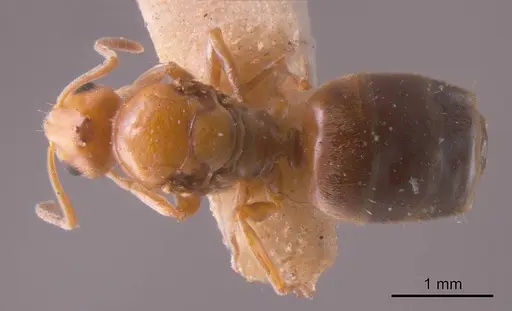
Literature
Loading...Loading products...