

Proformica striaticeps
- Scientific Name
- Proformica striaticeps
- Tribe
- Formicini
- Subfamily
- Formicinae
- Author
- Forel, 1911
- Distribution
- Found in 2 countries
Proformica striaticeps Overview
Proformica striaticeps is an ant species of the genus Proformica. It is primarily documented in 2 countries , including Greece, Türkiye. Detailed taxonomic data and occurrence records can be further explored via authoritative databases such as AntWeb or the Global Biodiversity Information Facility (GBIF).
Proformica striaticeps
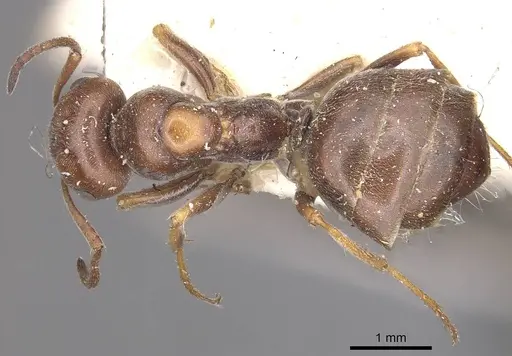
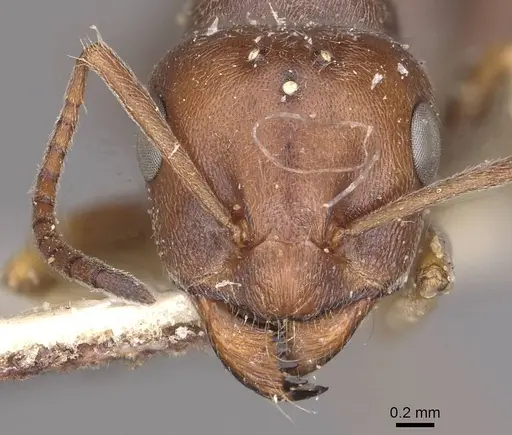
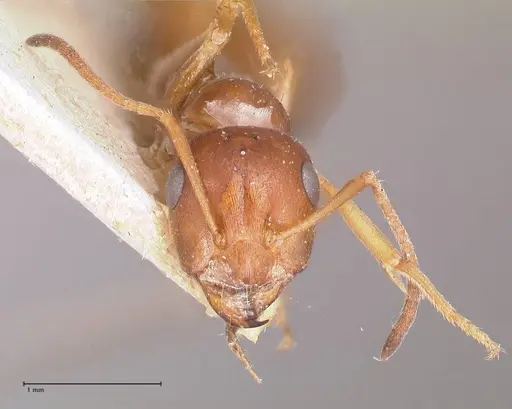
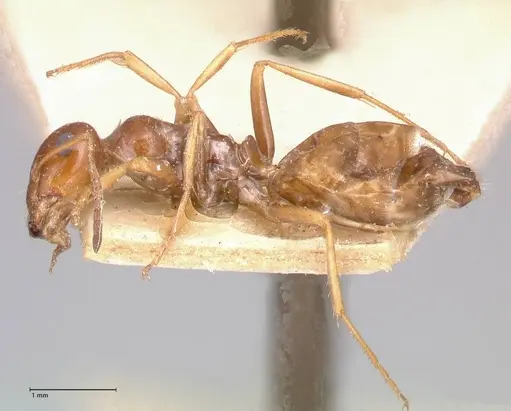
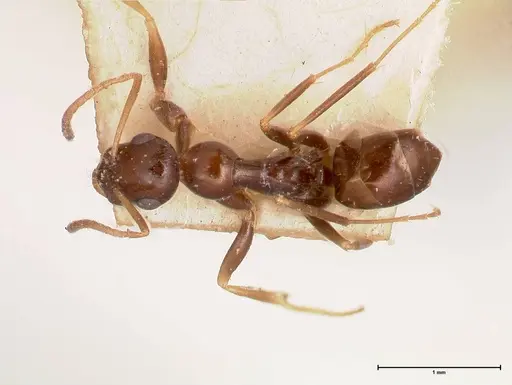
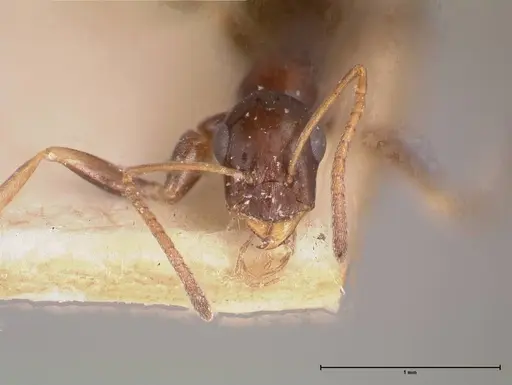
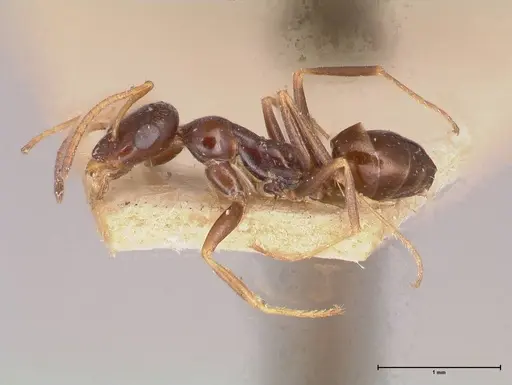
Proformica striaticeps is a small to medium-sized ant belonging to the subfamily Formicinae. Workers are polymorphic, meaning they come in different sizes, minor workers measure 0.75-0.87mm in head length while major workers are larger at 1.24-1.46mm [1]. The species is characterized by its distinctive striated clypeus (the face area above the jaws) and notably lacks the erect body hairs that similar species possess, giving it a relatively smooth appearance [2]. The coloration varies between castes: minor workers are yellowish-brown with brown heads, while major workers are darker with black heads and gaster [1].
This species has a limited distribution across the Balkan-Anatolian region, being found in Bulgaria, Turkey, and Greece where it represents a subendemic species [3]. In Greece, it has only been recorded from the highlands of Halkidiki in Macedonia and the mountains of north-western Peloponnese, typically nesting in mountain pastures along clay-gravel roads [4]. The species was originally described from Greece in 1911 and represents one of the rarer Proformica species in Europe [5].
Quick Summary
- Difficulty: Unknown, likely Medium
- Origin & Habitat: Southeastern Europe and Anatolia, found in mountain pastures and grasslands in Bulgaria, Greece (Macedonia and Peloponnese), and Turkey. Nests are located along clay-gravel roads and open sunny areas at various altitudes [4][5][6].
- Colony Type: Colony structure is unconfirmed. Based on related Proformica species, likely single-queen (monogyne) colonies.
- Size & Growth:
- Queen: Unconfirmed, estimated 6-8mm based on genus patterns
- Worker: Minor workers: 0.75-0.87mm, Major workers: 1.24-1.46mm [1]
- Colony: Unknown, likely moderate colonies based on typical Proformica size
- Growth: Unknown
- Development: Unconfirmed, estimated 6-10 weeks based on related Formicinae species (No specific development data available for this species)
- Antkeeping:
- Temperature: Unconfirmed, based on its mountain habitat in Greece and Bulgaria, likely prefers moderate temperatures around 20-24°C. Related Proformica species typically thrive at room temperature.
- Humidity: Likely prefers dry to moderate conditions, mountain pastures suggest they tolerate drier environments than forest-dwelling species. Provide a gradient with some damp areas for founding colonies.
- Diapause: Likely yes, as a temperate/semi-mountain species from the Balkans, probably requires a winter rest period of 2-3 months at 5-10°C. This is typical for European Formicinae.
- Nesting: In nature, they nest in soil, often along roadsides and in open grassy areas. For captivity, a naturalistic setup with soil substrate or a Y-tong/plaster nest works well. They likely prefer干燥的环境.
- Behavior: Workers are active foragers that likely collect honeydew and small insects. As Formicinae, they defend themselves by spraying formic acid rather than stinging, this makes them harmless to humans but irritating if sprayed in the eyes. They are not aggressive but will defend the nest if threatened. Escape risk is moderate due to their small size, standard barrier methods should suffice.
- Common Issues: limited distribution means this species is rarely available in the antkeeping hobby, specific temperature and humidity requirements are not well-documented, requiring careful observation, winter diapause requirements are inferred but not confirmed for captive colonies, founding colonies may be slow to establish due to unknown claustral behavior
Distribution and Habitat
Proformica striaticeps is a Balkan-Anatolian subendemic species, meaning it's found primarily in the Balkans and Anatolia with limited distribution outside this region [3]. In Greece, the species has been recorded from two main areas: the highlands of Halkidiki in Macedonia and the mountains of north-western Peloponnese [4]. The type locality in Greece is Thessaloniki at low altitude [7].
In Bulgaria, records exist from multiple locations including the Western and Eastern Stara Planina Mountains, the Thracian Lowland, Belasitsa Mountain, the Rila and Pirin Mountains, and the Eastern Rhodopi Mountains [6]. In Turkey, the species has been recorded from Artvin, Isparta, and Sivas provinces [8].
The natural habitat consists of mountain pastures and open grassy areas, often along clay-gravel roads where numerous nests have been observed [4]. This suggests a preference for open, sunny locations with sparse vegetation.
Identification and Morphology
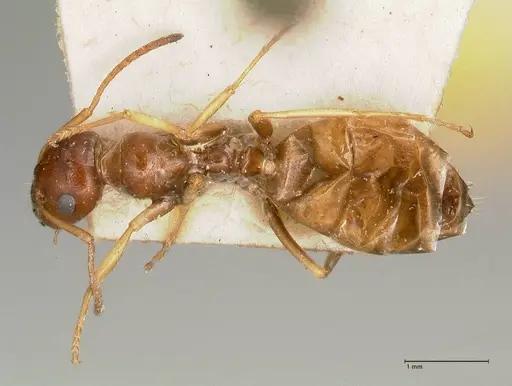
Proformica striaticeps workers are polymorphic, meaning the colony contains both minor (smaller) and major (larger) workers. Minor workers have a head length of 0.754-0.873mm, while major workers measure 1.238-1.460mm in head length [1].
One of the key identifying features is the striated clypeus, the face area above the mandibles has distinctive longitudinal striations (lines) that are visible from the clypeus to the space between the eyes [7]. This distinguishes it from the similar species P. oculatissima, which has a smooth interocular space.
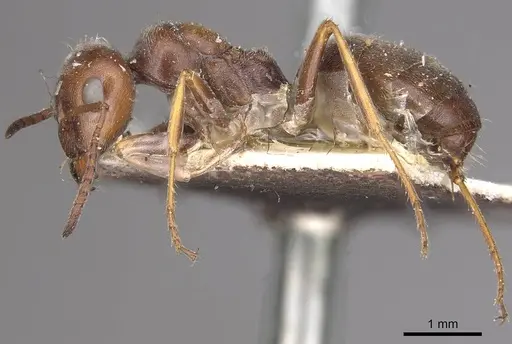
The species is also characterized by having very few or no erect hairs on the body, particularly on the mesosoma and first gastral segment [2]. This is an important distinguishing feature from P. chelmosensis, which has many erect hairs. Minor workers have a very long scape (antenna segment) that extends approximately 1.5 times beyond the occipital margin of the head [1].
Coloration differs between castes: minor workers have a brown head, mesosoma, and petiolar scale, with yellowish-brown pronotum and gaster. Major workers are darker, with black head, mesosoma, and gaster [1].
Temperature and Seasonal Care
Based on the species' mountain habitat in Greece and Bulgaria, Proformica striaticeps likely prefers moderate temperatures. Related Proformica species and other Formicinae from similar habitats typically thrive at room temperature around 20-24°C. During the active season, maintain temperatures in this range with slight variations acceptable.
As a species from the temperate Balkans with mountain populations, it almost certainly requires a winter diapause period. This should be provided for 2-3 months during winter (typically November-February in the Northern Hemisphere) at temperatures between 5-10°C. This can be achieved by moving the colony to an unheated room, garage, or refrigerator during the cold months.
During the active season, ensure the nest area maintains stable temperatures without major fluctuations. A heating cable on one side of the nest can create a gentle gradient if your room temperature runs cool, but avoid overheating.
Nesting and Housing
In the wild, Proformica striaticeps nests in soil in open, sunny locations such as mountain pastures and along roadsides [4]. For captive care, several nest types work well:
A naturalistic setup with a soil substrate allows the ants to create their own tunnels, mimicking natural conditions. Use a mix of soil and sand that holds its structure when damp but doesn't become waterlogged.
Y-tong (AAC) nests or plaster nests are also suitable, providing the chambers are appropriately sized for their small workers. The nest should have narrow passages and small chambers scaled to their size.
Regardless of nest type, ensure proper escape prevention. While not the smallest ants, they can still squeeze through small gaps. Use standard barrier methods like fluon on the rim of the formicarium.
Place the nest in a location with moderate lighting, these ants prefer dimmer conditions than some species but still need some light cycles.
Feeding and Diet
Like other Formicinae, Proformica striaticeps likely has an omnivorous diet. They probably feed on honeydew (a sugary substance excreted by aphids and scale insects) and small insects for protein.
For captive colonies, offer a mix of sugar sources and protein foods. Sugar water or honey water can be provided as a constant food source. For protein, offer small insects like fruit flies, small crickets, or mealworms. Feed protein sources 2-3 times per week, adjusting based on colony size and consumption.
Fresh water should always be available. A water test tube with a cotton stopper provides a simple, reliable water source.
Observe your colony's preferences, some colonies accept certain foods readily while ignoring others. Remove uneaten prey after 24-48 hours to prevent mold issues.
Defense and Behavior
As members of the subfamily Formicinae, these ants do not have a functional stinger. Instead, they defend themselves by spraying formic acid, a defensive chemical that can irritate predators and, if sprayed in human eyes, causes discomfort [1]. This makes them essentially harmless to keepers, though you should avoid putting your face near an agitated colony.
Workers are active foragers that likely search for food both on the ground and on low vegetation. They probably maintain moderate activity levels throughout the day.
The species is not known to be particularly aggressive toward humans or other ants. They will defend their nest if threatened but are not aggressive outside defensive contexts.
Colony founding likely follows the typical Formicinae pattern where the queen seals herself in a chamber, lives off her stored fat reserves, and raises the first brood alone until nanitic (first) workers emerge.
Frequently Asked Questions
How long does it take for Proformica striaticeps to raise first workers?
The exact development time is unconfirmed for this species. Based on related Formicinae species, expect approximately 6-10 weeks from egg to first worker at optimal temperatures (around 20-24°C). The queen will remain sealed in her founding chamber during this time, living off her fat reserves until the nanitic workers emerge.
What temperature do Proformica striaticeps need?
While not directly studied, based on their mountain habitat in Greece and Bulgaria, they likely prefer moderate temperatures around 20-24°C during the active season. They almost certainly require a winter diapause period of 2-3 months at 5-10°C.
Are Proformica striaticeps good for beginners?
Difficulty level is not well-established since this species is rarely available in the antkeeping hobby. Based on their likely requirements (moderate temperatures, standard feeding, winter diapause), they may be suitable for intermediate keepers. However, the limited availability and unconfirmed specific requirements make them a challenging choice for beginners.
How big do Proformica striaticeps colonies get?
Colony size is not well-documented for this species. Based on related Proformica species, colonies likely reach several hundred workers. They are not among the largest ant species.
Do Proformica striaticeps need hibernation?
Likely yes. As a species from the temperate Balkans with mountain populations, they almost certainly require a winter rest period. Provide 2-3 months of cold temperatures (5-10°C) during winter, typically from late autumn through early spring.
What do Proformica striaticeps eat?
Like other Formicinae, they likely have an omnivorous diet. Offer sugar sources (honey water, sugar water) for energy and small insects (fruit flies, small crickets, mealworms) for protein. They probably also collect honeydew in the wild.
Can I keep multiple Proformica striaticeps queens together?
The colony structure is unconfirmed for this species. Based on related Proformica species, they likely form single-queen colonies. Combining unrelated queens is not recommended without evidence they can found colonies pleometrotically (multiple queens starting together).
What makes Proformica striaticeps different from other ants?
This species is distinguished by its striated clypeus (face markings), lack of erect body hairs, and very long antennae scapes in minor workers. It has a limited distribution in the Balkans and Anatolia, making it a rare and unusual species in the antkeeping hobby.
Where is Proformica striaticeps found in the wild?
Proformica striaticeps is a Balkan-Anatolian subendemic species found in Bulgaria, Turkey, and Greece. In Greece, it's only known from the highlands of Halkidiki and mountains of northwestern Peloponnese. They nest in mountain pastures and along clay-gravel roads.
References

This caresheet is licensed under CC BY-SA 4.0 .
Literature
Loading...Loading products...