

Procryptocerus eladio
- Scientific Name
- Procryptocerus eladio
- Tribe
- Attini
- Subfamily
- Myrmicinae
- Author
- Longino & Snelling, 2002
- Distribution
- Found in 1 countries
Procryptocerus eladio Overview
Procryptocerus eladio is an ant species of the genus Procryptocerus. It is primarily documented in 1 countries , including Costa Rica. Detailed taxonomic data and occurrence records can be further explored via authoritative databases such as AntWeb or the Global Biodiversity Information Facility (GBIF).
Procryptocerus eladio
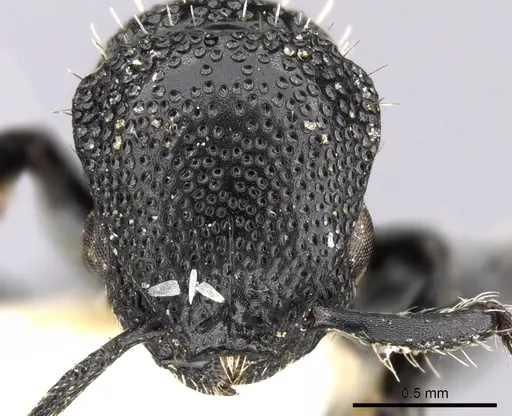
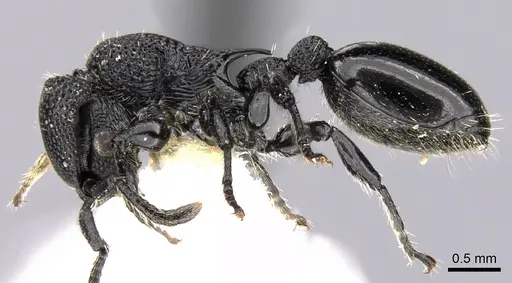
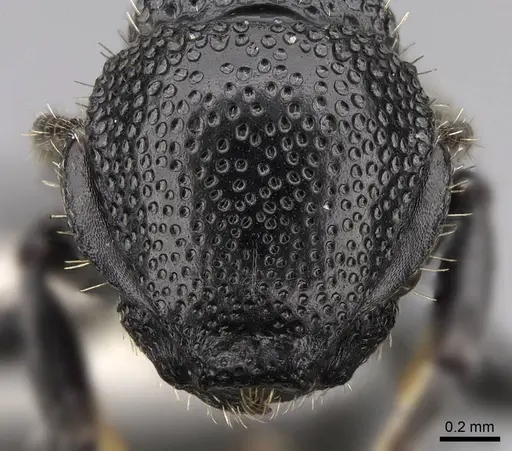
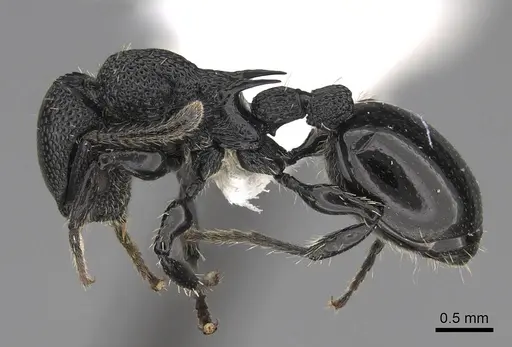
Procryptocerus eladio is a tiny, glossy black ant endemic to Costa Rica. Workers measure around 3-4mm total length with a distinctive appearance featuring deep foveae (pitted sculpturing) on the face and mesosoma, longitudinal striations on the vertex, and completely smooth, shining gasters. The propodeal spines are long and directed posteriorly, and the hind femur is notably swollen and spindle-shaped. This species is known only from the Rio Penas Blancas valley in Alajuela Province at approximately 800m elevation, where it inhabits midmontane wet forest with high rainfall and abundant epiphytes. The type series was collected from workers scattered in the crown of a recent treefall, suggesting they forage in the canopy layer rather than on the forest floor.
Quick Summary
- Difficulty: Expert
- Origin & Habitat: Endemic to Costa Rica, specifically the Rio Penas Blancas valley in Alajuela Province at 800m elevation. Inhabits midmontane wet forest characterized by high rainfall and heavy epiphyte loads [1].
- Colony Type: Colony structure is unconfirmed. Workers have only been collected as scattered foragers in canopy debris, suggesting small, dispersed colonies or specialized foraging patterns.
- Size & Growth:
- Queen: Undescribed, no queen measurements available
- Worker: Approximately 3-4mm total length (HL 1.201mm, HW 1.179mm) [1]
- Colony: Unknown, only scattered workers have been collected
- Growth: Unknown, no colony development data available
- Development: Unknown, no development data exists for this species (Development timeline has not been studied. Related Procryptocerus species suggest slow growth typical of tropical canopy ants.)
- Antkeeping:
- Temperature: Keep at room temperature or slightly warm, roughly 20-26°C. As a midmontane Costa Rican species, avoid extreme heat. A gentle gradient allowing cooler areas is advisable.
- Humidity: Requires high humidity, think damp forest canopy. Keep nest substrate consistently moist but not waterlogged, with some drier areas available for the ants to self-regulate.
- Diapause: Unknown for this species. Midmontane species from Costa Rica may not require strong hibernation but may have seasonal activity patterns.
- Nesting: No captive nesting data exists. In nature they appear to be canopy-nesting ants, found in debris and epiphytes in treefall areas. A naturalistic setup with moist substrate and small chambers would be most appropriate. Test tubes with cotton may work for founding colonies.
- Behavior: Behavior is poorly documented. The collection method (scattered workers in treefall canopy debris) suggests they are arboreal or subarboreal foragers. Their small size and smooth gasters indicate they may be docile and non-aggressive. Escape prevention is critical given their tiny size, they can squeeze through standard test tube barriers. No defensive behaviors have been documented.
- Common Issues: tiny size makes escape likely without fine mesh barriers, no captive husbandry information exists, experimental keeper, humidity requirements are uncertain but likely high, colony size and growth rate unknown making care speculative, only known from single location limits available husbandry data
Natural History and Distribution
Procryptocerus eladio is one of the rarest and most poorly known ant species in Central America. It has only been collected from a single location: the Rio Penas Blancas valley in Costa Rica's Alajuela Province at approximately 800 meters elevation. The original specimens were collected as scattered workers found in the crown of a recent treefall in midmontane wet forest, this habitat is characterized by very high rainfall and heavy epiphyte loads (mosses, bromeliads, and other plants growing on trees). This collection method is unusual and suggests the species may be arboreal or subarboreal, living and foraging in the canopy rather than on the forest floor. The species was described in 2002 by Longino and Snelling and named in honor of Eladio Cruz, a conservationist who contributed greatly to protecting the Penas Blancas Valley [1].
Identification and Morphology
Procryptocerus eladio workers are tiny ants measuring approximately 3-4mm in total length. They are entirely shining black with no color patterns. The most distinctive morphological features include: deep, discrete foveae (circular pits) evenly dispersed across the face, with distances between foveae subequal to the fovea diameter, longitudinal striae radiating from the occiput onto the vertex, a strongly produced and ventrally bent clypeus, long propodeal spines directed posteriorly, a notably swollen, spindle-shaped hind femur, and a completely smooth and shining first gastral tergite. The mesonotal lobes are completely absent, and the propodeal spines are long and upturned-curvate. These morphological features make identification relatively straightforward under magnification [1][2].
Housing and Nesting
No established captive husbandry methods exist for Procryptocerus eladio. This is an expert-level species that should only be attempted by very experienced antkeepers comfortable with experimental setups. Based on their natural history as canopy-dwelling ants from humid midmontane forest, a naturalistic setup with consistently moist substrate would be most appropriate. Small test tubes with cotton may work for founding colonies, but the key challenge is maintaining appropriate humidity without causing mold. The tiny size of these ants means escape prevention must be excellent, use fine mesh barriers and ensure all connections are sealed. Given the complete lack of captive data, keepers should be prepared to experiment and document their observations carefully.
Feeding and Diet
Procryptocerus belongs to the tribe Attini, which includes the famous leaf-cutter ants and other fungus-growing species. However, not all Attini are leaf-cutters, many are smaller ants that cultivate fungus on other substrates. The diet of P. eladio specifically is completely unstudied. Based on related Procryptocerus species and general Attini biology, they likely cultivate fungus on organic matter they collect, rather than cutting fresh leaves. In captivity, offering small amounts of organic material (dead leaves, detritus) alongside standard ant foods (sugar water, small insects) would be a reasonable starting point. However, be prepared for the possibility that they have specialized dietary requirements that are difficult to meet in captivity.
Temperature and Humidity
As a midmontane species from Costa Rica at 800m elevation, Procryptocerus eladio likely experiences moderate temperatures in nature, warmer than highland areas but cooler than lowland tropics. Room temperature (20-26°C) is likely appropriate, with avoidance of extreme heat. Humidity requirements are probably high, given their origin in wet forest with heavy epiphyte loads. Keep the nest substrate consistently moist but not waterlogged, and consider providing a humidity gradient so the ants can self-regulate. The lack of any captive data means these recommendations are speculative and should be adjusted based on colony behavior and survival. [1]
Challenges and Considerations
Procryptocerus eladio is not a species for beginners. There is essentially no captive husbandry information available, and keepers will be pioneering their care entirely through experimentation. The species is only known from a very restricted range in Costa Rica, and wild colonies have never been documented. Key challenges include: maintaining appropriate high humidity without causing mold, providing adequate nutrition (diet is completely unknown), preventing escape due to their tiny size, and determining appropriate colony establishment methods. If you obtain this species, documenting your observations carefully and sharing them with the antkeeping community would be extremely valuable for advancing our knowledge of this poorly understood ant.
Frequently Asked Questions
How long does it take for Procryptocerus eladio eggs to develop into workers?
This is completely unknown. No development data exists for this species or any closely related Procryptocerus. Based on typical tropical ant development, it might take 4-8 weeks at optimal temperature, but this is purely speculative.
What do Procryptocerus eladio ants eat?
Their diet is unstudied. As members of the tribe Attini (fungus-growing ants), they likely cultivate fungus on organic matter. In captivity, offering small insects, sugar water, and organic debris would be a reasonable starting point, but acceptance is completely unknown.
Can I keep multiple Procryptocerus eladio queens together?
This is unknown. Colony structure has not been documented for this species. Without data on whether they are single-queen or multi-queen colonies, combining queens is not recommended.
Is Procryptocerus eladio a good species for beginners?
No. This is an expert-level species with no captive husbandry information available. There are no established care protocols, and keepers will need to experiment entirely. This species is not recommended unless you have extensive experience with difficult, data-deficient ant species.
What temperature should I keep Procryptocerus eladio at?
Room temperature (20-26°C) is likely appropriate. As a midmontane Costa Rican species, avoid extreme heat. Start around 22-24°C and observe colony activity for guidance.
Do Procryptocerus eladio ants need hibernation?
This is unknown. As a tropical to subtropical species from moderate elevation in Costa Rica, they likely do not require true hibernation but may have seasonal activity patterns related to wet/dry seasons.
How big do Procryptocerus eladio colonies get?
This is completely unknown. Only scattered workers have ever been collected, no colony size data exists. Based on their small size and restricted distribution, colonies are likely small.
When will Procryptocerus eladio produce alates (reproductives)?
This is unknown. Nuptial flight timing has not been documented for this species, and alates have never been collected or described.
Why are my Procryptocerus eladio ants dying?
Without any captive data, diagnosing problems is extremely difficult. Ensure humidity is high but not causing mold, temperature is stable (20-26°C), and escape prevention is adequate. The fundamental issue may simply be that we don't yet know how to keep this species alive in captivity.
References

This caresheet is licensed under CC BY-SA 4.0 .
CASENT0280782
View on AntWeb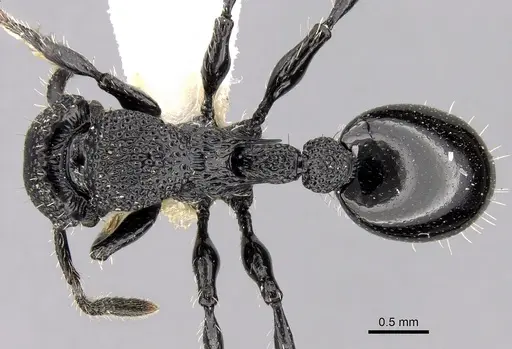
LACMENT140642
View on AntWeb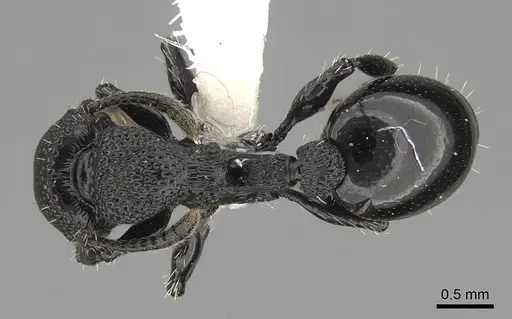
Literature
Loading...Loading products...