

Procryptocerus attenuatus
- Scientific Name
- Procryptocerus attenuatus
- Tribe
- Attini
- Subfamily
- Myrmicinae
- Author
- Smith, 1876
- Distribution
- Found in 5 countries
Procryptocerus attenuatus Overview
Procryptocerus attenuatus is an ant species of the genus Procryptocerus. It is primarily documented in 5 countries , including Brazil, Costa Rica, Guyana. Detailed taxonomic data and occurrence records can be further explored via authoritative databases such as AntWeb or the Global Biodiversity Information Facility (GBIF).
Procryptocerus attenuatus
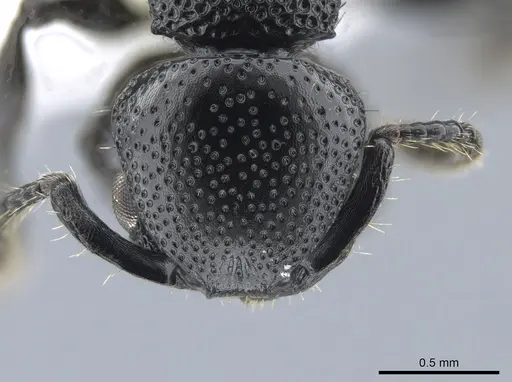
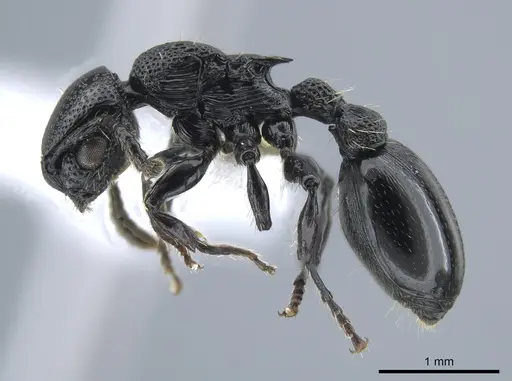
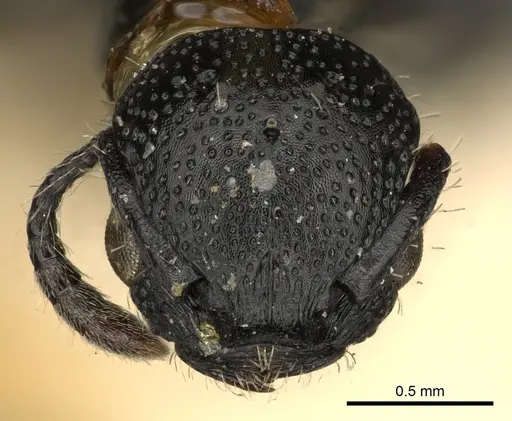
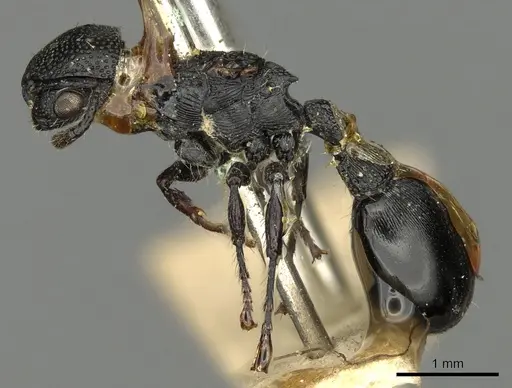
Procryptocerus attenuatus is a small, striking Myrmicine ant known for its glossy black body and distinctive morphology. Workers measure around 1mm in head width, while queens reach approximately 1.07mm [1]. The species features a broad, flattened antennal scape and a uniquely sculpted head with foveae (small pits) and fine surface sculpturing. This ant is a true canopy dweller, it's one of the rarest Procryptocerus species to collect, living exclusively in the high canopy of lowland tropical rainforests from Costa Rica south to Bolivia and across the Amazon basin [1][2]. The few specimens scientists have obtained came from insecticidal fogging of rainforest trees, making wild colonies exceptionally difficult to study. Only one natural nest has ever been collected, near Manaus, Brazil [1].
Quick Summary
- Difficulty: Expert
- Origin & Habitat: Lowland tropical rainforests of Central and South America, from Costa Rica through Panama, Colombia, Peru, Bolivia, and across the Amazon basin in Brazil, Guyana, Suriname, and French Guiana [1][2]. They live exclusively in the high rainforest canopy, often many meters above ground.
- Colony Type: Unconfirmed colony structure, single queen or multiple queen arrangement has not been documented in scientific literature.
- Size & Growth:
- Queen: ~1.07mm head width [1]
- Worker: ~1.0mm head width [1]
- Colony: Unknown, only one nest has ever been collected
- Growth: Unknown, no captive development data exists
- Development: Unknown, no development data exists for this species (No captive colonies have been documented, so no timeline information is available. Related Procryptocerus species may provide rough estimates, but this species' arboreal canopy lifestyle suggests different patterns.)
- Antkeeping:
- Temperature: Unknown, must be inferred from natural habitat. As a lowland tropical rainforest species, aim for warm conditions around 24-28°C with stable humidity. Start in this range and monitor colony activity for guidance.
- Humidity: High humidity required, these are canopy ants from humid tropical rainforests. Keep nest substrate consistently moist but not waterlogged. Provide a water tube and ensure humidity remains high (70-85% estimated).
- Diapause: No, as a tropical species from lowland rainforests, they likely do not require a winter rest period. Maintain warm conditions year-round.
- Nesting: Arboreal canopy specialists, they nest in tree hollows and branches high above the forest floor. In captivity, a test tube setup works for founding colonies. For established colonies, a vertical or elevated nest design that mimics tree hollows works best. Y-tong (AAC) nests or plaster nests with narrow chambers can work, but ensure good humidity retention.
- Behavior: Behavior is poorly documented due to their canopy lifestyle and rarity in collections. They are likely docile like other Attini tribe members. Workers are small (~1mm) so escape prevention is critical, use fine mesh barriers and tight-fitting lids. Their natural history suggests they may be slower-moving and less aggressive than ground-nesting ants. No documented sting severity is available, but given their small size, any sting would be minimal.
- Common Issues: this species has never been documented in captive antkeeping, all care recommendations are estimates based on related species and natural history, canopy-dwelling lifestyle means they need high humidity and likely vertical nesting spaces that most formicaria don't provide, only one wild nest has ever been collected, making basic biology (founding, colony size, behavior) essentially unknown, their extreme rarity means finding a colony to keep is nearly impossible, they are not available in the antkeeping hobby, high temperatures and low humidity can quickly kill these sensitive canopy ants
Why This Species Is So Difficult to Keep
Procryptocerus attenuatus represents one of the most challenging ants to keep in captivity, not because of any special care requirements, but because we essentially know nothing about them. This species lives exclusively in the rainforest canopy, high above the forest floor where researchers can reach them. The only nest ever collected was by W.L. Brown, Jr. near Manaus, Brazil, containing just a dealate queen and a single male [1]. Most specimens scientists have examined came from insecticidal fogging of canopy trees, a technique that kills the insects being studied. This means we have no data on how they found colonies, how many workers a mature colony has, what their exact nesting preferences are, or how they behave in captivity. If you obtain this species, you are essentially pioneering all captive care knowledge, every observation you make contributes to science.
Natural History and Collection Challenges
This species has one of the most unusual collection histories in all of Myrmicinae. Scientists have obtained specimens from some bizarre sources: a winged queen was found in the stomach of a marine toad (Bufo marinus) [1], and another queen head capsule was recovered from the feces of a silky anteater (Cyclopes) [1]. These odd occurrences highlight just how difficult it is to study canopy-dwelling ants. The species ranges from Costa Rica south through Panama, Colombia, Peru, Bolivia, and across the Amazon basin in Brazil, Guyana, Suriname, and French Guiana [1][2]. In Colombia, they've been found at elevations around 980 meters in the Antioquia region [3]. The combination of arboreal lifestyle and extreme rarity means this is not a species for beginners, or even most experienced antkeepers.
Housing and Nest Setup
Since we have no captive data for this species, housing recommendations must be based on what we know about their natural arboreal habitat and related Procryptocerus species. These are canopy ants that live in tree hollows and branches, not ground nests. A test tube setup works for founding colonies, but you'll need to maintain very high humidity, think rainforest conditions. For established colonies, consider a Y-tong (AAC) nest or plaster formicarium with chambers scaled to their tiny size (workers are only about 1mm). The nest should have good humidity retention since canopy environments are naturally humid. Provide a water tube and consider misting the nest area regularly. Since they're arboreal, a vertical or angled nest orientation may be more appropriate than a horizontal one. Escape prevention is critical due to their very small size, use fine mesh barriers on all openings.
Feeding and Diet
As members of the tribe Attini, these ants are likely fungus-farming ants, though this is not definitively documented for P. attenuatus specifically. The Attini tribe includes the famous leafcutter ants (Atta and Acromyrmex) that cultivate fungus for food. However, Procryptocerus is not a leafcutter genus, they're considered 'lower Attini' that likely cultivate simpler fungus structures or may have different dietary habits. In captivity, you should offer a varied diet: small insects (fruit flies, pinhead crickets, small mealworms), sugar sources (honey water, sugar water), and potentially a small piece of fungus-growing substrate. Start with small live prey and sugar water, then observe what the colony accepts. Given the complete lack of captive data, be prepared to experiment and document your findings carefully.
Temperature and Environmental Conditions
As a lowland tropical rainforest species from the Amazon basin and Central American rainforests, this ant requires warm, stable, humid conditions. Aim for temperatures in the range of 24-28°C, never let temperatures drop below room temperature (around 20°C). They have no documented diapause requirement and likely need year-round warm conditions. High humidity is essential, target 75-85% relative humidity or higher. The canopy environment they inhabit is naturally humid and protected from temperature fluctuations. Use a heating cable on one side of the nest if your room temperature falls below 24°C, but always provide a temperature gradient so ants can choose their preferred spot. Monitor the colony closely, any signs of lethargy or clustering may indicate temperature or humidity issues.
Frequently Asked Questions
Can I keep Procryptocerus attenuatus ants?
In theory yes, but in practice this is nearly impossible. This species has never been documented in the antkeeping hobby, they've only been collected a handful of times in the wild, and always from rainforest canopy. If you somehow obtain a colony, you would be pioneering all captive care knowledge for this species. They are not available from any known ant suppliers.
How big do Procryptocerus attenuatus colonies get?
We don't know. Only one nest has ever been collected (near Manaus, Brazil), and it contained just a dealate queen and a single male, no workers were present. Based on related Procryptocerus species, mature colonies might reach a few hundred workers, but this is purely speculative.
What do Procryptocerus attenuatus ants eat?
As members of the ant tribe Attini (fungus farmers), they likely cultivate fungus for food like other lower Attini. In captivity, offer small insects (fruit flies, tiny crickets), sugar water or honey, and observe what they accept. No captive feeding data exists for this species.
Do Procryptocerus attenuatus ants need hibernation?
No, they are tropical rainforest canopy ants from the Amazon basin and do not require a winter rest period. Keep them warm (24-28°C) year-round.
Are Procryptocerus attenuatus good for beginners?
Absolutely not. This is an expert-only species, not because of aggression or difficulty, but because we know essentially nothing about their captive care. Every aspect of keeping them would be experimental. They are also virtually unavailable, this is one of the rarest ant species to collect in the world.
How long does it take for Procryptocerus attenuatus to develop from egg to worker?
Unknown, no development data exists for this species. No captive colonies have ever been documented. Related Procryptocerus species suggest several months, but this is a complete guess.
Can I keep multiple Procryptocerus attenuatus queens together?
Unknown, colony structure (monogyne vs polygyne) has never been documented for this species. Without any data on their natural colony arrangement, combining unrelated queens is not recommended.
Where does Procryptocerus attenuatus live in the wild?
They live exclusively in the high canopy of lowland tropical rainforests, from Costa Rica south through Panama, Colombia, Peru, Bolivia, and across the Amazon basin in Brazil, Guyana, Suriname, and French Guiana. They are arboreal, living in tree hollows and branches many meters above the forest floor.
References

This caresheet is licensed under CC BY-SA 4.0 .
CASENT0631476
View on AntWeb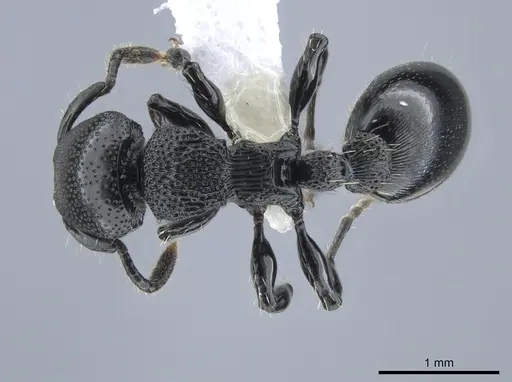
CASENT0900224
View on AntWeb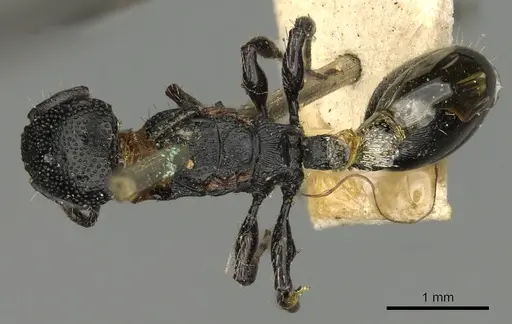
Literature
Loading...Loading products...