

Proceratium watasei
- Scientific Name
- Proceratium watasei
- Tribe
- Proceratiini
- Subfamily
- Proceratiinae
- Author
- Wheeler, 1906
- Distribution
- Found in 1 countries
Proceratium watasei Overview
Proceratium watasei is an ant species of the genus Proceratium. It is primarily documented in 1 countries , including Japan. Detailed taxonomic data and occurrence records can be further explored via authoritative databases such as AntWeb or the Global Biodiversity Information Facility (GBIF).
Proceratium watasei
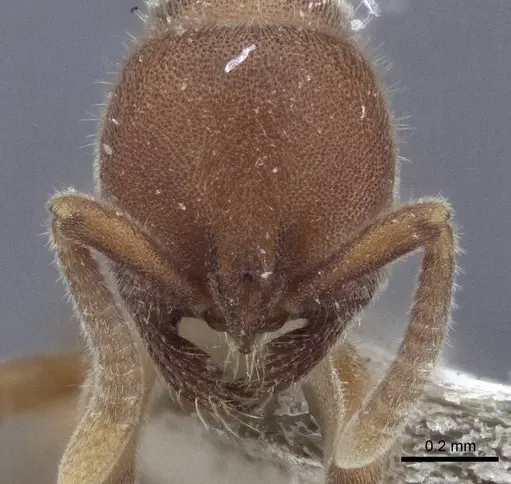
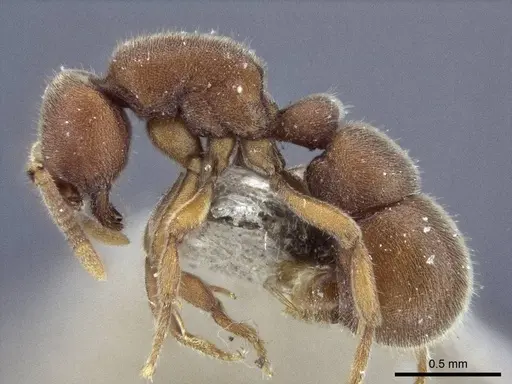
Proceratium watasei are small rusty-brown ants that live underground in the forests of Japan and Korea. Workers measure 3.5-4 mm while the queen reaches about 5.6 mm, making them the largest species in their genus in Japan [1][2][3][4]. They inhabit the soil of glossy-leaved evergreen forests across the Japanese archipelago and the Korean peninsula, occurring at extremely low densities of roughly one nest per 30 square meters [4][1][5].
These ants are among the most secretive and rarely encountered ants in their native range [6]. Natural history observations are sparse, and their biology remains poorly known compared to other ants. They spend their lives in dark soil chambers, emerging only rarely, which makes them challenging subjects for both field research and captive keeping.
Quick Summary
- Difficulty: Expert
- Origin & Habitat: Japan and Korea, in soil of glossy-leaved evergreen forests [4][1][2]
- Colony Type: Unknown, likely single-queen based on typical Proceratium patterns
- Size & Growth:
- Antkeeping:
- Temperature: Keep at 20-24°C during activity period, provide winter rest at 10-15°C
- Humidity: High humidity required, keep nest soil damp but not waterlogged
- Diapause: Yes, likely requires winter rest period
- Nesting: Deep soil or sand-clay mix in darkness, avoid open spaces
- Behavior: Secretive and slow-moving, rarely seen on surface, non-aggressive. Their tiny size means escape prevention must be excellent [6].
- Common Issues: tiny size requires excellent escape prevention, they squeeze through the smallest gaps., diet is unknown but likely specialized, making feeding difficult in captivity., sensitive to disturbance and light due to underground lifestyle., rare in the wild means captive stock is extremely limited.
Nest Preferences
In nature, Proceratium watasei lives in the soil of evergreen forests [4][1]. For captive colonies, you must recreate these underground conditions. Use a deep soil mix of sand and clay that holds moisture but allows for tunneling. The nest must be completely dark, these ants are not adapted to light and will stress if exposed.
Avoid standard acrylic nests with open chambers. Instead, use a soil-filled container or a plaster nest buried in soil. Chambers should be small and narrow, scaled to their 4 mm body size. Provide at least 10 cm of soil depth to allow for natural burrowing behavior. Ventilation should be minimal to maintain humidity, but not so restricted that mold grows.
Feeding and Diet
The specific diet of Proceratium watasei has not been observed. Related Proceratium species are specialized predators of arthropod eggs, but you should not assume this species has identical requirements. Start by offering a variety of small prey items including springtails, minute insect eggs, and tiny soft-bodied insects.
Observe what they accept. If they are indeed egg specialists, they may refuse standard ant foods like sugar water or honey. Do not rely on carbohydrates until acceptance is confirmed. Protein sources should be tiny due to their small size. Remove uneaten food promptly to prevent mold in the humid nest environment.
Temperature and Seasonal Care
These ants come from temperate East Asia where seasons are distinct. During the active season (spring through autumn), keep them at 20-24°C. You will likely need to provide a winter rest period at 10-15°C for 3-4 months to simulate their natural cycle.
Cooling should be gradual over several weeks. During winter rest, keep the soil slightly damp but reduce feeding. Return to normal temperatures in spring. Without this seasonal cycle, colonies may fail to thrive or show reduced brood development. [4]
Behavior and Temperament
Proceratium watasei are extremely secretive ants. Workers are rarely seen above ground and move slowly when disturbed [6]. They are not aggressive and lack effective defenses against predators or keepers. Their primary survival strategy is hiding deep in soil.
Because workers measure only 3.5-4 mm, they can escape through tiny gaps that larger ants cannot. Use fine mesh (under 0.5 mm) and barrier products like Fluon or talcum powder on all container openings. Check lids and tubing connections carefully, these ants are small enough to squeeze through imperfect seals.
Frequently Asked Questions
Can I keep Proceratium watasei in a test tube?
Test tubes are not ideal for these soil-dwelling ants. They need darkness and room to dig. If you must use a test tube for founding, wrap it in foil to block light, but plan to move them to a soil nest as soon as possible.
How long until first workers for Proceratium watasei?
The egg-to-worker timeline is unknown for this species. Based on related temperate ants, expect roughly 8-12 weeks at 20-25°C, but this is only an estimate.
What do Proceratium watasei eat?
Their specific diet is unconfirmed. Offer tiny live prey like springtails and small insect eggs. They may refuse sugar water. Observe acceptance carefully and remove uneaten food.
Do Proceratium watasei need hibernation?
Yes, likely. They come from temperate Japan and Korea where winters are cool. Provide a winter rest period at 10-15°C for 3-4 months.
Are Proceratium watasei good for beginners?
No. They are expert-level ants due to their specialized underground needs, unknown diet, small size, and requirement for seasonal temperature changes.
Do Proceratium watasei sting?
They are too small to sting humans effectively and are not aggressive. They rely on hiding rather than fighting.
How big do Proceratium watasei colonies get?
Colony size is unknown, but likely small, probably under 100 workers based on patterns in related Proceratium species.
Can I keep multiple Proceratium watasei queens together?
Combining multiple queens is not recommended. Their colony structure is unknown, and unrelated queens will likely fight or be rejected.
References

This caresheet is licensed under CC BY-SA 4.0 .
CASENT0916701
View on AntWeb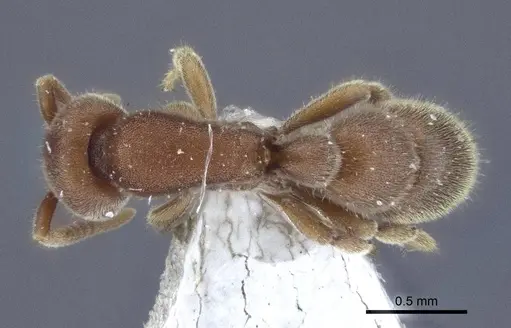
Literature
Loading...Loading products...