

Proceratium vinaka
- Scientific Name
- Proceratium vinaka
- Tribe
- Proceratiini
- Subfamily
- Proceratiinae
- Author
- Hita Garcia <i>et al.</i>, 2015
- Distribution
- Found in 2 countries
Proceratium vinaka Overview
Proceratium vinaka is an ant species of the genus Proceratium. It is primarily documented in 2 countries , including Fiji, Wallis and Futuna. Detailed taxonomic data and occurrence records can be further explored via authoritative databases such as AntWeb or the Global Biodiversity Information Facility (GBIF).
Proceratium vinaka
Proceratium vinaka is an exceptionally rare ant species endemic to Fiji, first described in 2015 from a single worker collected on Mt. Tomanivi in Viti Levu. These are tiny ants, workers measuring just 3.4mm total length, with a distinctive uniformly yellowish to light orange-brown coloration. They belong to the Proceratium silaceum clade, characterized by their moderately squamiform (scale-like) petiolar node and uniquely reduced ventral petiolar process that is convex and rounded rather than toothed or spined. The species name 'vinaka' means 'thank you' or 'hello' in Fijian, chosen to honor the hospitality of the Fijian people. This ant represents one of only three Proceratium species known from Fiji, and virtually nothing is known about its biology in the wild.
Quick Summary
- Difficulty: Expert
- Origin & Habitat: Endemic to Fiji Islands, specifically Viti Levu, found at 950m elevation in mid-elevation rainforest habitats. Specimens were collected from soil, leaf litter, and decaying wood [1].
- Colony Type: Unknown, only the worker caste has been described. No queens or colony structure has been documented. Related Proceratium species are typically monogyne with claustral founding.
- Size & Growth:
- Queen: Unknown, queen caste has not been described
- Worker: 3.38-3.41mm total length [2]
- Colony: Unknown, only single workers have been collected
- Growth: Unknown
- Development: Unknown, no development data exists for this species (Based on related Proceratium species, development likely takes several months but this is entirely speculative)
- Antkeeping:
- Temperature: No specific data exists. Based on their mid-elevation rainforest origin on Fiji (tropical but cooler due to altitude), aim for warm subtropical conditions around 22-26°C with stable temperatures. Avoid temperature extremes.
- Humidity: No specific data exists. Based on collection from leaf litter and decaying wood in rainforest, they likely require high humidity similar to other Proceratium species, keep nest substrate consistently moist but not waterlogged.
- Diapause: Unknown, Fiji has no true winter, so diapause is unlikely. However, seasonal rainfall patterns may influence activity cycles.
- Nesting: Based on collection data (soil, leaf litter, decaying wood), they likely nest in dark, humid microhabitats underground or within rotting wood. In captivity, a Y-tong or plaster nest with high humidity works well for Proceratium species.
- Behavior: Proceratium ants are typically cryptic, slow-moving, and predatory. They likely forage in leaf litter and soil microhabitats. Their very small size (3.4mm) and reduced eyes suggest they are not strong foragers and may specialize on tiny prey. Escape prevention should be excellent due to their small size. Aggression levels are unknown but likely low, they are ambush predators rather than aggressive defenders.
- Common Issues: no biological data exists, all care recommendations are speculative guesses based on genus patterns, extremely rare in the wild with only a handful of specimens ever collected, no established captive breeding, likely unavailable to hobbyists, tiny size makes escape prevention critical, predatory specializations mean standard ant foods may be refused
Species Discovery and Rarity
Proceratium vinaka was only described in 2015 by Hita Garcia, Sarnat and Economo based on a single worker collected on Mt. Tomanivi in central Viti Levu. The species epithet 'vinaka' is Fijian for 'thank you' or 'hello', chosen to honor the hospitality of the Fijian people during research expeditions. This ant is one of only three Proceratium species known from Fiji, alongside P. oceanicum and P. relictum. Males tentatively associated with this species have been collected on Taveuni and Vanua Levu, suggesting P. vinaka may have a broader distribution across the Fijian archipelago, but workers remain extremely rare in collections. [1]
Identification and Morphology
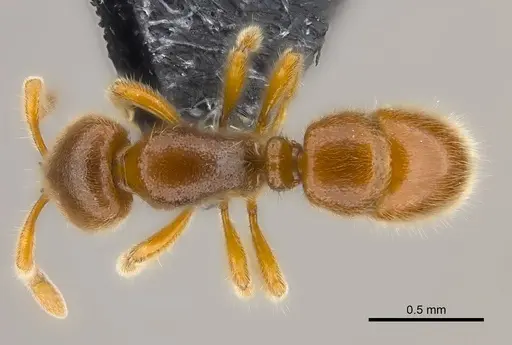
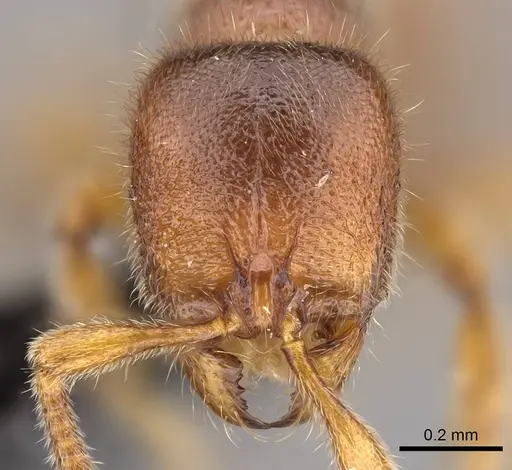
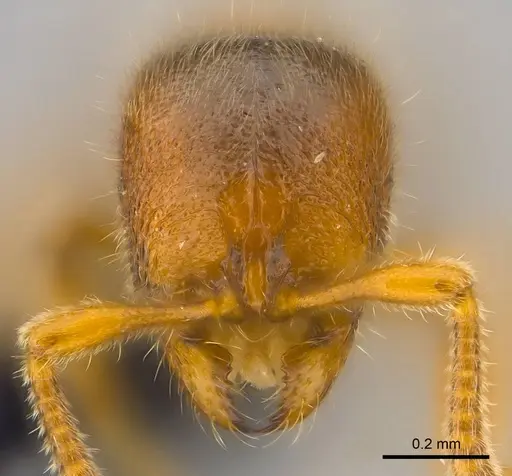
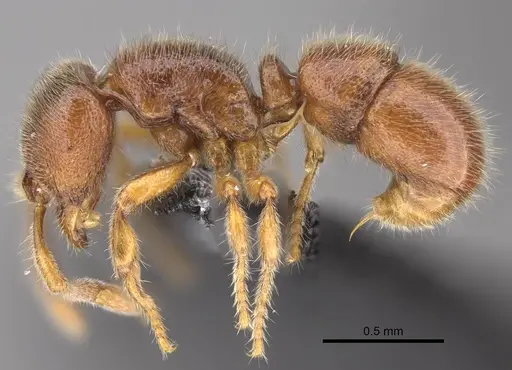
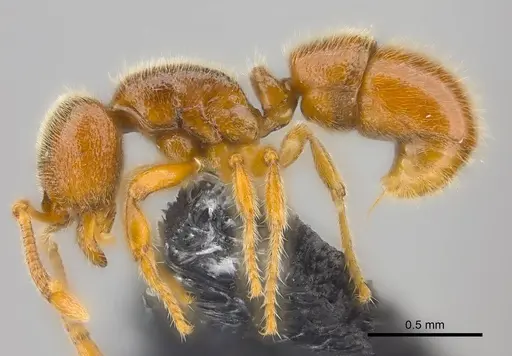
Proceratium vinaka is a small species with workers measuring 3.38-3.41mm total length. It can be distinguished from other Fiji Proceratium species by its moderately squamiform petiolar node that only weakly narrows from base to apex (unlike P. oceanicum and P. relictum which have extremely squamiform nodes). The ventral petiolar process is uniquely reduced and convex, rounded without any rectangular, dentiform, or spined projections, unlike other species in the silaceum clade. The lateral expansions of the frontal carinae are conspicuously triangular and acute rather than rounded. Body color is uniformly yellowish to light orange-brown. Eyes are extremely reduced, consisting of just a single ommatidium. [2]
Natural History and Biology
Absolutely no biological information exists for Proceratium vinaka. The single known worker was collected from soil, leaf litter, and decaying wood in mid-elevation rainforest at 950m altitude. Based on what is known about related Proceratium species, these ants are likely cryptic, slow-moving predators that hunt small invertebrates in leaf litter and soil. Proceratium ants are known for their unusual habit of feeding on insect eggs, and some species have specialized predatory behaviors. The genus is characterized by their reduced eyes and cryptic lifestyle, typically nesting in dark, humid microhabitats underground or within rotting wood. [1]
Keeping Proceratium vinaka - Practical Guidance
This species is not recommended for antkeepers due to complete lack of biological data and likely extreme rarity in the wild. If available, care would need to be based entirely on genus-level patterns. Provide a humid nest (Y-tong or plaster) with consistent moisture. Temperature should be warm subtropical (22-26°C). Feeding would likely require small live prey such as springtails, micro-arthropods, or fruit fly larvae, Proceratium species are predatory and may refuse standard ant foods. Escape prevention must be excellent given their tiny 3.4mm size. These ants are not aggressive and likely have minimal defensive capabilities. The biggest challenge is that this species has never been kept in captivity and may have specialized requirements we simply do not understand.
Related Proceratium Species in Fiji
Fiji is home to three Proceratium species: P. vinaka, P. oceanicum, and P. relictum. All three belong to the silaceum clade but can be distinguished by petiolar node shape. P. oceanicum and P. relictum have extremely squamiform petiolar nodes that strongly narrow from base to apex, plus either a dentiform or spiniform ventral petiolar process. In contrast, P. vinaka has a moderately squamiform node that narrows only weakly and a uniquely reduced, convex ventral process with no projections. These differences are subtle and require careful examination under magnification. The Fijian Proceratium fauna represents a significant biogeographic finding, as Proceratium was previously unknown from many Pacific islands. [1]
Frequently Asked Questions
Is Proceratium vinaka available for sale in the antkeeping hobby?
Almost certainly not. This species is known from only a handful of specimens collected over decades of fieldwork. It has never been established in captive breeding and likely has extremely small wild populations.
How do I care for Proceratium vinaka ants?
No one knows, there is zero biological data on this species. Any care advice would be pure speculation based on genus patterns. Do not attempt to keep this species unless you are a researcher with proper collection permits.
What does Proceratium vinaka look like?
Workers are tiny at 3.38-3.41mm, with uniformly yellowish to light orange-brown coloration. They have a moderately squamiform (scale-like) petiolar node, reduced eyes, and 12-segmented antennae. The ventral petiolar process is uniquely rounded and reduced.
Where does Proceratium vinaka live?
Only known from Viti Levu, Fiji, specifically Mt. Tomanivi at 950m elevation in mid-elevation rainforest. Males suggest distribution may include Taveuni and Vanua Levu, but workers have not been collected there.
Do Proceratium vinaka ants sting?
Unknown for this specific species, but Proceratium ants are not known for their stingers. They are cryptic predators that rely on ambush hunting rather than defense. Given their tiny size (3.4mm), any sting would likely be imperceptible to humans.
What do Proceratium vinaka eat?
Unknown, no feeding observations exist. Based on related Proceratium species, they are likely predatory on small invertebrates and may specialize on insect eggs or tiny arthropods in leaf litter.
How big do Proceratium vinaka colonies get?
Unknown, only single workers have ever been collected. Related Proceratium species typically form small colonies of perhaps dozens to a few hundred workers.
Is Proceratium vinaka a good species for beginners?
Absolutely not. This is an expert-level species purely due to lack of information, no one knows how to keep it alive. Even experienced antkeepers would struggle with a species that has zero documented captive care history.
Does Proceratium vinaka need hibernation?
Unknown, but unlikely. Fiji has no true winter, and the species was collected at 950m elevation in rainforest where temperatures remain mild year-round. There is no evidence of diapause requirements.
Can I keep multiple Proceratium vinaka queens together?
Unknown, colony structure has never been documented. Related Proceratium species are typically monogyne (single queen), but this is unconfirmed for P. vinaka.
References

This caresheet is licensed under CC BY-SA 4.0 .
CASENT0187587
View on AntWeb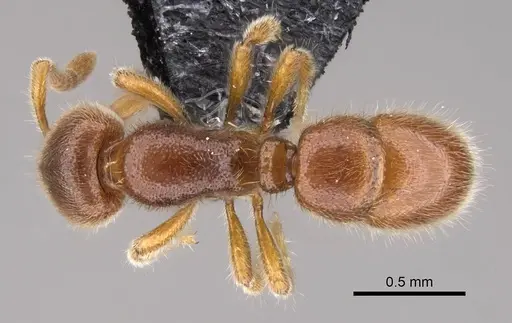
Literature
Loading...Loading products...