

Proceratium goliath
- Scientific Name
- Proceratium goliath
- Tribe
- Proceratiini
- Subfamily
- Proceratiinae
- Author
- Kempf & Brown, 1968
- Distribution
- Found in 5 countries
Proceratium goliath Overview
Proceratium goliath is an ant species of the genus Proceratium. It is primarily documented in 5 countries , including Colombia, Costa Rica, Honduras. Detailed taxonomic data and occurrence records can be further explored via authoritative databases such as AntWeb or the Global Biodiversity Information Facility (GBIF).
Proceratium goliath
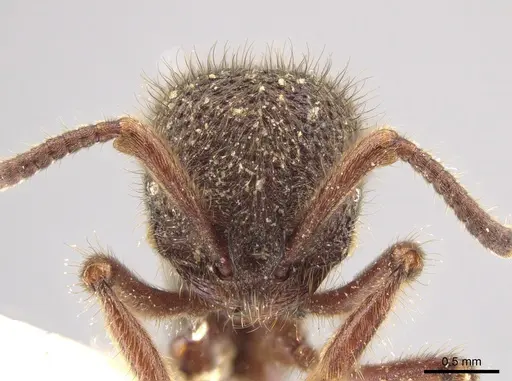
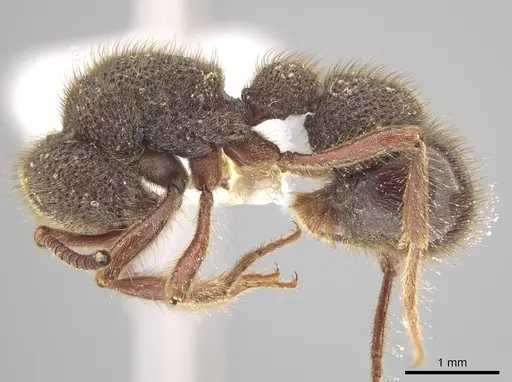
Proceratium goliath is a large, distinctive ant belonging to the subfamily Proceratiinae. Workers measure 6.2-6.7mm, making them the largest species in the stictum group [1]. They have a brownish-red coloration with lighter legs, and their body is covered in irregular foveolate-punctate sculpture with sparse granulation [1]. The head is slightly longer than broad with gently convex sides, and they possess small but visible eyes placed slightly below the midline of the head [1]. This species is known from Costa Rica, Honduras, Nicaragua, and parts of Colombia, where it inhabits disturbed wet lowland rainforests [1][2][3]. They nest under fragments of rotten logs in forest floor habitats [1][4].
Quick Summary
- Difficulty: Expert
- Origin & Habitat: Neotropical region, Costa Rica, Honduras, Nicaragua, and Colombia (Antioquia, Caldas, Valle del Cauca). Found in disturbed wet lowland rain forest, nesting under rotten log fragments [1][4].
- Colony Type: Colony structure is unconfirmed. Based on genus patterns, likely single-queen (monogyne) colonies with relatively small colony sizes typical of ground-nesting Proceratiinae.
- Size & Growth:
- Queen: Unknown, not documented in original species description [1]
- Worker: 6.22-6.72 mm (TL) [1]
- Colony: Estimated 50-200 workers based on typical Proceratiinae colony sizes
- Growth: Slow, inferred from genus patterns
- Development: Estimated 8-12 weeks based on related Proceratium species and tropical development timelines (Direct development data unavailable, estimate based on genus patterns for tropical Proceratiinae)
- Antkeeping:
- Temperature: Keep around 24-27°C, this matches their Neotropical lowland rainforest origin. A gentle thermal gradient allows them to regulate
- Humidity: High humidity required (70-85%). These ants come from wet lowland rainforest habitats. Keep substrate consistently moist but not waterlogged
- Diapause: Unknown, tropical species may not require formal hibernation but may have reduced activity periods
- Nesting: Naturalistic setup with moist soil/earth and rotten wood fragments works best. Y-tong or plaster nests with high humidity chambers are suitable alternatives. They prefer tight, enclosed spaces mimicking their natural under-log microhabitat
- Behavior: This is a cryptic, ground-dwelling species that forages slowly and methodically. They are not aggressive and possess a functional sting, though their sting is not medically significant to humans. Workers are relatively large for the genus but still modest in size. Escape risk is moderate, standard barrier methods should suffice. They are predators of small invertebrates in nature, hunting micro-arthropods in the leaf litter layer
- Common Issues: high humidity maintenance is critical, dry conditions will kill colonies quickly, slow growth can frustrate keepers expecting rapid colony development, cryptic behavior means you may not see much activity, this is normal, wild-caught colonies may carry parasites that are difficult to treat, difficulty establishing founding colonies, queen mortality is high in captivity
Natural History and Distribution
Proceratium goliath is native to the Neotropical region of Central America. Its confirmed range includes Costa Rica, Honduras, and Nicaragua, with populations also documented in Colombia (Antioquia, Caldas, Valle del Cauca) [1][2][3]. The species was originally described from Costa Rica, specifically from the Limón Province near Guapiles, collected in February-March 1966 under a fragment of rotten log [1][5]. This is a ground-dwelling species that inhabits wet lowland rainforests, including disturbed areas. The habitat data indicates they prefer moist forest floor microhabitats with decaying wood, which provides both shelter and hunting grounds for their predatory lifestyle [1][4]. The species is considered part of the stictum group and is the largest member of that group, making it distinctive within the genus [1].
Identification and Morphology
Proceratium goliath workers are substantial ants measuring 6.22-6.72mm in total length, making them the largest species in the stictum group [1]. The head is slightly longer than broad with gently convex sides, and the vertex is convex in full face view [1]. A distinctive feature is the broad, convex clypeus that protrudes anteriorly and surrounds the antennal insertions, with a notch in the anteromedian margin [1]. The eyes are present but small (0.10mm), composed of clearly convex facets and placed slightly below the midline of the head [1]. The scapes do not reach the vertexal margin [1]. The propodeum has broad subtriangular teeth, and the petiole has a small, subtriangular ventral process, these features distinguish it from its sister species P. tio which has larger propodeal teeth and a spiniform ventral process [1]. The body coloration is brownish-red with lighter legs, and the sculpture consists of irregular foveolate-punctate patterns with sparse granulation on the head, mesosoma, petiole, and postpetiole [1].
Housing and Nesting Preferences
In captivity, Proceratium goliath requires a setup that mimics their natural under-log microhabitat. A naturalistic setup with moist soil and small rotten wood fragments works well, allowing them to create chambers similar to what they would find in the wild. Alternatively, Y-tong (AAC) nests or plaster nests with high humidity chambers provide suitable captive environments. The key requirement is tight, enclosed spaces, these are cryptic ants that prefer not to be exposed. Given their origin in wet lowland rainforest, humidity must be maintained at high levels (70-85%). The substrate should remain consistently moist but never waterlogged. Provide a water reservoir or moisture source to maintain humidity without daily misting. Use adequate ventilation to prevent mold while maintaining the moisture levels this species requires.
Feeding and Diet
Proceratium goliath is a predator in nature, hunting small invertebrates in the leaf litter layer. In captivity, their primary food should be small live prey such as springtails, micro-arthropods, and tiny insects. Based on genus patterns, they likely accept protein sources like small mealworms, fruit flies, and other tiny arthropods. Sugar sources may be accepted occasionally, but these ants are primarily predatory and protein-focused. Feed small prey items 2-3 times per week, adjusting based on colony size and consumption. Remove uneaten prey promptly to maintain cleanliness. The cryptic, slow-moving foragers may take time to accept new food items, patience is key when establishing feeding routines.
Temperature and Seasonal Care
As a Neotropical species from wet lowland rainforest habitats, Proceratium goliath requires warm, stable temperatures. Maintain nest temperatures around 24-27°C, which matches their natural lowland environment in Costa Rica and surrounding regions. A gentle thermal gradient allows the colony to self-regulate, position a heating cable on one side of the nest rather than heating uniformly. Avoid temperatures below 22°C or above 30°C. Regarding seasonal cycles, tropical ants may not require formal hibernation, but expect reduced activity during cooler months. Monitor colony behavior and adjust feeding accordingly, less activity means less food consumption. Maintain humidity year-round as these ants are adapted to consistently moist conditions.
Behavior and Temperament
Proceratium goliath is a cryptic, slow-moving species that spends much of its time hidden within nest chambers or foraging methodically through the substrate. Workers are not aggressive and will retreat rather than engage threats. They possess a functional sting but are not considered dangerous to humans, the sting is primarily effective against small invertebrate prey. This species is ground-dwelling and does not climb well on smooth surfaces, reducing escape risk compared to more arboreal species. However, standard barrier methods (Fluon, talcum powder) should still be used. Activity levels are typically low, do not be alarmed if you don't see constant foraging activity. This is normal for cryptic Proceratiinae species that have evolved to remain hidden from predators and prey alike.
Frequently Asked Questions
How long does it take for Proceratium goliath to produce first workers?
Direct development data is not available for this species. Based on related Proceratium species and tropical development timelines, expect approximately 8-12 weeks from egg to first worker at optimal temperature (around 26°C). Growth is slow, patience is essential.
Can I keep Proceratium goliath in a test tube?
Test tubes can work for founding colonies if humidity is carefully maintained, but a naturalistic or Y-tong setup is preferable for long-term housing. These ants require high humidity that can be difficult to sustain in simple test tube setups. If using test tubes, use a water reservoir and monitor moisture levels closely.
What do Proceratium goliath ants eat?
They are predators that hunt small invertebrates. Feed live springtails, micro-arthropods, tiny mealworms, and fruit flies. Small prey items are essential given their modest size. Occasional sugar water may be accepted but should not be a primary food source.
Are Proceratium goliath ants dangerous?
They possess a functional sting but are not considered dangerous to humans. The sting is primarily adapted for subduing small invertebrate prey. These ants are docile and not aggressive toward keepers.
How big do Proceratium goliath colonies get?
Colony size is estimated at 50-200 workers based on typical Proceratiinae patterns. This is not a highly populous species, colonies remain relatively modest in size even at maturity.
Do Proceratium goliath ants need hibernation?
As a tropical species from wet lowland rainforest, formal hibernation is not required. However, expect reduced activity during cooler periods and adjust feeding accordingly. Maintain warm temperatures year-round.
What is the best nest type for Proceratium goliath?
Naturalistic setups with moist soil and rotten wood fragments best mimic their natural habitat. Y-tong (AAC) nests or plaster nests with high humidity chambers are suitable alternatives. Provide tight, enclosed chambers rather than open spaces.
Why is my Proceratium goliath colony not growing?
This species has inherently slow growth, do not expect rapid development. Ensure temperatures are warm (24-27°C), humidity is high (70-85%), and prey is being consumed. Wild-caught colonies may carry parasites. If all conditions are met and growth remains stagnant, the colony may be stressed or queen may have died.
Can I keep multiple Proceratium goliath queens together?
Colony structure is unconfirmed for this species. Based on genus patterns, they likely form single-queen colonies. Combining unrelated queens is not recommended as it has not been documented and could result in aggression.
Are Proceratium goliath good for beginners?
No, this is an expert-level species. They require high humidity maintenance, have slow growth, and have specific habitat requirements that make them challenging for beginners. More established species like Lasius or Camponotus are better choices for those new to antkeeping.
References

This caresheet is licensed under CC BY-SA 4.0 .
CASENT0612315
View on AntWeb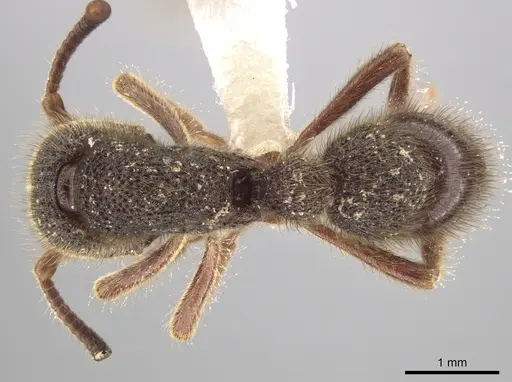
Literature
Loading...Loading products...