

Proceratium australe
- Scientific Name
- Proceratium australe
- Tribe
- Proceratiini
- Subfamily
- Proceratiinae
- Author
- de Andrade, 2003
- Distribution
- Found in 1 countries
Proceratium australe Overview
Proceratium australe is an ant species of the genus Proceratium. It is primarily documented in 1 countries , including Australia. Detailed taxonomic data and occurrence records can be further explored via authoritative databases such as AntWeb or the Global Biodiversity Information Facility (GBIF).
Proceratium australe
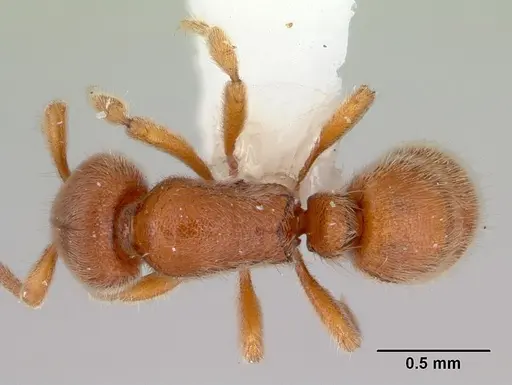
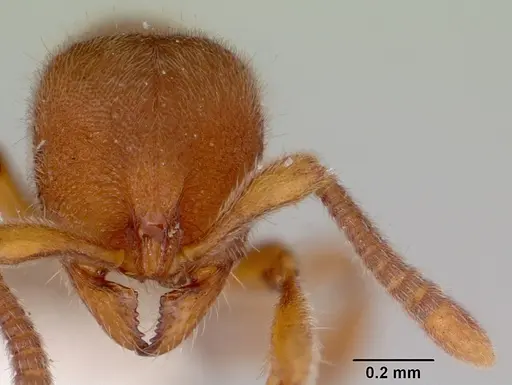
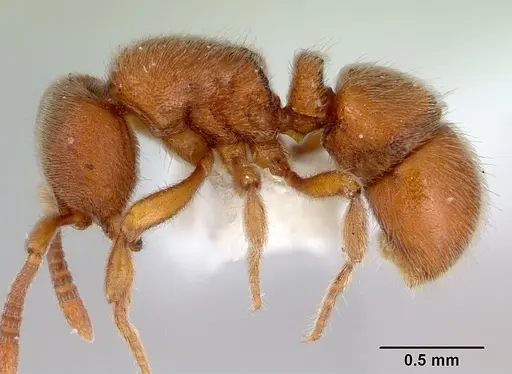
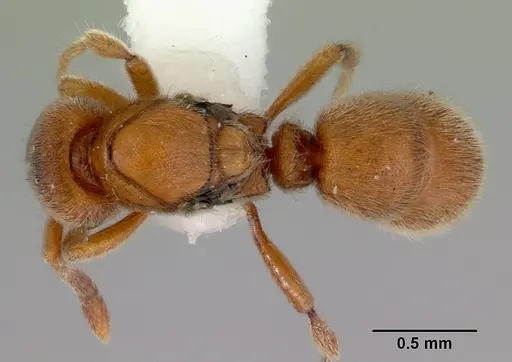
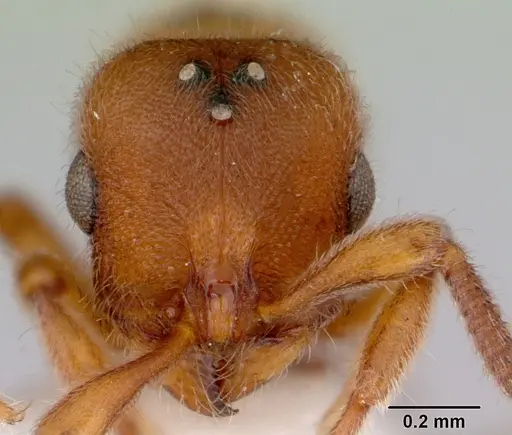
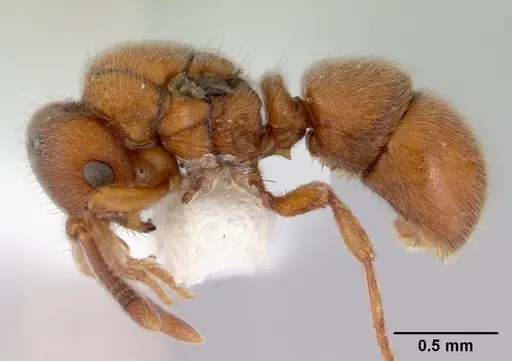
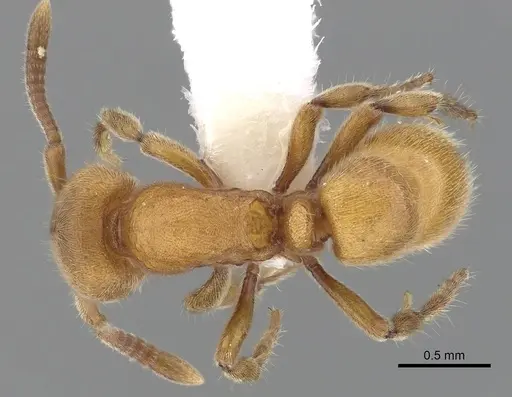
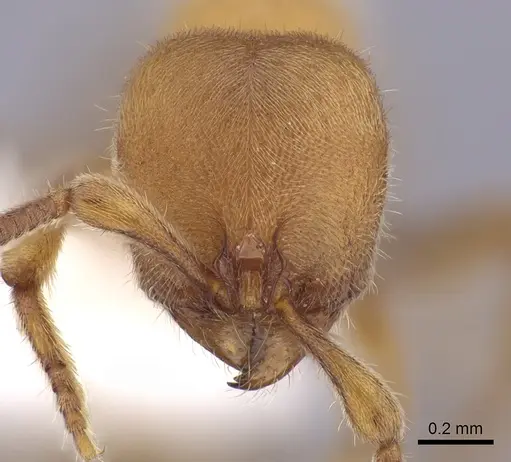
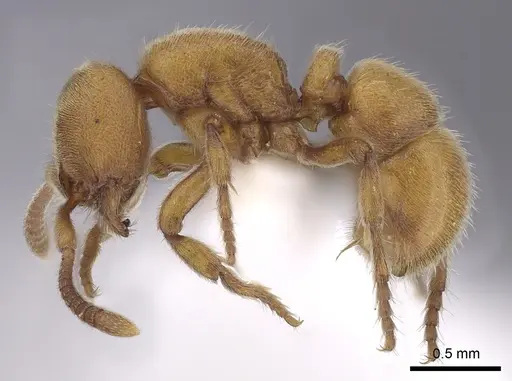
Proceratium australe is a small, cryptic ant species native to the rainforests of eastern Australia, specifically Queensland and New South Wales. Workers measure 2.56-3.44mm and are a light ferrugineous (rusty) color with lighter antennae and legs. They belong to the silaceum clade and can be identified by their narrower petiole and shorter body hairs compared to similar species like P. siamense. Queens are larger at 3.14-3.75mm with well-developed eyes and ocelli. This species inhabits rainforest environments at elevations between 200-1200m, where they likely live in leaf litter and rotting wood. Nothing is known about their biology in the wild, this is one of the most poorly documented ant species in Australia, making captive care largely experimental. [1]
Quick Summary
- Difficulty: Expert
- Origin & Habitat: Eastern Australia (Queensland, New South Wales) in rainforest habitats at 200-1200m elevation. Type locality is Boar Pocket, Queensland at 720m elevation in pristine rainforest. [1][2]
- Colony Type: Colony structure is unconfirmed. Based on related Proceratium species, likely forms small colonies with a single queen. No data on whether multiple-queen colonies occur. [1]
- Size & Growth:
- Queen: 3.14-3.75mm [1]
- Worker: 2.56-3.44mm [1]
- Colony: Unknown, likely small, possibly under 100 workers based on typical Proceratium colony sizes
- Growth: Unknown, likely slow to moderate based on genus patterns
- Development: Unknown, estimated 8-12 weeks based on related Proceratium species and temperate development patterns (No direct development data exists for this species. Estimates based on genus-level patterns for small rainforest ants.)
- Antkeeping:
- Temperature: Keep around 22-26°C with gentle gradient. This species comes from Australian rainforests where temperatures are warm but not extreme. Avoid temperatures below 18°C or above 30°C.
- Humidity: High humidity required, aim for 70-85%. These are rainforest leaf-litter ants that need consistently moist substrate. Keep nest substrate damp but not waterlogged. Provide a water tube for drinking.
- Diapause: Unknown, Australian rainforest ants may have reduced activity during cooler months but true hibernation is unlikely. Consider a slight cooling period (15-18°C) for 2-3 months in winter if colony shows reduced activity.
- Nesting: Use a naturalistic setup with moist substrate (soil/peat mix) or a Y-tong/plaster nest kept consistently damp. They are cryptic leaf-litter ants that prefer dark, confined spaces. Provide plenty of hiding structures and keep lighting minimal.
- Behavior: Extremely cryptic and non-aggressive. Workers are slow-moving and rarely venture into the open. They are likely predators specializing on small arthropods and eggs, typical of Proceratium. Escape risk is low as they are not climbers, but excellent escape prevention is still recommended due to their small size. They do not sting and pose no danger to keepers.
- Common Issues: no biological data means all care is experimental, expect trial and error, high humidity requirements can lead to mold if ventilation is poor, slow growth and small colony sizes make them fragile, losses are common, wild-caught colonies may have parasites or be already stressed from collection, they are extremely secretive and you may rarely see the ants, this is normal, not a sign of problems
Why This Species is Challenging
Proceratium australe is not a species for beginners. The honest truth is that we know almost nothing about their biology, the scientific literature explicitly states this. What you are doing is essentially experimental conservation. These ants come from Australian rainforests where they live in tiny microhabitats in leaf litter and rotting wood. They have never been kept in captivity before, at least not documented. You will be learning alongside the antkeeping community, and losses should be expected. This is not a failure, it's pioneering work. That said, if you succeed, you will have one of the rarest ants in captivity. [1]
Housing and Setup
For this species, I recommend a naturalistic setup with a deep layer of moist substrate (a mix of soil, peat, and rotting wood works well). Use a container that allows you to maintain high humidity without flooding, a plastic box with small ventilation holes or a glass tank with a mesh lid works. Add pieces of rotting wood, leaves, and small stones to provide hiding places. Keep the setup in a dark location or cover three sides of the enclosure to reduce light stress. These ants are extremely light-shy and will stay hidden under bright conditions. A test tube setup can work for founding colonies if kept humid and dark.
Feeding and Diet
Proceratium ants are predators that specialize on small arthropods and their eggs. In captivity, offer small live prey like springtails, fruit fly larvae, tiny crickets, and other micro-arthropods. You may also try small pieces of insects. Sugar sources are unlikely to be accepted, these are not honeydew feeders. Feed small amounts every few days and remove uneaten prey after 24 hours to prevent mold. Since we don't know their exact diet, offering a variety of tiny live prey gives you the best chance of success.
Temperature and Humidity Control
Maintain temperatures in the low-to-mid 20s Celsius (22-26°C). A heating cable on one side of the nest can create a gradient, but never let temperatures exceed 30°C. For humidity, aim for 70-85%, the substrate should feel consistently damp but never soggy. Use a hygrometer to monitor levels. Mist the enclosure occasionally but rely on a large water reservoir in the nest to maintain stability. These ants come from a stable rainforest environment, so avoid temperature and humidity fluctuations. Room temperature in most homes (20-24°C) may be adequate if humidity is maintained.
Observation and Patience
You will rarely see these ants. This is completely normal, they are cryptic leaf-litter ants that avoid light and open spaces. They will likely stay hidden under wood pieces, in substrate crevices, or in their nest chambers. Do not mistake their invisibility for death or colony failure. The best way to observe them is to use a red light (they cannot see red) or check the setup when it is completely dark with a flashlight. Any disturbance causes them to retreat and hide. Limit your inspections to once a week or less to avoid stressing the colony.
Frequently Asked Questions
How long does it take for Proceratium australe to produce first workers?
Unknown, no development data exists for this species. Based on related Proceratium species and typical small ant development, expect 8-12 weeks from egg to worker at optimal temperature (around 24°C). The first workers (nanitics) will likely be smaller than normal workers.
Can I keep Proceratium australe in a test tube?
Yes, test tubes can work for founding colonies. Keep the cotton wet, maintain high humidity by covering the tube with a damp cloth or placing it in a humid container, and keep it dark. However, these ants may do better in a naturalistic setup with substrate since they are leaf-litter specialists.
Do Proceratium australe ants sting?
No. Proceratium ants are completely harmless to humans. They have no stingers and are not aggressive. Even if handled roughly, they cannot harm you.
What do Proceratium australe eat?
Likely small live prey, springtails, fruit fly larvae, tiny insects, and other micro-arthropods. They are predators that probably hunt small arthropods and their eggs. Sugar sources are unlikely to be accepted. Offer variety and remove uneaten prey promptly.
Are Proceratium australe good for beginners?
No. This is an expert-level species because we know absolutely nothing about their biology in captivity. Every aspect of their care is experimental. They have specific humidity requirements, are extremely cryptic, and have never been documented in the antkeeping hobby. If you want a rewarding challenge and don't mind experimental care, this could be for you. Otherwise, start with a better-documented species. [1]
How big do Proceratium australe colonies get?
Unknown, but likely small, probably under 100 workers. Proceratium species typically form small, cryptic colonies rather than large supercolonies. Expect slow growth and a modest final colony size.
Do Proceratium australe need hibernation?
Unclear. They come from Australian rainforests where winters are mild. If your colony shows reduced activity during winter months (Australian winter is June-August), you could provide a slight cooling period to 15-18°C for 2-3 months. However, this may not be necessary. Watch your colony's behavior and adjust accordingly.
Why can't I see my ants?
This is normal. Proceratium australe is an extremely cryptic leaf-litter ant that avoids light and open spaces. They will hide under substrate, wood pieces, and in nest chambers. Use a red light or check in complete darkness to observe them. Minimal disturbance is key, frequent inspections will only stress them.
Can I keep multiple queens together?
Unknown. No data exists on their colony founding behavior. Based on typical ant patterns, single-queen colonies are most likely. Do not attempt to combine unrelated queens, this has not been studied and could result in fighting.
Where can I get Proceratium australe?
This species is almost certainly not available in the antkeeping hobby. It would need to be collected from the wild in Queensland or New South Wales, Australia, which requires permits. This makes them a true collector's item for the most dedicated ant enthusiasts. [1]
References

This caresheet is licensed under CC BY-SA 4.0 .
Literature
Loading...Loading products...