

Probolomyrmex salomonis
- Scientific Name
- Probolomyrmex salomonis
- Tribe
- Probolomyrmecini
- Subfamily
- Proceratiinae
- Author
- Taylor, 1965
- Distribution
- Found in 1 countries
Probolomyrmex salomonis Overview
Probolomyrmex salomonis is an ant species of the genus Probolomyrmex. It is primarily documented in 1 countries , including Solomon Islands. Detailed taxonomic data and occurrence records can be further explored via authoritative databases such as AntWeb or the Global Biodiversity Information Facility (GBIF).
Probolomyrmex salomonis
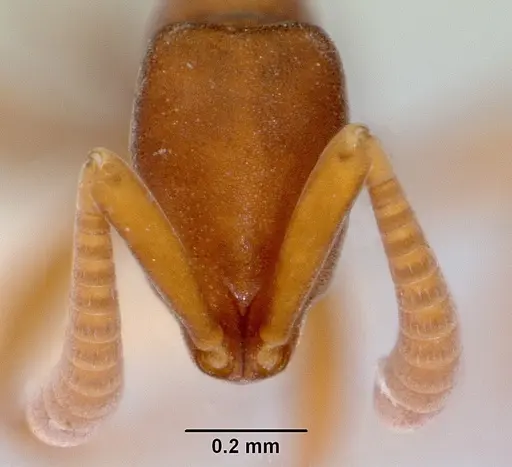
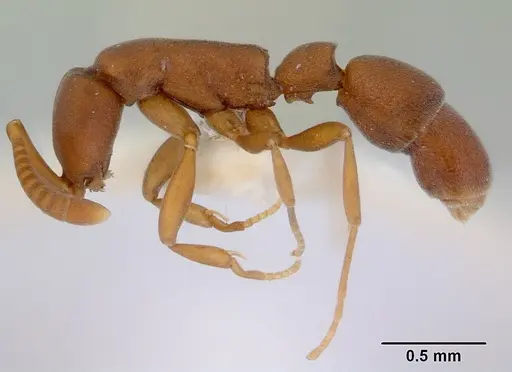
Probolomyrmex salomonis is an extremely rare ant species endemic to the Solomon Islands. Workers are tiny at just 0.59mm head length, making them among the smallest ants in the world [1]. They are completely eyeless and have a distinctive golden-brown coloration with a long, narrow petiolar node [1]. This species was described by Taylor in 1965 and is known only from a handful of collections in undisturbed rainforest on Guadalcanal Island [1][2]. They live in leaf litter and mould on the forest floor, typically at elevations around 1000 feet [1]. The genus Probolomyrmex belongs to the subfamily Proceratiinae, known for cryptic, ground-dwelling ants with reduced eyes.
Quick Summary
- Difficulty: Expert
- Origin & Habitat: Solomon Islands (Guadalcanal), endemic to this region. Found in undisturbed rainforest, living in leaf mould and forest floor debris at approximately 1000 feet elevation [1][2].
- Colony Type: Unknown, colony structure has not been documented. Based on related Proceratiinae, likely single-queen colonies, but this is unconfirmed.
- Size & Growth:
- Queen: Unknown, queens have not been described in scientific literature
- Worker: 0.59mm head length,0.38mm head width,0.79mm mesosoma length [1]
- Colony: Unknown, colony size has not been documented
- Growth: Unknown
- Development: Unknown, no development data exists for this species (Based on their tiny size and typical Proceratiinae patterns, development is likely relatively rapid but colony growth is slow due to small colony sizes typical of this genus)
- Antkeeping:
- Temperature: Unknown for this species. Based on their Solomon Islands origin (tropical), aim for warm conditions around 24-28°C. Use a heating cable on one side of the nest to create a gentle gradient.
- Humidity: High humidity is essential, they live in rainforest leaf litter. Keep the nest substrate consistently moist but not waterlogged. Think damp forest floor conditions.
- Diapause: Unknown, tropical species from Solomon Islands likely do not require hibernation, but seasonal activity patterns have not been studied.
- Nesting: Natural nesting occurs in leaf mould and forest floor debris. In captivity, a naturalistic setup with fine substrate (like a mixture of soil and leaf litter) works well. Given their tiny size, avoid large open spaces, use tight chambers or a test tube setup with moist substrate.
- Behavior: This is an extremely cryptic, ground-dwelling species. Workers are eyeless and forage slowly through leaf litter. They are not aggressive and likely have minimal defensive capabilities due to their tiny size. Escape prevention is critical, they are among the smallest ants and can squeeze through the tiniest gaps. They are rarely seen and spend most of their time hidden in substrate.
- Common Issues: escape prevention is critical due to their extremely tiny size, use fine mesh and tight-fitting lids, this species is rarely kept in captivity and basic husbandry is poorly understood, colony sizes appear to be naturally small, do not expect rapid population growth, no established feeding protocols exist, offer small live prey and observe acceptance, wild-caught colonies may be stressed from collection and difficult to maintain
Species Overview and Rarity
Probolomyrmex salomonis is one of the rarest ant species in the antkeeping hobby, known only from a handful of scientific collections in the Solomon Islands. The entire genus Probolomyrmex is rarely encountered, with most species known from single collections or very few specimens. This species was first described in 1965 from a specimen collected on Guadalcanal Island, and it remains known primarily from the type specimen [1][2]. The genus is characterized by extremely small workers, complete absence of eyes, and distinctive petiolar morphology. These ants are part of the subfamily Proceratiinae, which includes other cryptic, ground-dwelling ants like Proceratium and Discothyrea.
Natural History and Habitat
In the wild, Probolomyrmex salomonis lives in the leaf mould and debris on the floor of undisturbed tropical rainforest. The holotype was collected using a Berlese funnel, which is a sampling device that extracts small invertebrates from leaf litter [1]. This suggests they are strictly litter-dwelling and cryptic, living entirely within the forest floor microhabitat. The Solomon Islands have a tropical climate with high year-round humidity, which is reflected in their moisture requirements. They are found at elevations around 1000 feet above sea level on Guadalcanal Island [1]. Nothing is known about their diet in the wild, but related Proceratiinae species are typically predators or scavengers of tiny arthropods.
Housing and Nest Setup
Given their natural habitat in leaf litter, a naturalistic setup with fine substrate is most appropriate. A mixture of moist soil with some leaf litter or peat moss works well to replicate their forest floor environment. Because they are extremely small, avoid large open spaces in the nest, tight chambers or passages scaled to their tiny size are essential. A test tube setup with a small chamber filled with moist substrate can work for founding colonies. Ensure excellent escape prevention, their tiny size means they can escape through gaps that would hold larger ants. Use fine mesh on any ventilation holes. Provide a small outworld for foraging that is also escape-proof.
Feeding and Diet
The specific diet of Probolomyrmex salomonis has not been documented, but based on related Proceratiinae species, they likely prey on or scavenge tiny arthropods. Offer small live prey such as springtails, fruit flies, or other very small insects. Due to their tiny size, even small prey items like pinhead crickets would be enormous to them, scale accordingly. Observe carefully to see what they accept. Sugar sources are unlikely to be significant in their diet, as this is not typical for the subfamily. Start with tiny live prey and experiment to see what they will accept.
Temperature and Humidity Requirements
As a tropical species from the Solomon Islands, they require warm and humid conditions. Aim for temperatures in the range of 24-28°C, which is typical for tropical rainforest ants. A heating cable on one side of the nest can create a gentle gradient allowing the ants to choose their preferred temperature. Humidity should be high, the forest floor in Solomon Island rainforests is consistently moist. Keep the substrate damp but not waterlogged. Some drier areas in the nest allow the ants to regulate their own humidity preferences. Avoid stagnant air, but also avoid excessive airflow that would dry out the nest.
Challenges and Limitations
Probolomyrmex salomonis is not a species for beginners. There is virtually no established husbandry information, and colonies are extremely rare in the antkeeping hobby. This species should be considered a collector's item for experienced antkeepers who enjoy the challenge of keeping poorly understood species. Do not expect rapid colony growth, even under ideal conditions, related Proceratiinae species typically maintain small colonies. Be patient and observant, and document your observations to contribute to our understanding of this species. If you acquire a colony, be prepared for a steep learning curve and potentially high mortality.
Frequently Asked Questions
Is Probolomyrmex salomonis a good species for beginners?
No. This is an expert-level species that is extremely rare and has no established care protocols in the antkeeping hobby. There is virtually no information available about their husbandry, making them very challenging to keep successfully.
What do Probolomyrmex salomonis ants eat?
Their diet is not documented, but based on related Proceratiinae species, they likely accept tiny live prey such as springtails, fruit flies, and other small arthropods. Start with prey items appropriately sized for their tiny workers.
How big do Probolomyrmex salomonis colonies get?
Colony size is unknown, but based on related Proceratiinae species, colonies are likely small, probably under 100 workers even at maturity.
Do Probolomyrmex salomonis ants sting?
Given their extremely small size and the typical behavior of Proceratiinae, they are not capable of stinging humans. Their primary defense is likely cryptic behavior and staying hidden in substrate.
What temperature should I keep Probolomyrmex salomonis at?
As a tropical species from the Solomon Islands, aim for warm conditions around 24-28°C. A heating cable on one side of the nest can create a gradient.
Do Probolomyrmex salomonis need hibernation?
Unknown, as a tropical species, they likely do not require a hibernation period, but seasonal activity patterns have not been studied.
How long does it take for Probolomyrmex salomonis to develop from egg to worker?
Unknown, no development data exists for this species. Based on their tiny size, development may be relatively rapid but overall colony growth is likely slow.
Can I keep multiple queens together?
Unknown, colony structure has not been documented for this species. It is not recommended to combine unrelated queens given the lack of information.
What type of nest should I use for Probolomyrmex salomonis?
A naturalistic setup with fine, moist substrate (soil mixed with leaf litter) works best to replicate their forest floor habitat. Given their tiny size, use tight chambers and excellent escape prevention.
Where is Probolomyrmex salomonis found in the wild?
This species is endemic to the Solomon Islands, specifically known from Guadalcanal Island. They live in leaf mould and forest floor debris in undisturbed rainforest at about 1000 feet elevation.
References

This caresheet is licensed under CC BY-SA 4.0 .
CASENT0172413
View on AntWeb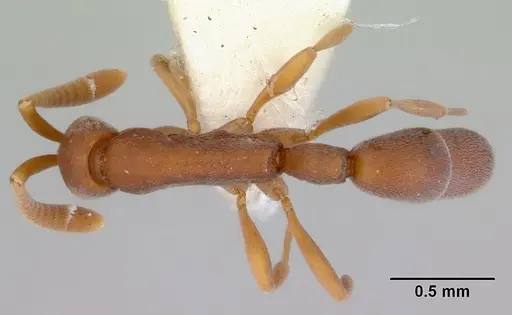
Literature
Loading...Loading products...