

Probolomyrmex maryatiae
- Scientific Name
- Probolomyrmex maryatiae
- Tribe
- Probolomyrmecini
- Subfamily
- Proceratiinae
- Author
- Eguchi <i>et al.</i>, 2006
- Distribution
- Found in 2 countries
Probolomyrmex maryatiae Overview
Probolomyrmex maryatiae is an ant species of the genus Probolomyrmex. It is primarily documented in 2 countries , including Brunei Darussalam, Malaysia. Detailed taxonomic data and occurrence records can be further explored via authoritative databases such as AntWeb or the Global Biodiversity Information Facility (GBIF).
Probolomyrmex maryatiae
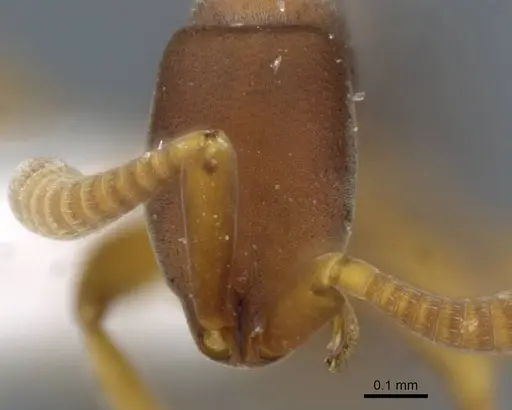
Probolomyrmex maryatiae is an extremely tiny ant species from the rainforests of Borneo (Sabah and Sarawak). Workers measure just 0.54-0.58mm in head length, making them among the smallest ants you can keep. They are completely blind (no eyes) and have a distinctive rusty brown coloration. Their petiole (the narrow waist segment) has a unique shape with conspicuous projections underneath. This species is part of the Proceratiinae subfamily, which contains some of the most obscure and rarely kept ants in the hobby. Only five workers have ever been scientifically described, and virtually nothing is known about their biology in the wild or in captivity. They represent a true challenge for advanced antkeepers interested in keeping something most people have never heard of.
Quick Summary
- Difficulty: Expert
- Origin & Habitat: Borneo (Sabah and Sarawak, Malaysia) in Indomalaya region. Found in rainforest and wet forest habitats [1]
- Colony Type: Unknown, colony structure has not been documented. Only five workers from a single colony have ever been studied.
- Size & Growth:
- Queen: Undescribed, no queen has been documented [2]
- Worker: 0.54-0.58mm head length, total body approximately 2-2.5mm [2]
- Colony: Unknown, likely small (under 100 workers) based on genus patterns for rare Proceratiinae
- Growth: Unknown
- Development: Unconfirmed, no development data exists for this species (Development timeline is completely unstudied. Related Proceratiinae species suggest 2-4 months at optimal temperature, but this is a rough estimate.)
- Antkeeping:
- Temperature: Inferred: 24-28°C based on rainforest habitat. Start in this range and observe colony activity.
- Humidity: Inferred: High humidity (70-85%) based on wet forest habitat. Keep substrate consistently moist but not waterlogged.
- Diapause: Unknown, no data on overwintering requirements. Borneo has no true winter, so diapause may not be necessary.
- Nesting: Inferred: Likely nests in soil or rotting wood in nature. Small test tubes or tight acrylic chambers work for their tiny size. Avoid large open spaces.
- Behavior: Behavior is completely unstudied. Based on related Proceratiinae, they are likely predatory and slow-moving. Their tiny size and blindness suggest they hunt micro-prey. Escape prevention must be excellent, they can squeeze through gaps too small for most ants. Sting ability is unknown but likely present (Proceratiinae typically have functional stingers, though too small to affect humans).
- Common Issues: complete lack of biological data means all care is experimental, tiny size makes escape prevention critical, use fine mesh and tight-fitting lids, no confirmed diet, may refuse standard ant foods, slow growth and small colony size may frustrate beginners, virtually impossible to find queens for sale, only wild colony capture possible
Discovery and Taxonomy
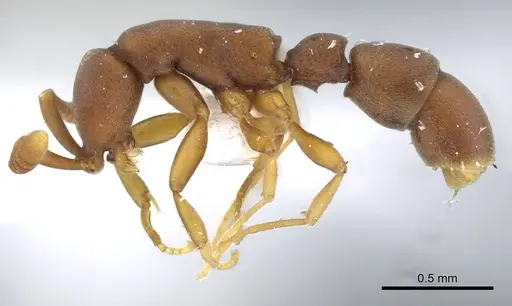
Probolomyrmex maryatiae was only described in 2006 by Eguchi, Yoshimura, and Yamane. The holotype and four paratype workers were collected from a single colony in Gunong Rara, Sabah, Malaysia in February 1997. This species is morphologically very similar to three other Probolomyrmex species: P. greavesi, P. salomonis, and P. vieti. The key distinguishing features are in the shape of the petiole (waist) and the subpetiolar process (a projection beneath the waist). In P. maryatiae, the anteroventral projection is relatively thick and not translucent, and the posterodorsal margin of the petiolar node is broadly concave. This is an extremely rare species that has rarely been encountered since its description. [2][1]
Appearance and Identification
These are tiny ants, workers have a head length of only 0.54-0.58mm, making them barely visible to the naked eye. They are completely blind, lacking any eyes entirely. Their body is a ferruginous (rusty) brown color. The head has weakly convex sides and a very shallowly concave back. The antennae are relatively short. The mesosoma (middle body section) has an almost straight dorsal outline. The propodeum (the segment behind the mesosoma) has a distinctive translucent lamella on the posterior face. The petiole is roughly as long as it is high, with a gentle anterior slope and concave posterior outline. The subpetiolar process has conspicuous anteroventral and posteroventral projections. The gaster (abdomen) is relatively short and gently narrowed toward the front. [2]
Distribution and Habitat
Probolomyrmex maryatiae is known only from Borneo, specifically the Malaysian states of Sabah and Sarawak. This places it in the Indomalaya biogeographic region. The only habitat information available indicates they are found in rainforest and wet forest environments. Borneo has a tropical rainforest climate with high year-round humidity and temperatures. This species appears to be extremely rare or localized, only one colony has ever been scientifically documented. The Probolomyrmex genus as a whole is known from scattered tropical locations across Asia, Africa, and South America, with most species being known from very few specimens. [2][1]
Care and Husbandry
WARNING: This species has never been kept in captivity by the antkeeping hobby. All care recommendations are educated guesses based on related Proceratiinae species and general ant biology. You will essentially be a pioneer if you attempt to keep this species. Temperature should be kept in the range of 24-28°C, mimicking the stable warmth of tropical rainforest. Humidity should be high (70-85%), with consistently moist but not flooded substrate. Nest options are limited by their tiny size, small test tubes with cotton plugs or tight acrylic chambers with narrow passages would work. Escape prevention is absolutely critical because of their minute size. They can likely squeeze through gaps that other ants cannot. Feed a diet of tiny live prey appropriate to their size, such as springtails, fruit flies, or other micro-arthropods. Sugar sources may or may not be accepted.
Why Keep This Species?
Probolomyrmex maryatiae is not a species for beginners or even intermediate antkeepers. It is for the specialist collector who wants to keep something truly obscure and challenging. The appeal is in the challenge and the opportunity to learn: you will be discovering things about this species that have never been documented. The tiny size, the complete blindness, and the mystery surrounding their biology make them a fascinating subject for observation. That said, you should have extensive experience with other micro-ant species (like Strumigenys or basic Myrmicinae) before attempting this species. Be prepared for experimental care and be willing to adapt your methods based on what you observe. Success with this species would be a genuine contribution to antkeeping knowledge.
Frequently Asked Questions
How hard is Probolomyrmex maryatiae to keep?
This is an Expert-level species. In fact, it's probably beyond Expert, virtually nothing is known about their biology, so all care is experimental. You should have extensive experience with other difficult species before attempting this one.
What do Probolomyrmex maryatiae eat?
Diet is completely unconfirmed. Based on related Proceratiinae, they are likely predatory on tiny arthropods. Offer small live prey like springtails, fruit flies, or micro-arthropods. Sugar acceptance is unknown.
How big do Probolomyrmex maryatiae colonies get?
Unknown. Based on related Proceratiinae genus patterns, colonies are likely small, probably under 100 workers. Only five workers from a single colony have ever been scientifically documented.
Do Probolomyrmex maryatiae queens need to forage during founding?
Unconfirmed. Founding behavior has not been documented. Most Proceratiinae are claustral (queen seals herself in and lives off stored fat), but this is not confirmed for P. maryatiae.
What temperature should I keep Probolomyrmex maryatiae at?
No specific data exists. Based on their rainforest habitat in Borneo, aim for 24-28°C. Start in the middle of this range and adjust based on colony activity.
Do Probolomyrmex maryatiae ants sting?
Sting ability is not documented but likely present. Proceratiinae typically have functional stingers, though they are far too small to affect humans. The sting would be negligible even if present.
Can beginners keep Probolomyrmex maryatiae?
No. This species is not recommended for beginners. The complete lack of biological data means you need extensive experience with other ant species and a willingness to experiment. Start with easier species like Lasius, Camponotus, or basic Myrmicinae.
Where can I get a Probolomyrmex maryatiae queen?
Extremely unlikely to find for sale. This is one of the rarest ant species in the hobby. Only one colony has ever been documented scientifically. You would need to find and capture a wild colony in Borneo, which presents significant practical and legal challenges.
Do Probolomyrmex maryatiae need hibernation?
Unknown. Borneo has no true winter, so diapause may not be necessary. However, some seasonal slow-down may occur. Monitor your colony and reduce temperatures slightly (by 2-3°C) during what would be the wet season, rather than a true hibernation.
How do I prevent escape with such tiny ants?
Excellent escape prevention is essential. Use fine mesh (at least 0.5mm or smaller), tight-fitting lids, and barrier methods like fluon. Their minute size means they can squeeze through gaps invisible to the naked eye. Check all connections and seams regularly.
References

This caresheet is licensed under CC BY-SA 4.0 .
CASENT0911224
View on AntWeb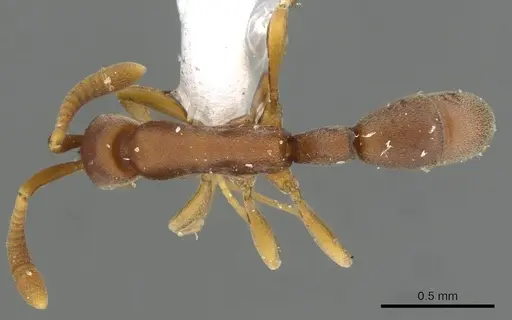
Literature
Loading...Loading products...