

Probolomyrmex latalongus
- Scientific Name
- Probolomyrmex latalongus
- Tribe
- Probolomyrmecini
- Subfamily
- Proceratiinae
- Author
- Shattuck <i>et al.</i>, 2012
- Distribution
- Found in 1 countries
Probolomyrmex latalongus Overview
Probolomyrmex latalongus is an ant species of the genus Probolomyrmex. It is primarily documented in 1 countries , including Australia. Detailed taxonomic data and occurrence records can be further explored via authoritative databases such as AntWeb or the Global Biodiversity Information Facility (GBIF).
Probolomyrmex latalongus
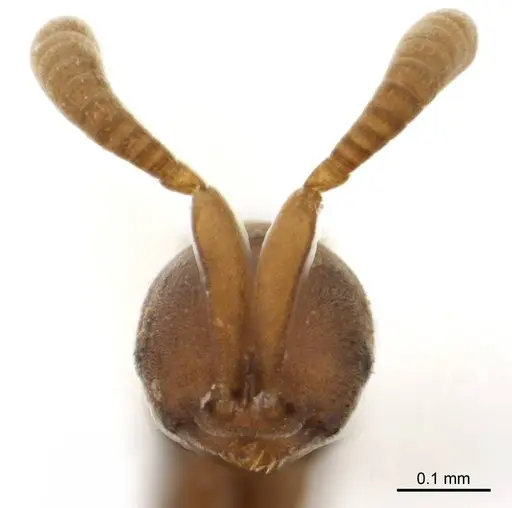
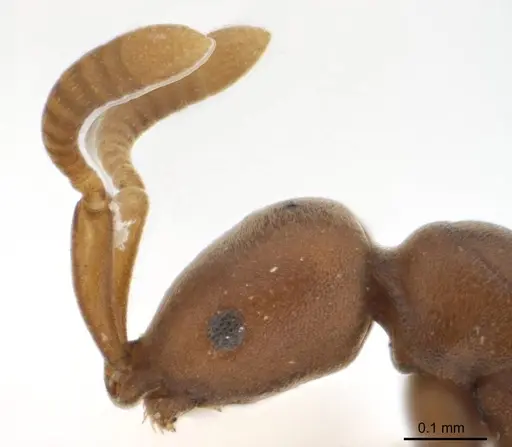
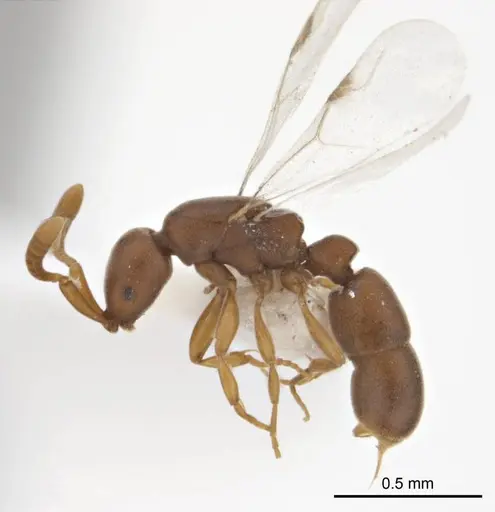
Probolomyrmex latalongus is an exceptionally tiny ant species native to northern Australia, measuring just 0.29-0.32mm in head width [1]. Workers are ferruginous brown in color and possess a distinctive morphological feature: a subpetiolar process that forms a rounded 90° angle at the front [1]. This species is completely blind, like all Probolomyrmex ants, they have no eyes [1]. The petiolar node is relatively short and broad, and the antennae are relatively short [1]. This is the most widely distributed Probolomyrmex species in Australia, found from Barrow Island in Western Australia across to Cape York Peninsula in Queensland [1]. They inhabit diverse environments including rainforests, Eucalyptus woodland, and grasslands, typically living in leaf litter [1].
Quick Summary
- Difficulty: Expert
- Origin & Habitat: Northern Australia, from Barrow Island (Western Australia) to Cape York Peninsula (Queensland). Found in diverse habitats including rainforests, Eucalyptus woodland, and grasslands [1].
- Colony Type: Unknown, colony structure has not been documented. A single winged queen has been collected, suggesting nuptial flights occur.
- Size & Growth:
- Queen: Undocumented in measurements, only a winged queen specimen exists [1]
- Worker: 0.29-0.32mm head width,0.54-0.65mm mesosoma length [1]
- Colony: Unknown, no colony size data available
- Growth: Unknown
- Development: Unknown, no development data exists for this species. Based on similar tiny predatory ants, estimate 4-8 weeks at warm temperatures. (No direct data exists. Estimate based on genus-level patterns for small Proceratiinae ants.)
- Antkeeping:
- Temperature: Likely 22-28°C based on Australian tropical distribution. Provide a gentle gradient and monitor colony activity.
- Humidity: High humidity required, these are leaf litter ants from typically damp environments. Keep substrate consistently moist but not waterlogged.
- Diapause: Unknown, Australian tropical species may not require true hibernation but may have reduced activity during cooler dry season.
- Nesting: Tiny size and blind nature suggest they likely nest in small cavities within leaf litter or rotting wood. In captivity, a small test tube setup with tight chambers or a small Y-tong nest would work well. They need tight passages scaled to their minute size.
- Behavior: Nothing is documented about their behavior in captivity. Based on genus patterns, they are likely predatory on tiny arthropods. Their blind nature suggests they may use chemical cues and vibrations to navigate. Escape prevention is critical, at under 0.33mm width, they can squeeze through incredibly small gaps. They are extremely docile and non-aggressive based on their small size and lack of defensive structures.
- Common Issues: escape prevention is critical, they are tiny enough to squeeze through standard mesh barriers, no colony size data makes it hard to plan housing needs, diet acceptance is completely unknown, must experiment carefully, slow growth and tiny size means colonies are fragile and easily lost, lack of documented care information means all guidance is estimated
Understanding Probolomyrmex latalongus
This is an exceptionally obscure ant species that has rarely been encountered in the wild. The entire scientific knowledge base consists of workers collected from leaf litter samples and a single winged queen captured in a flight intercept trap [1]. They belong to the subfamily Proceratiinae, which contains some of the world's smallest ants. What makes them particularly unusual is their complete lack of eyes, they are blind ants that navigate entirely through chemical and tactile senses [1]. The genus Probolomyrmex is poorly understood globally, with this species being the most widespread in Australia but still barely studied. For antkeepers, this means you will essentially be a pioneer, there is no established captive care protocol for this species, and you may discover aspects of their biology that have never been documented before.
Housing and Escape Prevention
Housing Probolomyrmex latalongus presents unique challenges due to their extreme small size. Workers measure only 0.29-0.32mm in head width, smaller than many springtails commonly used as prey for other tiny ants [1]. This means standard ant keeping equipment may not provide adequate escape prevention. You must use the finest mesh available, and test tube setups should have cotton packed tightly. Any gap larger than about 0.2mm is a potential escape route. Consider using small acrylic nests with very tight chambers, or modified test tube setups with minimal opening diameters. Because they are blind, they may be less aware of escape routes than sighted species, but this also means they may wander more randomly and encounter edges unexpectedly.
Feeding and Diet
The diet of Probolomyrmex latalongus has not been documented in scientific literature. However, their relatives in the Proceratiinae subfamily are typically predatory, hunting small soft-bodied arthropods. Given their minute size, they likely target tiny prey such as springtails, minute soil mites, and other micro-arthropods found in leaf litter [1]. Start by offering live springtails as a primary food source, as these are likely to be an appropriate size. You might experiment with other tiny prey, but avoid anything larger than their own body size. Sugar sources are unlikely to be accepted, these are predatory ants, not sugar-seekers. Monitor carefully to see if they show interest, but do not rely on sugar water as a food source.
Temperature and Humidity
Probolomyrmex latalongus occurs across northern Australia in regions with tropical to subtropical climates [1]. They have been found in rainforests, Eucalyptus woodland, and grasslands, suggesting some flexibility in temperature tolerance. However, being leaf litter inhabitants, they likely prefer warmer, humid conditions with minimal temperature fluctuations. Aim for temperatures in the 24-28°C range, providing a slight gradient so the colony can self-regulate. Humidity should be kept high, think damp forest floor conditions. The substrate should feel consistently moist but never waterlogged. A small water reservoir in their test tube setup helps maintain humidity. Avoid letting the setup dry out, as these tiny ants are highly susceptible to desiccation.
Colony Establishment and Growth
A single winged queen was collected in an intercept trap on Barrow Island, indicating that nuptial flights occur but the timing is unknown [1]. Nothing is known about their founding behavior, whether the queen seals herself in (claustral) or must forage during founding (semi-claustral). Given their small size and likely predatory nature, they may be semi-claustral, but this is entirely speculative. Colony growth is expected to be slow given their tiny size, each worker is minuscule, and the colony likely remains small. Do not expect rapid expansion. Based on similar tiny ants, you might expect a mature colony to number only in the dozens to low hundreds of workers. Patience is essential with this species, expect months or years to see significant growth.
Frequently Asked Questions
How long does it take for Probolomyrmex latalongus to produce first workers?
This is completely unknown, no development data exists for this species. Based on similar tiny predatory ants, estimate 4-8 weeks from egg to worker at warm temperatures (around 26°C). However, this is a rough guess since no actual data is available.
Can I keep Probolomyrmex latalongus in a test tube?
Yes, a test tube setup is likely the best option given their tiny size. Use a small diameter tube (like a standard karyotype tube or narrow glass tube) with a tight-fitting cotton plug. The small water reservoir helps maintain humidity. Ensure the cotton is packed very tightly to prevent escape.
What do Probolomyrmex latalongus ants eat?
Their diet is unconfirmed, but based on their relatives, they are likely predatory on tiny arthropods. Start with live springtails as a primary food source. Other tiny micro-arthropods may be accepted. Sugar sources are unlikely to be taken, these appear to be strict predators.
Are Probolomyrmex latalongus dangerous?
No, at 0.3mm in size, they pose no threat to humans. They lack stingers and are completely harmless. Their tiny size also means they cannot bite effectively.
How big do Probolomyrmex latalongus colonies get?
Unknown, no colony size data exists. Based on their tiny size and the genus patterns, colonies likely remain small, probably under 100-200 workers at maturity. Do not expect large colonies.
Do Probolomyrmex latalongus ants need hibernation?
This is unknown. As a tropical Australian species, they likely do not require true hibernation. However, they may have reduced activity during cooler periods. If you keep them at room temperature (22-26°C), year-round activity is probably fine.
Why are Probolomyrmex latalongus ants blind?
They are not blind by accident, this is their natural state. Like all Probolomyrmex species, they have evolved without eyes [1]. This is common in some ant lineages that live in dark, enclosed spaces like leaf litter or underground. They navigate using chemical signals (pheromones) and touch.
Is Probolomyrmex latalongus suitable for beginners?
No, this species is not suitable for beginners. There is essentially no captive care information available, they are extremely tiny making them difficult to house and feed, and colonies are likely very slow-growing and fragile. This is an expert-level species for antkeepers who want to pioneer captive breeding of poorly studied species.
Can I keep multiple queens together?
This is unknown, colony structure has not been documented for this species. Do not attempt combining unrelated queens unless you are prepared to lose them. Wait for more information or start with a single queen.
When will my queen lay eggs?
Unknown, no data exists on founding behavior or time to first eggs. Provide appropriate conditions (warm, humid, dark) and wait. Be patient, this process may take weeks to months based on typical patterns.
References

This caresheet is licensed under CC BY-SA 4.0 .
ANTWEB1008711
View on AntWeb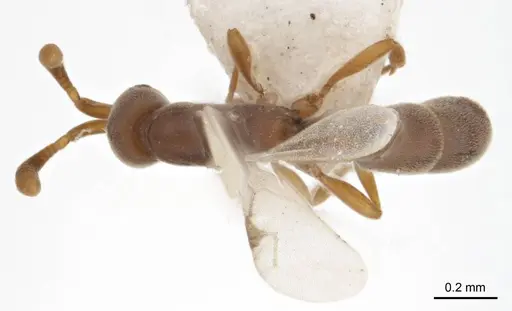
Literature
Loading...Loading products...