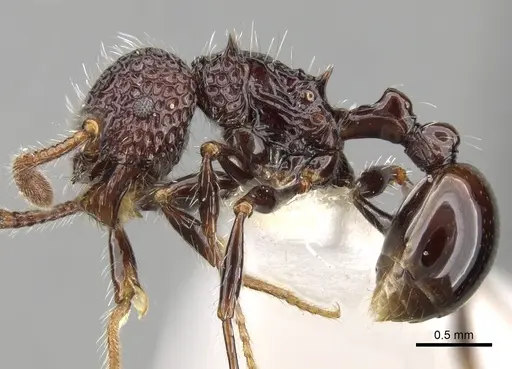
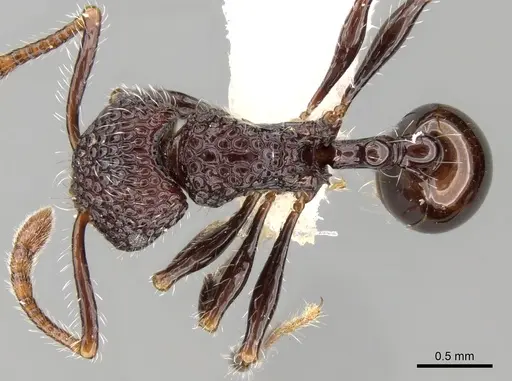
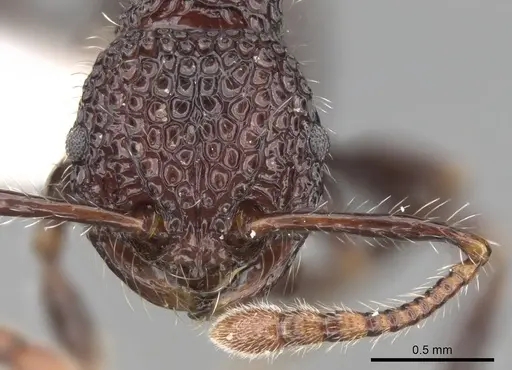
Pristomyrmex sulcatus - "Sulcate Spined Ant (unofficial)"
Pristomyrmex sulcatus is a captivating ant species originating from the rainforests of Southeast Asia. These ants are notable for their reddish-brown bodies, accented by striking white antennal funicular segments. Workers measure around 3.98-4.74 mm, while queens are similar in size or slightly larger, typically between 4.5-5.5 mm. A distinctive feature is the prominent tooth on the underside of their clypeus and a pair of moderately long spines on their pronotal segment. As active predators and scavengers, they display intriguing behaviors such as feigning death when disturbed and often forage nocturnally, making them a unique addition to any antkeeping setup.
- Difficulty: Medium
- Origin & Habitat: India, Myanmar, Nepal, Thailand, Vietnam, Malaysia, China (Oriental Region) in Rainforests, dense secondary forests, preferring shaded areas within leaf litter, rotten wood, soil, or around plant roots..
- Colony Type: Monogyne or Polygyne (queens are present, unlike some Pristomyrmex species where workers can reproduce), claustral or semi-claustral (exact method not well documented, likely dependent on queen type) founding.
- Size & Growth:
- Queen: 4.5-5.5mm
- Worker: 3.98-4.74mm
- Colony: Large (tens of thousands). Fast growth.
- Antkeeping:
- Temperature: Maintain a temperature gradient between 22-28°C for optimal development. While they can tolerate brief periods outside this range, consistent temperatures within this spectrum are best for colony health and growth..
- Humidity: High humidity is crucial for this rainforest species. Aim for 70-80% in the nesting chambers and 50-60% in the outworld to provide a suitable environment..
- Diapause: Not required. Not specified at Not specified.
- Nesting: These ants are highly adaptable, nesting naturally in soil, leaf litter, rotten wood, or within plant root systems. For captivity, setups that mimic these conditions are ideal, such as acrylic nests with good hydration, Ytong, or naturalistic setups incorporating wood and substrate..
- Behavior: Low (towards handler), High (towards food or other ants) aggressiveness.
- Common Issues: Mold in nest, Humidity fluctuations, Colony stalling if humidity is too low, Overfeeding leading to waste.
One fascinating aspect of Pristomyrmex sulcatus is their unique defense mechanism: if disturbed, they may feign death, remaining perfectly still to avoid predation. This 'playing dead' behavior, coupled with their often slow-moving and nocturnal foraging habits, can make them seem quite secretive at times. Observing these subtle behaviors in your formicarium can provide a deeper appreciation for their survival strategies.
The genus Pristomyrmex is renowned for its diverse reproductive strategies. While Pristomyrmex sulcatus is known to have queens, it’s worth noting that some related species, like Pristomyrmex punctatus, are 'queenless' and workers can reproduce via parthenogenesis or through the presence of ergatoid queens – wingless females that are morphologically intermediate between workers and queens. While P. sulcatus typically has a queen, understanding this broader genus trait highlights the unique evolutionary paths within the Pristomyrmex lineage.
Feeding your Pristomyrmex sulcatus colony requires a carnivorous approach. They are eager hunters and scavengers, readily accepting a variety of protein sources such as small feeder insects (e.g., cut-up crickets, roaches, or mealworms). They also appreciate a balanced diet that includes sweet liquids like sugar water or honey. A varied diet is key to their health and vigorous colony growth, ensuring they get all the necessary nutrients.
Due to their natural rainforest habitat, maintaining high humidity in the nest is paramount for Pristomyrmex sulcatus. Inadequate moisture can quickly lead to stress and colony decline. It’s crucial to establish a proper humidity gradient within their formicarium, ensuring that a significant portion of the nest remains consistently moist. Regular monitoring and hydration are essential to prevent issues like mold, which can arise from stagnant water or poor ventilation in humid environments.
While Pristomyrmex sulcatus workers are generally not aggressive towards handlers and do not sting or spray formic acid, they are incredibly tenacious when it comes to prey. You'll observe a high level of aggression and mass recruitment when new food sources are introduced to their outworld. Their small size makes them relatively harmless to humans, often simply walking across your skin without attempting to bite unless severely provoked, making them a suitable species for observing their foraging prowess.
Frequently Asked Questions
What's the best way to start a *Pristomyrmex sulcatus* colony?
To kick off your Pristomyrmex sulcatus journey, beginning with a queen and her initial brood in a test tube setup is ideal. Ensure the test tube is adequately hydrated to meet their high humidity demands, mimicking their natural rainforest environment. Once the colony begins to expand and the first workers emerge, they'll be ready for a small, humid formicarium.
Do *Pristomyrmex sulcatus* workers sting or bite?
Good news for antkeepers! Pristomyrmex sulcatus workers are generally not known to sting, nor do they spray formic acid. While they might attempt a defensive bite if severely agitated, their small size means it's usually harmless to human skin. They're more focused on overwhelming prey items with their numbers rather than direct confrontation with larger threats.
What kind of food do *Pristomyrmex sulcatus* colonies eat?
These ants are primarily carnivorous, so a steady supply of protein is key. Think small feeder insects like cut-up crickets, mealworms, or roaches. Don't forget their sweet tooth – a little sugar water or honey solution will also be a hit. A diverse diet ensures your colony receives all the nutrients for robust growth and activity.
How important is humidity for *Pristomyrmex sulcatus*?
Humidity is incredibly important for Pristomyrmex sulcatus! Hailing from rainforests, they thrive in high moisture. Aim for nest humidity in the 70-80% range, with the outworld at 50-60%. Providing a proper humidity gradient within their formicarium is crucial to prevent stress and ensure the well-being of your colony and their delicate brood.
What type of nest is best for *Pristomyrmex sulcatus*?
Given their natural nesting habits in leaf litter, rotten wood, or soil, Pristomyrmex sulcatus will appreciate artificial nests that offer similar conditions. Hydrated acrylic setups, Ytong nests, or even naturalistic setups with a substrate layer and pieces of decaying wood can work wonderfully. The key is to ensure consistent, high humidity levels within the nesting chambers.
Do *Pristomyrmex sulcatus* need to hibernate?
No, Pristomyrmex sulcatus generally does not require diapause or hibernation. They are a tropical/subtropical species, and maintaining stable temperatures within their preferred range (22-28°C) year-round will support continuous activity and brood production. Unlike ants from temperate climates, a cool-down period is not necessary for their lifecycle.
How large can a *Pristomyrmex sulcatus* colony get?
While the exact maximum for Pristomyrmex sulcatus can vary, species within the Pristomyrmex genus are known to form impressive colonies, potentially reaching tens of thousands of individuals. With proper care and consistent feeding, you can expect your P. sulcatus colony to grow into a sizable and active community over time, making for a truly engaging antkeeping experience.
Are there any unique behaviors of *Pristomyrmex sulcatus*?
Absolutely! Pristomyrmex sulcatus exhibits some fascinating behaviors. They are known for feigning death when disturbed, and you might observe them foraging more actively during the night. Their efficiency in mass recruitment for food items is also quite remarkable to witness, showcasing their cooperative nature in securing resources for the colony.