

Pristomyrmex flatus
- Scientific Name
- Pristomyrmex flatus
- Tribe
- Crematogastrini
- Subfamily
- Myrmicinae
- Author
- Wang, 2003
- Distribution
- Found in 0 countries
Pristomyrmex flatus Overview
Pristomyrmex flatus is an ant species of the genus Pristomyrmex. It is primarily documented in 0 countries . Detailed taxonomic data and occurrence records can be further explored via authoritative databases such as AntWeb or the Global Biodiversity Information Facility (GBIF).
Pristomyrmex flatus
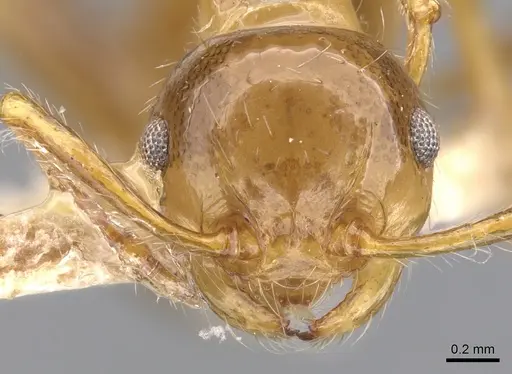
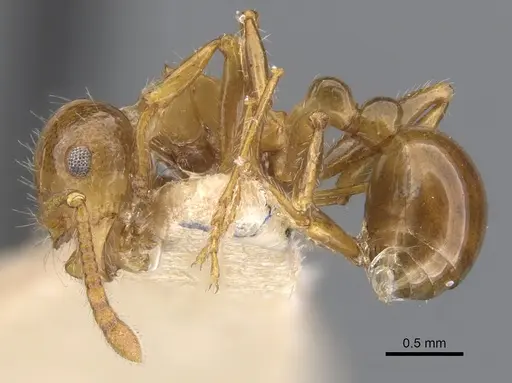
Pristomyrmex flatus is a small, smooth-bodied ant native to the Philippines, specifically found on Luzon Island. Workers measure 3.8-4.1mm in total length with a reddish-brown to yellow-brown coloration. The species is easily recognized by its unsculptured, shining dorsal surfaces and the distinctive petiole structure where the anterior face of the node blends directly into the peduncle without a clear separation. Both the pronotum and propodeum bear short spines, with the propodeal spines being slightly longer. This species belongs to the Quadridens group and is known only from the Philippines, where it was first collected in the 1920s. Queens have never been collected, making colony structure and founding behavior currently unknown.
Quick Summary
- Difficulty: Unknown, Insufficient Data
- Origin & Habitat: Endemic to the Philippines, specifically recorded from Luzon Island (Ilocos Norte/Banqui region). Found in tropical forest habitat, though specific microhabitat preferences are unstudied [1][2].
- Colony Type: Unknown, queens have never been collected. The species is known only from workers and tentatively associated males. Colony structure (single-queen or multi-queen) cannot be determined from available data.
- Size & Growth:
- Queen:{.size-link} Unknown, queens have not been collected or described [2]
- Worker:{.size-link} 3.8-4.1mm total length [1]
- Colony: Unknown, no colony size data exists
- Growth: Unknown
- Development: Unknown, no development data exists for this species (This species has never been kept in captivity, and no biological observations exist in scientific literature. All care recommendations are speculative and based on genus-level patterns.)
- Antkeeping:
- Temperature: Unconfirmed, as a tropical Philippine species, likely prefers warm conditions in the range of 24-28°C. No direct thermal studies exist for this species.
- Humidity: Unconfirmed, likely requires moderate to high humidity typical of tropical forest ants. Keep substrate consistently moist but not waterlogged.
- Diapause: Unknown, as a tropical species from the Philippines, diapause is unlikely but not confirmed. No seasonal studies exist.
- Nesting: Unconfirmed, likely nests in soil or rotting wood based on typical Pristomyrmex genus patterns. A naturalistic setup with moist substrate or a Y-tong/plaster nest would be appropriate speculative choices.
- Behavior: Behavior is completely unstudied in this species. Based on genus patterns, Pristomyrmex ants are typically predatory or omnivorous with moderate aggression. Workers are likely active foragers. Escape prevention should be practiced as standard, though escape behavior has not been documented.
- Common Issues: no captive husbandry data exists, this species has never been kept in captivity, queenless collections mean no founding or colony growth can be observed, wild-caught colonies may carry unknown parasites or pathogens, lack of baseline data makes troubleshooting impossible, temperature and humidity requirements are speculative only
Species Identification and Status
Pristomyrmex flatus was described by Wang in 2003 based on worker specimens collected from Luzon Island in the Philippines in 1923. The species remains one of the most poorly known Pristomyrmex species, with virtually no biological data available. Males have been tentatively associated but never confirmed through breeding observations. Queens have never been collected, leaving fundamental questions about colony structure unanswered. This species is part of the Quadridens group, which includes several other Philippine and Asian Pristomyrmex species. The distinguishing features include the smooth, unsculptured dorsal surfaces and the unique petiole structure where the anterior face blends directly into the peduncle. [1][2]
Why This Species Is Not Recommended for Beginners
Pristomyrmex flatus should not be kept by hobbyists at this time. The species has never been documented in captivity, and no biological or husbandry information exists in scientific literature. There are no established care guidelines, no known feeding preferences, no documented temperature or humidity requirements, and no understanding of colony development. Without queens ever being collected, there is no way to start a colony. Any antkeeper attempting to keep this species would be working entirely from speculation, making success extremely unlikely. For antkeepers interested in Pristomyrmex, better-documented species within the genus would be far more suitable choices. [2]
What We Know About Related Species
While P. flatus itself has no documented biology, the broader Pristomyrmex genus provides some context. Most Pristomyrmex species are small to medium-sized Myrmicinae ants found in tropical and subtropical Asia and Australia. They are typically ground-nesting ants that prefer moist forest habitats. Many species in the genus are predatory or omnivorous, feeding on small invertebrates. However, these are general genus patterns and may not apply specifically to P. flatus. The Philippines hosts several Pristomyrmex species, and the tropical climate suggests warm, humid conditions would be appropriate if the species were to be kept. But without specific data, these remain educated guesses rather than established requirements.
Future Research and Discovery Potential
Pristomyrmex flatus represents an opportunity for scientific discovery in antkeeping. If queens are eventually collected from the wild, this species could become a pioneering subject for captive study. Any future attempts to keep this species should document all observations meticulously, feeding acceptance, temperature preferences, humidity needs, development times, and colony behavior. Such documentation would be valuable both for the antkeeping hobby and for scientific understanding. Antkeepers who successfully establish this species would contribute genuinely new knowledge to ant biology.
Frequently Asked Questions
Can I keep Pristomyrmex flatus as a pet ant?
No, this species cannot be kept because queens have never been collected. Without queens, there is no way to start a colony. Additionally, no captive husbandry information exists for this species, making successful keeping impossible.
Where can I find Pristomyrmex flatus queens for sale?
Queens are not available. This species has never been documented as being sold in the antkeeping hobby, and queens have never been scientifically collected or described. There are no commercial sources for this ant.
What do Pristomyrmex flatus ants eat?
Unknown, no feeding observations exist for this species. Based on genus patterns, they likely accept small live prey and sugar sources, but this is entirely speculative.
What temperature should I keep Pristomyrmex flatus at?
No established requirements exist. As a tropical Philippine species, they would likely prefer warm conditions around 24-28°C, but this is an educated guess rather than documented need.
Do Pristomyrmex flatus ants need hibernation?
Unknown, as a tropical species from the Philippines, hibernation is unlikely, but no seasonal behavior has been documented.
How big do Pristomyrmex flatus colonies get?
Unknown, colony size has never been documented. No mature colonies have been observed or described in scientific literature.
Are Pristomyrmex flatus ants aggressive?
Unknown, no behavioral observations exist for this species. General Pristomyrmex behavior patterns cannot be reliably applied to this specific species.
What is the best nest type for Pristomyrmex flatus?
Unknown, no captive nesting observations exist. Based on genus patterns, they likely prefer soil-based or rotting wood nests in humid conditions, but this is speculative.
How long does it take for Pristomyrmex flatus to develop from egg to worker?
Unknown, no development data exists for this species. Even basic timeline estimates are impossible without any captive observations.
Is Pristomyrmex flatus a good species for beginners?
No, this species is completely unsuitable for any antkeeper. No husbandry information exists, queens are not available, and the species has never been kept in captivity. Better-documented species are strongly recommended instead.
Report an Issue
The current care sheet is based fully on literature. See inconsistencies, or something that's incorrect? Please , it will be resolved after review from an admin. Contributing to the blogs tab also helps providing information, to make us be able to further improve the caresheets. Thank you for your support!
References

This caresheet is licensed under CC BY-SA 4.0 .
CASENT0901722
View on AntWeb
Literature
Loading...Loading products...