

Pristomyrmex brevispinosus
- Scientific Name
- Pristomyrmex brevispinosus
- Tribe
- Crematogastrini
- Subfamily
- Myrmicinae
- Author
- Emery, 1887
- Distribution
- Found in 5 countries
Pristomyrmex brevispinosus Overview
Pristomyrmex brevispinosus is an ant species of the genus Pristomyrmex. It is primarily documented in 5 countries , including China, Hong Kong, Indonesia. Detailed taxonomic data and occurrence records can be further explored via authoritative databases such as AntWeb or the Global Biodiversity Information Facility (GBIF).
Pristomyrmex brevispinosus
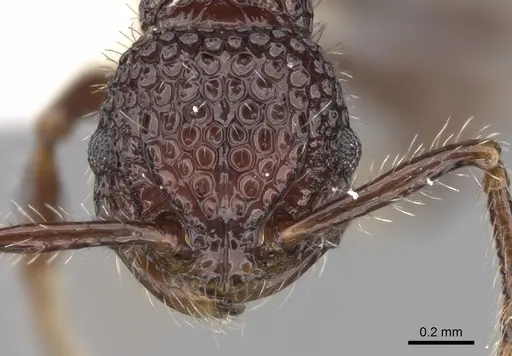
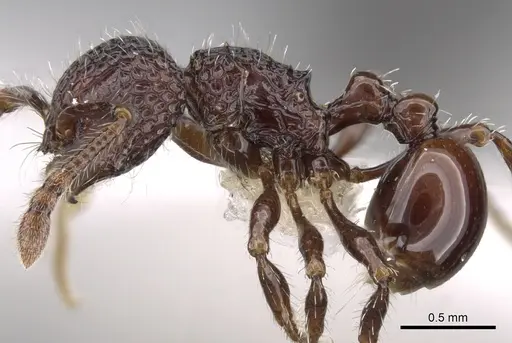
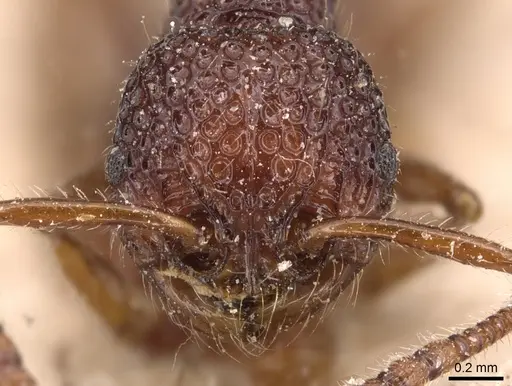
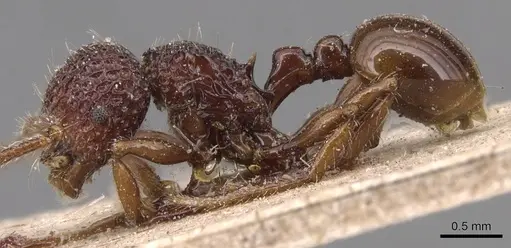
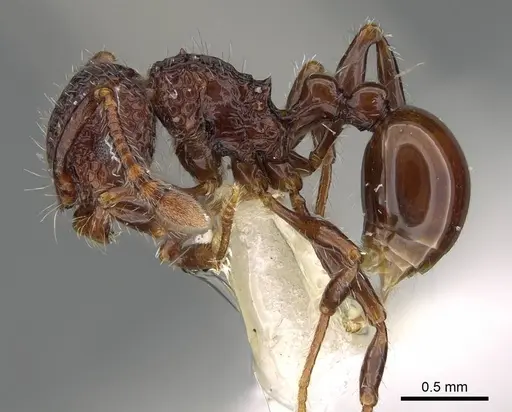
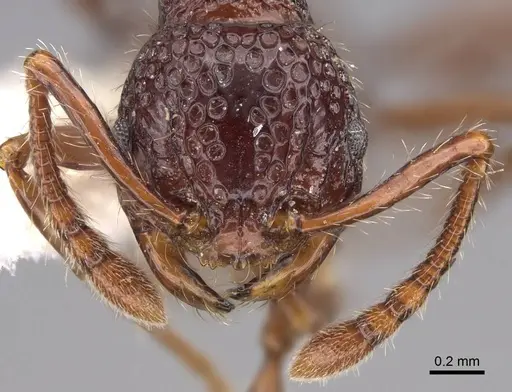
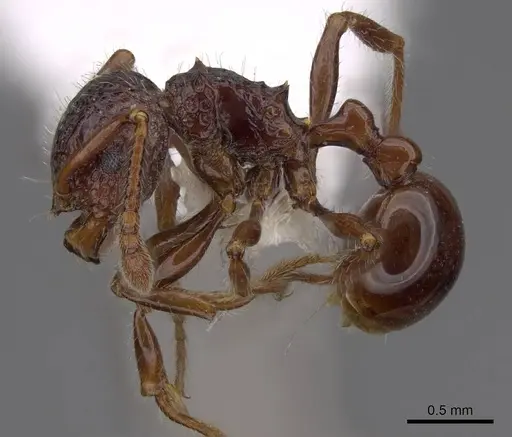
Pristomyrmex brevispinosus is a small myrmicine ant native to Southeast Asia and the Indo-Malayan region. Workers measure 3-4.3mm and are reddish-brown to blackish-brown with a distinctive appearance: they have small tooth-like spines on the pronotum (shoulders) and short triangular spines on the propodeum (the section behind the waist). The head and back have a characteristic foveolate-reticulate sculpture, essentially a honeycomb-like pitted texture that gives them a somewhat roughened look [1]. These ants are ground-dwelling, nesting in rotting wood or under stones in forested habitats [2]. What makes this species particularly interesting is the presence of ergatoid females, wingless queens that can serve as replacement reproductives if the primary queen dies [2]. Colonies are very small, typically containing fewer than 20 workers [2]. The species has a wide but scattered distribution across Japan, Taiwan, Thailand, Malaysia, Indonesia, the Philippines, and southern China, but it is a habitat specialist found almost exclusively in primary forest [3].
Quick Summary
- Difficulty: Medium
- Origin & Habitat: Southeast Asia and Indo-Malayan region, found in Japan (Iriomote Island), Taiwan, Thailand, Malaysia, Indonesia (Sumatra, Borneo, Sulawesi), Philippines, and southern China. Nests in rotting wood or under stones in forested habitats [2][1].
- Colony Type: Monogyne (single-queen colonies) with ergatoid replacement reproductives. Colonies are very small, typically under 20 workers [2][4].
- Colony: Monogyne
- Founding: Claustral
- Size & Growth:
- Queen: 3.42-4.81mm
- Worker: 3.0-4.3mm [1]
- Colony: Under 20 workers per nest [2]
- Growth: Slow
- Development: Unknown, no specific development data available for this species (Development timeline has not been directly studied. Based on typical Myrmicinae patterns and their small colony size, expect development to take several months. Related Pristomyrmex species suggest 6-10 weeks at optimal temperature, but this is an estimate.)
- Antkeeping:
- Temperature: Keep at room temperature, around 22-26°C. This species comes from tropical and subtropical forests, so they prefer warmth. A gentle gradient allowing them to move between warmer and cooler areas is ideal.
- Humidity: Moderate to high humidity. They naturally nest in rotting wood and under stones in forest environments, so keep the nest substrate slightly moist but not waterlogged. Provide a moisture gradient so ants can self-regulate.
- Diapause: Unlikely, being a tropical/subtropical species, they probably do not require a true hibernation. However, a slight reduction in temperature during winter months (to around 18-20°C) may be appropriate given their range includes the subtropics.
- Nesting: They naturally nest in rotting wood or under stones in forested habitats [2]. For captivity, a small naturalistic setup with wood pieces or a Y-tong/plaster nest with narrow chambers works well. Because colonies stay very small, use appropriately scaled-down nest dimensions. Keep nesting area humid but allow for some drier areas for foraging.
- Behavior: These are relatively docile, small ants that are not aggressive. They are ground-nesting and prefer to stay within the nest and immediate foraging area. Workers are modest foragers that search for small prey and honeydew. Because of their very small size, escape prevention must be excellent, they can squeeze through tiny gaps. They are not known for stinging and pose no danger to keepers.
- Common Issues: very small colony size means slow growth and potential loss of queen, colonies may fail to establish or collapse easily, escape prevention is critical due to tiny worker size, use fine mesh and tight-fitting barriers, habitat specialist, they do poorly in disturbed habitats, so avoid keeping them in artificial setups without proper humidity and ground cover, small colony size makes them vulnerable to stress, avoid disturbing the nest frequently, limited distribution in Japan means wild-caught colonies may be difficult to find and potentially protected
Housing and Nest Setup
Pristomyrmex brevispinosus requires careful housing due to their tiny size and small colony size. Use a small formicarium or naturalistic setup scaled appropriately, chambers should be compact, not spacious. They naturally nest in rotting wood or under stones in forest habitats, so a setup with small wood pieces, soil, and some stones mimics their natural environment well. A Y-tong (AAC) nest with narrow passages also works, but ensure chambers are appropriately sized for such small ants. Because colonies max out at around 20 workers, you do not need large spaces. Maintain moderate to high humidity within the nest, these forest-floor ants prefer damp conditions. Provide a water tube or moisture source, but avoid flooding. Escape prevention is critical: these tiny ants can squeeze through gaps that seem impossible, so use fine mesh (at least 0.5mm or finer) on all openings and check for any gaps regularly. [2][1]
Feeding and Diet
Like other Pristomyrmex species, these ants are likely omnivorous with a preference for small prey and sugary substances. In the wild, they probably forage for tiny insects, aphids, and honeydew. In captivity, offer small live prey such as fruit flies, pinhead crickets, or tiny insects appropriate to their size. They will likely accept sugar water or honey as well. Because of their small size, prey items should be very small, anything larger than they can handle will go to waste. Feed them small amounts of protein (prey) a few times per week, and keep a constant source of sugar water available. Remove uneaten prey after 24-48 hours to prevent mold. Their small colony size means they do not need large quantities of food.
Temperature and Seasonal Care
Keep these ants warm, around 22-26°C, which is typical for tropical and subtropical species. They come from regions in Japan, Taiwan, Thailand, and throughout Southeast Asia where temperatures remain moderate to warm year-round. A heating cable on one side of the nest can create a temperature gradient, allowing ants to self-regulate. Avoid temperatures below 18°C or above 30°C. Since they are from subtropical/tropical areas, they likely do not require a true hibernation period, but you might slightly reduce temperatures in winter to around 18-20°C to simulate seasonal slowing. Monitor colony activity, if workers become less active and cluster together, they may be experiencing cooler than preferred conditions. They are a primary forest specialist [3], so stable conditions are important rather than dramatic seasonal swings.
Colony Dynamics and Behavior
This species has fascinating colony dynamics. Colonies are monogyne (single queen) with documented ergatoid females present [2]. Ergatoids are wingless females that can serve as replacement reproductives if the primary queen dies, this is a backup reproductive strategy. Colony size is very small, typically under 20 workers even in mature colonies [2]. This is one of the smallest colony sizes among ant species. Workers are not aggressive and do not pose any sting threat to keepers. They are ground-nesting and prefer to stay within the nest structure. The presence of ergatoid females means the colony has some resilience if the queen is lost, but overall the small colony size makes them vulnerable to stress and disturbance. Be very careful when observing or moving the nest, sudden changes can stress these small colonies.
Common Challenges
The biggest challenges with Pristomyrmex brevispinosus relate to their small size and small colony size. First, escape prevention is absolutely critical, these tiny ants can escape through the tiniest gaps, so inspect all connections and use fine mesh barriers. Second, their very small colonies grow slowly, which can be frustrating for keepers expecting rapid expansion. Do not overfeed or disturb the nest frequently. Third, they are habitat specialists restricted to primary forest [3], which suggests they are sensitive to environmental changes, avoid keeping them in bare, artificial setups without proper substrate and humidity. Fourth, wild-caught colonies may be difficult to find, especially in Japan where they are only known from Iriomote Island. If you obtain a colony, be prepared for a long-term commitment with slow growth. Finally, because colonies stay so small, they are more vulnerable to queen loss, avoid moving or disturbing the nest unnecessarily once the colony is established.
Frequently Asked Questions
How long does it take for Pristomyrmex brevispinosus to produce first workers?
The exact egg-to-worker timeline has not been documented for this species. Based on typical Myrmicinae development and related Pristomyrmex species, expect around 6-10 weeks at optimal temperature (around 24-26°C). However, this is an estimate, actual development may be faster or slower depending on conditions. The small colony size suggests growth is gradual.
Can I keep multiple Pristomyrmex brevispinosus queens together?
No. This species is monogyne, meaning colonies have a single queen [4]. Combining unrelated queens is not recommended and would likely result in fighting. The presence of ergatoid (wingless) females in established colonies serves as replacement reproductives if the queen dies, not as additional egg-layers.
How big do Pristomyrmex brevispinosus colonies get?
Very small. Unlike many ant species that can reach thousands of workers, P. brevispinosus colonies typically max out at under 20 workers [2]. This is one of the smallest colony sizes among ants. Even mature, established colonies remain tiny.
Do Pristomyrmex brevispinosus ants sting?
No, these ants are not known for stinging and pose no danger to keepers. They are small and docile. While all Myrmicinae ants have the potential to sting, these tiny ants are not aggressive and would not be able to penetrate human skin even if they tried.
Are Pristomyrmex brevispinosus good for beginners?
Probably not ideal for beginners. While they are docile and easy to handle, their very small colony size, slow growth, and escape-prone tiny workers present challenges. They also require specific humidity conditions and are sensitive to disturbance. If you are new to antkeeping, consider starting with a more robust species. However, if you are patient and attentive to their needs, they can be rewarding.
Do Pristomyrmex brevispinosus need hibernation?
Unlikely. Being a tropical/subtropical species from Southeast Asia and the subtropics of Japan, they probably do not require a true hibernation period. However, a slight reduction in temperature during winter months (to around 18-20°C) may be appropriate to simulate their natural seasonal cycle. Avoid keeping them too cold.
Why are my Pristomyrmex brevispinosus escaping?
Their tiny size makes them excellent escape artists. Use fine mesh (0.5mm or finer) on all openings, check for gaps regularly, and ensure all connections are tight. Even seemingly impossible gaps can be traversed by these small ants. Apply fluon or similar barriers to be safe.
What do Pristomyrmex brevispinosus eat?
They are omnivorous. Offer small live prey appropriate to their size (fruit flies, tiny crickets, small insects) and sugar sources (honey water, sugar water). They likely forage for small insects and honeydew in the wild. Feed small amounts a few times per week and remove uneaten food promptly.
Where is Pristomyrmex brevispinosus found in the wild?
Across Southeast Asia and the Indo-Malayan region: Japan (only Iriomote Island), Taiwan, Thailand, Malaysia, Indonesia (Sumatra, Borneo, Sulawesi), the Philippines, and southern China. They are a primary forest specialist and are not found in secondary forest or rubber plantations [3].
References

This caresheet is licensed under CC BY-SA 4.0 .
CASENT0281797
View on AntWeb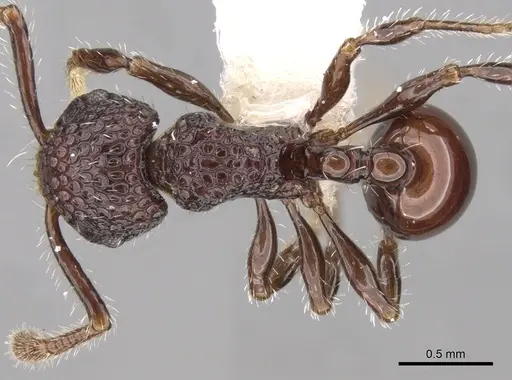
CASENT0904694
View on AntWeb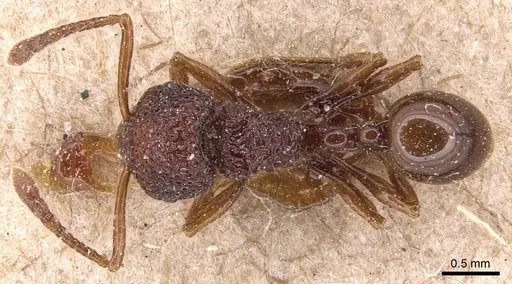
CASENT0919946
View on AntWeb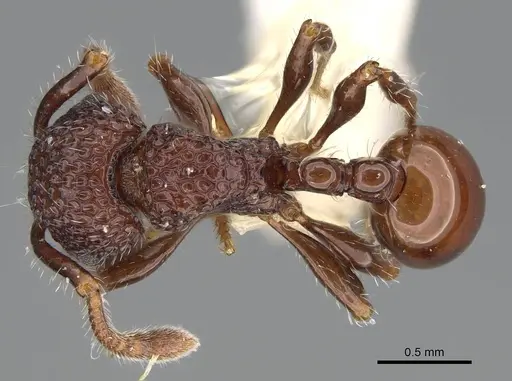
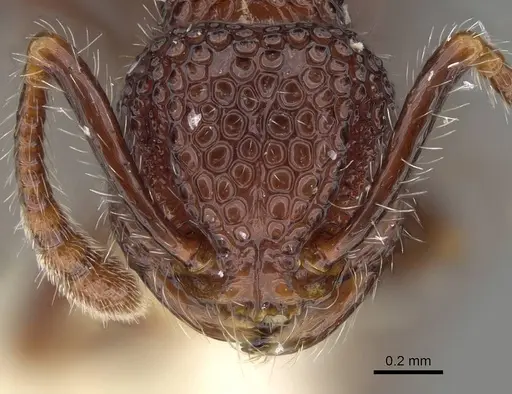
CASENT0922983
View on AntWeb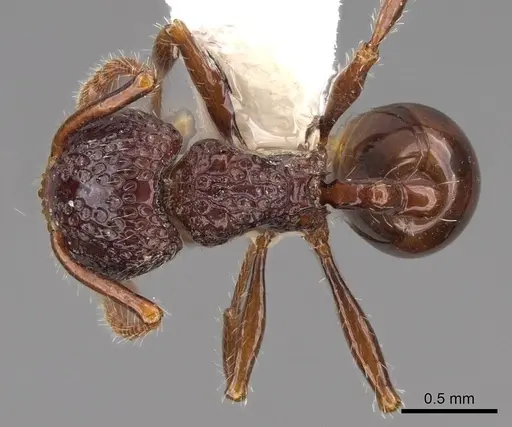
Literature
Loading...Loading products...