

Prionopelta talos
- Scientific Name
- Prionopelta talos
- Tribe
- Amblyoponini
- Subfamily
- Amblyoponinae
- Author
- Overson & Fisher, 2015
- Distribution
- Found in 1 countries
Prionopelta talos Overview
Prionopelta talos is an ant species of the genus Prionopelta. It is primarily documented in 1 countries , including Madagascar. Detailed taxonomic data and occurrence records can be further explored via authoritative databases such as AntWeb or the Global Biodiversity Information Facility (GBIF).
Prionopelta talos
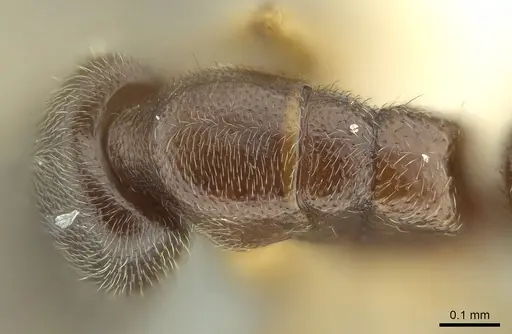
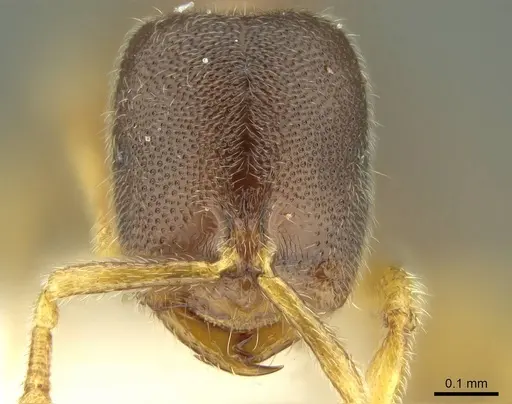
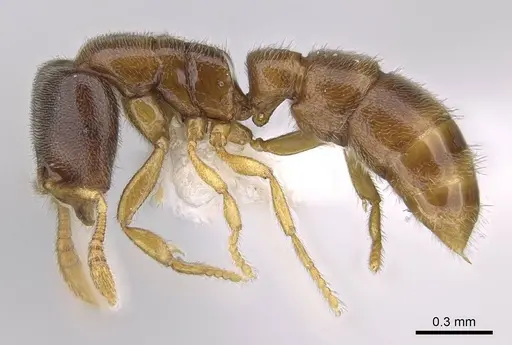
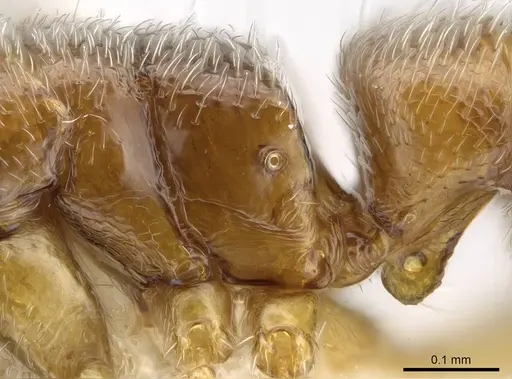
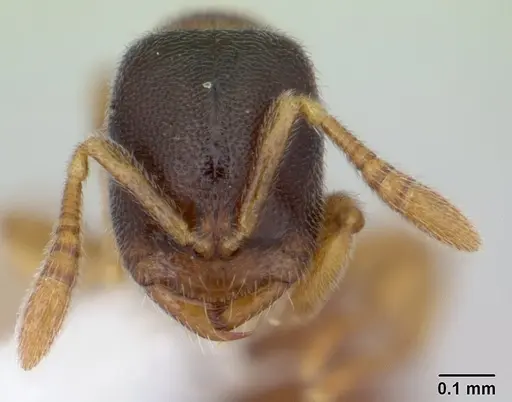
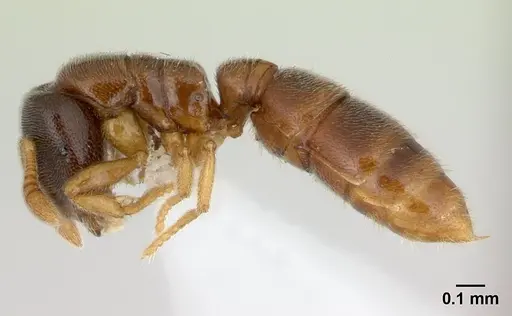
Prionopelta talos is an exceptionally rare ant species described in 2015,known only from a single location in the Anjanaharibe-Sud Reserve in northeastern Madagascar. Workers are tiny at just 0.5mm head length, with a striking tricolored appearance: a uniformly dark brown head, tan-colored mesosoma and gaster, and pale yellow legs and antennae [1]. The species is most notable for its unusually large, globular eyes that protrude from the head like a half-sphere, the largest eyes of any Malagasy Prionopelta species [1]. This ant lives in montane rainforest at 1260 meters elevation, making it a cool-climate species from Madagascar's highlands [1].
Quick Summary
- Difficulty: Expert
- Origin & Habitat: Anjanaharibe-Sud Reserve, province of Antsiranana, northeastern Madagascar. Found in montane rainforest at 1260 meters elevation, living in canopy moss and leaf litter [1].
- Colony Type: Colony structure is unconfirmed. Based on genus patterns, likely single-queen colonies.
- Size & Growth:
- Queen: Unconfirmed, no queen description available. Based on genus patterns, likely 3-4mm.
- Worker: 0.5-0.53mm head length,0.39-0.43mm head width [1].
- Colony: Unknown, only known from 7 collected specimens. Likely small colonies typical of the genus.
- Growth: Unknown, likely slow to moderate based on small worker size.
- Development: Unconfirmed. Based on typical Amblyoponinae patterns and small size, estimate 6-10 weeks at optimal temperature. (No direct development data available. Estimate based on genus-level inference.)
- Antkeeping:
- Temperature: Keep cool, around 18-22°C. The montane rainforest habitat at 1260m elevation indicates preference for cooler temperatures than typical tropical ants. Avoid overheating.
- Humidity: High humidity required, think damp forest floor. Keep substrate consistently moist but not waterlogged. Montane rainforest environments are humid year-round.
- Diapause: Unknown, no data on overwintering requirements. The high elevation location suggests some temperature seasonality, but captive diapause requirements are unconfirmed.
- Nesting: Likely prefers naturalistic setups with moist substrate. In captivity, a small test tube setup or Y-tong with tight chambers would work. Provide access to a small outworld. The tiny worker size means chambers should be appropriately scaled.
- Behavior: Behavior is unstudied in captivity. Based on genus patterns, these are likely cryptic, slow-moving ants that forage in leaf litter and soil. The large eyes suggest some visual capability, though this is unusual in Amblyoponinae. Escape risk is very high due to their minute size, excellent escape prevention is essential. Workers likely forage individually rather than in groups.
- Common Issues: tiny size means escapes are likely without fine mesh barriers, no captive husbandry information exists, this is an expert-only species, colony size unknown, may be naturally small and slow-growing, humidity requirements are critical, drying out kills colonies quickly, no information on founding behavior or queen requirements
Discovery and Rarity
Prionopelta talos was only described in 2015 by Overson and Fisher, making it one of the most recently described Malagasy ant species. It is known from just 7 collected worker specimens all from the same locality in the Anjanaharibe-Sud Reserve [1]. This extreme rarity means virtually no captive husbandry information exists. The species was named 'talos' after the living bronze statue from Greek mythology that protected Europa, a reference to the rich brown color of its shiny integument [1]. The type specimens were collected in 1994 during canopy moss and leaf litter sampling, but were only formally described over 20 years later.
Identification and Appearance
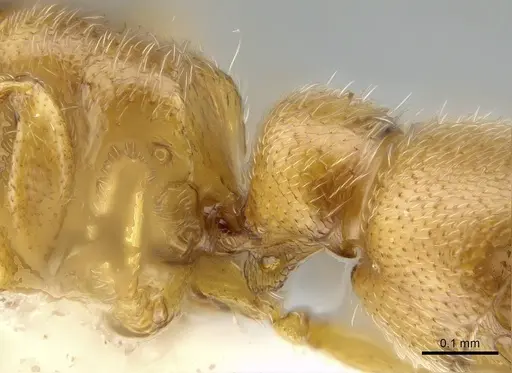
This species is unmistakable among Malagasy Prionopelta due to its striking tricolored pattern: a uniformly dark brown head, tan mesosoma and gaster, and pale yellow legs and antennae [1]. The most distinctive feature is its large, globular eyes that appear as a half-sphere protruding from the head, the largest eyes of any Malagasy Prionopelta species. Under high magnification, these eyes appear composed of several overlapping globular sections [1]. Workers measure just 0.5mm in head length, making them among the smaller Amblyoponinae. The head has characteristic foveae (pits) that become denser toward the center and often form longitudinal chains [1].
Natural Habitat
P. talos lives in montane rainforest at 1260 meters elevation in northeastern Madagascar, a cool, humid environment quite different from lowland tropical conditions [1]. The collection data indicates it was found in canopy moss and leaf litter, suggesting it forages in the forest floor layer where humidity remains high and temperatures moderate. This elevation experiences cooler temperatures than the coast, with the montane rainforest characterized by constant moisture and relatively stable temperatures year-round. The species has never been found outside this single locality.
Housing and Care
This species is recommended only for expert antkeepers with experience in difficult, data-poor species. Housing should consist of small, tight chambers scaled to their tiny worker size (under 1mm). A small test tube setup or Y-tong nest with narrow passages works well. Escape prevention must be excellent, these minute ants can squeeze through standard mesh. Keep temperatures cool (18-22°C) and humidity high (70-85%). The montane origin suggests they are sensitive to heat and drying. Provide a small, humid outworld for foraging. Feed small prey items like springtails or fruit flies. No captive breeding information exists, so be prepared for a challenging husbandry experience.
Genus Background
Prionopelta belongs to the subfamily Amblyoponinae, a group of cryptic, often subterranean ants known for their unusual morphology and behaviors. The genus contains about 20 species, all restricted to the Old World tropics and subtropics. Amblyoponinae ants are typically small, with distinctive features including specialized mouthparts and often reduced or absent eyes, making P. talos's large eyes particularly unusual. Many Amblyoponinae are predators of soil micro-arthropods, and some have unusual reproductive systems including gamergates (reproductive workers). However, Prionopelta specifically remains poorly studied.
Frequently Asked Questions
How big do Prionopelta talos colonies get?
Unknown. Only 7 workers have ever been collected. Based on related species and their tiny size, colonies are likely small, probably under 100 workers at maturity.
What do Prionopelta talos ants eat?
Unconfirmed. Based on genus patterns, they likely prey on small soil arthropods like springtails, mites, and other micro-invertebrates. Offer small live prey like springtails, fruit flies, or pinhead crickets.
Can I keep Prionopelta talos in a test tube?
Yes, a small test tube setup would be appropriate given their tiny size. Ensure the cotton is packed tightly and use fine mesh on any ventilation holes to prevent escapes.
Do Prionopelta talos ants sting?
Unknown for this specific species. Most Amblyoponinae have stingers but are too small to penetrate human skin. Handle with care regardless.
What temperature do Prionopelta talos ants need?
Keep them cool, around 18-22°C. Their montane rainforest habitat at 1260m elevation indicates preference for cooler conditions than typical tropical ants.
Are Prionopelta talos good for beginners?
No. This is an expert-only species with no captive husbandry information available. Only experienced antkeepers should attempt this species.
How long does it take for Prionopelta talos to develop from egg to worker?
Unconfirmed. Based on typical Amblyoponinae patterns and their very small size, estimate 6-10 weeks at optimal temperature.
Do Prionopelta talos queens need to forage during founding?
Unknown. Likely claustral (queen seals herself in and lives off stored fat) based on typical Amblyoponinae behavior, but this has not been directly studied for this species.
Where is Prionopelta talos found in the wild?
Only from the Anjanaharibe-Sud Reserve in northeastern Madagascar, at 1260 meters elevation in montane rainforest. It has never been found anywhere else.
Why are Prionopelta talos ants so rare?
This species is known from only 7 collected specimens from a single locality. The montane rainforest habitat is remote and difficult to sample, and the species may naturally have a restricted range and small population size.
References

This caresheet is licensed under CC BY-SA 4.0 .
CASENT0009472
View on AntWeb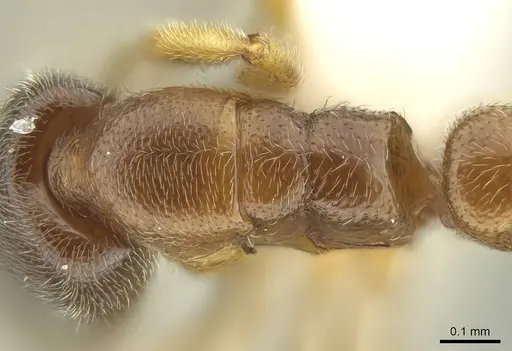
CASENT0009473
View on AntWeb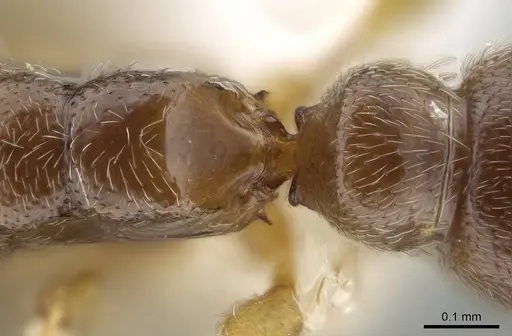
CASENT0191885
View on AntWeb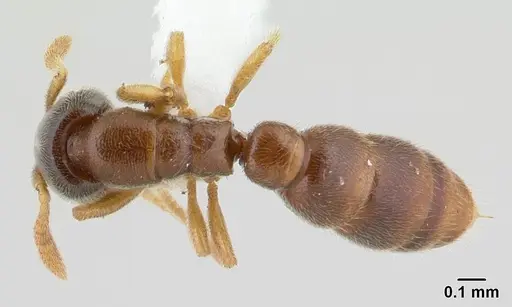
CASENT0339229
View on AntWeb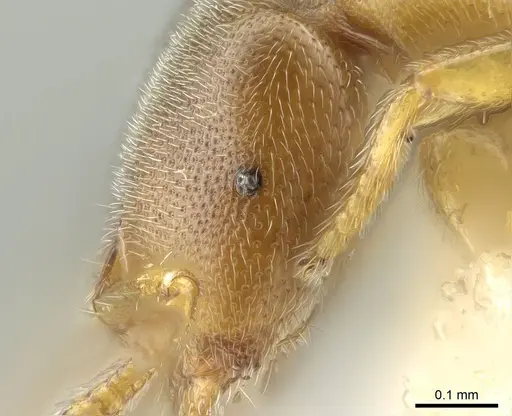
Literature
Loading...Loading products...