

Prionopelta robynmae
- Scientific Name
- Prionopelta robynmae
- Tribe
- Amblyoponini
- Subfamily
- Amblyoponinae
- Author
- Shattuck, 2008
- Distribution
- Found in 2 countries
Prionopelta robynmae Overview
Prionopelta robynmae is an ant species of the genus Prionopelta. It is primarily documented in 2 countries , including Australia, Papua New Guinea. Detailed taxonomic data and occurrence records can be further explored via authoritative databases such as AntWeb or the Global Biodiversity Information Facility (GBIF).
Prionopelta robynmae
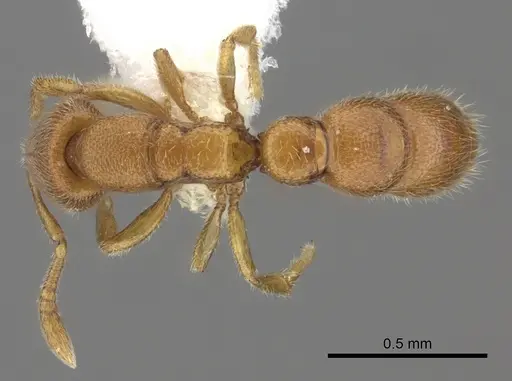
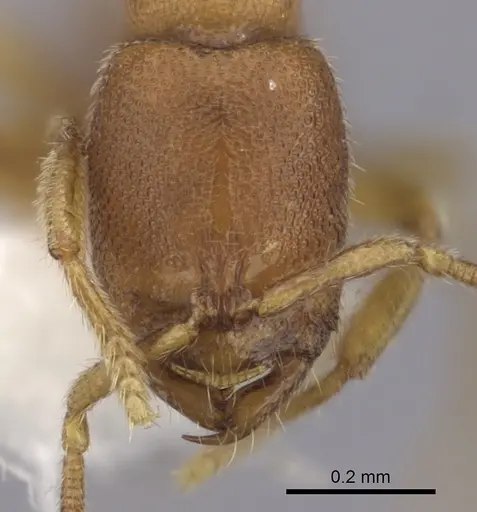
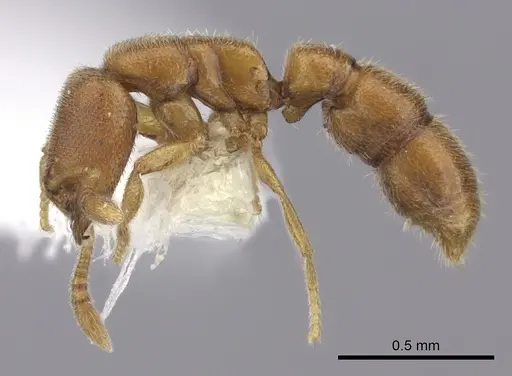
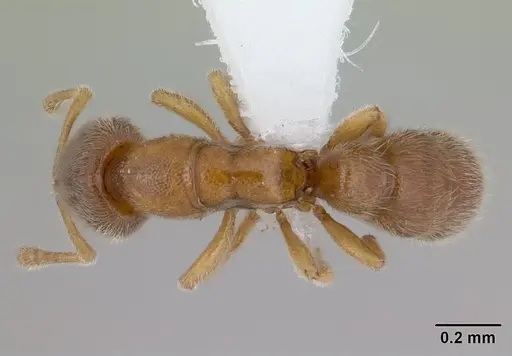
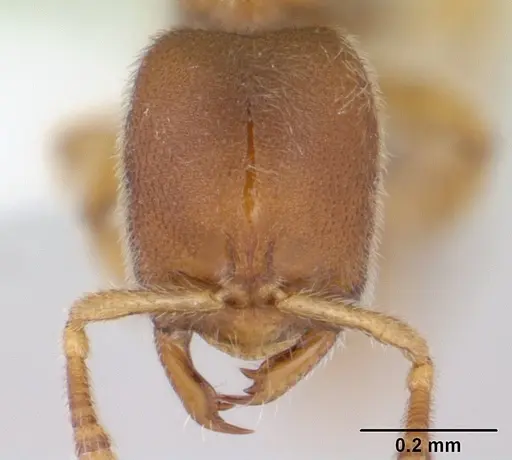
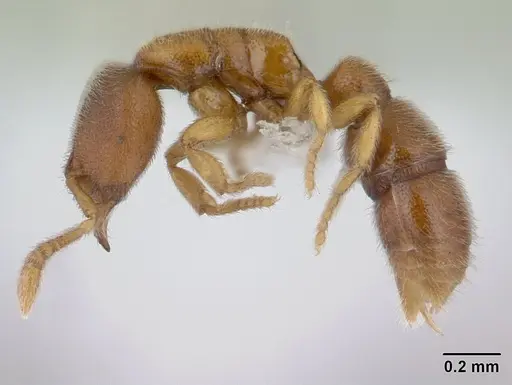
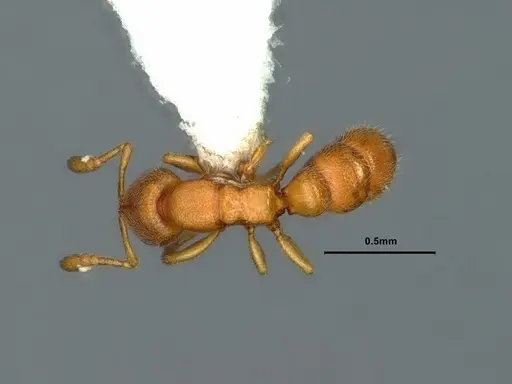
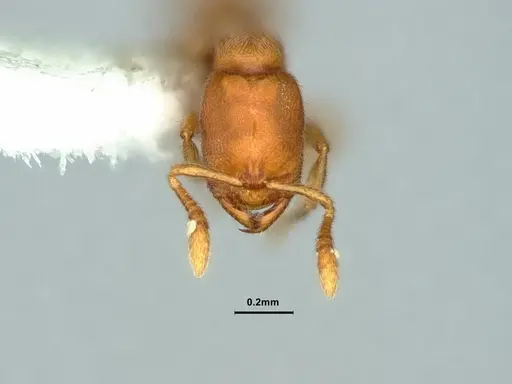
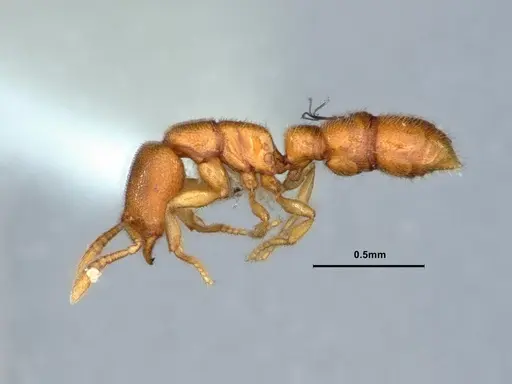
Prionopelta robynmae is a tiny ant species native to Australia and New Guinea, belonging to the Amblyoponinae subfamily. Workers are among the smallest ants you'll encounter, with head widths under 0.48mm and body lengths around 0.5-0.7mm [1]. They have a distinctive pale yellow to yellow-red coloration, with queens being slightly darker. Their most识别特征 is the broad petiolar node and the unique pattern of foveae (small pits) on their body, the pronotum has closely spaced foveae that contrast sharply with the widely spaced ones on the mesonotum and propodeum [1].
This species stands out as exceptionally widespread for a Prionopelta, occurring from Papua New Guinea in the north all the way to Victoria and Western Australia in the south [1]. They show considerable ecological flexibility, being found in rainforests, open forests, paperbark swamps, and Picabean palm forests [1]. Like other Amblyoponinae ants, they are likely predatory, hunting small prey in the leaf litter layer.
Quick Summary
- Difficulty: Medium
- Origin & Habitat: Native to Australia and New Guinea in the Australasian region. Found across a wide geographic range from PNG north to Victoria and Western Australia south. Inhabits various forested habitats including rainforests, open forests, paperbark swamps, and Picabean palm forests. Foraging occurs in leaf litter while nests are located in soil under objects, between rock slices, and in rotten wood [1][2].
- Colony Type: Colony structure is not well documented in scientific literature. Based on related Prionopelta species, likely forms small colonies with single queens (monogyne). The genus Prionopelta is not known for having ergatoid replacement reproductives like some Amblyoponinae.
- Size & Growth:
- Queen: Queens are slightly larger than workers, generally darker in color. Specific measurements not documented in available literature [1].
- Worker: Workers measure 0.46-0.63mm head length,0.35-0.47mm head width, making them very small ants [1].
- Colony: Exact colony size is not documented. Based on related species and their small worker size, colonies likely reach several hundred workers at most.
- Growth: Growth rate is unconfirmed. Amblyoponinae typically develop faster than larger ants, but specific timelines for P. robynmae are unknown.
- Development: Unconfirmed. Based on typical Amblyoponinae patterns and small colony sizes, estimate 4-8 weeks at optimal temperature. This is a rough estimate only. (No specific development data exists for this species. Related Prionopelta species suggest relatively fast development compared to larger ants, but exact timelines are unknown.)
- Antkeeping:
- Temperature: Keep at room temperature, roughly 20-25°C. This species occurs across varied Australian climates from tropical Queensland to temperate Victoria, suggesting it can adapt to typical indoor temperatures. Provide a gentle temperature gradient if possible.
- Humidity: Maintain moderate to high humidity. In nature, they inhabit forest floor environments with leaf litter, suggesting they prefer damp conditions. Keep the nest substrate consistently moist but not waterlogged. Provide some drier areas within the setup for the ants to self-regulate.
- Diapause: Likely requires a winter rest period given the temperate to subtropical distribution across Australia. Based on related Australian Amblyoponinae, expect reduced activity during Australian winter months (June-August). Reduce temperature to around 15-18°C during this period.
- Nesting: Provide a naturalistic setup with access to soil or moist substrate. They nest in soil under objects, between rock slices, and in rotten wood in the wild [1]. A Y-tong or plaster nest with moist chambers works well. Given their tiny size, ensure chambers are appropriately scaled.
- Behavior: This is a cryptic leaf-litter ant that forages in the forest floor layer. Workers are small and likely slow-moving as they search for prey. Temperament is not well documented, but Amblyoponinae ants are typically not aggressive and rely on stealth rather than confrontation. Escape prevention is critical due to their very small size, they can squeeze through the tiniest gaps. They are likely nocturnal or crepuscular foragers based on typical genus behavior.
- Common Issues: escape prevention is critical due to their very small size, they can slip through standard test tube barriers, humidity management is tricky, they need damp conditions but mold can quickly become a problem in enclosed nests, slow colony growth can frustrate beginners who may overfeed or disturb the colony, wild-caught colonies may have parasites that are difficult to detect and treat, their tiny size makes them difficult to observe and easy to accidentally damage during nest maintenance
Housing and Nest Setup
Prionopelta robynmae requires careful housing due to its tiny size. A Y-tong (acrylic) nest or plaster nest with small, appropriately-scaled chambers works best. The chambers should be tight enough that the ants feel secure but large enough for them to move freely. Given their natural nesting in soil under objects and in rotten wood, provide a moist substrate that mimics forest floor conditions [1]. A test tube setup can work for founding colonies, but ensure the cotton barrier is packed tightly, these tiny ants will escape through gaps that larger species cannot. For outworld space, keep it minimal and simple. These are cryptic ants that don't need much foraging area.
Feeding and Diet
Like other Amblyoponinae ants, P. robynmae is likely predatory, feeding on small soft-bodied invertebrates in the wild [2]. In captivity, offer small live prey such as springtails, fruit flies, and other micro-arthropods. They probably accept protein sources readily but may be slow to discover food due to their cryptic foraging behavior. Sugar acceptance is uncertain, some Amblyoponinae take honeydew or sugar water, while others are strictly predatory. Offer occasional sugar water or honey but don't rely on it as a primary food source. Feed small amounts every 2-3 days and remove uneaten prey promptly to prevent mold.
Temperature and Seasonal Care
This species occurs across a wide climatic range in Australia, from tropical Queensland to temperate Victoria, suggesting adaptability to typical room temperatures [1]. Aim for 20-25°C as a starting point. They likely benefit from a winter rest period given their distribution extends to southern temperate regions. During Australian winter (June-August), reduce temperatures to around 15-18°C and reduce feeding frequency. This mimics the natural seasonal slowdown they would experience in the wild. Monitor colony activity levels, if workers become sluggish and cluster together, the colony is entering dormancy.
Handling and Observation
Observing Prionopelta robynmae requires patience and good lighting. These are tiny ants that spend much of their time in the nest or moving slowly through leaf litter. Their small size means you'll need good magnification to see key identifying features like the foveae pattern on their body. When maintaining the colony, minimize disturbances, these ants are not aggressive and will likely retreat rather than defend. Because they are so small, any gap in your setup is a potential escape route. Double-check all connections and use fine mesh barriers. Regular but gentle observation will help you understand their activity patterns and catch problems early. [1]
Frequently Asked Questions
How long does it take for Prionopelta robynmae to produce first workers?
The exact timeline is unconfirmed, but based on typical Amblyoponinae development patterns, expect 4-8 weeks from egg to first worker at optimal temperature (around 22-25°C). This is only an estimate, no specific development data exists for this species.
Can I keep Prionopelta robynmae in a test tube?
Yes, test tubes work for founding colonies, but you must use excellent escape prevention. Pack the cotton barrier very tightly and consider adding a fluon barrier at the tube opening. Their tiny size means they can escape through gaps that larger ants cannot.
What do Prionopelta robynmae ants eat?
They are likely predatory, feeding on small soft-bodied invertebrates. Offer live springtails, fruit flies, and other micro-arthropods. Sugar acceptance is uncertain, some Amblyoponinae take honey or sugar water occasionally, but protein should be the primary food source.
Do Prionopelta robynmae ants sting?
They are too small to effectively sting humans. Their stingers cannot penetrate human skin. However, they may bite if handled roughly, though this is not their typical defensive response.
Are Prionopelta robynmae good for beginners?
They are rated as medium difficulty. Their tiny size makes escape prevention challenging, and their slow growth can be frustrating. They require more careful attention to humidity and setup than larger, more forgiving species.
Do Prionopelta robynmae need hibernation?
Based on their distribution across temperate regions of Australia, they likely benefit from a winter rest period. Reduce temperatures to 15-18°C during Australian winter months (June-August) and reduce feeding frequency.
How big do Prionopelta robynmae colonies get?
Colony size is not well documented, but based on related species and their tiny worker size, colonies likely reach several hundred workers at most. They are not known for reaching the massive colony sizes of some other ant genera.
Why are my Prionopelta robynmae escaping?
Their tiny size means they can slip through the smallest gaps. Check all connections, use tightly packed cotton in test tubes, and apply fluon barriers to any potential escape points. Even standard ant keeping setups often have gaps too small for larger ants but perfect for these tiny ants.
References

This caresheet is licensed under CC BY-SA 4.0 .
Literature
Loading...Loading products...