

Prenolepis lakekamu
- Scientific Name
- Prenolepis lakekamu
- Tribe
- Lasiini
- Subfamily
- Formicinae
- Author
- Williams & LaPolla, 2018
- Distribution
- Found in 1 countries
Prenolepis lakekamu Overview
Prenolepis lakekamu is an ant species of the genus Prenolepis. It is primarily documented in 1 countries , including Papua New Guinea. Detailed taxonomic data and occurrence records can be further explored via authoritative databases such as AntWeb or the Global Biodiversity Information Facility (GBIF).
Prenolepis lakekamu
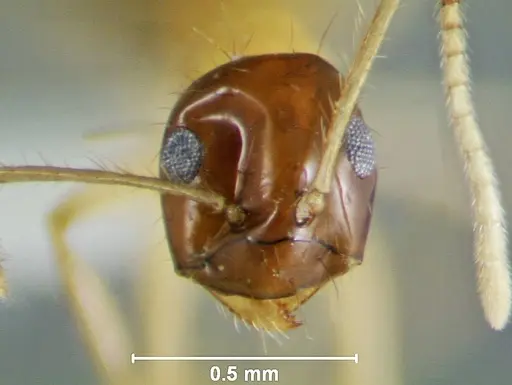
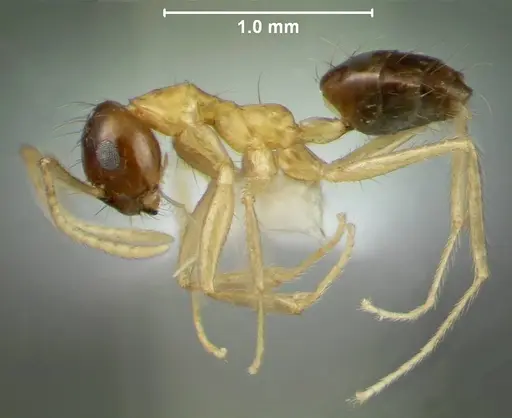
Prenolepis lakekamu is a tiny, recently described ant species from Papua New Guinea. Workers measure just 2.38-2.45mm, making them one of the smaller ant species in the hobby. They have a striking two-tone color pattern: a yellow mesosoma (middle body section), legs, and antennae contrasting with a medium to dark brown head and gaster (abdomen). Their entire cuticle is smooth and shiny, and they sport very long, erect hairs (macrosetae) across their head, body, and abdomen. This species was only described in 2018 and represents the first Prenolepis species documented east of Wallace's Line, a major biogeographic boundary separating Asian and Australian fauna. The species name comes from the Lakekamu Basin in Papua New Guinea where they were discovered.
Quick Summary
- Difficulty: Unknown, newly described species with no captive husbandry data
- Origin & Habitat: Papua New Guinea, Gulf Province, Lakekamu Basin at 120m elevation. Found in lowland tropical rainforest [1].
- Colony Type: Unknown, colony structure has not been documented for this species. Most Prenolepis species are single-queen (monogyne) colonies, but this has not been confirmed for P. lakekamu.
- Size & Growth:
- Queen: Unknown, queen has not been described [1]
- Worker: 2.38-2.45mm [1]
- Colony: Unknown, no colony size data exists
- Growth: Unknown, no development data exists for this species
- Development: Unknown, no development timeline has been documented (No published data exists. Related Prenolepis species typically develop from egg to worker in 6-10 weeks at optimal temperatures, but this is an estimate only.)
- Antkeeping:
- Temperature: Likely 24-28°C based on being a lowland tropical species from Papua New Guinea. Provide a gentle gradient and monitor colony activity.
- Humidity: Likely requires moderate to high humidity (60-80%) typical of tropical forest floor species. Keep substrate consistently moist but not waterlogged.
- Diapause: Unknown, no seasonal data exists. Lowland tropical species may not require formal hibernation, but may show reduced activity during cooler periods.
- Nesting: No specific nesting data exists. Based on related species, they likely prefer humid, enclosed spaces. A test tube setup or acrylic nest with moisture reservoir would be appropriate starting points.
- Behavior: Behavior has not been documented. Based on genus patterns, they are likely docile and not aggressive. Their very small size (under 3mm) means escape prevention is critical, they can squeeze through standard mesh. They likely prefer sugar sources (honeydew, nectar) but may accept small protein prey.
- Common Issues: this is a newly described species with no captive husbandry data, expect a learning curve, their tiny size makes escape likely without fine mesh barriers, no development timeline means slow growth may be normal or indicate problems, humidity requirements are inferred, not confirmed, monitor for desiccation, no colony structure data means queen number and behavior are unknown
Species Discovery and Identification
Prenolepis lakekamu was only described in 2018 by Jason Williams and John LaPolla, making it one of the newest species in the antkeeping hobby. It was discovered in the Lakekamu Basin of Papua New Guinea's Gulf Province at an elevation of 120 meters. This discovery was significant because it represents the first Prenolepis species ever recorded east of Wallace's Line, the major biogeographic boundary separating Asian fauna from Australian fauna. The species was identified from just two worker specimens collected in 1999,showing how little we know about ant biodiversity in this region. The workers have a distinctive appearance with their yellow mesosoma contrasting against dark brown head and gaster, along with very long erect hairs covering their body. [1]
Appearance and Size
This is a tiny ant species, workers measure only 2.38-2.45mm in total length. They have a distinctive two-tone color pattern: the mesosoma (middle body section), legs, and antennae are yellow, while the head and gaster (abdomen) are medium to dark brown. Their entire cuticle is smooth and shiny, and they sport very long, erect macrosetae (bristle-like hairs) on the head, mesosoma, and gaster. The scapes (antenna segments) and legs also have abundant suberect to erect setae. In profile, their mesosoma appears gracile (slender), and the propodeum (the section behind the mesosoma) has a distinctive flattened, elongated profile. The petiole (waist) is low-profile with a unique shape featuring a right angle at the anterodorsal point. [1]
Known Distribution
Prenolepis lakekamu is currently known only from its type locality in the Lakekamu Basin, Gulf Province, Papua New Guinea. This is a lowland tropical location at approximately 120 meters elevation. The species most closely resembles three other Prenolepis species found across maritime Indomalaya (Prenolepis jacobsoni, P. jerdoni, and P. subopaca), but P. lakekamu is the only member of this group found east of Wallace's Line. This suggests either recent dispersal to the region or that additional undiscovered populations may exist in surrounding areas. The fact that only two specimens have been documented despite the species being described in 2018 indicates this ant is either rare, difficult to collect, or both. [1]
Keeping an Undescribed Species
Prenolepis lakekamu presents a unique challenge: it is a newly described species with absolutely no published biological data or captive husbandry experience. This means you will be essentially pioneering the husbandry of this species. Start with conservative, standard antkeeping practices. Use a test tube setup with a water reservoir for humidity, as this works well for most small tropical ants. For temperature, aim for 24-28°C, which matches their lowland tropical origin in Papua New Guinea. For feeding, offer sugar water or honey as a primary energy source, along with small protein sources like fruit flies or tiny prey items. Monitor your colony closely, what works for other Prenolepis species will likely work here, but be prepared to adjust based on their behavior. The lack of data also means problems may be difficult to diagnose, so keeping detailed notes on your observations will be valuable for the antkeeping community. [1]
Related Species and What We Can Infer
While P. lakekamu itself has no documented biology, we can make educated guesses based on its genus and related species. The genus Prenolepis contains about 20 described species, many of which are known to be generalist foragers with a preference for sugar sources. Prenolepis species are typically docile and form moderate-sized colonies. Most Prenolepis species studied have claustral founding, where the queen seals herself in a chamber and raises her first workers entirely on stored body fat without foraging. They are not known to be aggressive or to have painful stings. The lowland tropical preference of related species suggests P. lakekamu needs warm, humid conditions year-round without hibernation. However, these are inferences only, your observations will be genuinely new data for science. [1]
Frequently Asked Questions
How long does it take for Prenolepis lakekamu to produce first workers?
This is unknown, no development timeline has been documented for this species. Based on related Prenolepis species, expect 6-10 weeks from egg to worker at optimal temperature, but this is only an estimate.
What do Prenolepis lakekamu ants eat?
Feeding behavior has not been documented for this species. Based on related Prenolepis species, they likely prefer sugar sources (honeydew, nectar, sugar water) and will accept small protein prey. Start with honey/sugar water and small live prey like fruit flies.
Are Prenolepis lakekamu good for beginners?
No, this is not a recommended species for beginners. It was only described in 2018 and has no captive husbandry data. Keeping newly described species requires the ability to adapt care based on observation rather than established protocols.
What temperature do Prenolepis lakekamu need?
Temperature requirements are unconfirmed. Based on their origin as a lowland tropical species from Papua New Guinea, aim for 24-28°C. Provide a temperature gradient so the ants can choose their preferred zone.
Do Prenolepis lakekamu need hibernation?
Diapause requirements are unknown. As a lowland tropical species from near the equator, they likely do not require formal hibernation. They may show reduced activity during cooler periods.
How big do Prenolepis lakekamu colonies get?
Maximum colony size is unknown, no colony size data has been documented. Most Prenolepis species form moderate colonies, but we have no specific numbers for P. lakekamu.
Can I keep multiple Prenolepis lakekamu queens together?
Colony structure is unconfirmed. We do not know if this species is single-queen (monogyne) or multi-queen (polygyne). Until more is known, it is safest to keep one queen per setup.
What is the best nest type for Prenolepis lakekamu?
No specific nesting data exists. For their small size and likely humidity needs, a test tube setup or small acrylic nest with a moisture reservoir would be appropriate. Avoid dry, airy setups.
Why is my Prenolepis lakekamu colony not growing?
Without established benchmarks, slow growth may be normal or indicate problems. Ensure proper humidity, temperature in the 24-28°C range, and offer varied food. Their tiny size and the lack of known requirements make diagnosis difficult.
References

This caresheet is licensed under CC BY-SA 4.0 .
USNMENT01126705
View on AntWeb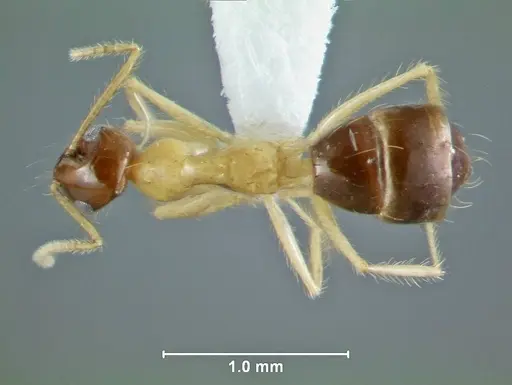
Literature
Loading...Loading products...