

Poneracantha lineolata
- Scientific Name
- Poneracantha lineolata
- Tribe
- Ectatommini
- Subfamily
- Ectatomminae
- Author
- Brown, 1993
- Distribution
- Found in 1 countries
Poneracantha lineolata Overview
Poneracantha lineolata is an ant species of the genus Poneracantha. It is primarily documented in 1 countries , including Dominican Republic. Detailed taxonomic data and occurrence records can be further explored via authoritative databases such as AntWeb or the Global Biodiversity Information Facility (GBIF).
Poneracantha lineolata
Poneracantha lineolata is a medium-small predatory ant endemic to the Dominican Republic on the island of Hispaniola. Workers measure 5.2-5.8mm in total length with a distinctive striate (fine longitudinal line) body sculpture and triangular mandibles bearing small teeth [1]. The head is roughly square in frontal view, and the body ranges from brownish black to yellowish brown in color. This species belongs to the rastrata complex within the Ectatommini tribe and represents a relatively primitive member of its group in the New World. Found at elevations between 845-1,090 meters, these ants inhabit various forest types in the Dominican highlands and nest opportunistically under stones, in downed wood, and under epiphytes.
Quick Summary
- Difficulty: Medium
- Origin & Habitat: Endemic to the Dominican Republic (Hispaniola), specifically found in La Vega and Duarte provinces at elevations of 845-1,090m [2][3]. The species inhabits broad-leaf valley forest with pine, degraded forest remnants, and various forest types in the Dominican highlands [1]. They prefer mesophilic sites, moderately damp, shaded forest environments.
- Colony Type: Colony structure is unconfirmed. No data exists on whether this species is single-queen (monogyne) or multi-queen (polygyne).
- Size & Growth:
- Queen: Undocumented, no queen measurements have been published
- Worker: 5.2-5.8mm total length, head width ~1.2mm, Weber's length ~1.6mm [1]
- Colony: Unknown, no colony size data available
- Growth: Unknown, no development timing data available
- Development: Unconfirmed, no direct data. Based on related Ectatommini species, expect 6-10 weeks at optimal temperature. (Development timeline has not been directly studied. Related Ectatommini ants typically take 6-10 weeks from egg to first worker.)
- Antkeeping:
- Temperature: Based on their highland Dominican Republic habitat (845-1,090m elevation), they likely prefer moderate temperatures. Start around 20-24°C and monitor colony activity. Avoid overheating.
- Humidity: Based on mesophilic forest habitat, they need moderate to high humidity. Keep nest substrate consistently moist but not waterlogged. Provide a humidity gradient so ants can self-regulate.
- Diapause: Unknown, no data on overwintering requirements. The Dominican Republic has a mild climate, so true hibernation may not be necessary, but a slight cool period during winter months may be beneficial.
- Nesting: In captivity, provide a naturalistic setup with multiple nesting options. They naturally nest under stones, in rotting wood, and under epiphytes. A Y-tong or plaster nest with moist substrate works well. Provide damp soil/peat as nesting material and ensure dark, quiet conditions.
- Behavior: This is a predatory ant species that hunts small invertebrates. Workers are moderately active foragers, with specimens collected from leaf litter and along forest trails. They are not known to be particularly aggressive but will defend the nest. Escape prevention should be moderate, workers are a manageable size and not particularly fast. They may form moderate-sized colonies over time.
- Common Issues: lack of published care information makes reliable husbandry guidelines difficult, humidity control is critical, too dry and brood will desicate, too wet and mold becomes a problem, predatory diet requirements may be challenging, need constant supply of small live prey, wild-caught colonies may have parasites that are difficult to treat, limited availability in the antkeeping hobby means few experienced keepers to learn from
Natural History and Distribution
Poneracantha lineolata is a rare endemic species known only from the Dominican Republic on the island of Hispaniola. The original type specimens were collected from La Cienaga in Parque Nacional La Vega at approximately 1100 meters elevation, in a broad-leaf valley forest with some pine [1]. Additional specimens have been found at elevations between 845-1,090m across various forest types including degraded forest remnants [2][3]. The species was originally described by Bill Brown in 1993 as Poneracantha lineolata before being moved to the genus Poneracantha in 2022 following phylogenetic research. This ant is considered a relatively primitive species within both the Hispaniolan and overall New World congeners, belonging to the rastrata species group.
Identification and Morphology
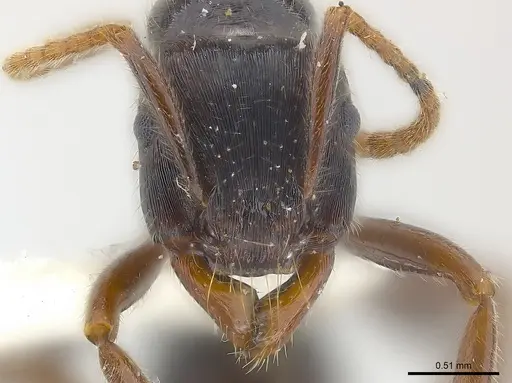
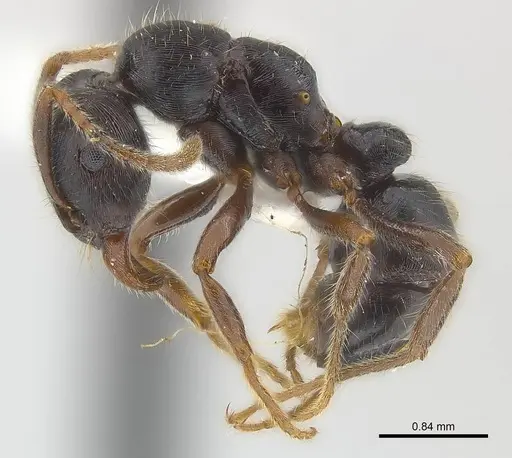
Workers of Poneracantha lineolata are medium-small ants measuring 5.2-5.8mm in total length with a head width of approximately 1.2mm and Weber's length around 1.6mm [1]. The head is subquadrate (roughly square) in frontal view with sides that are subparallel and weakly convex. The eyes are fairly large, situated distinctly behind the mid-length of the head. The mandibles are triangular with a basal margin that meets the apical margin at an obtuse angle, and they possess a short series of spaced, uneven, low teeth along the masticatory margin. The body is covered with fine, regular, longitudinal striation (about 30-33 costulae between the frontal carinae), giving the ant a moderately shining appearance. The propodeum (the rear portion of the thorax) lacks distinct teeth or denticles. The scapes (the first segments of the antennae) surpass the vertexal margin by about their apical thickness and are smooth and shining. Color ranges from brownish black to yellowish brown, with lighter specimens often having darker dorsal coloration.
Nest Preferences and Housing
In the wild, Poneracantha lineolata nests have been found under large stones in soil, in downed rotting wood, and under epiphytes (plants growing on other plants) [1]. This suggests they prefer mesophilic sites, moderately damp, shaded locations, and opportunistically nest in and under various objects. For captive care, provide a naturalistic setup with multiple nesting options. A Y-tong (acrylic) nest or plaster nest with chambers filled with damp peat or soil works well. The nest should be kept consistently moist but never waterlogged. Provide a dark, quiet location as these ants prefer dim conditions. Include a foraging area with access to small live prey. Since this is a relatively rare species in the hobby with limited documented care information, providing a humidity gradient allows the ants to self-regulate their conditions.
Feeding and Diet
As a member of the Ectatommini tribe, Poneracantha lineolata is predatory on small invertebrates. The original species description by Brown (1993) notes that related Gnamptogenys species are known to prey on millipedes, suggesting this species likely has similar predatory habits. In captivity, offer small live prey such as fruit flies (Drosophila), springtails, tiny crickets, and other small arthropods. Feed protein-rich prey 2-3 times per week, removing any uneaten prey after 24 hours. Sugar sources like honey water or sugar water may be accepted occasionally, but protein prey should form the primary diet. Always ensure fresh water is available. [1]
Temperature and Seasonal Care
Based on their highland Dominican Republic habitat at elevations of 845-1,090m, Poneracantha lineolata likely prefers moderate temperatures rather than tropical heat. Aim for a temperature range of 20-24°C in the nest area. Avoid temperatures above 28°C as this could stress the colony. A slight temperature gradient allows ants to regulate their own conditions. Since the Dominican Republic has a relatively mild climate year-round, true hibernation may not be necessary, but a slight reduction in temperature during winter months (perhaps to 16-18°C for 2-3 months) may help simulate natural seasonal cycles. Monitor colony activity, if workers become lethargic or cluster tightly together, they may be too cool, if they avoid the heated portion of the nest, it's too warm. [2][3]
Frequently Asked Questions
How long does it take for Poneracantha lineolata to go from egg to worker?
The development timeline has not been directly studied for this species. Based on related Ectatommini ants, expect approximately 6-10 weeks from egg to first worker at optimal temperature (around 22°C).
What do Poneracantha lineolata ants eat?
They are predatory ants that hunt small invertebrates. Feed small live prey such as fruit flies, springtails, and tiny crickets. Protein-rich prey should be offered 2-3 times weekly. Sugar water or honey water may be occasionally accepted.
Are Poneracantha lineolata ants good for beginners?
This species is not recommended for beginners. Limited published care information exists, and their predatory diet requires a constant supply of small live prey. They are also quite rare in the antkeeping hobby.
Do Poneracantha lineolata ants need hibernation?
True hibernation may not be necessary given the mild Dominican Republic climate, but a slight cool period (16-18°C) during winter months for 2-3 months may be beneficial.
What size colony do Poneracantha lineolata colonies reach?
Colony size data is not available in the scientific literature. Based on related species, colonies likely reach several hundred workers over several years.
What nest type is best for Poneracantha lineolata?
A naturalistic setup with a Y-tong or plaster nest containing damp peat or soil works well. They naturally nest under stones and in rotting wood, so provide dark, moist nesting chambers.
Do Poneracantha lineolata ants sting?
As a member of the Ectatommini subfamily, they possess a stinger. However, given their small size (5.2-5.8mm), any sting is likely to be very mild and barely perceptible to humans.
Can I keep multiple queens together?
Colony structure (monogyne vs polygyne) has not been documented for this species. Until more information is available, it is not recommended to house multiple unrelated queens together.
What temperature should I keep Poneracantha lineolata at?
Keep nest temperatures around 20-24°C. Based on their highland Dominican habitat, they prefer moderate temperatures rather than tropical heat. Avoid temperatures above 28°C.
References

This caresheet is licensed under CC BY-SA 4.0 .
CASENT0179965
View on AntWeb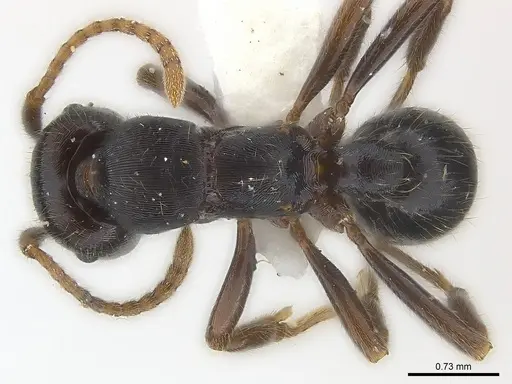
Literature
Loading...Loading products...