

Ponera xenagos
- Scientific Name
- Ponera xenagos
- Tribe
- Ponerini
- Subfamily
- Ponerinae
- Author
- Wilson, 1957
- Distribution
- Found in 1 countries
Ponera xenagos Overview
Ponera xenagos is an ant species of the genus Ponera. It is primarily documented in 1 countries , including Papua New Guinea. Detailed taxonomic data and occurrence records can be further explored via authoritative databases such as AntWeb or the Global Biodiversity Information Facility (GBIF).
Ponera xenagos
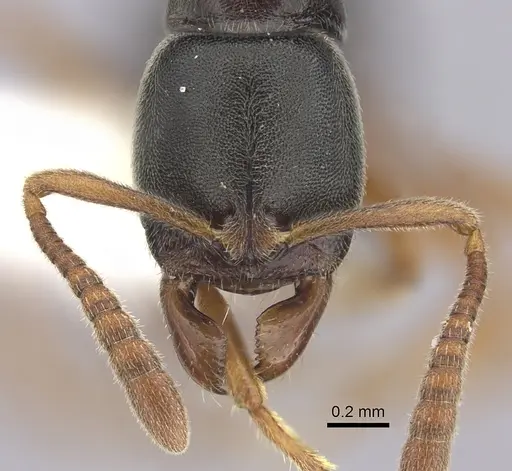
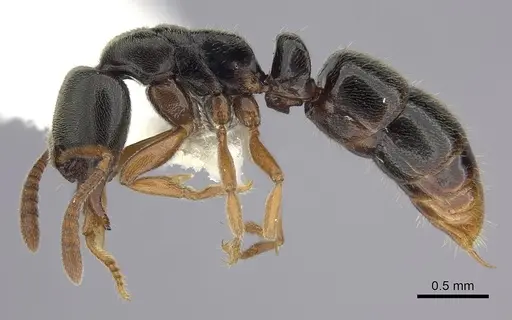
Ponera xenagos is a relatively large species of predatory ant native to New Guinea, specifically the Huon Peninsula and Eastern Highlands regions. Workers measure 0.65-0.73mm in head width, making them one of the largest Ponera species alongside P. alpha. They have a relatively broad head, small eyes with only 4-5 indistinct facets, and lack a differentiated antennal club. The scapes extend past the occipital border by about half their thickness. These ants inhabit dense midmountain rainforests at elevations of 1300-1500m, nesting under loose bark on rotting stumps or on the upper surfaces of large rotting logs. The larvae possess 3 pairs of dorsal abdominal glutinous tubercles, and worker pupae develop inside cocoons.
Quick Summary
- Difficulty: Unknown, limited data available
- Origin & Habitat: New Guinea (Huon Peninsula, Eastern Highlands), dense midmountain rainforest at 1300-1500m elevation, nesting in rotting wood debris [1][2]
- Colony Type: Colony structure unconfirmed, likely small, single-queen colonies typical of the genus
- Size & Growth:
- Queen: Undocumented, estimated 5-7mm based on large worker size
- Worker: 0.65-0.73mm head width,0.75-0.80mm head length [2]
- Colony: Unknown, likely small (under 100 workers) based on typical Ponera patterns
- Growth: Unknown, likely slow to moderate
- Development: Unconfirmed, estimated 6-10 weeks based on related Ponera species (Worker pupae are enclosed in cocoons, which may extend development time slightly [2])
- Antkeeping:
- Temperature: Unconfirmed, likely 22-26°C based on tropical mountain habitat. Start in this range and observe colony activity.
- Humidity: Unconfirmed, likely 70-85% based on rainforest nesting in rotting wood. Keep substrate consistently moist.
- Diapause: Unknown for this species, tropical elevation may reduce or eliminate diapause needs
- Nesting: Natural nesting: rotting wood debris, under loose bark. In captivity: Y-tong or plaster nests with moist substrate, small chambers scaled to their size. Provide rotting wood pieces or cork bark for natural feel.
- Behavior: Predatory, like other Ponera species. Likely slow-moving, cryptic foragers that hunt small invertebrates. Small eyes suggest limited visual orientation. Escape risk moderate, small but not tiny ants, use standard barrier methods. Temperament unknown but Ponera generally are not aggressive toward keepers.
- Common Issues: limited data makes care recommendations uncertain, observe colony closely, humidity control is critical, rotting wood habitat requires consistent moisture without flooding, predatory diet means live prey is essential, may not accept commercial ant foods, cocoon-bound pupae need stable conditions and may be sensitive to disturbance, wild-caught colonies may have parasites or fail to adapt to captive conditions
Natural History and Distribution
Ponera xenagos is endemic to New Guinea, specifically the northeastern regions including the Huon Peninsula and Eastern Highlands. The species was first described by Wilson in 1957 from specimens collected at Tumnang (1500m elevation) and Ebaabang (1300-1400m) in the Mongi River Watershed. These ants inhabit dense midmountain rainforests, typically found in partial clearings beside native trails. Nests are located under loose bark on rotting stumps or on the upper surfaces of large rotting logs. The Aiyura samples collected by Taylor came from disturbed midmountain forest, also nesting in rotting logs. This species appears to prefer humid, shaded microhabitats in tropical mountain environments. [1][2]
Morphology and Identification
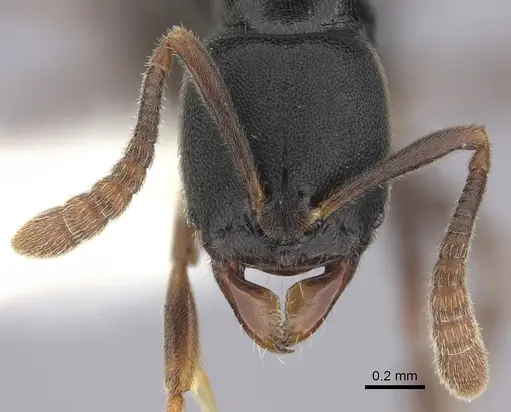
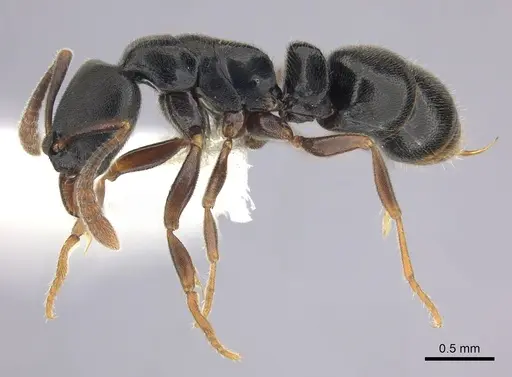
This is one of the largest Ponera species known, with workers measuring 0.65-0.73mm in head width and 0.75-0.80mm in head length. The cephalic index (CI) of 84-90 indicates a relatively broad head compared to other Ponera. Key identifying features include small eyes with only 4-5 indistinct facets, no differentiated antennal club, and scapes that exceed the occipital border by about half their maximum thickness. There is a vestigial median clypeal tooth present as a low obtuse tumosity. The petiolar node has more rounded contours than similar species like P. alpha or P. selenophora, with the posterior margin appearing almost straight when viewed from above. The larvae possess 3 pairs of dorsal abdominal glutinous tubercles, and worker pupae develop enclosed in cocoons. [2]
Housing and Nesting Preferences
In the wild, Ponera xenagos nests in rotting wood debris, under loose bark on stumps and within decaying logs. This indicates a need for humid, substrate-rich environments in captivity. Y-tong (acrylic) nests or plaster nests work well, with chambers scaled appropriately for their small size. The substrate should remain consistently moist but never waterlogged. Adding small pieces of rotting wood, cork bark, or leaf litter to the outworld provides enrichment and mimics their natural environment. Because they come from shaded rainforest habitats, avoid direct lighting and maintain stable humidity. Ensure escape prevention is adequate, while not among the smallest ants, they can still squeeze through small gaps. [1]
Feeding and Diet
Like other Ponera species, P. xenagos is predatory on small invertebrates. Their small eyes and lack of antennal club suggest they rely more on chemical cues than vision when hunting. In captivity, offer small live prey such as springtails, fruit flies, small mealworms, and other micro-arthropods. The larvae's glutinous tubercles suggest they may have specialized feeding requirements, though the exact diet in the wild is undocumented. Sugar sources may be accepted occasionally but should not be relied upon as a primary food. Feed protein prey 2-3 times per week, and remove uneaten prey promptly to prevent mold. [2]
Temperature and Seasonal Care
As a tropical mountain species from 1300-1500m elevation in New Guinea, Ponera xenagos likely prefers warm, stable temperatures in the range of 22-26°C. The midmountain rainforest environment suggests they experience consistent warmth year-round with high humidity. Diapause requirements are unknown, the tropical elevation may mean reduced or no winter dormancy needs. However, if your colony shows reduced activity during cooler months, a slight temperature reduction (a few degrees) may simulate seasonal changes. Avoid temperature extremes and sudden fluctuations. A heating cable on one side of the nest can create a gradient if room temperature is insufficient. [1]
Colony Development
Colony development details are poorly documented for this species. Worker pupae are enclosed in cocoons, which may slightly extend the development timeline compared to naked pupae. Based on typical Ponera patterns, expect development from egg to worker to take approximately 6-10 weeks at optimal temperature. Colonies are likely small, probably under 100 workers at maturity. The slow growth rate typical of Ponera species means patience is essential, do not overfeed or disturb the colony excessively. Queens are undocumented in size but likely measure 5-7mm based on the large worker size relative to other Ponera. [2]
Frequently Asked Questions
How long does it take for Ponera xenagos to produce first workers?
The exact timeline is unconfirmed, but based on related Ponera species, expect approximately 6-10 weeks from egg to first worker at optimal temperature (22-26°C). Cocoon-bound pupae may extend this slightly.
What do Ponera xenagos ants eat?
They are predatory and require small live prey such as springtails, fruit flies, and micro-arthropods. Sugar sources may be occasionally accepted but should not be primary. Remove uneaten prey promptly.
Are Ponera xenagos good for beginners?
Difficulty is unknown due to limited data. This is not a recommended species for beginners given the lack of captive care information and potentially specialized requirements. Consider starting with more documented species.
What temperature should I keep Ponera xenagos at?
Based on their tropical mountain habitat, aim for 22-26°C. Start in this range and adjust based on colony activity. Avoid temperatures below 20°C or above 30°C.
How big do Ponera xenagos colonies get?
Colony size is undocumented, but based on typical Ponera patterns, colonies likely remain small, probably under 100 workers at maturity.
What humidity do Ponera xenagos need?
Based on their rotting wood habitat in rainforest, keep humidity high, approximately 70-85%. The substrate should remain consistently moist but not waterlogged.
Can I keep multiple Ponera xenagos queens together?
Colony structure is unconfirmed for this species. Combining unrelated queens is not recommended since this has not been documented and may result in aggression.
What type of nest should I use for Ponera xenagos?
Y-tong or plaster nests with moist substrate work well. Include small pieces of rotting wood or cork bark in the outworld to mimic their natural rotting log habitat.
Do Ponera xenagos need hibernation?
Diapause requirements are unknown. As a tropical elevation species, they likely do not require hibernation. Monitor colony activity, if they become less active in cooler months, a slight temperature reduction may help.
References

This caresheet is licensed under CC BY-SA 4.0 .
CASENT0249238
View on AntWeb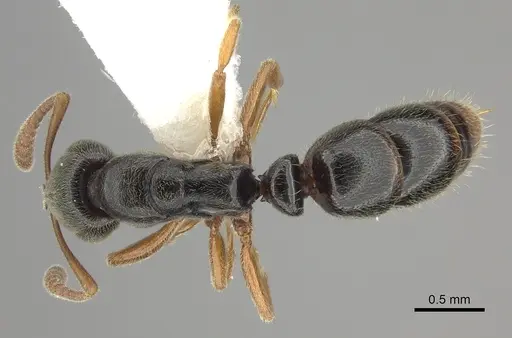
CASENT0249239
View on AntWeb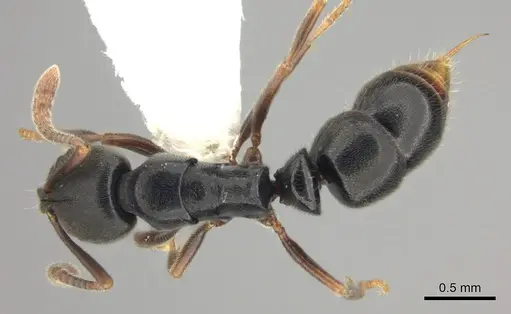
Literature
Loading...Loading products...