

Ponera scabra
- Scientific Name
- Ponera scabra
- Tribe
- Ponerini
- Subfamily
- Ponerinae
- Author
- Wheeler, 1928
- Distribution
- Found in 2 countries
Ponera scabra Overview
Ponera scabra is an ant species of the genus Ponera. It is primarily documented in 2 countries , including Japan, Korea, Republic of. Detailed taxonomic data and occurrence records can be further explored via authoritative databases such as AntWeb or the Global Biodiversity Information Facility (GBIF).
Ponera scabra
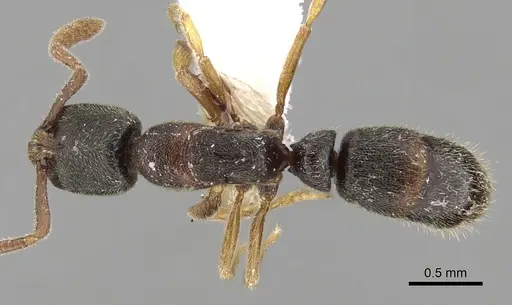
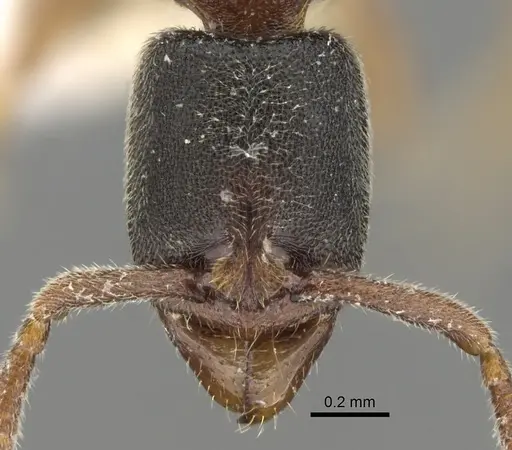
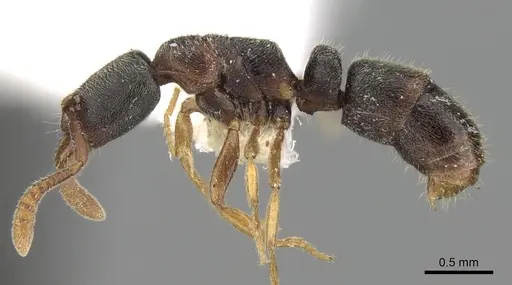
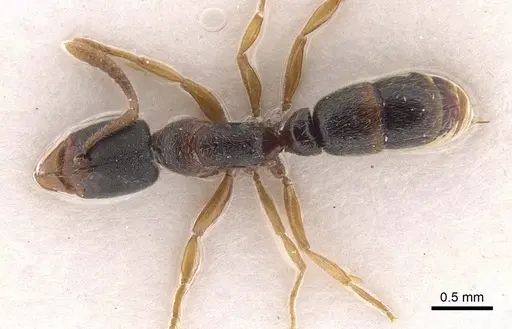
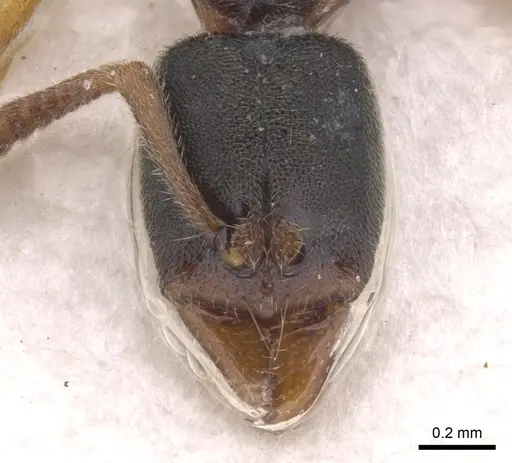
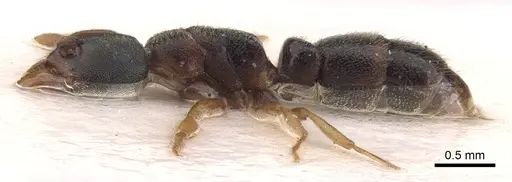
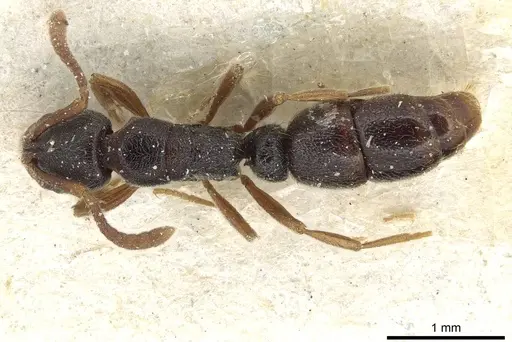
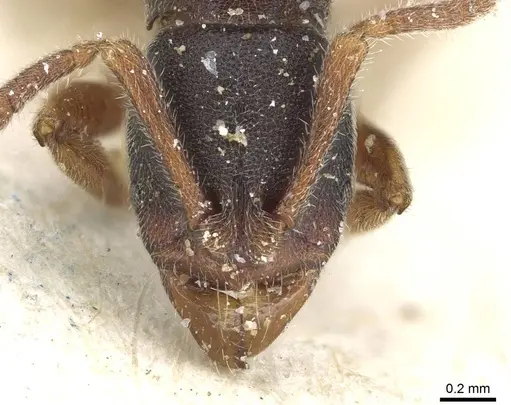
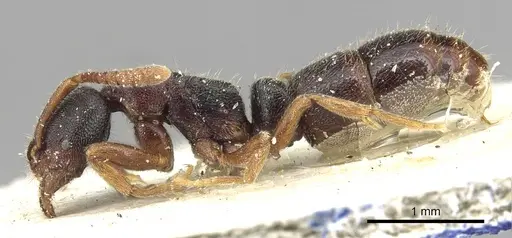
Ponera scabra is a small, dark ponerine ant native to East Asia, found across Japan, Korea, and parts of China. Workers measure around 3.5mm with a distinctive black body and heavy sculpturing [1][2]. They have unusually small eyes with only 5-7 indistinct facets and long antennal scapes that almost reach the back of their head [3]. The petiolar node is thick and trapezoidal with a distinctly concave posterior margin when viewed from above [3]. This species nests in soil and under moss, making it a subterranean dweller typical of the genus Ponera [1][2][4]. Unlike many ants, their larvae spin cocoons rather than remaining naked [1].
What makes Ponera scabra interesting is its status as a cryptic, ground-dwelling ant that is rarely seen despite being locally common in parts of Japan [5]. Their small size, dark coloration, and preference for hidden microhabitats make them a challenge to find in the wild and a rewarding species to keep for those interested in observing secretive ant behavior.
Quick Summary
- Difficulty: Medium
- Origin & Habitat: Native to East Asia: Japan (Honshu, Kyushu, Yakushima), South Korea, North Korea, and China (Guizhou, Henan, Yunnan) [3][6]. Found from northern Iwate Prefecture (~39°N) to southern Kagoshima Prefecture (~31°N) in Japan [6]. Inhabits evergreen broadleaf forests and temperate environments, nesting in soil and under moss [1][2][4].
- Colony Type: Colony structure is unconfirmed. Based on typical Ponera genus patterns, likely single-queen (monogyne) colonies, but this has not been directly documented for this species.
- Size & Growth:
- Queen: 0.71-0.74 mm head width [7]
- Worker: 0.74-0.78 mm head length,0.61-0.64 mm head width [3][7]
- Colony: Likely small colonies typical of Ponera genus, estimated under 100 workers based on related species
- Growth: Moderate, inferred from typical Ponera development
- Development: Estimated 6-10 weeks based on typical Ponera genus patterns at room temperature (Direct development data unavailable for this species. Ponera larvae spin cocoons, which adds time compared to naked-larvae species [1].)
- Antkeeping:
- Temperature: Keep at 22-26°C. This species tolerates a range given its broad distribution from cool temperate to warm regions of Japan and Korea [6]. Room temperature is likely adequate, avoid extremes.
- Humidity: Requires high humidity, these are subterranean ants that naturally live in damp soil and under moss [1][2]. Keep nest substrate consistently moist but not waterlogged. Provide a moisture gradient so ants can choose their preferred zone.
- Diapause: Likely yes, as a temperate species from Japan and Korea, they probably require a winter rest period. Keep at 10-15°C for 2-3 months during winter.
- Nesting: Soil-dwelling species. A naturalistic setup with moist soil or a plaster/acrylic nest with narrow chambers works well. They prefer tight, enclosed spaces typical of subterranean ants. Test tube setups can work if kept humid and dark.
- Behavior: Ponera scabra is a secretive, ground-dwelling ant that forages primarily in soil and leaf litter. They are generalist predators on small arthropods [8]. Workers are small (around 3.5mm) and can likely escape through small gaps, use fine mesh barriers. They are not aggressive and lack a painful sting, making them safe to handle. Their small eyes reflect their subterranean lifestyle, they likely rely more on chemical cues than vision. Activity level is moderate, they will forage but remain hidden much of the time.
- Common Issues: high humidity requirements mean mold can develop if ventilation is poor, small size makes escape prevention critical, use fine mesh and tight-fitting barriers, slow colony growth can frustrate beginners who overfeed or disturb the nest, subterranean lifestyle means they are often inactive and hidden, this is normal, not a problem, wild-caught colonies may contain parasites that can devastate captive colonies
Housing and Nest Setup
Ponera scabra is a subterranean species that naturally nests in soil and under moss [1][2][4]. For captive care, a naturalistic setup with moist soil or a plaster nest with narrow chambers works best. They prefer tight, enclosed spaces, avoid tall, open formicaria. A test tube setup can work if you keep it humid and provide a dark covering to simulate their natural underground environment. Because they are small (around 3.5mm), ensure your setup has no gaps larger than 1mm. Provide a moisture gradient by having one end slightly drier than the other, allowing ants to self-regulate their humidity preference.
Feeding and Diet
Based on related Ponera species and their generalist predatory habits, Ponera scabra likely feeds on small arthropods including springtails, mites, and other soil microfauna [8]. Offer small live prey such as fruit flies, pinhead crickets, or mealworm pieces. They may also accept protein-based commercial ant foods. Sugar sources are likely accepted but not a primary dietary need, focus on protein prey. Feed small amounts 2-3 times per week and remove uneaten prey within 24 hours to prevent mold. Their small size means even tiny prey items are appropriate.
Temperature and Seasonal Care
Keep Ponera scabra at 22-26°C for optimal colony function [6]. This range reflects their broad distribution from cool northern Japan to warmer southern regions. Room temperature is often suitable. As a temperate species from Japan and Korea, they require a winter diapause period. During winter (roughly November-February, depending on your location), reduce temperature to 10-15°C and reduce feeding. Do not feed during deep hibernation. Return to normal temperatures gradually in spring. This seasonal cycle helps maintain natural colony rhythms and may improve long-term colony health.
Behavior and Observation
Ponera scabra is a secretive, cryptic ant that spends much of its time underground or hidden in leaf litter. Workers are small with reduced eyes, reflecting their subterranean lifestyle [3]. They are not aggressive and pose no sting threat to keepers. Because they are cryptic, you may not see much activity, this is normal. They will forage at night and during dim conditions. Avoid disturbing the nest frequently. Their heavy sculpturing and dark coloration make them distinctive under magnification. Colony activity typically increases when the nest is humid and prey is available. Be patient, these ants reward careful observation rather than constant interaction.
Colony Development
Little specific data exists on Ponera scabra colony development. Like other Ponera species, the queen likely seals herself in a claustral chamber and raises the first workers alone on stored fat reserves. Larvae spin cocoons before pupating, which adds time compared to naked-larvae species [1]. Expect slow initial growth, the first nanitic workers will be smaller than mature workers. Colony size likely remains small (under 100 workers) even at maturity, which is typical for the genus. Growth rate is moderate. Patience is key with this species, rapid expansion should not be expected.
Frequently Asked Questions
How long does it take for Ponera scabra to produce first workers?
Exact timing is unconfirmed for this species, but based on typical Ponera genus patterns, expect 6-10 weeks from egg to worker at room temperature. The cocoon-spinning larval stage adds time compared to naked-larvae species [1].
Can I keep Ponera scabra in a test tube?
Yes, a test tube setup can work, but you must keep it humid and covered to simulate their natural dark, moist underground environment. Ensure the cotton is kept moist but not flooded. Transfer to a more naturalistic setup once the colony grows larger.
What do Ponera scabra ants eat?
They are generalist predators. Feed small live prey like fruit flies, springtails, tiny crickets, or mealworm pieces. Remove uneaten prey within 24 hours. They may accept commercial protein foods but live prey is preferred [8].
Are Ponera scabra good for beginners?
They are rated Medium difficulty. Their high humidity requirements and secretive nature make them better suited for keepers who already have some experience with ant keeping. Beginners may struggle with their slow growth and hidden lifestyle.
Do Ponera scabra need hibernation?
Yes, as a temperate species from Japan and Korea, they require a winter rest period. Reduce temperature to 10-15°C for 2-3 months during winter (roughly November-February). Reduce feeding during this period.
How big do Ponera scabra colonies get?
Colony size is unconfirmed but likely remains small, probably under 100 workers at maturity, which is typical for the Ponera genus. They are not large colony formers.
Why are my Ponera scabra always hiding?
This is normal behavior. Ponera scabra is a subterranean, cryptic species that naturally spends most of its time underground or in hidden spaces [3]. They are not inactive, they are simply secretive. Low light conditions and minimal disturbance will encourage more visible foraging activity.
What temperature is best for Ponera scabra?
Keep them at 22-26°C. This range reflects their natural distribution across Japan's broad climate gradient [6]. Room temperature is often suitable. Avoid temperatures above 30°C or below 15°C for extended periods.
Can I keep multiple Ponera scabra queens together?
This has not been documented. Based on typical Ponera genus patterns, they likely form single-queen colonies. Combining unrelated queens is not recommended as aggression may occur.
Why is my Ponera scabra colony declining?
Common causes include: low humidity (they need moist soil), improper temperature (too cold or too hot), overfeeding leading to mold, or parasites from wild-caught colonies. Ensure high humidity, stable temperatures, and remove uneaten prey promptly.
References

This caresheet is licensed under CC BY-SA 4.0 .
Literature
Loading...Loading products...