

Ponera longlina
- Scientific Name
- Ponera longlina
- Tribe
- Ponerini
- Subfamily
- Ponerinae
- Author
- Xu, 2001
- Distribution
- Found in 1 countries
Ponera longlina Overview
Ponera longlina is an ant species of the genus Ponera. It is primarily documented in 1 countries , including Lao People's Democratic Republic. Detailed taxonomic data and occurrence records can be further explored via authoritative databases such as AntWeb or the Global Biodiversity Information Facility (GBIF).
Ponera longlina
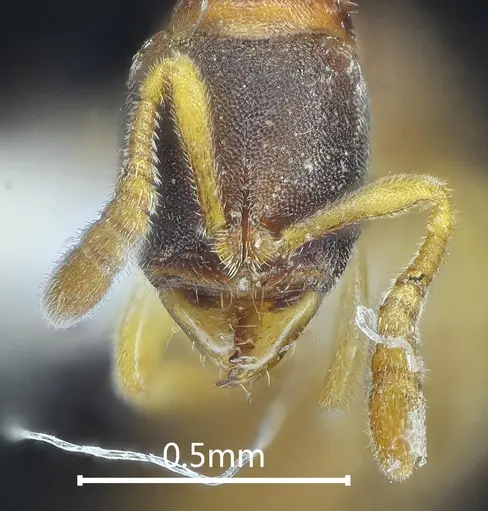
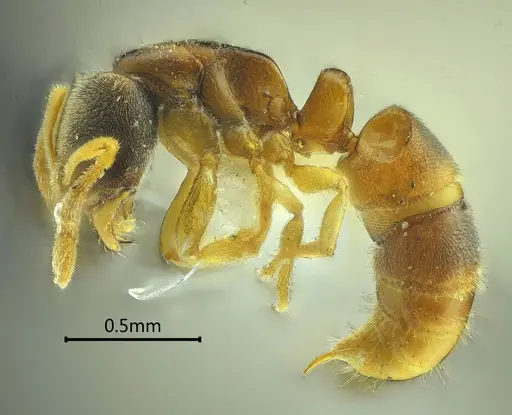
Ponera longlina is a tiny, cryptic ant species endemic to Yunnan Province, China. Workers measure just 2.2mm in total length, making them one of the smaller ant species kept in captivity. They have a distinctive appearance with a reddish-brown body, black head, and yellowish-brown appendages. The most notable physical feature is their extremely reduced eye, containing just a single facet, indicating they are adapted to life in dark, shaded microhabitats under forest floors. This species was described in 2001 from specimens collected in mountain rainforest at 1050m elevation in Longlin Village, Mengla County [1].
The genus Ponera contains small, slow-moving ants that typically live in cryptic colonies under stones, in rotting wood, or within soil. As a Yunnan endemic from mountain rainforest, this species likely prefers cooler, highly humid conditions similar to other Ponera species. Their tiny size and reduced eyes make them a challenging but fascinating species for experienced antkeepers who can provide the stable, humid conditions they require.
Quick Summary
- Difficulty: Hard
- Origin & Habitat: Ponera longlina is endemic to Yunnan Province, China, specifically found in mountain rain forest habitats at around 1050m elevation. The type colony was collected from a ground sample in Longlin Village, Mengla County [1]. This is a Palaearctic region species adapted to cool, shaded, humid forest floor conditions.
- Colony Type: Monogyne (single queen) colonies are typical for the genus Ponera. Colonies are small, typically reaching only a few hundred workers at maximum.
- Colony: Monogyne
- Founding: Claustral
- Size & Growth:
- Queen: Unknown for this specific species, Ponera queens are generally 3-4mm
- Worker: 2.2mm total length [1]
- Colony: Likely a few hundred workers maximum based on typical Ponera colony sizes
- Growth: Slow, Ponera species are known for slow development
- Development: Estimated 8-12 weeks based on typical Ponera development (Development is slow, expect several months from founding to first workers)
- Antkeeping:
- Temperature: Keep cool, around 18-22°C. The mountain rainforest origin suggests they prefer temperatures on the cooler side. Avoid overheating, a room-temperature range of 18-21°C is likely ideal
- Humidity: High humidity is essential, aim for 70-85% relative humidity. Keep the nest substrate consistently moist but not waterlogged. These forest floor ants need damp conditions
- Diapause: Likely requires a winter rest period given the temperate/mountain origin of this species. A 2-3 month diapause at 10-15°C is recommended
- Nesting: Provide a humid nest with fine substrate, test tubes with cotton or a small acrylic/plaster nest work well. They prefer tight, enclosed spaces. The Y-tong (AAC) nest or a small naturalistic setup with moist soil works better than open designs
- Behavior: Ponera longlina is a cryptic, slow-moving species. Workers are not aggressive and rarely venture into the open. They are predatory, hunting small invertebrates in the soil. Their tiny size and reduced eyes indicate a subterranean lifestyle, they will spend most of their time hidden within the nest structure. Escape prevention is critical due to their very small size, use fine mesh and tight-fitting barriers. They do not sting and pose no danger to keepers.
- Common Issues: very small size means escapes are likely without fine mesh barriers, slow growth can lead to keeper impatience and overfeeding which causes mold, high humidity requirements can lead to mold problems if ventilation is poor, wild-caught colonies may have parasites that kill them in captivity, difficulty establishing foundress queens, claustral founding may have high failure rate
Housing and Nest Setup
Ponera longlina requires a small, humid nest setup. A test tube setup works well for founding colonies, use a small test tube with a water reservoir separated by a cotton plug, providing humidity through the substrate. For established colonies, a Y-tong (AAC) nest or small acrylic nest with moist plaster or soil works better than dry setups. The key is maintaining high humidity while preventing mold. Provide a small outworld for feeding, a tiny dish or shallow container works given their small size. Because they are so tiny, use a container with tight-fitting lids and consider coating the rim with fluon to prevent escapes. Avoid large, open spaces that can stress these small ants.
Feeding and Diet
As with other Ponera species, Ponera longlina is predatory and should be fed small live prey. Offer tiny insects such as fruit flies, small springtails, pinhead crickets, or other micro-arthropods. Prey should be appropriately sized, no larger than the ant itself. Feed small prey items 2-3 times per week, removing any uneaten prey after 24 hours to prevent mold. Sugar sources are unlikely to be accepted given the predatory nature of this genus, focus on protein prey. Some keepers report success offering tiny amounts of honey or sugar water, but this should be offered sparingly and removed if not consumed.
Temperature and Seasonal Care
Keep Ponera longlina cool, aim for 18-22°C with 20°C being ideal. The mountain rainforest origin of this species indicates they prefer temperatures on the cooler side for ants. Avoid any heating elements that might overheat the nest. Room temperature is often suitable, but monitor during hot summer months. In winter, provide a diapause period of 2-3 months at 10-15°C to simulate natural seasonal cycles. This winter rest is important for colony health and may trigger reproductive behavior in the following season. Do not cool below 5°C or allow temperatures to fluctuate dramatically.
Colony Founding
Established colonies will have a single queen that seals herself in a claustral chamber during founding. The queen uses stored fat reserves to survive until her first workers (nanitics) emerge. This process takes several months, be patient and avoid disturbing the founding chamber. Queens are difficult to find in the wild due to their cryptic nature. If you obtain a wild-caught queen, provide a small, humid test tube chamber and keep her in darkness with minimal disturbance. Founding success rates are typically low, so expect some losses. Do not feed the founding queen, she will not leave to hunt.
Behavior and Observation
Ponera longlina is a cryptic, secretive species. Workers move slowly and will remain hidden within the nest structure most of the time. They are not aggressive and have no sting of significance to humans. Observation is challenging but rewarding, watching these tiny ants hunt small prey can be fascinating. They are primarily nocturnal or active in low-light conditions, which aligns with their reduced eyes. Colonies are small and slow-growing, so this is not a species for keepers wanting rapid colony development. The slow pace and quiet nature of this species makes them best suited for patient observers who appreciate subtle ant behavior.
Frequently Asked Questions
How long does it take for Ponera longlina to produce first workers?
Expect 8-12 months from founding to first workers. Ponera species are very slow-growing, and the queen will remain sealed in her chamber for several months before the first nanitic workers emerge. Patience is essential with this species.
What do Ponera longlina ants eat?
They are predatory and need small live prey. Feed tiny insects like fruit flies, small springtails, or pinhead crickets appropriately sized for 2mm ants. Sugar sources are unlikely to be accepted. Remove uneaten prey within 24 hours.
Are Ponera longlina ants good for beginners?
No, this is a difficult species not suitable for beginners. Their tiny size, high humidity needs, slow growth, and specific temperature requirements make them challenging. They are best suited for experienced antkeepers who can provide stable, humid conditions.
Do Ponera longlina ants need hibernation?
Yes, a winter diapause of 2-3 months at 10-15°C is recommended. This species originates from the temperate Yunnan mountains and requires a seasonal rest period. Reduce feeding and keep them cool during this time.
How big do Ponera longlina colonies get?
Colonies are small, typically reaching only 200-300 workers at maximum. This is typical for the genus Ponera, they maintain small, cryptic colonies rather than the large supercolonies seen in some other ant genera.
Can I keep multiple Ponera longlina queens together?
No, Ponera are typically monogyne (single queen). Combining unrelated queens is not recommended and will likely result in fighting. Only keep one queen per colony.
What temperature is ideal for Ponera longlina?
Keep them cool at 18-22°C, ideally around 20°C. The mountain rainforest origin means they prefer cooler conditions than most tropical ants. Avoid heating and monitor during hot weather.
Why are my Ponera longlina escaping?
Their tiny 2.2mm size means they can squeeze through very small gaps. Use fine mesh barriers, tight-fitting lids, and consider fluon on rim edges. Escape prevention must be excellent with this species.
When should I move Ponera longlina to a formicarium?
Wait until the colony reaches at least 20-30 workers before considering a move. For most keepers, a test tube setup works well for the entire life of the colony given their small size. Only move if the colony outgrows the setup.
References

This caresheet is licensed under CC BY-SA 4.0 .
ANTWEB1060520
View on AntWeb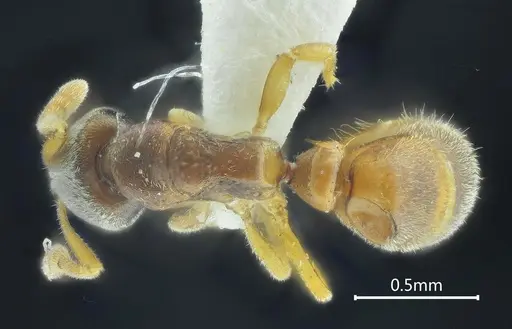
Literature
Loading...Loading products...