

Ponera alpha
- Scientific Name
- Ponera alpha
- Tribe
- Ponerini
- Subfamily
- Ponerinae
- Author
- Taylor, 1967
- Distribution
- Found in 2 countries
Ponera alpha Overview
Ponera alpha is an ant species of the genus Ponera. It is primarily documented in 2 countries , including Indonesia, Papua New Guinea. Detailed taxonomic data and occurrence records can be further explored via authoritative databases such as AntWeb or the Global Biodiversity Information Facility (GBIF).
Ponera alpha
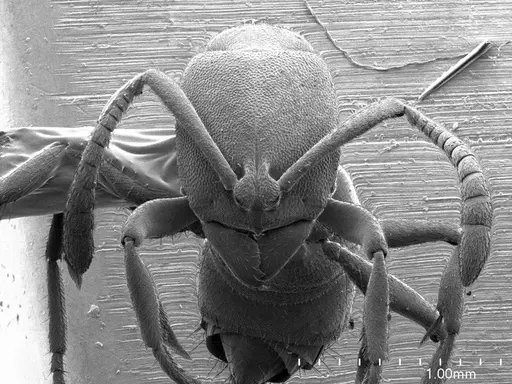
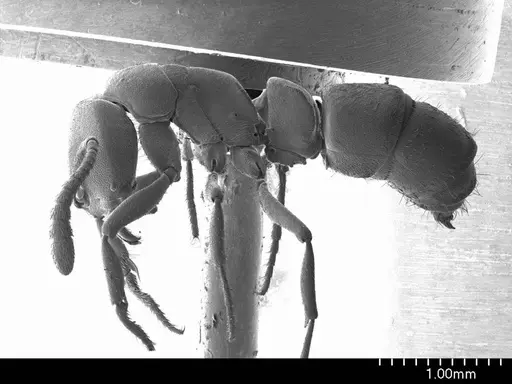
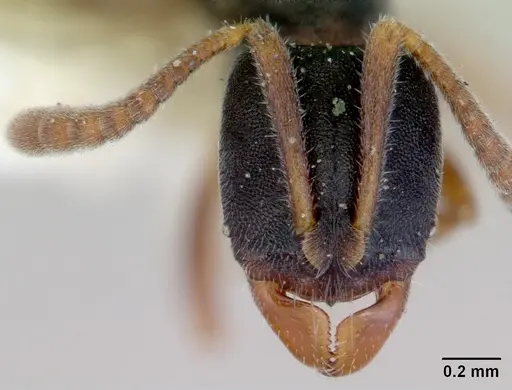
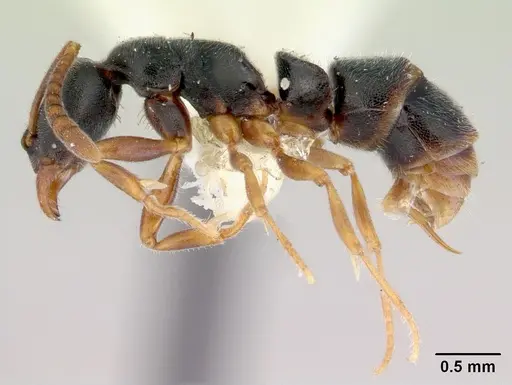
Ponera alpha is an exceptionally large ponerine ant species endemic to the mountains of New Guinea. Workers are among the largest in the genus Ponera, with head widths of 0.76-0.85 mm, notably larger than any other known Ponera species which max out at 0.73 mm [1]. They have a distinctive broad head, an unusually wide petiolar node, and a small median clypeal tooth on the face. Their antennae lack a distinct club, and their small eyes have only 6-7 indistinct facets. The entire body is very dark brown, almost black, with reddish-brown legs and antennae [1]. This species is known only from the type locality in northeastern New Guinea, collected at 1300m elevation in a damp roadside gorge within midmountain rainforest [1]. The larvae have a unique feature among Indo-Australian Ponera species: six pairs of glutinous tubercles on the abdominal dorsum [1].
Quick Summary
- Difficulty: Expert
- Origin & Habitat: Northeastern New Guinea, Kunai Creek area near Wau, at approximately 1300m elevation. Found in disturbed midmountain rainforest in dark, damp roadside gorges, living in leaf mold [1].
- Colony Type: Unknown, only known from type material. No data on natural colony structure (single-queen or multi-queen) exists.
- Size & Growth:
- Queen: 0.85-0.87 mm head width [1]
- Worker: 0.76-0.85 mm head width [1]
- Colony: Unknown, only known from fragment of a colony containing 4 workers,3 dealate queens, and about 10 larvae [1]
- Growth: Unknown, no captive breeding data exists
- Development: Unknown, no development data exists for this species. Based on typical Ponera patterns, expect 8-12 weeks at optimal temperature. (No direct data available. Related Ponera species typically take 2-3 months from egg to worker.)
- Antkeeping:
- Temperature: Unknown for this species. Based on its highland New Guinea origin (1300m elevation), likely prefers cooler temperatures than tropical lowland ants, roughly 18-22°C. Start in the low-to-mid 20s°C range and observe colony activity.
- Humidity: Likely requires high humidity given its collection from damp roadside gorges in rainforest. Keep nest substrate consistently moist but not waterlogged. The natural habitat suggests damp leaf mold environments.
- Diapause: Unknown, no data on seasonal behavior. Highland New Guinea may experience cooler periods, but specific diapause requirements are unstudied.
- Nesting: In nature, found in leaf mold and under bark of rotting branches. For captive care, a moist naturalistic setup with damp substrate (like a terrarium-style formicarium) or a well-humidified Y-tong/plaster nest would likely suit them. They appear to be ground-nesting forest floor ants.
- Behavior: Virtually unknown in captivity as the species has never been kept by hobbyists. Based on genus-level observations of other Ponera species, they are likely slow-moving, cryptic ants that forage through leaf litter and soil. Their small eyes and broad head suggest specialized behavior, but specific foraging patterns, aggression levels, and escape tendencies are unstudied. Their large size for the genus may make them slightly less prone to escape than very tiny Ponera, but excellent escape prevention is still recommended given their unknown behavior.
- Common Issues: this species has never been kept in captivity, no established care protocols exist, extremely limited data means all husbandry recommendations are educated guesses from genus patterns, wild-caught colonies may be nearly impossible to obtain as the species is only known from a single remote location, highland origin means they may not tolerate standard room temperatures, no information on acceptable foods or feeding schedules
Species Discovery and Rarity
Ponera alpha was described by Robert W. Taylor in 1967 from specimens collected in northeastern New Guinea. The holotype and paratypes came from a leaf mold sample collected in June 1962 from a disturbed fragment of midmountain rainforest in a dark, damp roadside gorge near Wau [1]. A small colony fragment was also found under bark on a rotting branch nearby, containing 4 workers,3 dealate queens, and about 10 larvae in various stages [1]. This remains the only known collection of the species, it has never been found again in subsequent surveys of New Guinea ant fauna. The species is considered extremely rare and potentially endemic to this single mountainous location.
Identification and Distinguishing Features
Ponera alpha is immediately recognizable by its exceptional size, workers have head widths of 0.76-0.85 mm, making them the largest known Ponera species by a significant margin (the next largest maxes out at 0.73 mm) [1]. The petiolar node is exceptionally broad, with a petiolar node index (PNI) of 92-98, this index does not exceed 90 in any other Ponera species [1]. The head is broad (cephalic index 88-93), and they possess a distinct median clypeal tooth. Their eyes are very small with only 6-7 indistinct facets, appearing almost like single large facets under low magnification. The antennae lack a distinct club, with segments gradually increasing toward the apex [1]. Queens are similarly large with very broad heads and petiolar nodes.
Habitat and Ecology
The only known specimens of Ponera alpha were collected at approximately 1300 meters elevation in the Bulolo River valley near Wau in northeastern New Guinea [1]. This is a midmountain rainforest environment that has been disturbed by human activity. The ants were found in leaf mold (decaying forest floor material) and under the bark of a rotting branch in a damp roadside gorge [1]. This suggests they are forest floor specialists adapted to cool, humid conditions in highland environments. The unique larval morphology (six pairs of glutinous tubercles) suggests they may have specialized brood care behaviors, though the function of these tubercles is unknown [1].
Keeping This Species - Practical Considerations
Ponera alpha has never been kept in captivity and no established care protocols exist. This caresheet represents educated guesses based on genus-level patterns and the known natural habitat. If you somehow obtain specimens, treat them as expert-level husbandry challenges. For housing, a naturalistic terrarium-style setup with abundant damp leaf mold and soil would most closely match their natural environment. Temperature should be kept cool, probably 18-22°C based on their highland origin. Humidity must be high, with consistently moist substrate. Feeding is speculative, but most Ponera species are predators that accept small invertebrates. Given the complete lack of captive data, success would require careful experimentation and documentation. This species is not recommended for any keeper except those with extensive experience and research interest.
Taxonomic Context
Ponera alpha belongs to the subfamily Ponerinae, tribe Ponerini. It was described by Taylor in 1967 as a species not assignable to any recognized species group within Ponera [1]. The genus Ponera contains small, cryptic ants found primarily in forested regions of the Indo-Australian area and warmer temperate zones. They are characterized by their 12-segmented antennae, distinct petiolar node, and often cryptic, ground-nesting habits. Morphological analysis places Ponera within the Ponerinae subfamily, with a longitudinally narrow and flat mesonotum typical of the group [2][3]. The species remains poorly known and is of significant interest to myrmecologists studying ant diversity in New Guinea.
Frequently Asked Questions
Can I keep Ponera alpha ants as a pet?
No. This species has never been kept in captivity and is only known from a single collection in 1962. It is not available through any commercial source, and collecting from the wild would require expeditions to remote New Guinea highlands. Even if available, the complete lack of captive husbandry data makes keeping them virtually impossible for anyone but professional researchers.
How big do Ponera alpha workers get?
Workers are exceptionally large for the genus Ponera, with head widths of 0.76-0.85 mm. This makes them the largest known Ponera species, significantly larger than any other which max out at 0.73 mm head width [1].
What temperature do Ponera alpha ants need?
Unknown specifically, but likely cooler than typical tropical ants. They were collected at 1300m elevation in New Guinea mountains, suggesting preference for cooler, highland conditions. A range of 18-22°C would be a reasonable starting point based on their origin, but no captive data exists to confirm this.
Do Ponera alpha ants need hibernation?
Unknown. No data exists on their seasonal biology. Highland New Guinea experiences cooler periods, but specific diapause requirements have not been studied. If kept, observe for seasonal slowdowns and adjust accordingly.
What do Ponera alpha ants eat?
Unconfirmed. Most Ponera species are predators that hunt small invertebrates in leaf litter. Based on genus patterns, they likely accept small live prey like springtails, but no specific feeding observations exist for this species.
How long does it take for Ponera alpha to develop from egg to worker?
Unknown. No development data exists for this species. Based on typical Ponera genus patterns, development likely takes 8-12 weeks at optimal temperature, but this is purely speculative.
Are Ponera alpha ants good for beginners?
No. This species is absolutely not suitable for beginners or even experienced antkeepers. It has never been kept in captivity, no care protocols exist, and specimens are essentially unavailable. This is an expert-level species of significant scientific interest, not a hobbyist pet.
Can I find Ponera alpha in the wild to catch?
Extremely unlikely. The species is only known from a single collection in 1962 from the Kunai Creek area near Wau, New Guinea. It has not been found in any subsequent surveys despite extensive ant biodiversity research in the region. The remote location and legal considerations would also make collection extremely difficult.
What makes Ponera alpha special compared to other Ponera species?
Ponera alpha is the largest known Ponera species by a significant margin, has an exceptionally broad petiolar node (PNI 92-98,the only species where this index exceeds 90), and possesses unique larval morphology with six pairs of glutinous tubercles. It is also one of the rarest ant species, known only from type material collected over 60 years ago.
References

This caresheet is licensed under CC BY-SA 4.0 .
ANTWEB1008578
View on AntWeb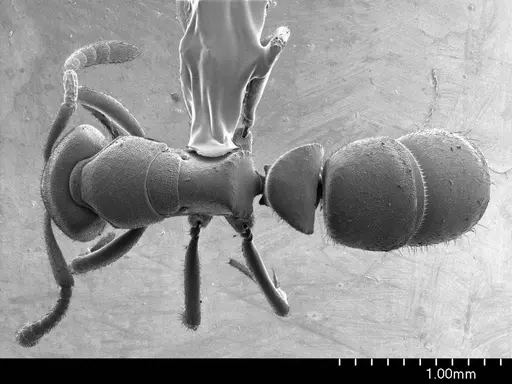
CASENT0172423
View on AntWeb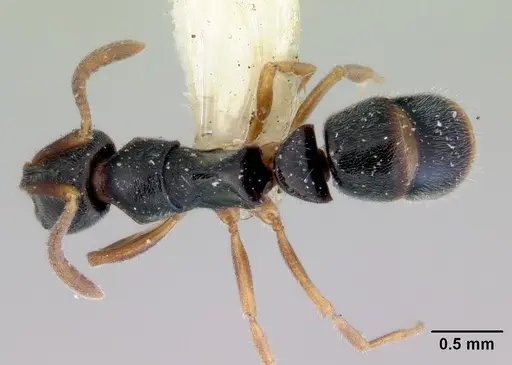
Literature
Loading...Loading products...