

Polyrhachis yarrabahensis
- Scientific Name
- Polyrhachis yarrabahensis
- Subgenus
- Myrmatopa
- Tribe
- Camponotini
- Subfamily
- Formicinae
- Author
- Forel, 1915
- Distribution
- Found in 1 countries
Polyrhachis yarrabahensis Overview
Polyrhachis yarrabahensis is an ant species of the genus Polyrhachis. It is primarily documented in 1 countries , including Australia. Detailed taxonomic data and occurrence records can be further explored via authoritative databases such as AntWeb or the Global Biodiversity Information Facility (GBIF).
Polyrhachis yarrabahensis
Polyrhachis yarrabahensis is a medium-sized arboreal ant native to the rainforests of northern Queensland and New Guinea. Workers measure 5.44-6.80mm with a distinctive appearance: their body is medium to dark reddish-brown, but the head is notably darker, often almost black, creating a striking two-tone look [1]. They belong to the subgenus Myrmatopa and are known for building sophisticated nests on leaves using silk and vegetation debris. These ants are arboreal nesters, meaning they live in trees and shrubs rather than underground, and they create polydomous nests (multiple connected nest sites) among foliage. This is a relatively rare species in the antkeeping hobby, making it an interesting choice for collectors seeking something unusual.
Quick Summary
- Difficulty: Medium
- Origin & Habitat: Northern Queensland wet tropics and New Guinea lowland rainforests. They build nests on leaves of rainforest trees, shrubs, and vines using silk and debris [1].
- Colony Type: Colony structure is unconfirmed. Based on genus patterns, likely single-queen colonies, but this has not been directly studied.
- Size & Growth:
- Queen: 8.01-8.87mm [1]
- Worker: 5.44-6.80mm [1]
- Colony: Unknown, no colony size data available
- Growth: Unknown, no development data available
- Development: Unknown for this species. Based on typical Polyrhachis patterns, expect 6-10 weeks at tropical temperatures. (Development timeline has not been directly studied. Related Polyrhachis species typically develop in 6-10 weeks at warm temperatures.)
- Antkeeping:
- Temperature: Keep warm, roughly 24-28°C. Being a tropical rainforest species from northern Queensland, they need stable warmth. A heating cable on one side of the nest creates a suitable gradient.
- Humidity: High humidity is essential. These are rainforest ants that live on leaves in humid environments. Aim for 70-85% humidity with good ventilation to prevent mold. Mist the outworld regularly and provide a water source.
- Diapause: Unlikely, as a tropical species from northern Queensland, they probably do not require a true hibernation. However, they may slow down during cooler winter months if your room temperature drops.
- Nesting: Arboreal setup is critical. These ants naturally nest among leaves in trees, so they need vertical space and climbing opportunities. A naturalistic setup with live plants or artificial foliage works well. Y-tong nests can work but ensure the ants have access to vertical surfaces and materials they can use to build their characteristic silk nests.
- Behavior: These ants are arboreal and active climbers. They will readily traverse branches, plants, and any vertical surfaces. They are not particularly aggressive but will defend their nest if threatened. Escape prevention is important, while not the smallest ants, they are excellent climbers and will exploit any gaps. Workers are moderately sized and can be somewhat shy compared to ground-nesting species. They likely forage for honeydew and small prey among the canopy.
- Common Issues: high humidity requirements can lead to mold problems if ventilation is poor, arboreal nature means they need vertical space and climbing structures that beginners may not provide, tropical species may struggle if room temperature drops below 22°C, colony growth is slow and may frustrate keepers expecting rapid development, escape prevention requires attention to gaps in lid and connections
Natural History and Distribution
Polyrhachis yarrabahensis is found in the Australasian region, specifically from New Guinea south to northern Queensland, Australia. They are most abundant within the Wet Tropics region of Queensland [1]. As an arboreal species, they build their nests among the foliage of lowland rainforest trees, shrubs, and vines. Unlike most ants that nest underground, these ants construct polydomous nests, meaning they have multiple connected nest sites, using silk and vegetation debris woven together on leaves. This nesting behavior is fascinating because it mimics the nest-building of weaver ants (Oecophylla), though Polyrhachis yarrabahensis uses a different technique. The nests are essentially small shelters made from leaves and debris held together with silk produced by the ants. This arboreal lifestyle means they are adapted to life in the canopy, where they forage among branches and leaves rather than on the forest floor.
Identification and Appearance
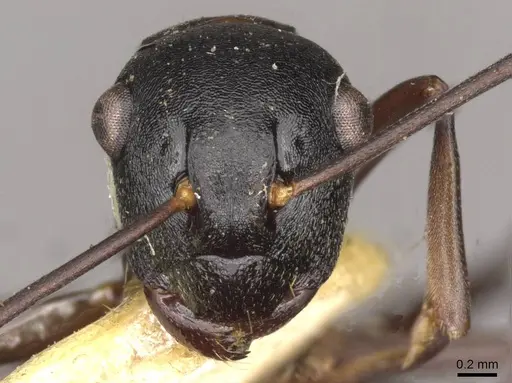
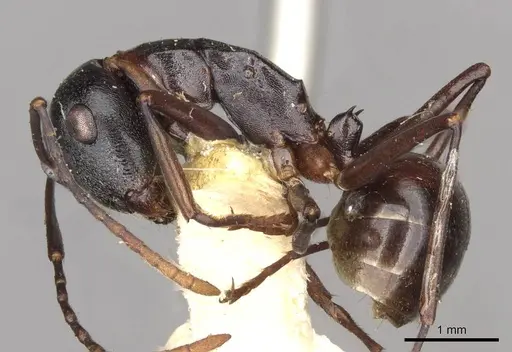
Workers of Polyrhachis yarrabahensis measure 5.44-6.80mm and have a distinctive appearance that helps separate them from related species. The most notable feature is the two-tone coloration: while the body is medium to dark reddish-brown, the head is distinctly darker, almost black in some specimens, creating a sharp contrast [1]. The sculpturation (surface texture) on the head is distinctly reticulate-punctate, meaning it has a net-like pattern of small punctures, with the intensity increasing toward the eyes and sides of the head. The propodeal teeth (the small projections on the back of the mesosoma) are rather poorly developed and more-or-less angular, which distinguishes them from similar species like P. lombokensis that have distinctly upturned and acute teeth [1]. Queens are larger at 8.01-8.87mm and have even more pronounced sculpturation on the head, with small punctures superimposed upon irregular reticulation.
Housing and Nest Setup
Because these are arboreal ants, your setup must reflect their natural lifestyle. They need vertical space with climbing structures, branches, cork, or artificial plants that they can traverse. A naturalistic vivarium with live plants works exceptionally well and allows the ants to build their characteristic leaf nests. Alternatively, you can use a Y-tong (acrylic) nest connected to an outworld, but ensure the nest has adequate humidity and the ants have access to vertical surfaces. The key is providing them with materials they can manipulate, small leaf fragments, cotton fibers, or other debris they can weave into nests. Test tubes can work for founding colonies but will need to be connected to a properly set up arboreal outworld. Escape prevention is important, while not tiny, these ants are excellent climbers and will find any gap in your setup. Use tight-fitting lids and seal any connections between nest and outworld.
Temperature and Humidity Requirements
Being a tropical rainforest species from northern Queensland, Polyrhachis yarrabahensis requires warm and humid conditions. Keep the nest area at roughly 24-28°C, stable warmth is more important than exact precision. A heating cable placed on one side of the nest creates a gentle gradient that allows ants to thermoregulate. For humidity, aim for 70-85% relative humidity. This is critical because their natural habitat is the humid rainforest canopy. Use a water reservoir in your nest setup and mist the outworld regularly, but ensure adequate ventilation to prevent mold buildup. Poor ventilation combined with high humidity creates ideal conditions for mold, which can quickly kill a colony. Good ventilation also provides the fresh air these active ants need. If you notice condensation constantly pooling or mold appearing, increase airflow immediately.
Feeding and Diet
In nature, Polyrhachis ants are omnivorous, typically foraging for honeydew from aphids and scale insects in the canopy, as well as hunting small insects. For captive care, offer a varied diet: sugar water or honey as a constant energy source, and protein in the form of small insects like fruit flies, small crickets, or mealworms. Feed protein roughly twice per week, removing any uneaten prey after 24 hours. Because they are arboreal foragers, place food on elevated surfaces or branches in the outworld rather than on the floor. Observe your colony's preferences, some Polyrhachis species accept a wide variety of foods while others can be more selective. Fresh fruit slices (especially citrus or melon) are often accepted. Always ensure a clean setup by removing uneaten food promptly.
Frequently Asked Questions
How long does it take for Polyrhachis yarrabahensis to raise their first workers?
The exact development timeline has not been studied for this species. Based on typical Polyrhachis patterns, expect 6-10 weeks from egg to worker at optimal tropical temperatures (around 26°C). Be patient, colony growth is typically slow, especially in the founding stage.
Can I keep Polyrhachis yarrabahensis in a test tube setup?
Test tubes can work for a founding queen, but these are arboreal ants that need vertical space and climbing structures. A test tube alone is not ideal for long-term housing. Once the colony reaches 10-15 workers, transfer them to a setup with vertical climbing opportunities and materials they can use for nest building.
What is the best nest type for Polyrhachis yarrabahensis?
A naturalistic arboreal setup is ideal, a vivarium with live plants or artificial branches where they can build their silk and debris nests. If using an artificial nest, choose a Y-tong or acrylic setup with good humidity retention and ensure the outworld provides climbing surfaces.
Do these ants need hibernation?
As a tropical species from northern Queensland, they likely do not require a true hibernation. However, if your room temperature drops significantly below their preferred range (below 20°C), they may become less active. No special overwintering treatment is needed if you maintain warm room temperatures year-round.
How big do Polyrhachis yarrabahensis colonies get?
Maximum colony size is unknown, no colony size data has been documented for this species. Based on related Polyrhachis species, colonies likely reach several hundred workers over several years. They are polydomous in nature, meaning the colony may maintain multiple nest sites.
Are Polyrhachis yarrabahensis good for beginners?
This species is rated Medium difficulty. While not the hardest ant to keep, their arboreal nature and high humidity requirements make them better suited for keepers who have some experience with tropical species. Beginners may struggle with the humidity management and the need for vertical space.
Can I keep multiple queens together?
The colony structure of this species has not been studied. Based on related Polyrhachis species, they are likely monogyne (single queen). Combining unrelated queens is not recommended as it has not been documented for this species and could result in fighting.
Why are my Polyrhachis yarrabahensis dying?
Common causes include: low humidity (they need 70-85%), temperatures below 22°C, mold from poor ventilation, or escape/escape-related stress. Check your setup parameters first. Also ensure you are not overfeeding, uneaten food mold is a major killer of arboreal ant setups.
What temperature range is ideal for Polyrhachis yarrabahensis?
Keep them at 24-28°C. Being from the Queensland wet tropics, they need stable warmth. A heating cable on part of the nest creates a gradient. Avoid temperatures below 22°C or above 32°C for extended periods.
References

This caresheet is licensed under CC BY-SA 4.0 .
CASENT0910785
View on AntWeb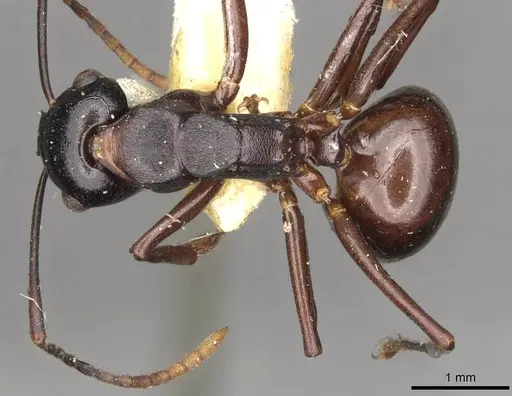
Literature
Loading...Loading products...