

Polyrhachis xiphias
- Scientific Name
- Polyrhachis xiphias
- Subgenus
- Campomyrma
- Tribe
- Camponotini
- Subfamily
- Formicinae
- Author
- Smith, 1863
- Distribution
- Found in 1 countries
Polyrhachis xiphias Overview
Polyrhachis xiphias is an ant species of the genus Polyrhachis. It is primarily documented in 1 countries , including Indonesia. Detailed taxonomic data and occurrence records can be further explored via authoritative databases such as AntWeb or the Global Biodiversity Information Facility (GBIF).
Polyrhachis xiphias
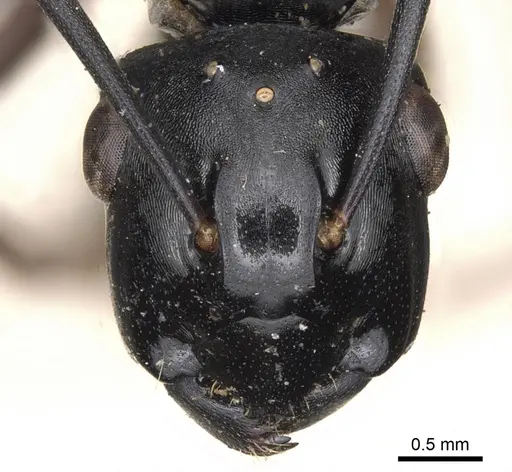
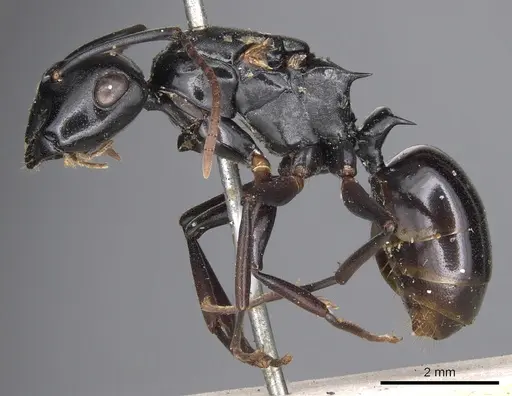
Polyrhachis xiphias is a medium-sized ant species native to the rainforests of New Guinea and Indonesia. Workers measure 6.0-6.8mm and are striking for their jet-black body contrasting with bright yellow legs and reddish-brown antennae [1]. The species belongs to the Polyrhachis xiphias group within the subgenus Campomyrma, distinguished by their columnar petiole with two horizontal posteriorly-directed spines and notably convex eyes that break the lateral outline of the head [1][2]. Queens are substantially larger at 10.3-10.9mm and closely resemble workers with the typical sexual characters and shorter propodeal spines [1]. This species remains poorly documented in captivity, with limited biological information available beyond its natural distribution in lowland rainforest habitats of Papua New Guinea and Indonesian islands [1].
Quick Summary
- Difficulty: Medium
- Origin & Habitat: Native to the Australasian and Indomalaya regions, specifically found in Papua New Guinea and Indonesia including Waigeo Island (Pulau Waigeo) and West Irian [1]. They inhabit lowland rainforest environments at elevations between 150-500 meters, where they nest in rotting wood pieces [1].
- Colony Type: Colony structure is not well documented. Only two queens have been measured, and males have never been collected [1]. Based on limited data, likely single-queen (monogyne) colonies, but this requires confirmation.
- Size & Growth:
- Queen: 10.33-10.89mm [1]
- Worker: 6.00-6.80mm [1]
- Colony: Unknown, no colony size data available
- Growth: Unknown, no development timing data available
- Development: Unknown, no direct development data exists for this species. Based on typical Polyrhachis patterns from related species, expect 6-10 weeks at tropical temperatures. (Development timeline has not been directly studied. Related Polyrhachis species in captivity typically require 6-10 weeks from egg to worker at 24-28°C.)
- Antkeeping:
- Temperature: Keep at 24-28°C. As a tropical rainforest species from New Guinea, they require warm, stable temperatures typical of tropical ant species. A gentle gradient allowing them to self-regulate is ideal.
- Humidity: High humidity is essential, aim for 70-85% relative humidity. These ants come from damp rainforest environments where they nest in rotting wood. Keep the nest substrate consistently moist but not waterlogged.
- Diapause: No, as a tropical species from near the equator, they do not require hibernation. Maintain consistent temperatures year-round.
- Nesting: In captivity, they do well in naturalistic setups with rotting wood or cork, or in well-humidified acrylic/plaster nests. They naturally nest in rotting wood pieces in the wild, so providing wood or wood-like materials helps simulate their natural environment [1].
- Behavior: Polyrhachis xiphias is a relatively calm, non-aggressive species. Workers are moderately active foragers that search for food throughout the outworld. They are not known to be particularly defensive or prone to stinging. As medium-sized ants, they have moderate escape prevention needs, standard barriers work well but ensure enclosures are secure. They appear to be generalist foragers based on typical Polyrhachis behavior.
- Common Issues: limited availability, this species is rarely available in the antkeeping hobby due to its remote distribution, humidity management is critical, too dry and colonies will fail, especially during founding, no development data means you are pioneering captive care, expect a learning curve, wild-caught colonies may harbor parasites or diseases from their native habitat, males have never been documented, suggesting nuptial flight timing is unusual or poorly understood
Natural History and Distribution
Polyrhachis xiphias is endemic to the rainforests of New Guinea and surrounding Indonesian islands. The species was originally described from a single queen collected by Alfred Russel Wallace on Waigeo Island (Pulau Waigeo) in 1863 [1]. Subsequent research has expanded the known range to include West Irian in Indonesia and multiple provinces in Papua New Guinea, including West Sepik Province and the Gulf Province around the Lakekamu Basin [1]. They inhabit lowland rainforest at elevations between 150-500 meters, where they nest in rotting wood pieces. The type locality is Waigeo Island, part of the Raja Ampat Islands in West Papua, Indonesia. Specimens have been collected using Malaise traps and by hand, typically from rainforest habitats. Males have never been collected, which is unusual and suggests either very localized nuptial flights or that reproductive behavior occurs in an unusual manner.
Identification and Distinguishing Features
Polyrhachis xiphias belongs to the Polyrhachis xiphias species-group within the subgenus Campomyrma. This group is characterized by having a columnar petiolar node with two horizontal, posteriorly-directed spines on the dorsum, which distinguishes them from other Campomyrma species that have scale-like petioles [1]. Workers can be identified by their moderately convex eyes that clearly break the lateral outline of the head in full-face view, the presence of blunt humeral angles on the pronotum, and notably divergent petiolar spines [1][2]. The body is black with a distinctive color pattern: legs are light yellow with dark brown joints at the femora and tibiae, and the tarsi are dark brown. The antennae are dark brown at the base, becoming progressively lighter toward the tips, with light yellow condylae. Queens are similar to workers but larger at 10.3-10.9mm and have the typical sexual characters including a developed mesosoma and shorter propodeal spines.
Housing and Nesting Preferences
In captivity, Polyrhachis xiphias does best in naturalistic setups that simulate their rotting wood nesting habitat. A setup with cork, wood pieces, or a well-humidified acrylic or plaster formicarium works well. Since they naturally nest in rotting wood in the wild, providing some wood material helps them feel at home. Keep the nest area consistently humid, these are rainforest ants that need moisture to thrive. A water reservoir or moisture chamber connected to the nest helps maintain appropriate humidity levels. The outworld can be a standard foraging area. Ensure the setup has good ventilation to prevent mold while maintaining humidity. Because this species is rarely kept, you may need to experiment to find what works best in your specific conditions.
Feeding and Diet
Based on typical Polyrhachis behavior, these ants are generalist foragers that likely accept a variety of foods. In captivity, offer protein sources such as small insects (fruit flies, small crickets, mealworms), and sugar sources like honey water or sugar water. Polyrhachis species are not typically specialized predators, so standard ant feeding protocols apply. Feed protein 2-3 times per week and keep sugar water available at all times. Remove uneaten prey after 24-48 hours to prevent mold. Since this species has not been documented in captivity before, monitor what your colony accepts and adjust accordingly.
Temperature and Humidity Requirements
As a tropical species from the New Guinea rainforest, Polyrhachis xiphias requires warm and humid conditions. Maintain temperatures between 24-28°C, with a slight gradient allowing the ants to self-regulate. Avoid temperatures below 22°C or above 30°C for extended periods. Humidity should be kept high at 70-85% relative humidity. This can be achieved by keeping the nest substrate moist (but not waterlogged) and using a water reservoir. Mist the nest occasionally if humidity drops. Unlike temperate species, they do not require any diapause or winter cooling period, maintain consistent tropical conditions year-round. A heating cable on one side of the nest can help create a temperature gradient if your room temperature is below their requirements.
Frequently Asked Questions
How long does it take for Polyrhachis xiphias to produce first workers?
The exact development timeline has not been documented for this species. Based on related Polyrhachis species, expect approximately 6-10 weeks from egg to worker at optimal temperatures of 24-28°C. Since this species has never been documented in captivity, be prepared for some experimentation.
What do Polyrhachis xiphias ants eat?
They are generalist foragers. Offer small insects like fruit flies, small crickets, or mealworms as protein sources 2-3 times per week. Keep sugar water or honey water available at all times for energy. Remove uneaten food after 24-48 hours.
Are Polyrhachis xiphias good for beginners?
This species is not recommended for beginners. It is rarely available in the hobby, and there is no established captive care protocol. Additionally, they require specific tropical conditions (high humidity, warm temperatures) that may be challenging to maintain consistently.
What temperature should I keep Polyrhachis xiphias at?
Keep them at 24-28°C. This is a tropical species from New Guinea rainforests that requires warm, stable temperatures. A slight gradient allowing self-regulation is ideal.
Do Polyrhachis xiphias need hibernation?
No, they do not require hibernation. As a tropical species from near the equator, they need consistent temperatures year-round. Do not cool them down in winter.
How big do Polyrhachis xiphias colonies get?
The maximum colony size is unknown, no scientific data exists on colony size for this species. Based on related Polyrhachis species, colonies likely reach several hundred to a few thousand workers over time.
Can I keep multiple queens together?
This is unknown. Only two queens have ever been documented in scientific literature, and the colony structure (monogyne vs polygyne) has not been confirmed. It is not recommended to combine unrelated queens until more is known about their natural colony structure.
What makes Polyrhachis xiphias different from other Polyrhachis?
They belong to the xiphias species-group within the subgenus Campomyrma, characterized by their columnar petiole with two horizontal spines and notably convex eyes. They have distinctive yellow legs with dark joints and are found only in New Guinea and surrounding Indonesian islands.
References

This caresheet is licensed under CC BY-SA 4.0 .
CASENT0901819
View on AntWeb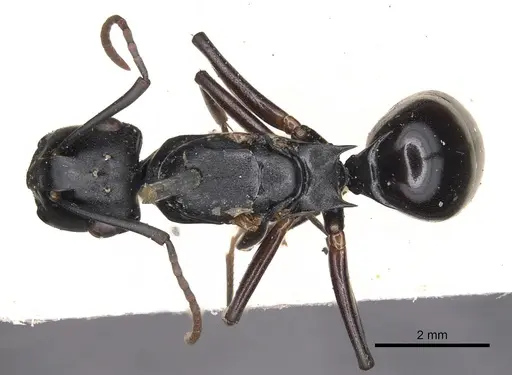
Literature
Loading...Loading products...