

Polyrhachis tubifera
- Scientific Name
- Polyrhachis tubifera
- Subgenus
- Hagiomyrma
- Tribe
- Camponotini
- Subfamily
- Formicinae
- Author
- Forel, 1902
- Distribution
- Found in 1 countries
Polyrhachis tubifera Overview
Polyrhachis tubifera is an ant species of the genus Polyrhachis. It is primarily documented in 1 countries , including Australia. Detailed taxonomic data and occurrence records can be further explored via authoritative databases such as AntWeb or the Global Biodiversity Information Facility (GBIF).
Polyrhachis tubifera
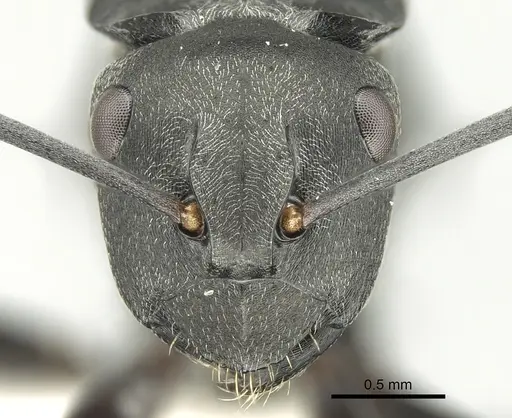
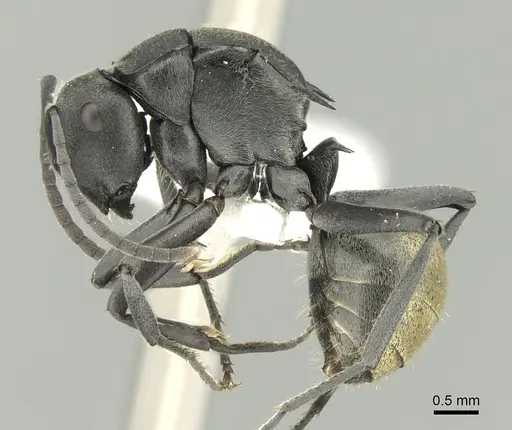
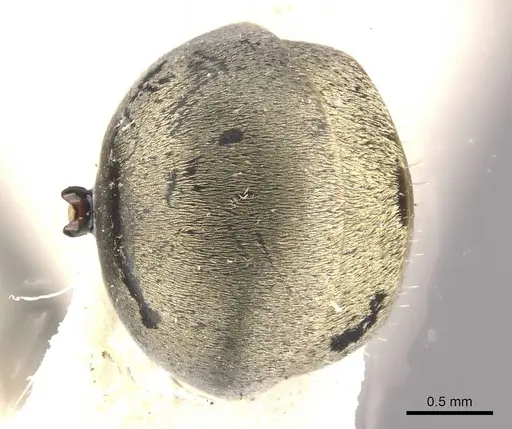
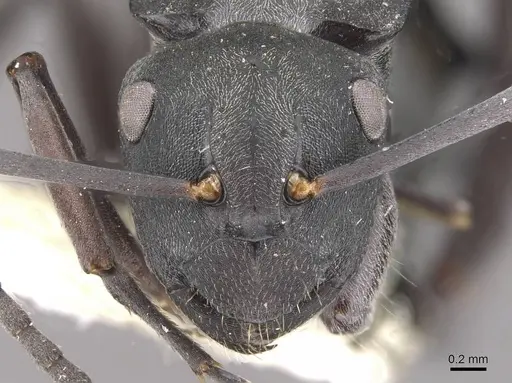
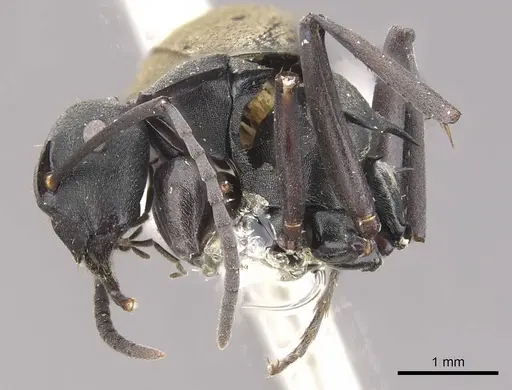
Polyrhachis tubifera is a medium-sized Australian ant measuring 5.5-7.25mm for workers and 7.3-7.4mm for queens [1]. Workers are mostly black with reddish-brown mandibles and legs, featuring a notably broad and short mesosoma (middle body section) with prominent spines on the propodeum and petiole [1]. The body has a distinctive opaque appearance due to very fine reticulate-punctate sculpturing, and the gaster is covered in dense golden pubescence that hides the underlying surface [1]. This species belongs to the tubifera group within the subgenus Hagiomyrma and is closely related to Polyrhachis diversa [1].
These ants are ground-nesters found in eastern Australia, ranging from Cape York Peninsula down to Brisbane in southeast Queensland [1]. They inhabit open eucalypt forests and woodlands, sometimes appearing along the edges of lowland rainforests, with nests typically located at the base of trees and covered with leaf litter [1][2]. Unlike many Polyrhachis species that nest in trees or vegetation, P. tubifera is one of the more terrestrial members of its genus, excavating shallow subterranean nests [3].
Quick Summary
- Difficulty: Medium
- Origin & Habitat: Eastern Australia, from Cape York Peninsula to Brisbane, Queensland. Found in open eucalypt forests, woodlands, and occasionally along rainforest edges [1][2].
- Colony Type: Colony structure is unconfirmed. Based on typical Polyrhachis patterns, likely single-queen colonies, but this has not been directly documented for this species.
- Founding: Claustral
- Size & Growth:
- Queen: 7.31-7.36 mm [1]
- Worker: 5.49-7.25 mm [1]
- Colony: Unknown, no colony size data available for this species
- Growth: Moderate, estimated based on typical Polyrhachis development patterns
- Development: 8-12 weeks, estimated based on related Polyrhachis species development (Development time is not directly documented for P. tubifera. Estimates based on genus-level patterns for similar-sized Formicinae ants.)
- Antkeeping:
- Temperature: Keep at 22-26°C. Australian species from subtropical Queensland typically prefer warm conditions with a gentle gradient. Room temperature is often suitable, but a heating cable on one side of the nest can help during cooler months.
- Humidity: Moderate humidity around 50-70%. These ground-nesting ants prefer slightly moist substrate but not waterlogged. Allow the nest to dry out partially between water additions.
- Diapause: No, being from subtropical Australia, they do not require hibernation. However, a slight cooling period during winter months (15-18°C) may benefit colony health.
- Nesting: Subterranean ground-nesters. In captivity, they do well in Y-tong (AAC) nests, plaster nests, or naturalistic setups with soil substrate. Provide a deep enough nest chamber (at least 10-15mm) as they like to bury themselves under substrate. A layer of leaf litter or debris on top of the outworld mimics their natural leaf-mould covered nests [1].
- Behavior: Workers are moderately active and forage both on the ground and low vegetation. They are not particularly aggressive but will defend the nest if threatened. Escape prevention should be moderate, while not tiny, they can squeeze through small gaps, so standard barrier methods work well. They have pupal cocoons, which is notable as some Polyrhachis species have naked pupae [3].
- Common Issues: colonies may be slow to establish, patience is needed during the founding stage, wild-caught colonies may carry parasites that cause issues in captivity, overheating can be fatal, avoid temperatures above 30°C, dry substrate leads to colony abandonment or mortality, queen loss during founding is common, ensure stable conditions
Housing and Nest Setup
Polyrhachis tubifera is a ground-nesting species that prefers subterranean nests covered with leaf litter in the wild [1]. In captivity, they adapt well to various nest types. Y-tong (AAC) nests work excellently, the narrow chambers and passages mimic their natural underground tunnels. Plaster nests or acrylic nests with soil chambers are also suitable. Provide a nest chamber at least 10-15mm deep, as these ants like to burrow under substrate. The outworld should include some leaf litter, small twigs, or debris to provide cover and foraging opportunities, this mimics the leaf-mould covered nests they build at tree bases [1]. A water test tube connected to the nest area provides constant humidity access.
Feeding and Diet
Like most Polyrhachis species, these ants are omnivorous. They accept sugar sources (honey water, sugar water) and protein foods. Offer small insects like fruit flies, small crickets, or mealworms as protein. Sugar water should be available at all times. Being ground-nesters that forage at tree bases, they likely scavenge for honeydew and small arthropods in nature. Feed protein 2-3 times per week, and keep sugar water constantly available. Remove uneaten prey after 24-48 hours to prevent mold.
Temperature and Seasonal Care
Being from subtropical Queensland, these ants prefer warm conditions around 22-26°C. They can tolerate slightly cooler temperatures down to around 18°C but grow best in warmth. A heating cable placed on one side of the nest creates a temperature gradient that allows the colony to regulate its own conditions. Avoid temperatures above 30°C as this can be fatal. During Australian winter (June-August), a slight reduction to 18-22°C is natural and may benefit colony cycling, but full hibernation is not required. Room temperature in most homes is suitable for this species. [1]
Behavior and Colony Dynamics
Workers are moderately sized and relatively active foragers. They are not particularly aggressive toward keepers but will defend the nest vigorously if disturbed. The species has pupal cocoons, which means the brood takes longer to develop than naked pupae but is better protected [3]. Queens are chunky at 7.3-7.4mm and capable of claustral founding, they seal themselves in a chamber and raise the first workers alone on stored fat reserves. Colonies likely grow at a moderate pace, with the first workers (nanitics) emerging smaller than normal workers. The broad, short mesosoma of this species is distinctive and helps distinguish it from other Polyrhachis in the hobby.
Handling and Escape Prevention
At 5.5-7.25mm, these ants are large enough to handle easily but not so large that they are intimidating. They move at a moderate pace and can be observed closely without much risk. Standard escape prevention using fluon on test tube rims or barrier tape on formicarium edges works well. They are not strong climbers like some arboreal Polyrhachis, but can still escape through small gaps. Check connections between the nest and outworld regularly. When observing the colony, do so gently to avoid stressing the queen or causing workers to abandon brood.
Frequently Asked Questions
How long does it take for Polyrhachis tubifera to raise first workers?
Based on typical Polyrhachis development, expect 8-12 weeks from egg to first worker. This is an estimate since specific development data for P. tubifera is not documented. The presence of pupal cocoons means development may take slightly longer than species with naked pupae.
What do Polyrhachis tubifera ants eat?
They are omnivorous. Offer sugar water or honey water constantly, and protein foods like small insects (fruit flies, small crickets, mealworms) 2-3 times per week. Remove uneaten prey after a day to prevent mold.
Do Polyrhachis tubifera ants need hibernation?
No, they do not require hibernation. Being from subtropical Australia, they are active year-round. A slight temperature reduction during winter months to 18-22°C is natural but not mandatory.
What size nest do Polyrhachis tubifera need?
They are ground-nesting ants that prefer deeper nest chambers (10-15mm) where they can burrow under substrate. Y-tong nests, plaster nests, or naturalistic setups with soil work well. They also appreciate leaf litter or debris in the outworld.
Are Polyrhachis tubifera good for beginners?
They are rated as medium difficulty. They are more forgiving than some exotic species but require warm conditions and proper humidity. Their ground-nesting habits make them easier to house than arboreal Polyrhachis species.
How big do Polyrhachis tubifera colonies get?
Colony size data is not documented for this species. Based on typical Polyrhachis patterns, colonies likely reach several hundred workers over several years. They are not known for forming supercolonies.
Can I keep multiple Polyrhachis tubifera queens together?
The colony structure of this species has not been documented. It is not recommended to combine unrelated foundress queens, as polygyny (multiple-queen colonies) has not been confirmed for P. tubifera. Start with a single queen for best success.
What temperature is ideal for Polyrhachis tubifera?
Keep them at 22-26°C. They prefer warm conditions but can tolerate 18-30°C. A heating cable on part of the nest creates a gradient. Avoid temperatures above 30°C.
Where is Polyrhachis tubifera found in the wild?
They are endemic to eastern Australia, ranging from Cape York Peninsula down to Brisbane in southeast Queensland. They live in open eucalypt forests, woodlands, and occasionally along rainforest edges.
References

This caresheet is licensed under CC BY-SA 4.0 .
CASENT0906595
View on AntWeb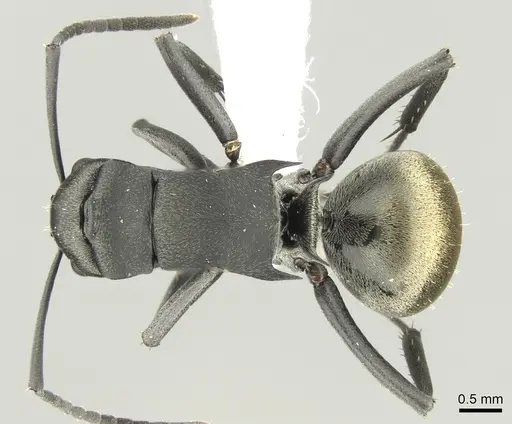
CASENT0910814
View on AntWeb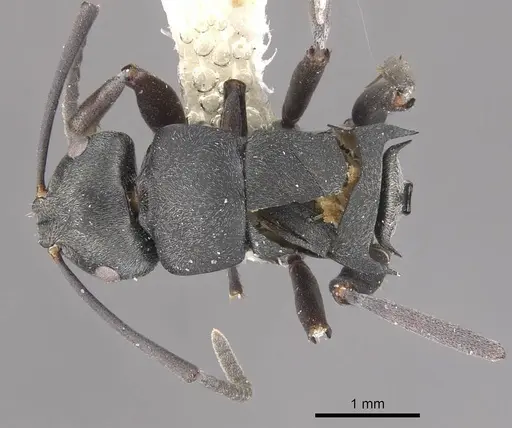
Literature
Loading...Loading products...