

Polyrhachis thusnelda
- Scientific Name
- Polyrhachis thusnelda
- Subgenus
- Hagiomyrma
- Tribe
- Camponotini
- Subfamily
- Formicinae
- Author
- Forel, 1902
- Distribution
- Found in 1 countries
Polyrhachis thusnelda Overview
Polyrhachis thusnelda is an ant species of the genus Polyrhachis. It is primarily documented in 1 countries , including Australia. Detailed taxonomic data and occurrence records can be further explored via authoritative databases such as AntWeb or the Global Biodiversity Information Facility (GBIF).
Polyrhachis thusnelda
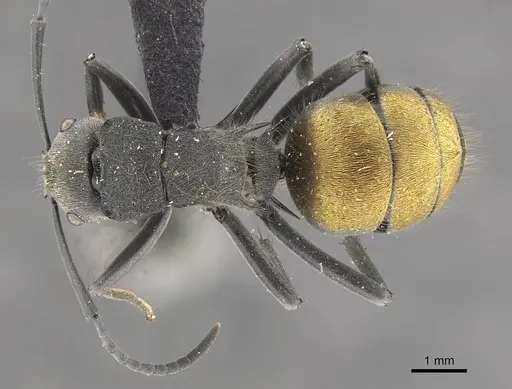
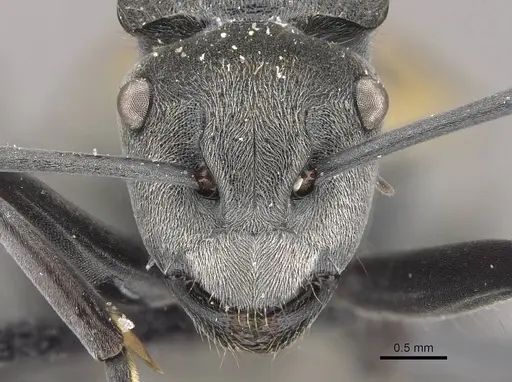
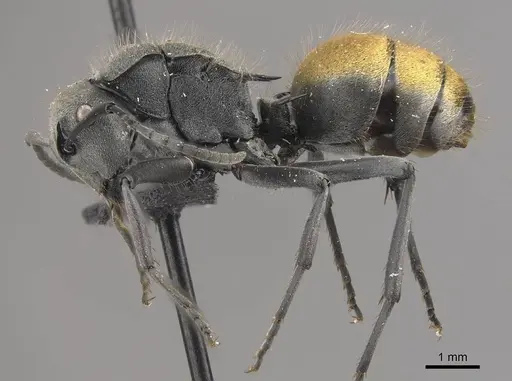
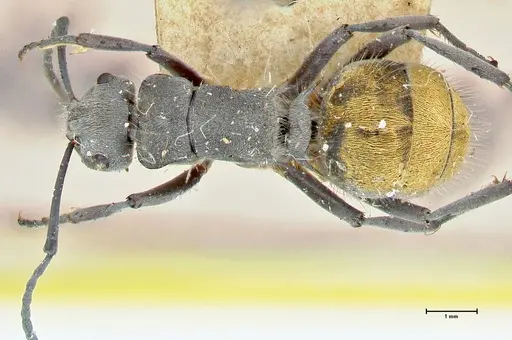
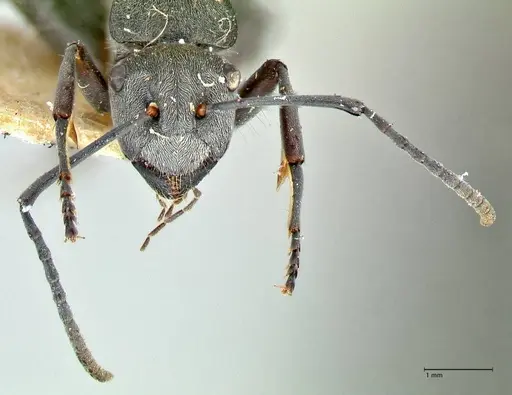
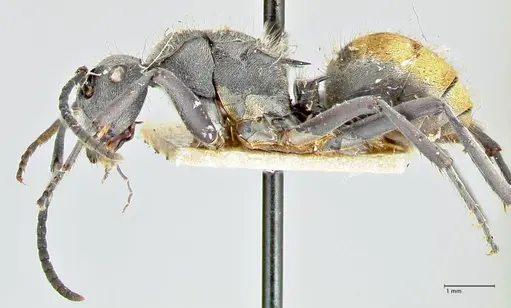
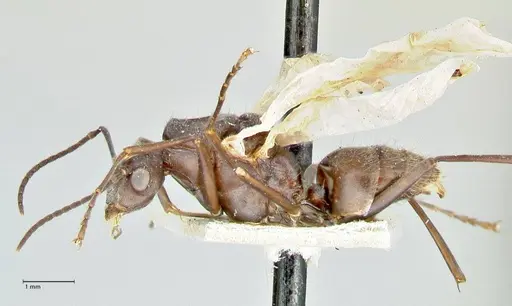
Polyrhachis thusnelda is a striking Australian ant known for its black body contrasted with rich golden pubescence covering the gaster (the rear body segment). Workers measure 8-9mm, making them a medium-sized ant, while queens reach 9-10mm. The species has distinctive spines on the propodeum and petiole, and the entire body is covered with long, silvery hairs that stand out against the dark coloration [1]. This species belongs to the trapezoidea species-group within the subgenus Hagiomyrma, characterized by their flat-topped petiolar dorsum [1].
What makes P. thusnelda special is its dual lifestyle, while most Hagiomyrma species are arboreal nesters, this species is lithocolous, meaning it nests in rock crevices in open eucalypt forests, though it has also been collected from rainforest canopies [1][2]. The golden sheen on their abdomen makes them one of the more visually striking Polyrhachis species available to keepers.
Quick Summary
- Difficulty: Medium
- Origin & Habitat: Northern Queensland, Australia, from Cape York Peninsula south to Mackay. Found in open eucalypt forests and occasionally in lowland tropical rainforest canopies [1].
- Colony Type: Colony structure is unconfirmed, the species has not been studied in detail for queen number. Based on related Hagiomyrma species, likely single-queen colonies.
- Founding: Claustral
- Size & Growth:
- Queen: 9.47-10.18 mm [1]
- Worker: 8.16-9.12 mm [1]
- Colony: Unknown, no colony size data available
- Growth: Moderate, estimated based on similar Polyrhachis species
- Development: Estimated 8-12 weeks at optimal temperature based on genus patterns (Pupae develop in cocoons, which requires appropriate humidity and substrate conditions)
- Antkeeping:
- Temperature: Keep at 24-28°C. As a Queensland species from tropical/subtropical regions, they need warm conditions year-round [1].
- Humidity: Moderate humidity around 60-70%. Lithocolous species prefer stable conditions with some moisture but not saturated substrate.
- Diapause: Likely minimal or no true diapause, Queensland species experience mild winters. Keep at reduced temperatures (around 18-20°C) for 2-3 months in winter if colony shows reduced activity.
- Nesting: Lithocolous (rock-dwelling) species. Provide tight rock crevices or similar tight chambers. Y-tong (AAC) nests work well, or naturalistic setups with flat stones. They prefer dark, secure spaces and may abandon overly open nests [3].
- Behavior: Generally calm and non-aggressive compared to many Polyrhachis species. Workers are moderately active foragers, searching for honeydew and small prey. They are not known for stinging, their primary defense is the spines on their body. Escape risk is moderate due to their size, standard barriers work well. They are diurnal and will explore the outworld regularly. Queens are relatively docile and not known to be aggressive toward workers.
- Common Issues: colonies may fail if kept too cold, maintain warm temperatures year-round, lithocolous species need tight, dark nesting spaces, they may reject open formicaria, pupae in cocoons require stable humidity to develop properly, too dry causes desiccation, newly established colonies are sensitive to disturbance, minimize nest inspections during founding, wild-caught colonies may have parasites or diseases that cause colony failure
Housing and Nest Preferences
Polyrhachis thusnelda is a lithocolous species, meaning it naturally nests in rock crevices and similar tight spaces [3]. In captivity, they do best in nests that mimic these conditions, dark, secure chambers with minimal light exposure. Y-tong (AAC) nests work very well for this species because they provide the tight, enclosed spaces these ants prefer. Naturalistic setups with flat stones or slate pieces can also work, but ensure there are no large gaps that let in too much light. Avoid fully transparent acrylic nests unless you can cover them, these ants will often refuse to inhabit overly bright chambers.
The key to successful housing is providing a sense of security. Place the nest in a quiet location away from vibrations and direct sunlight. They will readily move into suitable chambers but may abandon nests that are too exposed. Multiple chambers connected by narrow tunnels give them options for regulating their position based on temperature and humidity needs.
Feeding and Diet
Like most Polyrhachis species, P. thusnelda is omnivorous with a preference for sweet liquids and protein. In captivity, offer sugar water or honey as a constant energy source, they will readily accept these. For protein, provide small insects like fruit flies, small crickets, or mealworms. Since they are medium-sized ants, they can handle prey items that are proportionally larger than what tiny ants would accept.
Feed protein sources 2-3 times per week, removing any uneaten prey after 24 hours. Keep sugar water available at all times, replacing every few days to prevent mold. In the wild, they likely forage for honeydew from aphids and scale insects, so their diet in captivity should reflect this omnivorous nature. Observing your colony's preferences will help you fine-tune feeding schedules, healthy colonies will actively recruit to food sources within a day or two.
Temperature and Seasonal Care
Being from Queensland, Australia, these ants need warm conditions to thrive. Maintain temperatures between 24-28°C during the active season. A heating cable or mat on one side of the nest creates a temperature gradient that allows the colony to self-regulate. Place the heat source on top of the nest material, not underneath, to prevent excessive drying.
During the Australian winter (roughly June-August in the southern hemisphere, corresponding to winter in the northern hemisphere), you can reduce temperatures to around 18-20°C for 2-3 months. This mimics their natural seasonal cycle and may help trigger reproductive behavior. However, avoid true cold hibernation, Queensland does not experience freezing temperatures, so a mild reduction is more appropriate than full diapause conditions. Watch for colony activity levels, if they become sluggish, temperatures may be too low. [1]
Growth and Development
Polyrhachis thusnelda workers develop in cocoons, which is important for their care [3]. Unlike some ant species that pupate naked, these ants spin protective cocoons around their pupae. This means you need to ensure adequate humidity in the nest, too dry and the pupae will desiccate, too wet and they may mold.
The exact development time from egg to worker is not documented, but based on related Polyrhachis species, expect around 8-12 weeks at optimal temperatures. Queens lay eggs in batches, and the first workers (nanitics) will be smaller than mature workers. Growth rate is moderate, not the fastest but not particularly slow either. Colonies build gradually over the first year, with worker numbers increasing steadily if conditions are good. Patience is key during the founding phase, as disturbing the queen or moving the nest can cause colony failure.
Behavior and Temperament
Polyrhachis thusnelda is generally a calm species, less aggressive than many other Polyrhachis ants. Workers go about their foraging without the nervous energy seen in some species. They are not particularly defensive and do not form aggressive swarms when the nest is disturbed. Their primary physical defense is the series of spines on their mesosoma and petiole, these are more of a visual deterrent than an active weapon.
Workers are moderately active and will explore the outworld regularly in search of food. They use chemical trails to recruit nestmates to good food sources. The species is diurnal, with most activity occurring during daylight hours. They are not known for being particularly good climbers or escape artists relative to their size, so standard barrier methods (fluon, talcum powder barriers) should be sufficient. However, always check for gaps in your setup, any ant can escape through surprisingly small openings. [1]
Frequently Asked Questions
How long does it take for Polyrhachis thusnelda to produce first workers?
Based on related Polyrhachis species, expect first workers (nanitics) around 8-12 weeks after the queen lays eggs, assuming optimal temperatures around 26°C. This is a moderate development time, faster than some genera but not as rapid as species like Pheidole.
Can I keep multiple Polyrhachis thusnelda queens together?
The colony structure of this species has not been studied in detail. Based on related Hagiomyrma species, they are likely single-queen colonies. Combining unrelated queens is not recommended as it often leads to fighting. If you acquire a colony, assume monogyne (single queen) structure.
What temperature do Polyrhachis thusnelda ants need?
Keep them warm at 24-28°C. As a Queensland species from northern Australia, they need year-round warmth. A heating cable on one side of the nest creates a gradient they can use to regulate their temperature.
What do Polyrhachis thusnelda ants eat?
They are omnivorous. Offer sugar water or honey constantly, and protein (small insects like fruit flies, crickets, mealworms) 2-3 times per week. They will also eat fruit and other sweet substances.
Are Polyrhachis thusnelda good for beginners?
They are rated as medium difficulty. They require warm temperatures and appropriate nesting conditions (tight, dark chambers), but their calm temperament makes them manageable. They are more particular about nesting than some hardy species but not as challenging as exotic tropicals.
When should I move Polyrhachis thusnelda to a formicarium?
Wait until the colony has at least 20-30 workers before moving to a larger nest. Test tube colonies can be kept for the first year or two. When moving, ensure the new nest conditions (darkness, chamber tightness) match their preferences, they may reject overly bright or open setups.
Do Polyrhachis thusnelda need hibernation?
As a Queensland species, they do not need true hibernation. A mild winter reduction to 18-20°C for 2-3 months is appropriate if the colony shows reduced activity. Avoid cold temperatures below 15°C.
Why is my Polyrhachis thusnelda colony declining?
Common causes include: temperatures too low (below 24°C), nest too bright or open, humidity issues (too dry desiccates cocoons, too wet causes mold), or disturbance during founding. Check these parameters first and adjust accordingly.
What type of nest is best for Polyrhachis thusnelda?
Y-tong (AAC) nests work very well because they provide the tight, dark chambers this lithocolous species prefers. Naturalistic setups with flat stones or slate can also work. Avoid transparent acrylic nests unless you can cover them to block light.
References

This caresheet is licensed under CC BY-SA 4.0 .
Literature
Loading...Loading products...